Peach Prime Consultancy provides immersive experience design and planning services for investors, developers, cultural institutions, hospitality groups, and brand operators planning standalone immersive venues, experience zones within larger destinations, or event-based immersive installations. We cover the full scope of immersive experience consultancy from concept development and narrative design through to environment creation, spatial layout, technology integration, and execution advisory.
Immersive experiences represent one of the fastest-growing segments of the global leisure and entertainment market, driven by visitor demand for participation and sensory engagement over passive observation. A well-designed immersive experience transports visitors into a distinct world through the combined effect of spatial environment, sound, light, visual content, interactive technology, and narrative. The design challenge is not simply to deploy technology impressively but to use every design element in service of a coherent emotional and sensory journey that visitors find genuinely memorable and worth sharing. Peach Prime designs immersive experiences with this principle at the centre of every decision.
What Is an Immersive Experience and What Does Designing One Involve?
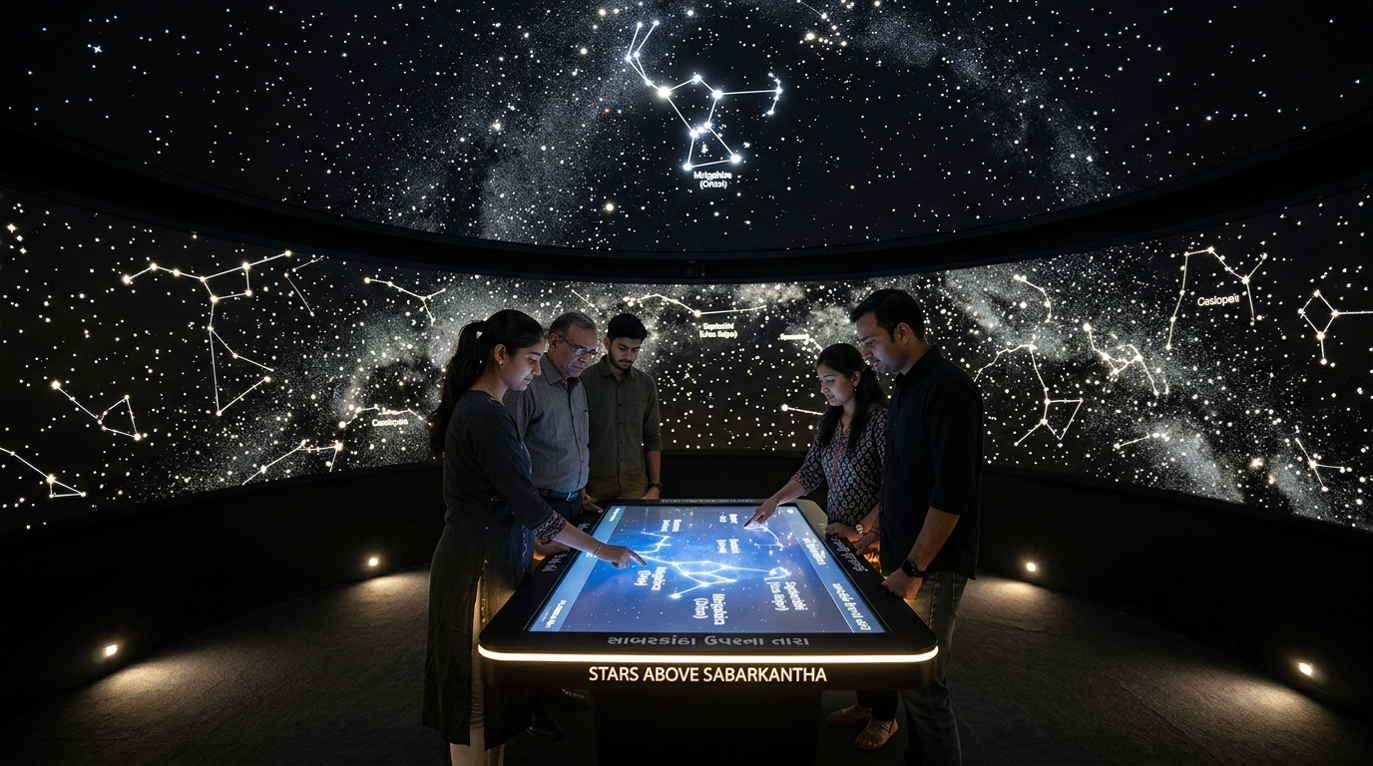
An immersive experience is a designed environment in which visitors are surrounded by and engaged within a sensory and narrative world, rather than observing it from a distance. The defining characteristic of immersion is the degree to which the visitor feels transported into a different reality, whether that is a fantastical world, a historical environment, a natural landscape, an abstract sensory space, or a branded narrative universe. Immersion is achieved through the coordinated design of spatial environment, lighting, sound, visual content, interactive technology, and visitor behaviour guidance.
Immersive experience design is the professional discipline of creating these environments from concept through to construction and technology installation. It encompasses the development of the narrative concept and emotional journey, the design of the physical environment that hosts the experience, the spatial layout that sequences the visitor journey, the specification of projection, lighting, sound, and interactive technology systems, the integration of all technical components into a unified show system, and the operational planning for daily show management and technical maintenance.
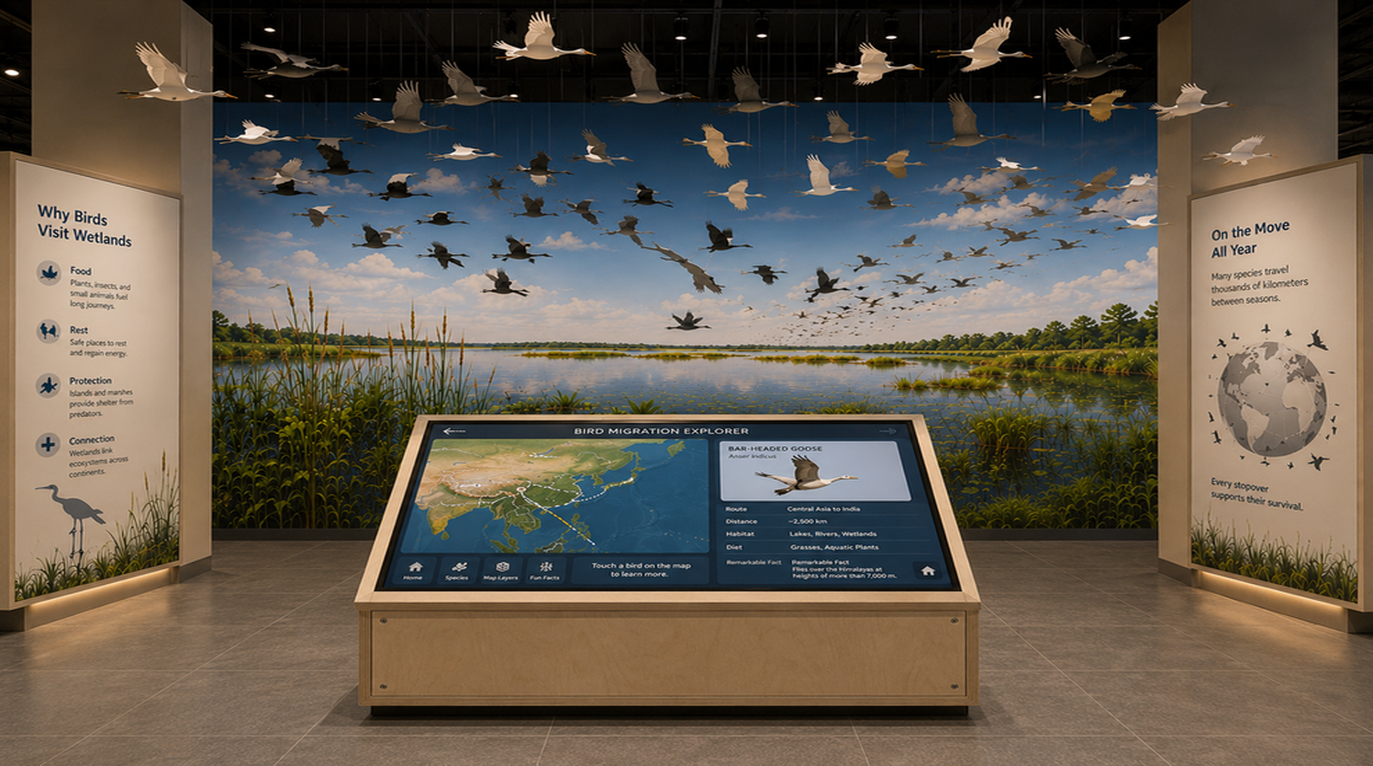
The immersive experience sector spans a wide range of formats and scales: from small pop-up activations of a few hundred square feet to permanent multi-room immersive museums covering tens of thousands of square feet; from purely digital experiences using projection and LED to hybrid environments combining physical set construction with digital content; from passive walk-through experiences to highly interactive environments where visitor actions influence the content in real time. Peach Prime has the design and technical capability to work across this full spectrum of immersive formats.
Our Immersive Experience Design Services
Peach Prime delivers immersive experience design across four integrated service areas that together produce a complete immersive environment from narrative concept to operational venue.
Concept and Storytelling | We develop the narrative concept and emotional journey map for the immersive experience. This includes the core story world or thematic premise of the experience, the emotional arc visitors travel through from entry to exit, the character and atmosphere of each zone or room within the experience, the key sensory and narrative moments that create the peak experiences visitors remember and share, and the interpretive framework that connects the individual moments into a coherent whole. The concept and storytelling brief is the creative foundation from which all environment creation, technology specification, and content design work proceeds. |
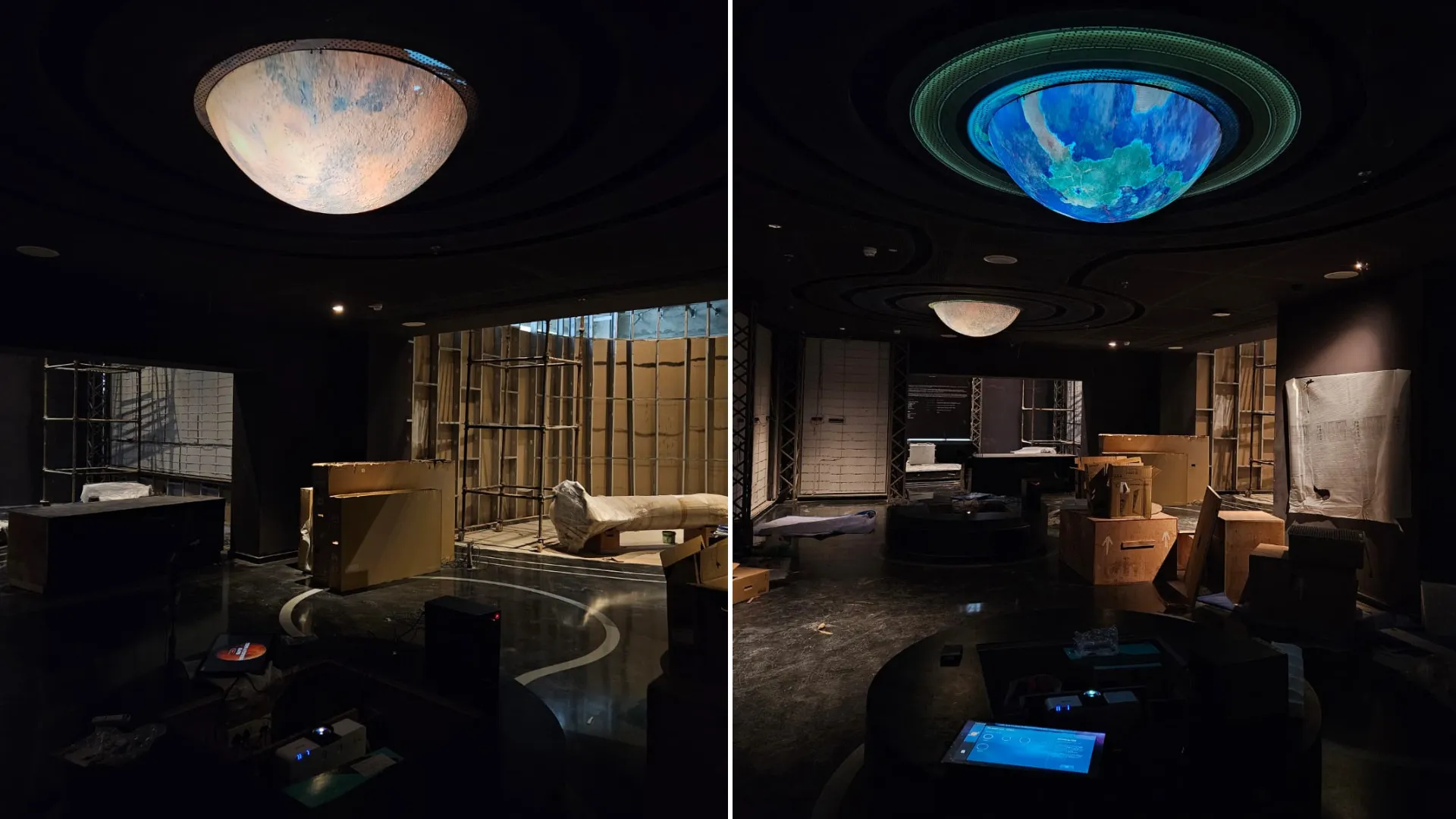
Environment Creation | We design the physical environment of the immersive experience, covering structural set design, surface treatments and materials, atmospheric props and decorative elements, spatial character and scale, and the relationship between physical built elements and digital projected or displayed content. Environment creation in an immersive context requires a specific understanding of how physical and digital elements interact: a physical surface that is slightly irregular creates more dynamic projection mapping results than a flat wall; a physical object placed in front of a projection surface creates a shadow that must be designed into the content; a curved ceiling creates opportunities for dome projection that a flat ceiling cannot. |
Layout Design | We design the spatial layout of the immersive experience, sequencing rooms, corridors, and transition spaces to create the intended narrative journey and visitor flow. Layout design in an immersive context is also a pacing and emotional rhythm design exercise: the sequence of large and small spaces, dark and bright environments, loud and quiet moments, and active and passive experience modes determines the emotional shape of the visit. A poorly sequenced immersive experience delivers its most spectacular moments too early, leaving visitors feeling underwhelmed by the conclusion. Peach Prime sequences immersive experiences to build toward a satisfying emotional peak. |
Technology Integration | We specify and plan the technology ecosystem of the immersive experience, covering projection mapping systems, LED wall and ceiling arrays, spatial audio systems, interactive sensor and tracking systems, lighting control platforms, content management and show control software, and visitor access management. Technology integration planning is produced as a unified system architecture rather than a list of individual components, ensuring all systems are compatible, can be controlled from a centralised show control platform, and can be maintained cost-effectively after opening. We coordinate with technology vendors and AV integrators during the installation phase to ensure the technical design is executed correctly. |
How Peach Prime Designs an Immersive Experience
Our immersive experience design process follows six structured phases from narrative concept development through to technical commissioning and pre-opening review. The process is designed to ensure the creative vision and technical specification remain aligned throughout, preventing the common failure mode of an immersive concept that is compelling in presentation but technically undeliverable or commercially unsustainable in operation.
Phase | What We Deliver |
Phase 1 Concept and Audience Brief | We begin with a thorough brief covering the intended audience, the emotional and sensory experience the client wants to create, the narrative or thematic premise, the available space and budget, and the operational context including expected daily visitor throughput, session duration, and staffing model. The concept brief produced at this phase defines the experience proposition, the emotional journey map, and the creative boundaries within which all subsequent design work operates. |
Phase 2 Narrative and Zone Structure | We develop the detailed narrative arc and zone structure of the experience, defining each room or environment within the sequence with its specific emotional character, sensory palette, visitor behaviour, and narrative role in the overall journey. The zone structure document is the creative and spatial brief for the environment creation and technology specification phases. |
Phase 3 Environment Design and Spatial Layout | We produce the spatial layout of the experience and the environment design for each zone. Spatial layout drawings define room dimensions, visitor flow routes, transition space design, and emergency egress. Environment design for each zone covers structural set elements, surface and material specifications, prop and decorative element concepts, and the spatial relationship between physical and digital content layers. |
Phase 4 Technology Specification and Content Brief | We specify the technology systems for each zone of the experience, including projection hardware, screen and LED display systems, audio equipment, interactive sensor systems, and lighting. We also produce the content brief for each zone, defining the visual and audio content requirements, content format specifications, interaction parameters, and the intended relationship between visitor behaviour and content response. The content brief is issued to the appointed content production studio. |
Phase 5 System Integration Design | We produce the show control system architecture, defining how all technology components across the experience are connected, controlled, and monitored from a centralised platform. System integration design covers network architecture, signal distribution, show control software configuration, trigger and automation logic, and maintenance access and diagnostic procedures. This document is issued to the AV integration contractor for installation. |
Phase 6 Installation Coordination and Commissioning | We coordinate between the fit-out contractor, AV integrator, content production team, and technology vendors during the installation phase, reviewing work against design specifications and resolving technical conflicts. We conduct the technical commissioning review, confirming that all systems are performing to specification, content is playing correctly across all surfaces and speakers, interactive triggers are responding as designed, and the complete visitor journey delivers the intended experience before the venue opens. |
Types of Immersive Experience Projects We Work On
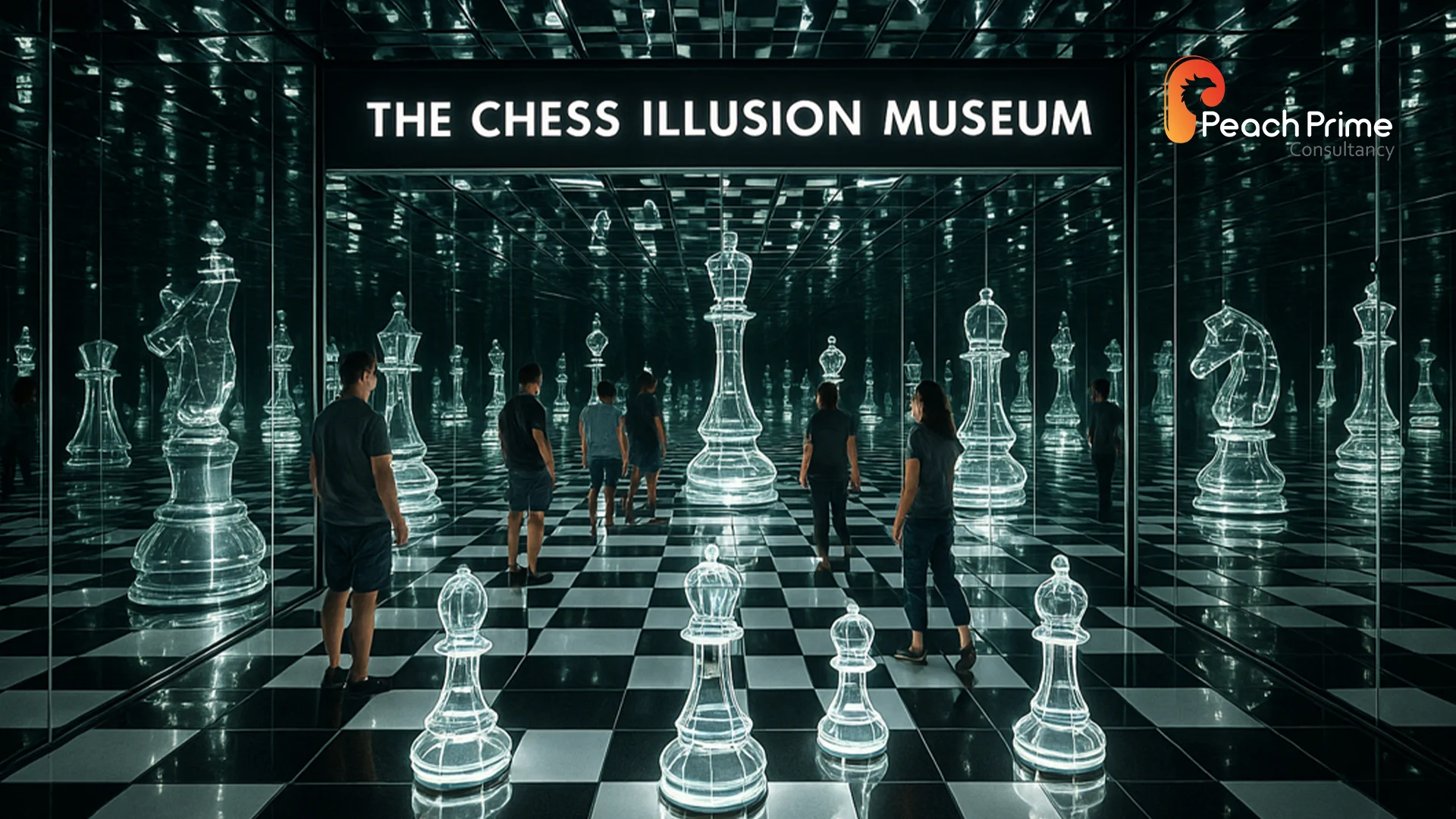
- Permanent immersive experience museums covering multiple themed rooms with projection mapping, LED environments, and interactive installations
- Immersive art and digital art galleries presenting large-scale digital artwork in walk-through spatial environments
- Branded immersive experiences for corporate clients, retail destinations, and hospitality venues
- Heritage and cultural immersive experiences bringing historical events, civilisations, or natural environments to life through spatial storytelling
- Immersive zones within theme parks, FECs, museums, and science centres as components of larger destinations
- Pop-up and temporary immersive activations for seasonal events, festivals, and promotional campaigns
- Multi-sensory experience rooms combining visual, audio, tactile, and olfactory elements for therapeutic or educational purposes
- Escape room and puzzle room environments combining narrative immersion with interactive challenge mechanics
Why Choose Peach Prime Consultancy for Immersive Experience Design?
Narrative-first design: Many immersive experiences are designed technology-first: the client selects impressive technology and then looks for a concept to put inside it. The result is often a technically spectacular but emotionally hollow experience that visitors find underwhelming despite the investment. Peach Prime begins every immersive project with the narrative concept and emotional journey, and selects technology that serves the story rather than overwhelming it. This approach consistently produces experiences that visitors describe as genuinely memorable rather than merely impressive.
Physical and digital environment as a unified design: The most compelling immersive experiences are those in which physical set elements and digital content are designed as a single unified environment rather than as separate layers placed on top of each other. Peach Prime designs both dimensions simultaneously, creating environments where the physical surfaces are shaped to enhance the digital content projected on them, and where physical objects and digital visual elements are scaled and positioned to create a convincing spatial world.
Technology specification that is operationally sustainable: Many immersive venues face serious operational challenges within two years of opening because their technology systems were specified for maximum impact at launch without consideration for daily maintenance, content update procedures, or the cost of component replacement. Peach Prime specifies technology systems that are commercially available, well-supported, maintainable by in-house technical staff, and designed for content updates without requiring full system reinstallation.
Visitor throughput as a design constraint: An immersive experience that delivers a spectacular experience for 20 visitors per session but needs to accommodate 500 visitors per day cannot achieve both objectives without careful design of session management, space sizing, and content looping strategy. Peach Prime designs immersive experiences with visitor throughput requirements built into the spatial layout and technology specification from the beginning, ensuring the commercial model is achievable within the physical and technical design.
Frequently Asked Questions: Immersive Experience Design
Q1. What is immersive experience design?
Immersive experience design creates environments where visitors step inside a story – using 360° projection, interactive sensors, spatial audio, scenic sets, and lighting to surround guests completely rather than showing them a screen. It powers immersive museums, digital art galleries, brand experiences, and dark walk-throughs.
Q2. How much does an immersive experience cost to build?
Compact immersive rooms start around ₹50 lakh–1.5 crore; full immersive galleries and multi-room experiences range ₹2–15 crore depending on projection scale, interactivity, and content production. Content is typically 30–40% of the budget.
Q3. What technologies are used in immersive experiences?
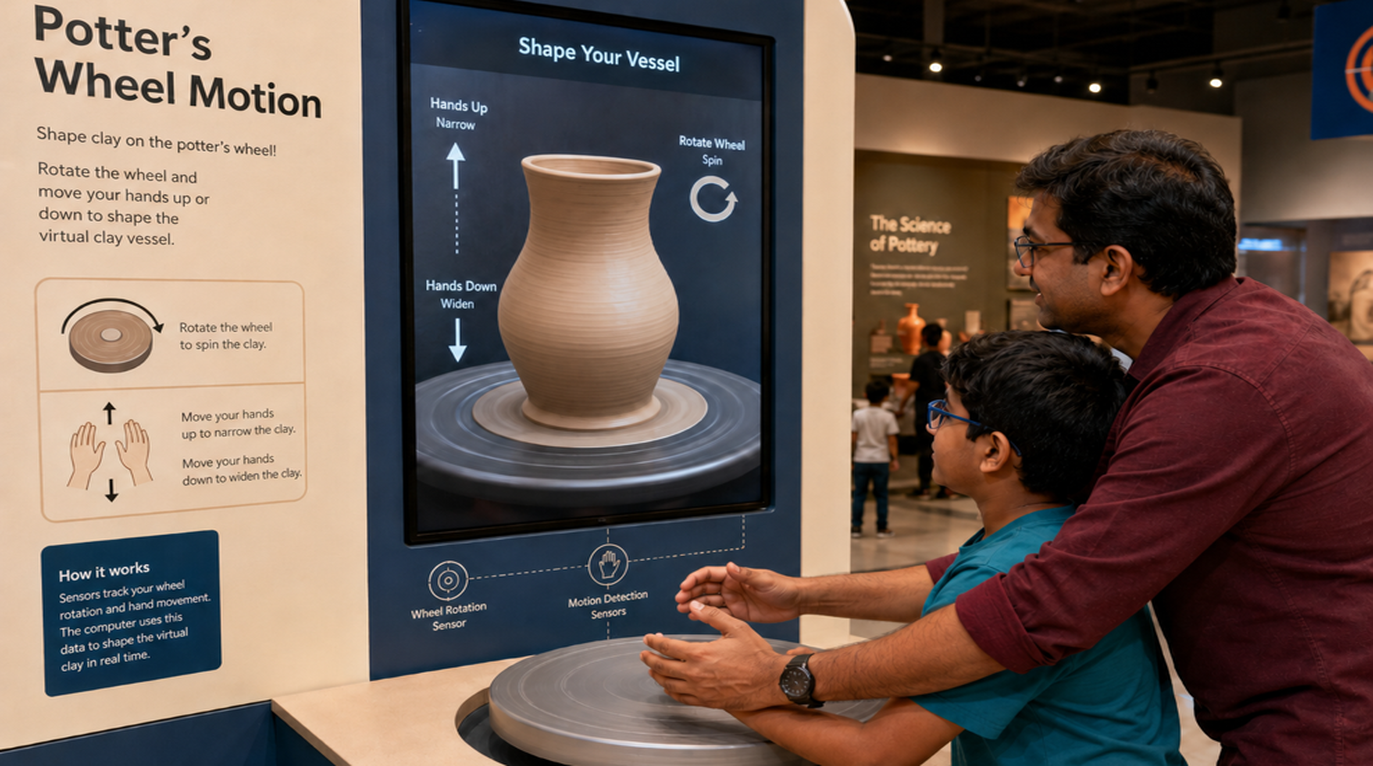
Projection mapping, LED volume walls, motion and depth sensors, real-time engines (Unreal/Unity/TouchDesigner), spatial audio, scent systems, haptics, RFID personalization, and AI-generated responsive content.
Q4. What is the difference between immersive and interactive experiences?
Immersive means the environment surrounds you; interactive means it responds to you. The strongest attractions combine both – rooms that envelop visitors AND react to their movement, voice, or choices.
Q5. How long do visitors spend in an immersive attraction?
Typically 30–60 minutes across 5–8 rooms. We design “photo moments per minute” deliberately – immersive venues live on social media sharing, which is their primary marketing engine.
Q6. Why are immersive experiences good business?
High ticket prices (₹600–1,200 in India), compact footprints, no ride machinery to maintain, and content that can be refreshed digitally for repeat visits – making them among the highest revenue-per-sq-ft formats in the attractions industry.