Peach Prime Consultancy is an adventure park design company in India providing adventure park design and planning services for investors, resort developers, hospitality groups, and government bodies planning standalone adventure parks or adventure zones within larger leisure destinations. As an adventure park design consultant working across India, Asia, and global markets worldwide, we cover the full scope of adventure park consultancy from initial concept ideation and activity selection through to zone planning, occupancy estimation, operational efficiency frameworks, and execution advisory.
Adventure parks are one of the fastest growing segments of the outdoor leisure market, driven by increasing demand for active, physically engaging experiences among visitors of all ages. Planning an adventure park that is safe, commercially viable, operationally efficient, and capable of sustaining visitor demand over multiple seasons requires a structured design and planning approach that addresses activity mix, site topography, safety certification requirements, staffing models, and visitor flow simultaneously. As a specialist adventure park design company, Peach Prime brings this integrated approach to every project we work on, in India and worldwide.
What Does Adventure Park Design and Planning Involve?
Adventure park design consultancy is the professional service of planning, designing, and specifying an adventure park or adventure zone from concept through to construction ready documentation. It encompasses activity selection and layout, site analysis and terrain integration, visitor safety systems, operational flow planning, capacity and occupancy modelling, staffing structure design, and the production of documents required to appoint contractors, safety certifiers, and equipment suppliers. As an experienced adventure park design consultant in India, Peach Prime delivers this entire scope under a single accountable team.
An adventure park is a destination in which physical activity and challenge are the primary visitor proposition. Activities range from aerial rope courses and zip lines to climbing walls, bouldering zones, obstacle courses, treetop trails, mountain biking tracks, and nature based play environments. The design of an adventure park must account for the physical interaction between visitor and environment far more directly than most entertainment destination types, which means site topography, vegetation, weather exposure, and ground conditions are active design inputs rather than background constraints.
Peach Prime approaches adventure park design with equal attention to visitor experience, operational safety, and commercial performance. An adventure park that delivers memorable physical experiences but is expensive to staff, prone to weather related closures, or difficult to maintain will not sustain the visitor numbers its financial model requires. We design adventure parks that are operationally realistic as well as experientially compelling.
Our Adventure Park Design Services
Peach Prime delivers adventure park design across five core service areas. These are designed to work as a complete engagement from concept to execution, but individual components can be commissioned for projects at a specific development stage. Each service below links to a dedicated page so you can explore the design discipline in detail.
Idea Generation | We develop the adventure park concept, defining the overarching experience proposition, the target visitor demographic, the character and atmosphere of the park environment, and the unique positioning of the destination relative to competing adventure offerings in the catchment. Idea generation produces a concept brief and mood reference document that aligns the client, design team, and operational stakeholders around a shared vision before detailed planning begins. |
Activity Selection | We advise on the activity mix for the adventure park based on the target demographic, site terrain, capital investment budget, operational staffing capacity, safety certification requirements, and revenue potential of each activity type. Activity selection covers aerial rope courses, zip lines, climbing walls, bouldering zones, obstacle courses, treetop trails, giant swings, free fall activities, archery, paintball, off road experiences, and nature based play. We produce a detailed activity mix recommendation with capacity analysis, space requirements, and investment estimates for each activity. |
Occupancy Estimation | We model visitor occupancy across the adventure park based on the catchment population, activity throughput rates, session durations, group booking patterns, and seasonal demand variation. Occupancy estimation produces realistic annual visitor projections under conservative, base, and optimistic scenarios, and confirms that the proposed activity mix can accommodate the projected visitor volumes without creating chronic queuing or safety management challenges at peak times. |
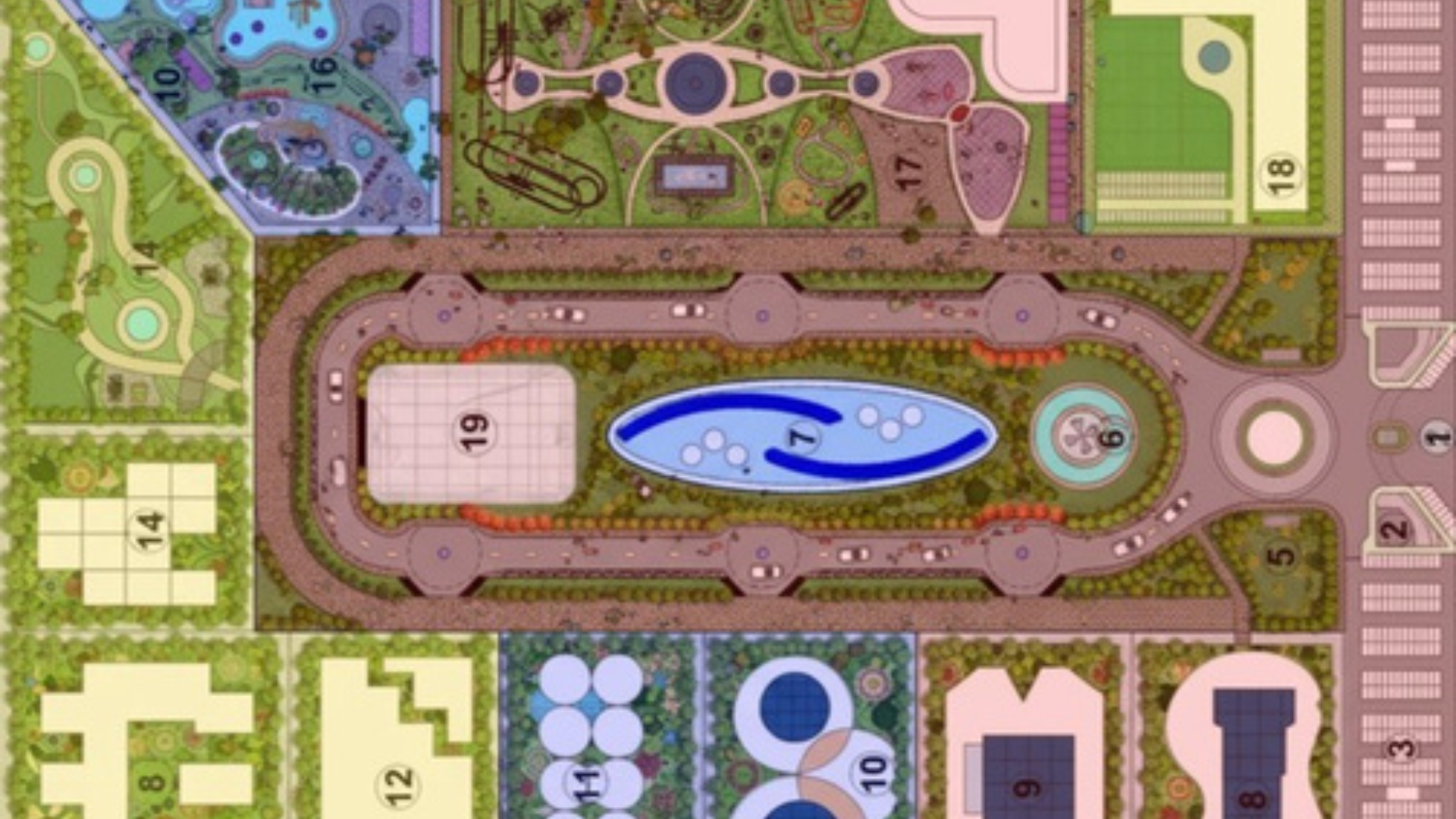
Zone Planning | We design the spatial layout of the adventure park, positioning activity zones, visitor arrival and ticketing areas, equipment storage and briefing areas, food, beverage, and rest nodes, first aid and safety posts, back of house access, staff circulation routes, and car parking within the site. Zone planning integrates with the site topography and existing vegetation to create a layout that uses natural features as activity infrastructure where possible, reducing construction cost and enhancing the environmental character of the park. |
Operational Efficiency | We design the operational framework of the adventure park, covering staffing structure and deployment, safety briefing and equipment distribution systems, activity booking and session management, visitor flow through multi activity routing, maintenance scheduling, and emergency response protocols. An operational efficiency plan reduces staffing costs, minimises activity downtime, and ensures the park can operate safely at varying occupancy levels with a lean staffing model. |
How Peach Prime Plans and Designs an Adventure Park
Our adventure park design process follows six structured phases from site assessment and concept development through to construction documentation and operational planning. Each phase produces defined deliverables with client review and approval gates before the next phase begins. This methodology is applied consistently for every client of the company, in India and worldwide.
Phase | What We Deliver |
Phase 1: Site Assessment and Feasibility | We assess the proposed site for adventure park development, evaluating terrain features, natural vegetation, slope gradients, soil conditions, drainage, weather exposure, vehicular access, and utility availability. We also conduct a market feasibility assessment covering catchment population, competitor analysis, visitor demand projections, and investment return modelling. Site assessment and feasibility together determine whether the adventure park concept is viable at the specific location and what scale of development the site and market can support. |
Phase 2: Concept and Activity Mix Development | We develop the adventure park concept and activity mix recommendation based on the site assessment, feasibility findings, target visitor demographic, and investment budget. The activity mix is presented with capacity analysis, space requirements, safety category classification, estimated capital cost, and revenue potential for each activity. We present two to three activity mix scenarios and recommend the optimal mix with documented rationale. |
Phase 3: Zone Planning and Layout | We produce the zone planning layout for the adventure park, positioning all activity zones, support facilities, pathways, and infrastructure within the site. The layout integrates with natural terrain features, minimises vegetation removal, routes visitor pathways for maximum activity exposure, and separates high energy and beginner zones to suit the mixed ability visitor demographic. The zone plan is presented as a site layout drawing with zone character descriptions and activity placement annotations. |
Phase 4: Activity Specification and Safety Framework | We produce detailed specifications for each activity covering structural and anchor system requirements, equipment specifications, safety zone clearances, inspection and certification requirements, and vendor options. We also develop the safety framework document covering risk assessment methodology, activity instructor ratios, emergency response procedures, and the certification standards the park must meet. This documentation is used to appoint activity suppliers, safety engineers, and certification bodies. |
Phase 5: Operational Planning | We develop the operational plan for the adventure park covering staffing structure, activity scheduling and session management, visitor flow routing, equipment distribution and storage, maintenance schedules, seasonal closure planning, and financial operating model. The operational plan bridges the gap between the physical design and the day to day reality of running a safe and commercially viable adventure park. |
Phase 6: Tender Support and Execution Advisory | We prepare tender documentation for civil works, activity structure installation, equipment supply, and landscaping. We support the client in evaluating contractor and supplier bids, managing design intent during construction, and conducting pre opening safety and operational readiness reviews. Execution advisory continues until the adventure park passes all required safety certifications and is ready to open to the public. |
Types of Adventure Park Projects We Work On in India and Worldwide
As a full service adventure park design company, Peach Prime works on a broad range of adventure park typologies for clients across India, Asia, and global destinations worldwide:
- Aerial rope course and zip line parks using natural tree canopy or purpose built structures
- Multi activity outdoor adventure parks combining rope courses, climbing walls, obstacle courses, and nature play
- Urban adventure parks within city fringe locations targeting school groups, corporate visitors, and weekend family markets
- Resort integrated adventure zones within existing hospitality properties adding active leisure to accommodation offerings
- Children’s adventure play parks featuring age appropriate physical challenges, nature play, and sensory environments
- Corporate team building adventure facilities designed for group bookings alongside general public access
- Eco adventure parks integrating conservation and environmental education alongside physical activity
- Adventure zones as components within larger theme parks, water parks, or integrated leisure destinations
Why Choose Peach Prime Consultancy for Adventure Park Design?
Site responsive design: Adventure parks that work with the natural features of their site are more compelling to visit, less expensive to build, and more environmentally sustainable than parks that impose a standardised layout onto any terrain. The Peach Prime design process begins with a detailed site assessment that turns natural terrain features into adventure assets rather than treating them as obstacles to be engineered around.
Safety framework as a design input: Safety in adventure parks is not a constraint applied after the design is complete. It is a design input that shapes activity placement, clearance zones, visitor routing, staffing positions, and emergency access routes from the earliest planning stage. Peach Prime integrates safety requirements into the design process so that the finished park meets certification standards without requiring expensive post design modifications.
Operational realism in the activity mix: Many adventure parks are designed with activity mixes that look compelling in a brochure but are difficult to operate profitably. Activities with very low throughput rates, high instructor ratios, or significant weather sensitivity can undermine the financial model of a park that looks viable on paper. Peach Prime evaluates each activity in the proposed mix against its operational cost and revenue contribution before recommending it for inclusion.
Occupancy modelling that reflects actual behaviour: Adventure park visitors do not behave like theme park visitors. They spend more time per activity, move through the park more slowly, and are more influenced by group composition and ability level. Our occupancy modelling accounts for these behaviour patterns, producing visitor projections that reflect how adventure park guests actually use a facility rather than applying generic entertainment industry benchmarks.
An adventure park design consultant with a global outlook: From a base in India, the company serves investors, resort developers, and government clients across Asia and global markets worldwide. You can review our delivered work on the Projects page or contact our team to discuss a new adventure park design brief.
Frequently Asked Questions: Adventure Park Design and Planning
Q1. What is included in adventure park design?
Activity selection (zip lines, rope courses, climbing, ninja courses, free fall), zone planning, safety engineering, capacity and occupancy estimation, theming, and operational planning – designed to serve mixed groups from kids to corporate teams.
Q2. How much does an adventure park cost to build in India?
Compact adventure zones start around ₹1.5–4 crore; full outdoor adventure parks with multiple high-element courses typically require ₹5–20 crore depending on activities and land development.
Q3. What safety standards apply to adventure parks?
International ropes-course standards EN 15567 and ACCT govern design, equipment, and operation. Certified auto-belays, daily inspection protocols, trained instructors, and documented maintenance are mandatory for insurance and guest safety.
Q4. How many visitors can an adventure park handle?
Capacity is engineered through occupancy estimation – a well-designed rope course handles 60–100 guests/hour per course, zip lines 30–60/hour per line. We design activity mixes to hit target daily capacity without queues that kill the experience.
Q5. What activities are trending in adventure parks?
Ninja warrior courses, zip coasters, climbing walls with digital games (AR climbing), night operations with LED-lit “glow” courses, and combination formats pairing adventure with F&B decks where parents watch comfortably.
Q6. Can adventure parks operate year-round in India?
Mostly yes – with climate-smart design: shaded courses, monsoon-rated equipment, drainage planning, and indoor adventure elements as backup. Evening operations with lighting effectively double revenue hours in hot climates.