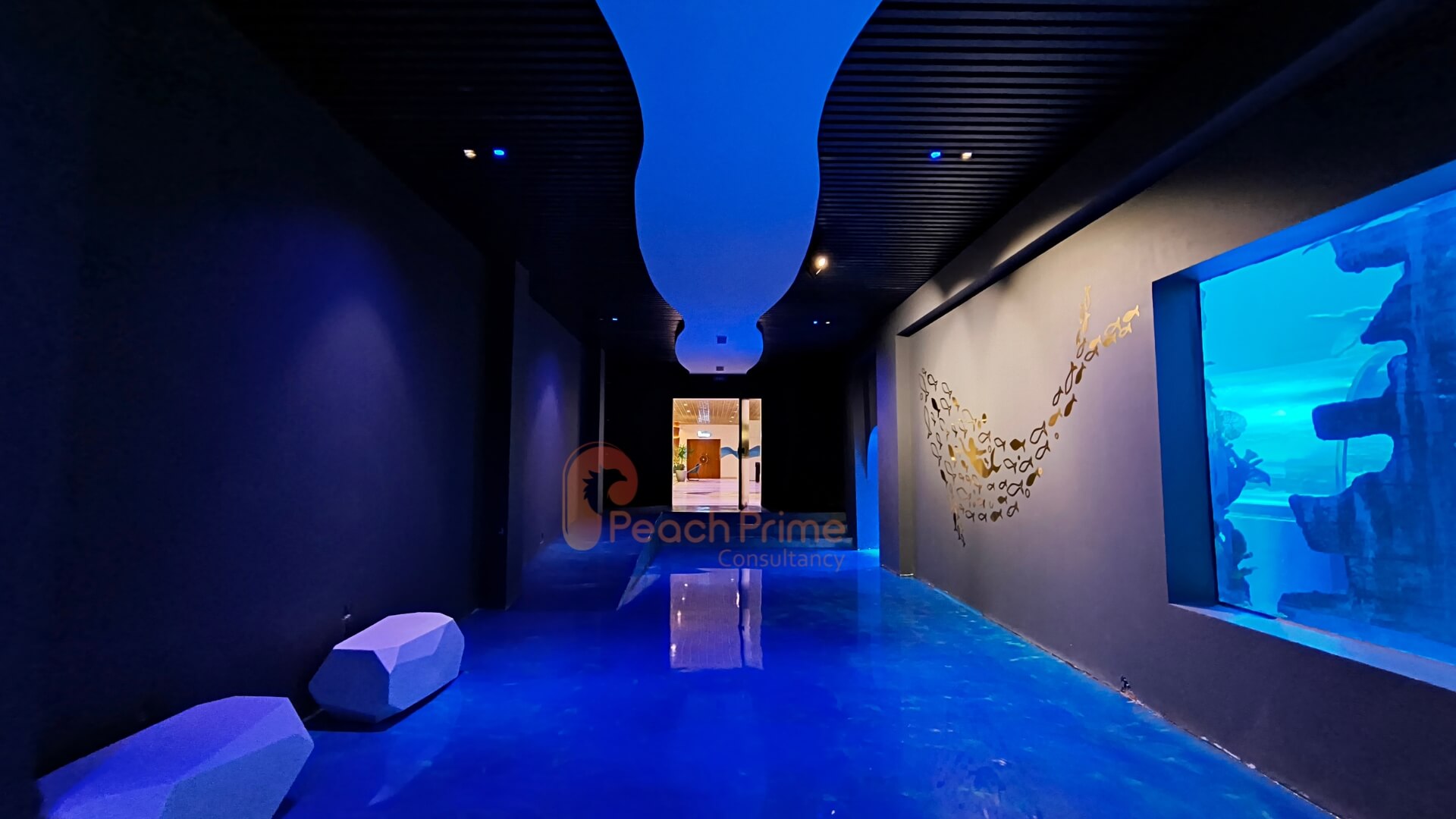
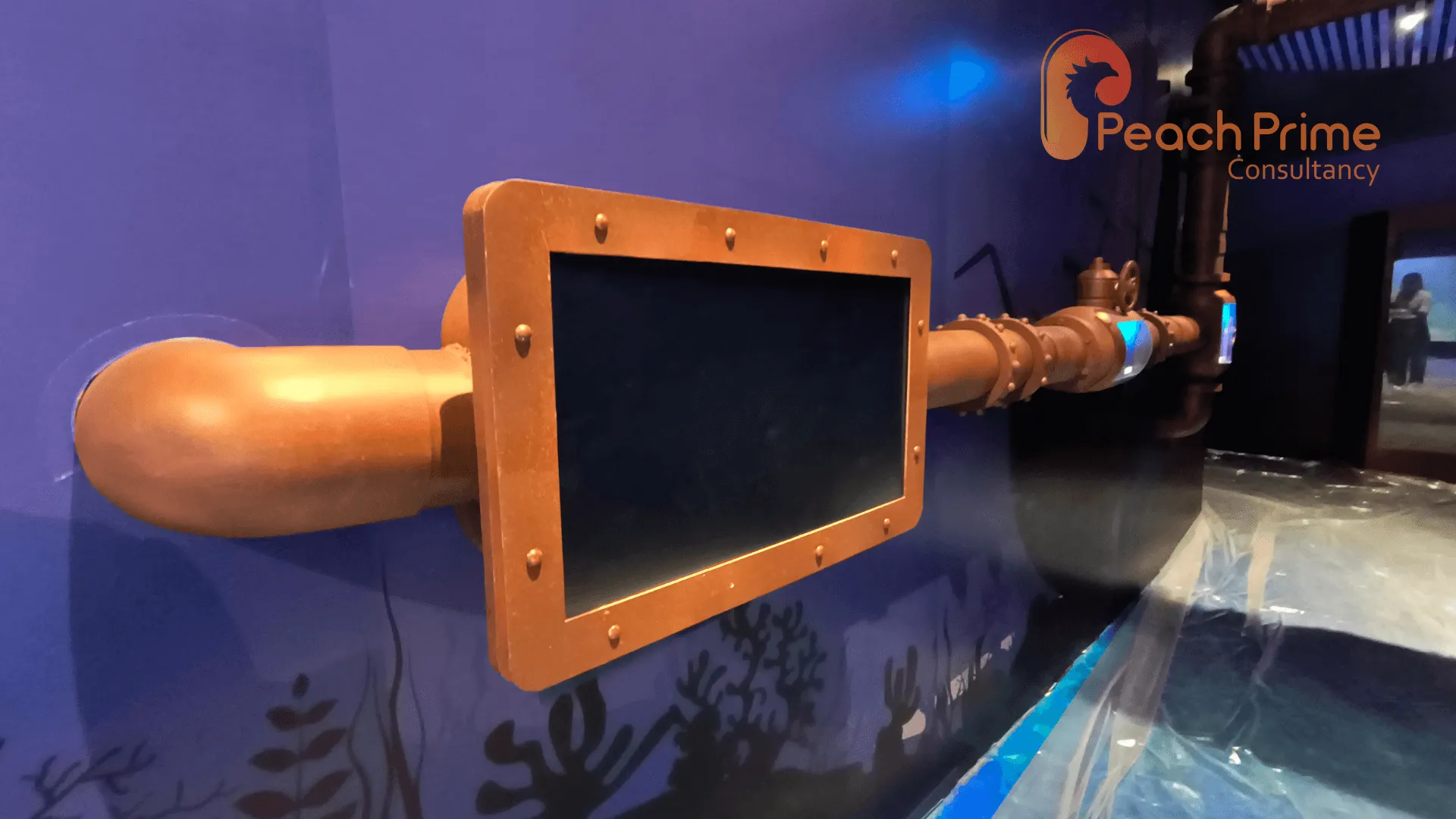
Peach Prime Consultancy provides aquarium and oceanarium design consultancy services for government bodies, tourism authorities, resort developers, and public institution operators planning new aquarium attractions or upgrading existing aquatic display environments. We cover the full scope of aquarium design from life support system planning and exhibit layout through to oceanarium theming, aquascaping, lighting and visual effects design, and 3D visualisation.
Designing a public aquarium is one of the most technically and experientially demanding undertakings in the entertainment and attraction sector. The living animals that form the core of the exhibit are not passive display objects: they require precisely controlled water chemistry, temperature, flow, and light conditions to survive and thrive. The life support systems that maintain these conditions are complex, expensive to install, and critical to the survival of the collection. At the same time, the visitor experience must be visually spectacular, narratively engaging, and educationally meaningful to justify the capital investment and premium ticket pricing that a world-class aquarium commands. Peach Prime brings specialist knowledge of both the technical and experiential dimensions to every aquarium project.
What Does Aquarium and Oceanarium Design Consultancy Involve?
Aquarium design consultancy is the professional service of planning, designing, and specifying a public aquarium or oceanarium from concept through to construction-ready documentation. It encompasses life support system planning, exhibit layout and species display strategy, tank sizing and structural engineering briefs, aquascaping and habitat recreation design, oceanarium theming and atmospheric environment creation, lighting and visual effects design, visitor flow and interpretive content planning, and 3D visualisation of the completed exhibit environment.
A public aquarium operates at the intersection of animal welfare, environmental science, structural engineering, water chemistry, visitor experience design, and conservation education. Every design decision in an aquarium has implications across multiple of these dimensions simultaneously. The size of a display tank determines both the species that can be housed and the structural load placed on the building floor. The lighting system must satisfy both the visual impact requirements of the visitor experience and the biological requirements of the species on display. The water temperature and salinity of each tank must reflect the natural habitat of the species housed within it while being maintained within the operating parameters of the life support system.
Peach Prime approaches aquarium design as a multidisciplinary coordination challenge, bringing together the expertise of marine biologists, structural engineers, water systems engineers, exhibit designers, and lighting specialists within a unified design process that ensures all dimensions of the aquarium are resolved together rather than in sequence.
Our Aquarium and Oceanarium Design Services
Peach Prime delivers aquarium and oceanarium design across five integrated service areas. These services work as a coordinated whole in which decisions in each area directly influence the others.
Life Support System Planning | The life support system (LSS) is the technical infrastructure that maintains water quality, temperature, flow, and chemistry across all display tanks and holding systems in the aquarium. We prepare the LSS engineering brief specifying filtration technology, water recirculation rates, temperature control systems, UV sterilisation, protein skimmers, biological filtration media, chemical dosing systems, and monitoring and alarm infrastructure. The LSS brief is the document issued to specialist aquarium engineers for detailed system design. An undersized or improperly designed LSS is the most common cause of catastrophic failure in public aquarium projects. |
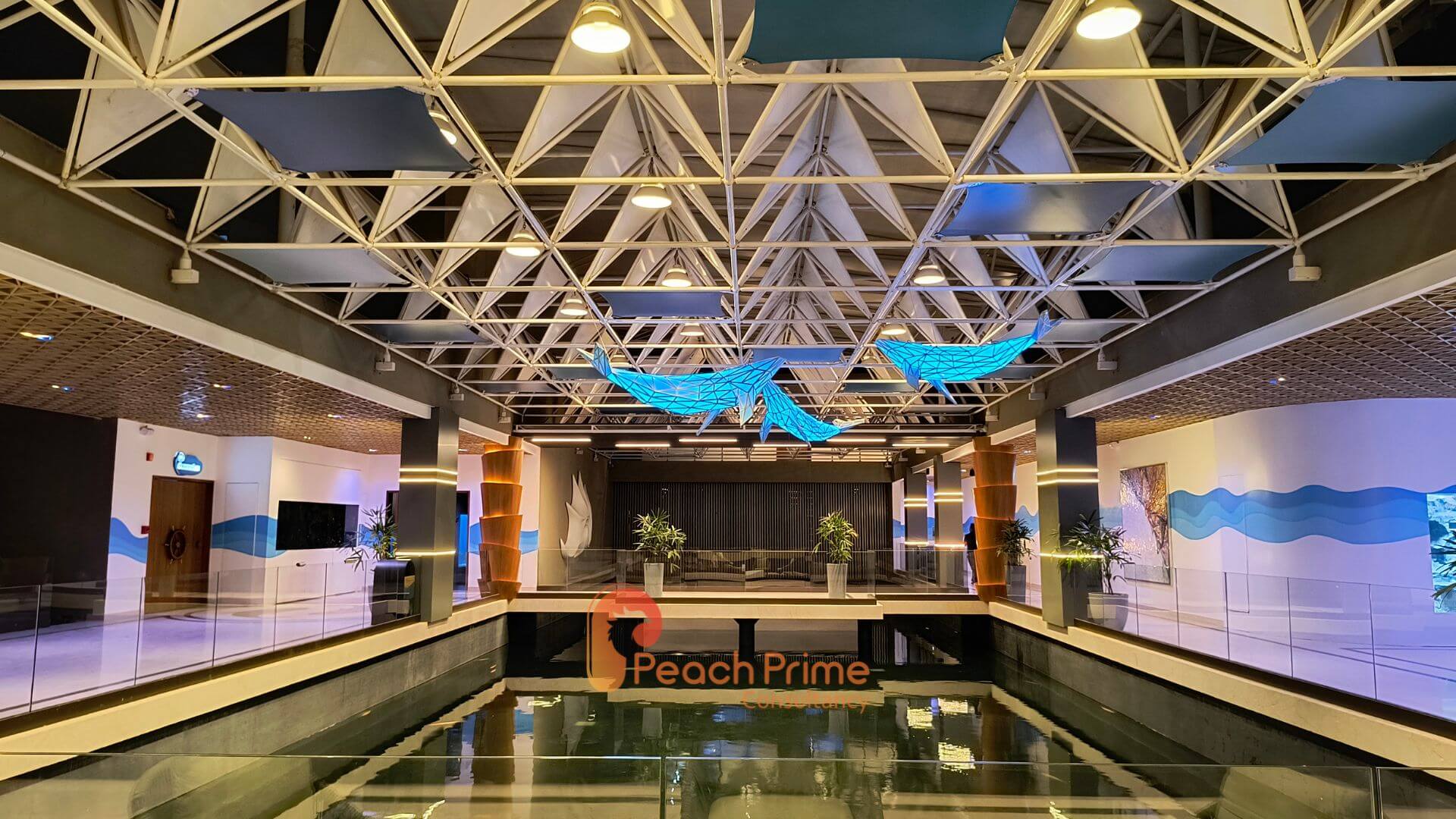
Oceanarium Theming | Oceanarium theming creates the immersive environmental character of each exhibit zone, transporting visitors into the world of the marine species on display. We develop theming concepts and specifications for each exhibit environment covering structural set pieces, rock and coral formations, substrate materials, interpretive graphics and signage, ambient sound design, and the architectural character of the visitor viewing areas. Theming quality directly influences visitor dwell time, perceived value, and the social media visibility of the aquarium as a destination. |
Aquascaping | Aquascaping is the design of the underwater landscape within each display tank, encompassing the arrangement of rocks, substrate materials, coral structures, plant life, and habitat features that recreate the natural environment of the species on display. Good aquascaping provides biological enrichment for the animals, creates visually compelling compositions for visitors viewing the exhibit, and contributes to the overall health and behaviour naturalness of the collection. We develop aquascaping concept designs for each major exhibit tank, coordinated with the species collection plan and LSS requirements. |
Lighting and Visual Effects | Lighting in a public aquarium serves three simultaneous purposes: supporting the biological needs of the species on display, creating visually spectacular viewing environments for visitors, and establishing the atmospheric character of each themed exhibit zone. We design integrated lighting schemes for each exhibit environment covering tank interior lighting, external viewing area lighting, architectural and ambient lighting, and special visual effects including bioluminescence simulations, caustic light patterns, and dynamic lighting sequences. Lighting design is developed in coordination with the aquascaping and theming designs to ensure all three dimensions work together. |
3D Visualisation | We produce 3D rendered visualisations and walkthrough animations of the aquarium exhibit environments before construction begins. These visualisations allow clients, government approvers, and design review committees to experience the intended exhibit environments in detail and identify any adjustments needed before construction investment is committed. 3D visualisation is particularly valuable in aquarium projects where the relationship between the tank display and the visitor viewing angle is critical to the experiential impact of each exhibit. |
How Peach Prime Plans and Designs an Aquarium
Our aquarium design process follows six structured phases that integrate the biological, technical, and experiential dimensions of aquarium development from the earliest planning stage. The coordination between these dimensions throughout the process is what distinguishes a well-executed aquarium from one that looks impressive but faces ongoing operational and animal welfare challenges.
Phase | What We Deliver |
Phase 1 Feasibility and Collection Strategy | We assess the market and site for aquarium viability, evaluating visitor demand, competition, available floor area, structural loading capacity, proximity to marine water supply or desalination infrastructure, and capital investment budget. We also develop the collection strategy brief in consultation with the client and marine biology advisors, defining the species groups to be displayed, the conservation and education narrative of the aquarium, and the visitor experience proposition. The collection strategy drives all subsequent design decisions. |
Phase 2 Exhibit Layout and Tank Sizing | We develop the exhibit layout plan for the aquarium, positioning display tanks, visitor pathways, interpretive content zones, holding and quarantine facilities, back-of-house fish rooms, food preparation areas, staff facilities, and visitor amenities. Tank sizing is determined by the collection strategy, species space requirements, and structural constraints of the building. We produce an exhibit layout drawing with tank configuration, visitor viewing angle analysis, and visitor flow diagram. |
Phase 3 Life Support System Engineering Brief | We prepare the LSS engineering brief specifying all water quality and treatment requirements across every tank and holding system in the aquarium. The brief covers filtration technology selection rationale, recirculation rates, water chemistry targets by tank zone, temperature control specifications, UV and chemical treatment requirements, and monitoring and alarm system requirements. This document is issued to the appointed aquarium engineering specialist for detailed LSS design. |
Phase 4 Theming, Aquascaping, and Lighting Design | We develop the themed environment design for each exhibit zone, the aquascaping concept for each major display tank, and the integrated lighting design for the visitor experience areas. These three design components are developed simultaneously and cross-referenced against the LSS requirements and tank configurations to ensure all creative design decisions are compatible with the biological and technical requirements of the aquarium. |
Phase 5 3D Visualisation and Stakeholder Review | We produce 3D rendered visualisations and a walkthrough animation of the approved aquarium design. These are used for client and investor approvals, government planning submissions, and conservation authority reviews. The visualisation phase consistently identifies viewing angle issues, lighting conflicts, and theming scale problems that are far less expensive to resolve in the design than during construction. |
Phase 6 Tender Support and Execution Advisory | We prepare tender documentation for civil and structural construction, LSS installation, tank fabrication and installation, theming and aquascaping fabrication, lighting system installation, and visitor amenity fit-out. We support the client in evaluating bids, appointing contractors, and managing design intent during construction. Pre-opening commissioning review confirms LSS performance, water quality parameters, and exhibit completeness before the aquarium opens to the public. |
Types of Aquarium and Oceanarium Projects We Design
- Public aquariums and oceanariums as standalone destination attractions within urban or resort settings
- Aquarium components within integrated leisure destinations including science parks, natural history museums, and theme parks
- Resort and hotel lobby and display aquariums creating dramatic architectural focal points for hospitality environments
- Children’s aquarium and marine discovery exhibits within science centres and children’s museums
- Freshwater aquarium exhibits showcasing river, lake, and wetland ecosystems alongside marine environments
- Shark and ray encounter exhibits featuring walk-through tunnels and overhead viewing panels
- Touch pool and interactive marine discovery exhibits designed for direct visitor engagement with marine species
- Aquarium exhibit upgrades and renovations improving water quality systems, theming, lighting, or species collection in existing facilities
Why Choose Peach Prime Consultancy for Aquarium Design?
Multidisciplinary coordination from day one: Aquarium projects that separate the LSS engineering from the exhibit design and theming work consistently encounter conflicts between biological requirements and experiential design aspirations. Peach Prime coordinates all design disciplines within a single integrated process from the beginning, ensuring that the theming concept, aquascaping design, lighting specification, and LSS requirements are aligned rather than negotiated against each other after the fact.
Collection strategy as the design foundation: The species collection that an aquarium houses must be determined before any physical design decisions are made. Tank sizes, water temperature and salinity systems, lighting spectra, aquascaping materials, and holding infrastructure all flow from the collection strategy. Peach Prime begins every aquarium engagement with a collection strategy brief developed in consultation with the client and marine biology advisors, ensuring the physical design is built on a sound biological foundation.
Visitor experience as a revenue and conservation tool: A well-designed aquarium visitor experience does not just entertain, it builds the emotional connection between visitors and marine species that is the foundation of conservation awareness and support. Peach Prime designs aquarium exhibit environments that create genuine moments of wonder and curiosity, using lighting, theming, and interpretive content to transform a display tank into an immersive encounter with a living ecosystem. This experiential quality directly supports repeat visitation, premium ticket pricing, and the conservation mission of the institution.
Realistic capital cost estimation for complex infrastructure: Aquarium projects are frequently underestimated at the feasibility stage because LSS infrastructure, tank fabrication, and specialist aquascaping are consistently more expensive than clients anticipate. Peach Prime prepares capital cost estimates that account for the full scope of aquarium-specific infrastructure, preventing the budget overruns that arise when these costs are discovered late in the design process.
Frequently Asked Questions: Aquarium and Oceanarium Design
Q1. How much does a public aquarium cost to build in India?
Public aquariums typically cost ₹25,000–60,000 per sq ft due to life support systems, acrylic viewing panels, and specialized construction – a mid-size 20,000 sq ft aquarium generally requires ₹50–120 crore.
Q2. What is a life support system (LSS) in an aquarium?
The LSS is the filtration, oxygenation, temperature control, and water chemistry infrastructure that keeps aquatic life healthy – including protein skimmers, biofilters, UV sterilization, and monitoring systems. LSS design is the single most critical element of aquarium engineering.
Q3. How long does an aquarium project take?
Typically 18–30 months: concept and species planning, LSS and structural engineering, acrylic procurement (long lead items), construction, water commissioning and biological cycling (2–4 months), and animal introduction.
Q4. What is aquascaping?
Aquascaping is the design of underwater environments – artificial reefs, rockwork, planted scenes, and themed habitats – that recreate natural ecosystems, keep species healthy, and create dramatic viewing moments for visitors.
Q5. What makes an aquarium commercially successful?
Signature exhibits (tunnels, giant ocean windows), interactive touch pools, feeding shows, edutainment programs for schools, strong retail/F&B design, and membership models – with school groups often providing 30–40% of weekday attendance.
Q6. What are the latest aquarium design trends?
Immersive tunnel walkthroughs, projection-augmented exhibits, conservation storytelling, jellyfish galleries with lighting art, interactive digital learning stations, and hybrid aquarium-museum formats.