Peach Prime Consultancy prepares project feasibility reports, bankable business plans, and Detailed Project Reports (DPRs) for entertainment destinations. We serve private investors, real estate developers, hospitality groups, and government bodies who are planning theme parks, Family Entertainment Centres (FECs), water parks, museums, adventure parks, snow parks, and public leisure infrastructure. Our feasibility work is grounded in site-specific data, realistic market benchmarks, and commercial logic rather than optimistic projections.
What Is a Project Feasibility Report for an Entertainment Destination?
A project feasibility study is a structured analytical document that evaluates whether a proposed entertainment destination is commercially viable, technically achievable, and financially sustainable before capital is committed. It answers the fundamental question every investor and government body must ask before proceeding: can this project deliver returns that are commensurate with its risk and investment?
For private investors and developers, the feasibility study becomes the foundation of the investment decision, the basis for bank financing discussions, and the performance benchmark against which actual results are measured once the project is operational. For government clients, the same document is structured as a Detailed Project Report (DPR), which is a mandatory requirement for public tender submissions, planning authority approvals, and infrastructure funding programmes.
Peach Prime prepares feasibility reports that go beyond generic templates. Every study we produce is site-specific, market-specific, and built around realistic benchmarks drawn from comparable executed entertainment projects. We do not use broad industry averages that fail to reflect the visitor demographics, pricing sensitivities, and operational cost structures of the actual market the destination will serve.
Our Project Feasibility and Planning Services
Peach Prime provides feasibility and planning services across the following categories. Each service is scoped to the specific project type and client requirement, and can be commissioned as a standalone engagement or as the first phase of a full project lifecycle.
|
DPR for Tender
|
Detailed Project Reports formatted to meet government tender requirements. We prepare DPRs for amusement parks, public museums, heritage interpretation centres, science parks, and civic leisure infrastructure commissioned by municipal corporations, state governments, and public sector bodies. The DPR includes technical specifications, demand analysis, cost estimates, operational plans, and financial projections in the format prescribed by the relevant authority.
|
|
Theme Park Feasibility Study
|
Site-specific feasibility analysis for theme park developments. The study covers catchment population assessment, competitive landscape mapping, proposed zone structure and attraction mix, capital expenditure estimation, revenue projections across all income streams, operating cost modelling, and financial return metrics including NPV, IRR, and payback period.
|
|
FEC Business Plan
|
Investment-grade business plans for Family Entertainment Centre projects. We analyse the catchment demographics, recommend an appropriate activity mix and space programme, model revenue per square foot, estimate equipment and civil investment, and produce a financial plan that demonstrates the path to profitability and investor return.
|
|
Museum Planning
|
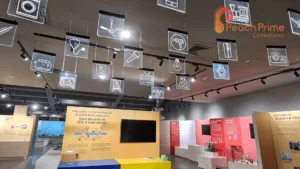
Feasibility and planning documents for museum and cultural attraction projects. We assess visitor demand, develop an exhibit content strategy, define the operating model and staffing structure, and produce financial sustainability analysis for both government-funded and privately developed museum projects.
|
How Peach Prime Prepares a Project Feasibility Study
Our feasibility process follows six defined phases. Each phase produces specific deliverables and requires defined inputs from the client. This structured approach ensures the final report is based on verified data rather than assumptions, and that all findings can be defended to investors, lenders, and government reviewers.
|
Phase
|
What We Deliver
|
|
Phase 1 Site and Catchment Assessment
|
We assess the project site, surrounding population within 30 to 100 km depending on destination type, road and transport connectivity, competing attractions within the catchment, tourism infrastructure quality, and demographic profile of the target visitor base. For FECs and indoor attractions, we map the immediate 5 to 10 km trade area in detail.
|
|
Phase 2 Market Demand Analysis
|
We analyse visitor demand using secondary data sources including regional tourism statistics, census data, mall footfall benchmarks for FEC projects, and comparable project performance data. We estimate annual footfall under conservative, base, and optimistic scenarios, with clearly documented assumptions for each scenario.
|
|
Phase 3 Concept and Attraction Mix
|
We recommend an appropriate destination concept, zone structure, and attraction mix calibrated to catchment demographics, available land area, investment budget, and competitive positioning. This phase prevents the common mistake of over-specifying a destination beyond what the local market can sustain, or under-investing in anchor attractions that drive repeat visitation.
|
|
Phase 4 Capital Expenditure Estimation
|
We prepare a detailed capital expenditure estimate covering civil and structural construction, mechanical and electrical infrastructure, ride and equipment procurement, theming and finishing works, technology systems, landscaping, car parking, and soft costs including design fees, project management, and pre-opening expenses.
|
|
Phase 5 Revenue and Operating Cost Modelling
|
We model all revenue streams including entry ticketing, F&B spend per visitor, retail, event hire, and corporate bookings. Operating cost modelling covers staffing at each occupancy level, utilities, maintenance schedules, marketing budgets, insurance, management fees, and working capital requirements.
|
|
Phase 6 Financial Analysis and Report
|
The final report presents NPV, IRR, payback period, debt service coverage ratio for financed projects, and full sensitivity and scenario analysis. For government DPRs, we follow prescribed formatting requirements and include all annexures, technical appendices, and supporting documentation required for tender submission.
|
Who Commissions a Project Feasibility Study from Peach Prime?
- Private investors and family offices evaluating entertainment destination investments before committing capital
- Real estate developers integrating FEC, theme park, or water park components into mixed-use residential or commercial projects
- Hospitality groups and resort developers assessing the commercial viability of adding leisure attractions to existing properties
- Government bodies and municipal corporations commissioning public amusement parks, civic museums, science centres, or heritage leisure destinations
- Banks and financial institutions requiring an independent feasibility assessment as a condition of project financing
- Entrepreneurs and first-time investors who need a structured business plan before approaching investors or lenders
Why Choose Peach Prime Consultancy for Your Feasibility Study?
Market-specific benchmarks: Most generic feasibility templates use broad global averages that do not reflect the realities of the actual market a destination will serve. Peach Prime’s financial models are built on data from comparable entertainment projects, adjusted for regional visitor behaviour, pricing sensitivity, and operational cost structures relevant to each specific project location.
End-to-end continuity: Because Peach Prime also handles master planning, concept design, and execution advisory, our feasibility reports are written to be actionable rather than theoretical. The attraction mix, capital cost estimates, and operational assumptions used in feasibility are consistent with what we would actually plan and design in subsequent phases, preventing misalignment between the financial model and the physical design.
Government DPR experience: We have prepared DPRs that have been accepted by government clients across multiple projects. We understand the formatting expectations, annexure requirements, and review processes of government tender systems across the markets we serve.
Commercial realism: We do not prepare optimistic feasibility reports designed to justify a decision already made. Our reports present a range of scenarios with transparent assumptions, because a project that fails in year three damages the investor, the operator, and ultimately the visitor economy it was meant to serve.
Frequently Asked Questions: Project Feasibility for Entertainment Destinations
Q. What is a project feasibility report for a theme park or FEC?
A project feasibility report for a theme park or FEC is a structured analysis that evaluates whether a proposed entertainment destination is commercially viable before investment is committed. It covers site assessment, catchment population analysis, visitor demand projections, competitive landscape review, proposed concept and attraction mix, capital expenditure estimation, revenue modelling, operating cost analysis, and financial return metrics including payback period and IRR. For government-commissioned projects, this document is structured as a Detailed Project Report (DPR) for tender submission.
Q. What is a DPR and when is it required?
A Detailed Project Report (DPR) is a comprehensive planning document required by government bodies before approving or tendering public infrastructure projects. For entertainment destinations such as public amusement parks, civic museums, science parks, and heritage interpretation centres, a DPR includes technical specifications, demand analysis, cost estimates, operational plans, and financial projections formatted according to the requirements of the commissioning authority. Peach Prime Consultancy has prepared government-accepted DPRs across multiple projects.
Q. How long does a feasibility study take to prepare?
A feasibility study for an entertainment destination typically takes 4 to 8 weeks from the date of engagement, depending on site complexity, data availability, and whether primary visitor surveys are required. Government DPRs may take longer if multiple review and revision cycles are required for tender approval. Peach Prime provides a clear timeline and milestone schedule at the start of every feasibility engagement.
Q. Can a feasibility report be used to secure bank financing?
Yes. A well-prepared feasibility study with realistic financial projections, clearly documented assumptions, and sensitivity analysis is a standard requirement for project financing from banks and financial institutions. Lenders typically require a debt service coverage ratio (DSCR) analysis, debt repayment schedule, and scenario modelling showing performance under a downside case. Peach Prime prepares feasibility reports that include all the financial metrics and documentation structures that lenders require.
Q. What is the difference between a feasibility study and a DPR?
A feasibility study and a DPR contain similar analytical content but differ in format, audience, and purpose. A feasibility study is prepared for private investors and developers and is formatted to support an investment decision. A Detailed Project Report (DPR) is prepared for government bodies and follows specific formatting and content requirements set by the commissioning authority. Peach Prime prepares both formats, and in many cases the same analytical work underpins both documents.
Q. Do you prepare feasibility studies for water parks, snow parks, and aquariums as well?
Yes. Peach Prime prepares feasibility studies and DPRs for all entertainment destination categories including theme parks, FECs, water parks, snow parks, aquariums, adventure parks, museums, science parks, and integrated leisure destinations. Each category has specific demand characteristics, capital cost ranges, and operational benchmarks that are incorporated into the analysis.