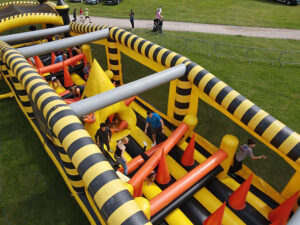

Inflatable Immersive Attraction Design & Development
Interactive Inflatable Adventure Environments for Malls, FECs & Event Destinations
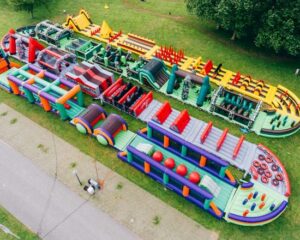
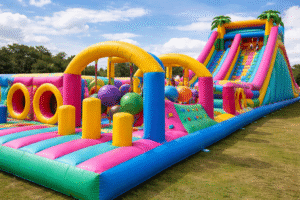
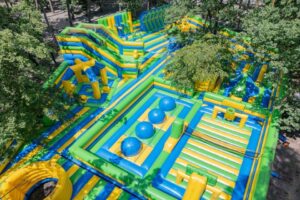
An Inflatable Immersive Attraction is a high-energy, interactive leisure concept that uses custom inflatable structures, obstacle courses, and playful environments to create destination-level entertainment.
Designed for malls, family entertainment centers, urban events, and mixed-use developments, these inflatable attractions drive strong footfall, extend dwell time, and enhance revenue per square foot with scalable operational models.
Engineering A High-Engagement Inflatable Experience
Developing a commercially successful inflatable immersive attraction requires far more than erecting oversized structures. Layout planning, safety engineering, traffic flow management, and experiential design must operate as a cohesive entertainment ecosystem.
Our planning approach ensures:
- Custom inflatable obstacle course and performance design
- Thematic inflatable modules engineered for visual impact
- Visitor circulation planning for peak-hour throughput
- Safety compliance systems and cushioned boundary engineering
- Lighting and accent integration for event-ready environments
- Parent viewing and spectator zones
- Merchandise, F&B, and ancillary revenue planning
When engineered with precision, inflatable attractions maximize dwell time, repeat participation, and revenue diversity.
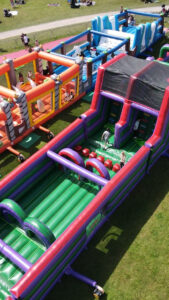
Defining A Commercial Inflatable Attraction Concept
An Inflatable Immersive Attraction is a purpose-built facility featuring thematic inflatable environments designed for physical interaction, exploration, and group engagement.
These facilities typically incorporate:
- Themed inflatable obstacle zones and mazes
- Bounce modules, slides, and launch pads
- Air-inflated interactive play installations
- Digital timing or scoring systems (optional)
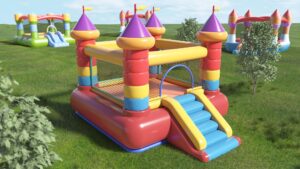
Unlike simple bounce houses, this format is engineered for high-throughput, multi-age engagement, and layered monetization.
A complete business model may include time-based ticketing, private event rentals, branding tie-ins, and cross-sell retail zones — making inflatable immersive attractions attractive for experiential developers and investors.
High-Demand Competitive Skill Gaming Formats
The configuration and sequencing of attractions directly influence throughput and commercial viability. We curate Skill-Based Game Zones based on demographic profiling and operational goals.

Interactive Competitive Gaming Arena
Designed for structured multiplayer tournaments, leaderboard competitions, and timed skill challenges.

Youth & Family Skill Gaming Zone
Balanced intensity formats suitable for high-footfall FEC environments.

Corporate Performance Arena
Optimized for team-based competition, timed events, and measurable group challenges.

Esports-Integrated Skill Zone
Configured to complement esports setups with physical-digital competitive gaming experiences.
Structuring A Revenue-Optimized Inflatable Entertainment Venue
A professionally engineered Inflatable Immersive Attraction must function as a revenue-driven entertainment asset. Experience sequencing, safety planning, and operational throughput directly influence commercial viability.
Key considerations include:
- Time-slot ticketing for throughput optimization
- Group pricing and membership packages
- Durable and fire-rated inflatable materials
- Safety supervision and staff workflow planning
- Retail and concession zone integration
- Private event rentals and birthday party formats
- Seasonal and branded theme rotations
Because inflatable attractions cater to families, youth groups, and social gatherings, they enjoy repeat traffic and strong engagement metrics — strengthening long-term ROI.
Complete Planning & Technical Coordination
Developing an inflatable immersive attraction requires synchronized planning across spatial design, safety engineering, and revenue modeling.
Our scope includes:Ideal Locations For Inflatable Immersive Attractions
They are particularly effective in:
- Large anchor FEC spaces within major malls
- Urban festival plazas and event precincts
- Sports complexes with complementary attractions
- Outdoor leisure parks and amusement clusters
- Resort recreation zones with multi-day stay traffic
- Tier 2 & Tier 3 cities with family entertainment demand
Location selection based on youth demographics, weekend visitation patterns, and adjacent attractions significantly increases revenue potential.
Why Peach Prime Consultancy
Peach Prime Consultancy brings multidisciplinary expertise Peach Prime Consultancy blends scalable entertainment design with safety engineering and revenue strategy to deliver inflatable immersive attractions that perform both operationally and commercially.
Our methodology combines experiential layout intelligence, market-aligned pricing models, and safety-centric engineering to build inflatable attraction ecosystems that thrive in competitive leisure landscapes.
Build a High-Performance Competitive Gaming Destination
Peach Prime Consultancy provides comprehensive feasibility analysis, structured design planning, and execution support to help you develop a commercially scalable, performance-driven gaming destination.
If you are planning a: Skill-Based Game Zone, Competitive Social Gaming Arena, Interactive Skill Gaming Facility, High-Engagement Game Zone within an FEC.
Explore Our ServicesGet In Touch
FAQs
Q. What is the ideal age range for inflatable immersive attractions?
Typically suitable for children 5+, with zones designed for teens and adults depending on obstacle complexity.
Q. How much space is required for an inflatable attraction?
Space needs vary by layout, but modular courses can fit 3,000–10,000 sq ft, depending on throughput goals.
Q. Can inflatable attractions operate indoors?
Yes. They perform very well within climate-controlled mall FEC floors and large event halls.
Q. Is it commercially viable in India?
Absolutely. These attractions enjoy high repeat visitation, group bookings, and event rentals — supporting strong ROI.
Q. Does it require specialised safety certification?
Yes. Structures must meet fire compliance, flame-retardant material standards, and engineered anchoring protocols.