
Mixed Reality gaming arenas are no longer a futuristic concept. They are an operating business category with proven global models, growing consumer demand, and a financial profile that rewards investors who plan well and execute with discipline.
This guide is written for entrepreneurs and investors who want a clear, practical framework for designing, launching, and scaling a profitable MR gaming venue.
What Makes a Mixed Reality Arena Different
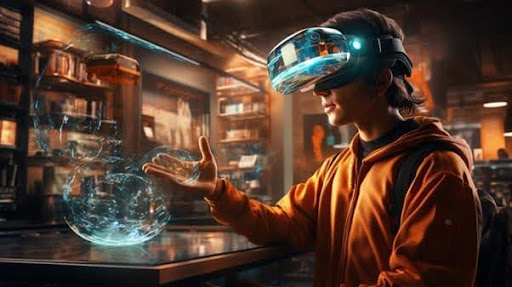
A Mixed Reality Arena is not a VR lounge or an arcade. It is a purpose-built competitive environment where physical movement and digital overlays combine to create a fully immersive multiplayer experience.
Players move through real physical space, tracked in real time, while digital elements, opponents, objectives, and environments are layered on top of their field of vision. The result is a gameplay experience that cannot be replicated on a home console or in a standard gaming cafe. That irreplicability is the core of the commercial proposition.
For investors, this distinction matters because it defines your competitive moat. You are not competing with PlayStation or a gaming subscription service. You are competing for discretionary social entertainment spend, and on that basis, a well-executed MR arena has very few direct competitors in most markets.
Designing the Arena Experience: Zone by Zone
The physical layout of your arena has a direct impact on throughput, guest satisfaction, and operational efficiency. A poorly designed floor plan creates congestion, slows session turnover, and degrades the experience for paying guests.
A proven four-zone flow works as follows:
Entry Briefing Zone is where guests receive their safety orientation, gameplay tutorial, and session briefing. Keeping this zone efficient and engaging sets the tone for the experience. First impressions matter, and many guests will be trying MR combat for the first time. A confident, well-paced briefing reduces in-session confusion and support demands on your staff.
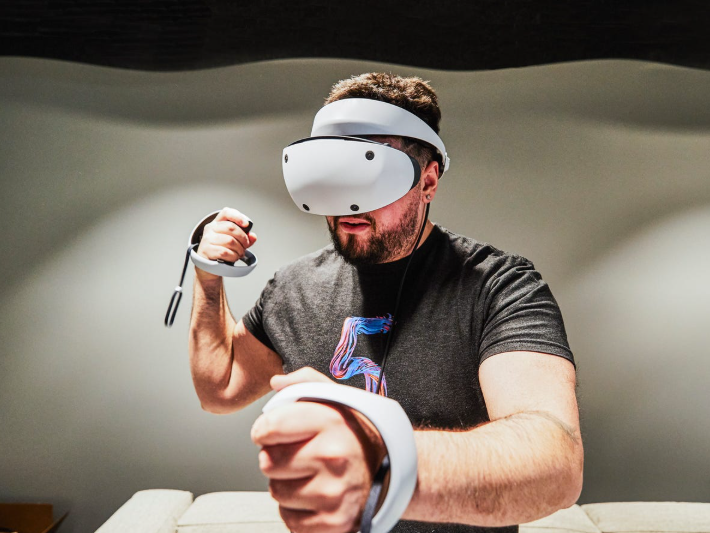
Gear-Up Station is the transition point where guests are fitted with headsets, trackers, and any physical props required for gameplay. The design of this zone should minimize the time between arrival and the moment the session begins. Every unnecessary minute here is revenue lost and guest impatience gained. Standardized fitting processes, clearly labeled equipment bays, and trained staff all contribute to a smooth transition.
Digital Combat Arena is the core experience. This is where your technology investment becomes visible. Arena dimensions, sensor placement, surface design, and lighting all need to be engineered around the specific gameplay formats you are offering. The arena should feel purpose-built, not improvised. Acoustic design, ventilation, and safety clearances are operational considerations that must be resolved at the planning stage, not after opening.
Leaderboard and Lounge Zone is where guests decompress after their session, review scores, share results, and make their next booking. This zone drives repeat visits when designed well. Digital leaderboards, social sharing stations, and comfortable seating extend dwell time and create organic word-of-mouth moments. It is also the right place to position merchandise, membership sign-up points, and tournament registration.
Clear zoning improves throughput, reduces congestion between session groups, and creates a narrative arc to the guest journey that elevates the overall experience.
Revenue Optimization Across Every Channel
A well-structured MR gaming venue operates multiple revenue lines simultaneously. Relying on a single income source, walk-in session bookings for example, leaves significant value on the table.
Tiered Match Pricing allows you to capture different willingness-to-pay segments within the same facility. Standard sessions, premium slots with advanced gameplay modes, and private arena bookings for groups can all be priced differently without requiring additional capital expenditure.
Seasonal Tournaments create an event calendar that drives advance bookings, media coverage, and community engagement. Entry fees, spectator tickets, and livestream sponsorship are all revenue opportunities attached to a single event format. Tournaments also justify higher average spend per guest, as competitive players invest more time and money per visit.
Youth Leagues open a structured, recurring revenue stream with strong community ties. Parents booking regular slots for children represents one of the most stable booking categories in the experience entertainment sector. League formats with weekly or fortnightly sessions create predictable forward revenue that improves cash flow visibility.
Sponsorship Activations monetize your audience and physical space beyond direct ticketing. Brand integrations on arena surfaces, sponsored tournament naming rights, in-game brand placements, and corporate partnership packages all represent income that flows independently of session volume on any given day.
Merchandise Sales convert guest enthusiasm into incremental revenue. Branded apparel, team gear, and exclusive tournament merchandise sell consistently in venues where guests feel a sense of identity and community. Keeping merchandise relevant to your competitive formats rather than generic ensures it retains perceived value.
Three Global Models That Prove the Concept
Before committing capital, studying operational precedents in comparable markets is essential. Three models in particular offer useful lessons.
Hado Arena (Japan) built its entire concept around AR dodgeball, a format that requires no prior gaming experience and translates immediately to a wide audience. Their success demonstrates that accessible, physical gameplay formats drive broader market penetration than complex or narrative-heavy game modes. Simplicity in the game mechanic does not mean a simple business. Hado has scaled internationally precisely because their format is easy to understand, easy to operate, and easy to market.
Zero Latency (Global) operates large-scale free-roam VR and MR arenas across multiple continents. Their model is notable for its operator licensing framework, which allows investors to deploy a proven concept with established technology and brand support rather than building from scratch. For investors who want lower concept risk, franchise or licensing models like Zero Latency offer a structured entry point.
Immotion VR Competitive Zones (UK) demonstrated that competitive MR experiences can be integrated into existing entertainment venues rather than requiring standalone facilities. Their approach of embedding competitive zones within larger leisure destinations reduces fixed overhead and allows operators to test demand before committing to a full venue investment.
Each of these models reflects a different risk and return profile. Understanding which one aligns with your capital position, market context, and operational capacity is part of the strategic work that precedes any investment decision.
Financial Structuring: What the Numbers Actually Reward
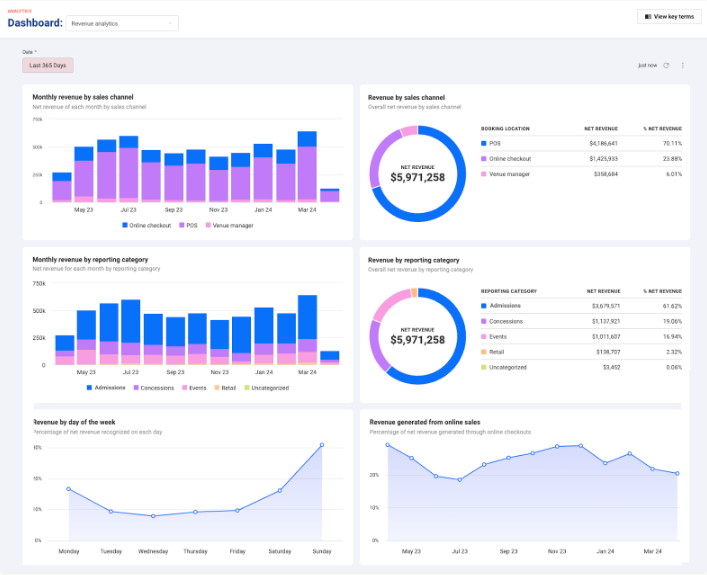
MR gaming venues have a financial structure that differs meaningfully from most other entertainment formats. Understanding this is essential for building accurate projections.
Session durations in competitive MR formats are typically short, ranging from 15 to 30 minutes per booking. This is a structural advantage, not a limitation. Short session durations mean higher daily throughput per arena square foot. A single arena that runs 20 sessions per day at a competitive price point generates significantly more revenue per square metre than a cinema screen, a bowling lane, or a fitness studio occupying the same footprint.
Competitive repeat play compounds this advantage. Guests who become invested in leaderboard rankings, tournament standings, or skill progression return more frequently than passive entertainment consumers. The more your programming encourages competitive development, the higher your repeat visit rate, and repeat visitors cost far less to acquire than new ones.
The financial model rewards operators who maximize session throughput, minimize idle time between groups, build repeat visit incentives into their membership and tournament structures, and layer passive revenue streams like sponsorship and merchandise on top of their session base.
Capital expenditure is front-loaded, with the technology fit-out representing the largest single cost. Maintenance, staff, and software licensing form the ongoing cost base. Venues that plan their technology procurement carefully, including upgrade cycles and vendor support agreements, avoid the operational disruption that comes from unplanned hardware failures or software obsolescence.
How Peach Prime Consultancy Supports Your Investment
Investing in a Mixed Reality gaming arena involves decisions that span real estate, technology, experience design, financial modelling, and market positioning. Each one of these areas has the potential to significantly affect your returns if handled without specialist input.
Peach Prime provides structured advisory support to investors and operators at every stage of the process. Our approach ensures that the immersive experience you build is not only operationally compelling but commercially viable and scalable from the outset.
From concept validation and vendor selection through to layout optimisation, financial modelling, and launch strategy, we work alongside you to build a venue that performs.
Speak with the Peach Prime team today to begin your structured feasibility assessment.
Peach Prime is a specialist consultancy helping investors and operators build and scale immersive entertainment venues across emerging markets. Visit peachprime.in to learn more.