
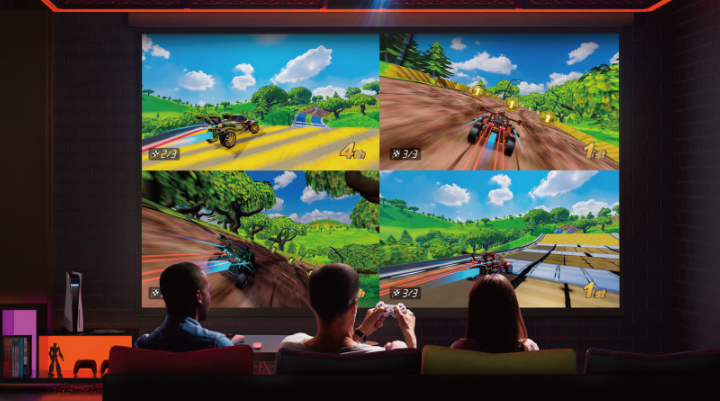
There is a category of entertainment venue that stops people mid-stride in a shopping mall. Not because of a sign or a promotion, but because of what they can see happening through the glass. A Holographic Gaming Arena is that venue.
Projection-based immersive gaming environments are among the most visually arresting commercial entertainment formats available today. They are also, when planned and operated correctly, among the strongest performing assets in the experience economy. This guide gives investors and developers a clear framework for evaluating the opportunity, planning the capital investment, selecting the right technology, and building a revenue model that generates returns over the long term.
Why Holographic Gaming Arenas Are Attracting Serious Investor Attention
The demand signal for this category is coming from two directions simultaneously, and both are worth understanding before you commit capital.
From the consumer side, searches for terms like holographic gaming arena business, projection-based interactive gaming, immersive digital arena startup cost, and next-gen gaming attraction ROI reflect an audience that is actively seeking these experiences. The core demographic spans families with children, competitive young adults, and corporate entertainment buyers. A format that serves all three segments from a single facility is commercially significant because it reduces the revenue concentration risk that affects single-demographic entertainment venues.
From the property side, mall operators and mixed-use developers are under sustained pressure to replace anchor retail with formats that generate footfall rather than simply occupy it. A holographic gaming arena that is visible from a mall concourse, that draws crowds of spectators even when sessions are running, and that creates social media content naturally through the visual spectacle of the experience, is exactly the kind of tenant that a forward-looking property developer wants in their asset. This alignment between investor interest and developer demand creates favourable lease negotiation conditions that are not available to most entertainment formats.
Capex Planning and Technology Infrastructure
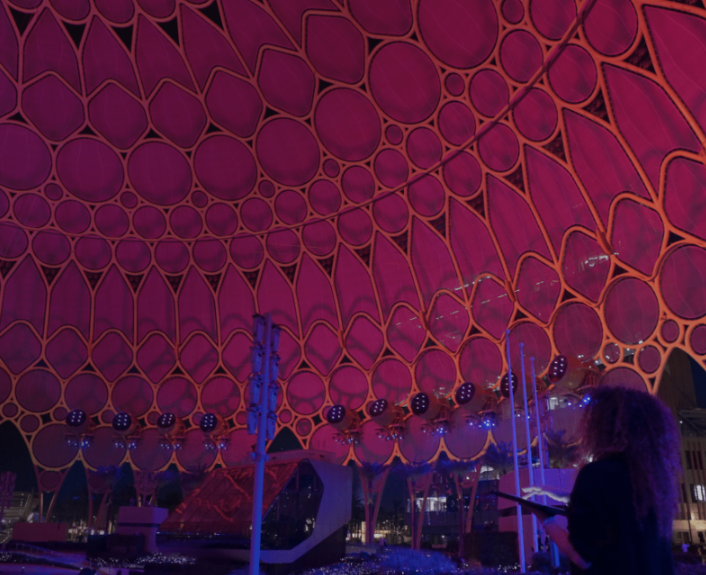
Holographic Gaming Arenas have a specific technology stack that differs meaningfully from VR or AR headset-based venues. Understanding each component and its role in the overall system is essential for accurate capital planning.
Projection Mapping Systems are the visual engine of the entire experience. High-lumen projectors calibrated to map digital content precisely onto physical arena surfaces, obstacles, and floor areas create the illusion of a fully digital environment without requiring guests to wear any headset or carry any equipment. The guest experience is immediate, accessible, and visually spectacular from the first moment. Projector selection, throw distance, overlap blending, and brightness specifications need to be engineered to your specific arena dimensions and ambient lighting conditions. A projection system that performs beautifully in a darkened showroom and washes out under the ambient light of a busy mall venue is a vendor demonstration problem, not a technology problem. Demand performance testing under your actual lighting conditions before committing.
Floor-Based Tracking Sensors enable the interactive layer that transforms projection mapping from a display technology into a gaming platform. Player position data captured by floor sensors feeds directly into the game engine, allowing the projected environment to respond in real time to where players are standing, moving, and directing their actions. Sensor grid density, response latency, and accuracy under simultaneous multi-player conditions are the specifications that determine gameplay quality. As with all tracking technology in competitive entertainment venues, evaluate vendors on real-world multi-player performance, not single-player demonstrations.
Real-Time Motion Detection extends the interactive capability beyond floor tracking to full-body gesture and movement recognition. Players who can jump, dodge, aim, and interact with projected elements using natural physical movement experience a fundamentally different quality of immersion than those operating through a handheld controller. The motion detection system needs to perform consistently across the full range of player sizes, movement speeds, and simultaneous player counts that your session formats require.
LED Wall Integration serves as a secondary display surface that complements floor and wall projection mapping. LED walls offer higher brightness output in areas where ambient light cannot be fully controlled, sharper resolution for scoring displays and tournament leaderboards, and dynamic visual framing that reinforces the arena’s spectator-ready aesthetic. They also create the visual backdrop that makes your venue photogenic from outside, which is one of the most valuable passive marketing assets an entertainment venue can have.
High-Performance Media Servers process the real-time rendering demands of a holographic gaming environment. The server architecture needs to handle simultaneous game engine processing, projection calibration management, player tracking data integration, scoring system operation, and content delivery without frame drops or latency spikes. Redundancy planning at the server level is non-negotiable. A media server failure mid-session is not a minor inconvenience. It is a complete experience failure that generates refunds, negative reviews, and guest relationship damage. Specify redundant server architecture from the beginning and include failover testing in your pre-launch commissioning process.
Spatial Audio Calibration completes the sensory environment that makes holographic gaming genuinely immersive rather than merely visually impressive. A precisely calibrated spatial audio system where sound effects, ambient environment audio, and competitive game sound respond directionally to player position and game events creates an experience that engages the auditory system as completely as the visual one. Guests who are fully immersed sonically as well as visually report significantly higher satisfaction and are more likely to share their experience with others.
Revenue Streams and Financial Modelling
A Holographic Gaming Arena that is designed as a complete commercial system rather than a technology installation generates revenue across multiple channels simultaneously.
Timed Interactive Sessions form the revenue foundation. Session pricing should reflect your operating cost per session, including technology depreciation, staffing, content licensing, and facility overhead, with a margin that reflects the premium and genuinely unique nature of the experience. Unlike formats where guests can approximate the experience at home, holographic gaming has no domestic equivalent. That irreplicability supports premium pricing, and premium pricing should be established from launch rather than built toward gradually.
Tournament Leagues create a structured competitive community that generates recurring revenue on a predictable calendar. Weekly or monthly leagues with entry fees, persistent standings, and end-of-season championship events convert occasional visitors into regulars. Tournament formats in holographic gaming venues also create exceptional spectator experiences because the gameplay is fully visible to audiences without any headset or equipment requirement. A room full of spectators watching a holographic tournament final generates the kind of atmosphere that drives social media content, press coverage, and membership conversions organically.
Corporate Experiential Rentals represent the highest per-session revenue opportunity in your booking calendar. Private arena hire for corporate events, product launches, brand activations, and team-building formats commands rates that are multiples of standard public session pricing. The holographic gaming format is particularly well-suited to corporate activations because the visual spectacle is extraordinary as a backdrop for branded content and because the experience is genuinely novel for virtually every corporate guest regardless of their gaming background.
Sponsorship and Brand Activations monetise your audience and your visual environment simultaneously. The projection surfaces of a holographic gaming arena are, by their nature, dynamic digital canvases. Brand integrations within the game environment, sponsored arena zones, co-branded tournament naming rights, and in-venue digital display placements are all sponsorship products that brands in technology, gaming, sports nutrition, and youth lifestyle categories will pay for access to. Developing even one or two sponsorship relationships in your first operating year creates a revenue stream that improves your financial model without adding capacity costs.
Merchandise Integration extends revenue per visit in a format that guests are naturally inclined to commemorate. The visual spectacle of holographic gaming creates strong memories and strong social sharing intent. Merchandise tied to the specific visual identity of your arena, your competitive game formats, and your tournament community carries higher perceived value than generic branded apparel and sells consistently in venues with an engaged guest community.
Three Global Models Worth Studying
BattleKart (Europe) built a successful competitive entertainment business on projection-based gameplay long before holographic gaming became a widely recognised investment category. Their go-kart racing format overlaid with projected digital environments demonstrated that projection mapping could deliver genuine competitive excitement at accessible price points and with operational reliability at scale. Their longevity in the market is itself evidence that projection-based formats sustain guest interest over time when the gameplay is genuinely engaging.
Holovis Interactive Arenas (UK) operates at the intersection of themed attraction design and interactive technology, creating arena experiences that blend cinematic production quality with real-time player interactivity. Their work demonstrates that holographic gaming environments need not choose between visual spectacle and gameplay depth. The highest-performing venues in this category deliver both, and Holovis has built a reputation for achieving that balance consistently across different venue types and scales.
Valo Motion (Finland) has scaled a compact, modular interactive projection gaming format across multiple international markets, demonstrating that holographic gaming does not require a large arena footprint to deliver a commercially compelling experience. Their systems, which can be deployed in relatively small spaces within larger entertainment destinations, offer investors a lower-capital entry point that allows demand validation before committing to a full-scale arena investment. For investors who want to test market appetite in a specific location before building a larger facility, a Valo Motion installation within an existing entertainment venue offers a structured and proven pathway.
Risk Mitigation and Scalability Planning
Protecting the long-term asset value of a holographic gaming arena requires active management of three specific risk categories.
Content Refresh Strategy is the most operationally significant risk factor for long-term venue performance. Guests who visit a holographic gaming arena for the first time are experiencing something genuinely extraordinary. Guests who return three months later and find exactly the same content in exactly the same configuration have a diminished experience relative to their memory of the first visit. A planned content refresh calendar, with new game scenarios, seasonal theme updates, and competitive format rotations, ensures that returning guests encounter meaningful novelty on every visit. The content refresh investment is not a discretionary marketing expense. It is the operational mechanism that sustains your repeat visitation rate, which is the single most important driver of long-term revenue stability.
Hardware Redundancy protects your daily revenue yield from the failure events that affect every technology-dependent venue over time. Projectors, media servers, tracking sensors, and audio systems all have finite operational lifespans and will require maintenance, repair, or replacement at intervals that your financial model should anticipate. Critical system components should have backup units available on-site. Maintenance contracts with your technology vendors should specify response times that protect your operating schedule. A venue that loses a projector at 6pm on a Friday and cannot restore service until Monday afternoon loses three days of peak-period revenue. A venue with a hot spare projector and a vendor maintenance agreement restores service within hours.
Modular Digital Architecture is the design principle that determines how adaptable your venue is to content evolution, technology upgrades, and format changes over its operating lifetime. A holographic gaming arena built on a flexible media server architecture, with projection systems that accept content from multiple game engines and tracking infrastructure that can be recalibrated for new game formats, can evolve continuously without structural rebuilding. A venue locked into a proprietary technology ecosystem that cannot be updated or expanded without full system replacement is a depreciating asset. Specify openness and modularity as procurement requirements, not nice-to-haves, before you sign any vendor agreement.
How Peach Prime Consultancy Supports Investors
A Holographic Gaming Arena is a complex, capital-intensive investment that rewards rigorous planning and punishes assumptions. The technology decisions, spatial design choices, vendor relationships, and financial structures you establish before opening day set the parameters for everything that follows.
Peach Prime provides end-to-end advisory support for investors entering the holographic and projection-based immersive entertainment space. Our work covers immersive concept design, vendor coordination, technology evaluation, financial feasibility modelling, and operational planning, structured to ensure that your investment is built on analysis rather than optimism.
We work with investors from initial concept evaluation through to venue launch and operational optimisation, ensuring that the asset you build performs commercially and is positioned to scale.
Contact Peach Prime today to begin your Holographic Gaming Arena feasibility assessment.
Peach Prime is a specialist consultancy helping investors and operators build and scale immersive entertainment venues across emerging markets. Visit peachprime.in to learn more.