
The most commercially durable entertainment venues are not the ones with the most impressive technology. They are the ones where the technology, the spatial design, the revenue model, and the operational structure work together as a single coherent system.
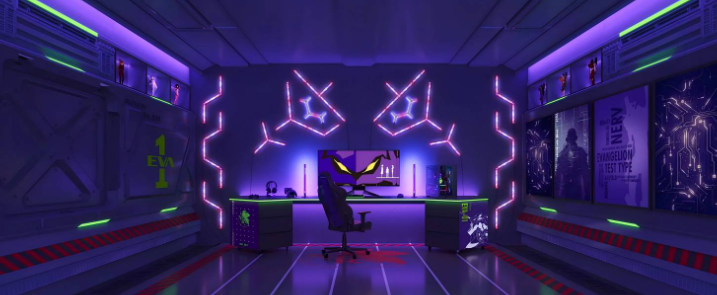
Holographic and projection-based gaming arenas have a rare quality: the technology itself is the spectacle. The guest does not need to be told the experience is impressive. They can see it before they book, feel it within seconds of entering, and share it instantly with their social networks after leaving. That quality creates a natural marketing engine that most entertainment formats spend heavily to manufacture.
This guide gives investors a practical framework for translating that spectacle into a financially disciplined, scalable business.
What Projection-Based Gaming Actually Delivers for Investors
Before examining the financial and operational framework, it is worth being precise about what this format offers that others do not.
Holographic and projection-based gaming arenas blend physical movement with real-time digital interaction in a shared, visible environment. Every player is in the same projected world simultaneously, without headsets, without handheld controllers, and without any barrier between the guest and the experience. This accessibility is a commercial advantage that compounds across every segment of your target market.
Families with younger children, who may be excluded from VR headset formats due to age or comfort concerns, are fully accommodated. First-time guests with no gaming background engage immediately because the interface is physical movement rather than button combinations. Competitive gaming audiences find the shared visible environment more socially engaging than isolated headset experiences. Corporate groups appreciate the fact that everyone participates on equal footing regardless of gaming experience.
A format that genuinely serves all of these segments from a single facility has a broader revenue base and lower demographic concentration risk than most comparable entertainment venue types.
Experience Architecture and Zone Design
The guest journey in a holographic gaming arena should be engineered with the same care as the technology that delivers the experience. Poor spatial design wastes the commercial potential of even the best projection systems.
Welcome Briefing Zone performs a dual function that is often underappreciated in the planning stage. Its primary function is operational: orienting guests, setting safety expectations, and preparing them for the gameplay mechanics they are about to encounter. Its secondary function is commercial: building anticipation, establishing the premium nature of the experience before it begins, and priming guests to notice and appreciate the details that justify your pricing. A briefing delivered in a well-designed space with dynamic visuals previewing the game environment, clear and confident staff presentation, and an atmosphere that signals genuine quality creates a guest who enters the arena ready to be impressed rather than merely curious.
Digital Gameplay Arena is the physical and commercial heart of the investment. Arena dimensions need to be determined by the specifications of your projection and tracking systems, not by the space left over after other zones have been allocated. Projection throw distances, sensor grid requirements, minimum safe play area dimensions, and the specific gameplay formats you intend to offer all have spatial implications that must be resolved with your technology vendor before floor plans are finalised.
Multiplayer formats deserve particular attention in the arena design phase. A holographic gaming arena that can accommodate eight to sixteen simultaneous players in competitive formats delivers exponentially more revenue per square metre than a single-player or two-player configuration. Designing the arena around your maximum viable multiplayer capacity from the beginning prevents the costly reconfiguration work that comes from discovering this limitation after the fit-out is complete.
Modular design principles should be embedded into the arena from day one. Movable obstacle systems, reconfigurable boundary configurations, and interchangeable surface treatment panels allow the arena to be updated for seasonal themes, new game formats, and competitive event configurations without structural rebuilding. The arena that can host a standard weekend session format on Saturday and a themed championship tournament on Sunday, without significant changeover effort, generates more revenue from the same square footage than one locked into a single configuration.
Leaderboard Stage is the experience extension that separates venues with strong repeat visitation from those with a one-visit novelty problem. A dedicated, prominently designed leaderboard display area where post-session scores, rankings, and highlights are visible creates the competitive social moment that motivates return bookings. Guests who see their name on a public leaderboard, who photograph that leaderboard and share it, and who leave with a concrete ranking to improve on next visit, have a reason to return that did not exist before they experienced that moment. Designing this zone as a genuine destination within the venue, with comfortable seating, social atmosphere, and staff positioned to facilitate membership sign-ups and next booking conversions, turns it into a retention engine.
Social Lounge Integration extends average dwell time and per-visit revenue without requiring any additional session capacity. Comfortable seating, food and beverage access, branded merchandise display, and an atmosphere that encourages groups to remain together after their session all contribute to incremental revenue per visit. The social lounge is also the natural environment for corporate clients to conduct their post-event debrief, for tournament participants to review performance between rounds, and for families to extend a visit that might otherwise end immediately after the session concludes. Every additional ten minutes of average dwell time translates into measurable incremental revenue across your annual operating calendar.
Revenue Optimisation Framework
Building a multi-stream revenue model before launch is the planning decision that most directly separates profitable holographic gaming venues from ones that rely entirely on volume to reach their financial targets.
Tiered Match Pricing captures different willingness-to-pay segments within the same facility and the same operating hour. Standard public sessions, premium peak-hour slots with advanced game modes, private arena bookings for groups, and exclusive championship event formats can all be priced at different levels without requiring different technology or additional capital expenditure. The pricing architecture you establish at launch anchors guest expectations. Starting at appropriate premium price points is significantly easier than attempting to move pricing upward after a lower-price positioning has been established in the market.
Seasonal Gaming Themes solve two business problems simultaneously. They give your marketing team a recurring content calendar with genuine news to communicate to your existing guest database, and they give returning guests a reason to visit that feels meaningfully different from their previous experience. A holographic gaming environment is, by its nature, a dynamic digital canvas. Updating the projected visual environment, introducing new seasonal game scenarios, and creating themed competitive formats around calendar events requires content investment but minimal additional hardware expenditure. The commercial return on a well-executed seasonal theme, measured in incremental bookings from returning guests, typically exceeds the content production cost by a significant margin.
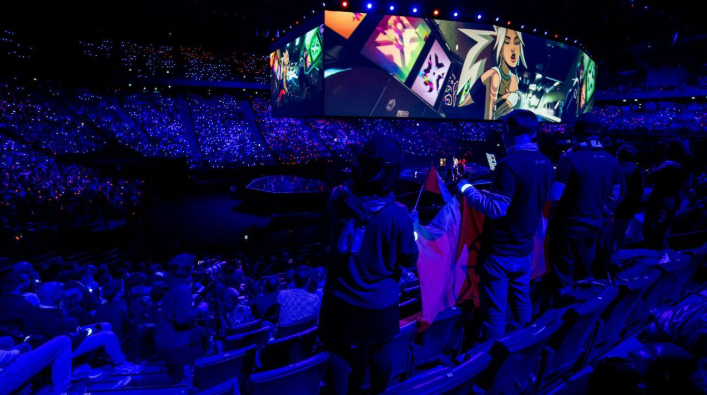
Competitive Championships generate the highest revenue intensity of any event format in the holographic gaming calendar. Multi-round tournament structures with entry fees, spectator ticketing, and sponsor integrations create event days where every revenue stream operates at maximum yield simultaneously. Session revenue, food and beverage, merchandise, sponsor activations, and spectator tickets all contribute on championship days. The operational investment in running a championship event is substantially higher than a standard operating day, but the revenue generated justifies it and the community-building effect sustains bookings in the weeks that follow.
Youth Training Leagues open a structured, recurring revenue channel that fills off-peak capacity with booking commitment rather than walk-in uncertainty. Weekly or fortnightly league sessions for youth age groups create appointment-based visits on predictable schedules, generate group invoicing that simplifies revenue forecasting, and build the community relationships that convert families from occasional visitors into loyal venue advocates. Parents who bring children regularly become familiar with the venue across all its formats and naturally convert into adult booking customers, corporate referrers, and membership holders over time.
Corporate Bookings represent the highest per-head revenue opportunity in the venue’s booking calendar. Private arena hire for corporate entertainment, product launches, client hospitality, and team-building events commands rates that are multiples of standard public session pricing. The holographic gaming format is particularly compelling for corporate clients because it requires no prior gaming experience, accommodates mixed groups easily, and creates shared memories that standard corporate entertainment formats simply do not. A structured corporate package with clear inclusions, flexible group sizing, and optional catering partnerships simplifies the buying decision for corporate event planners and drives conversion.
Three Global Case Studies
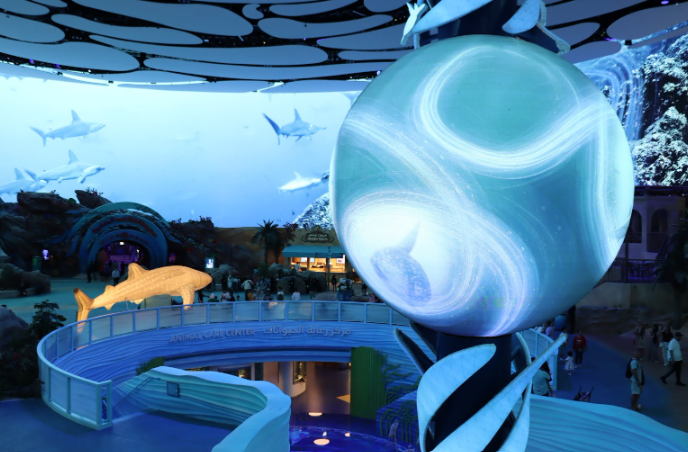
ValoArena (Finland) has built one of the most studied compact interactive projection gaming formats in the world. Their system, deployable within relatively small footprints inside larger entertainment destinations, has been adopted across multiple international markets. Their commercial model demonstrates that projection-based gaming does not require a large standalone venue to generate strong returns. For investors evaluating embedded formats within existing retail or leisure destinations, ValoArena’s track record offers a relevant and well-documented precedent. Their franchise and licensing model also provides a structured entry pathway for operators who want a proven system rather than a custom build.
Hado Holographic Arenas (Japan) combined AR projection technology with a physically active team sport format to create an experience that has been successfully introduced across diverse cultural and demographic markets. Their success is partly a function of format accessibility: AR dodgeball requires no gaming knowledge, rewards physical athleticism, and creates immediate competitive intensity that spectators can follow without any explanation. For investors targeting broad demographic appeal, Hado’s model demonstrates that the most commercially scalable holographic gaming formats are often the ones with the simplest gameplay mechanics and the most physically expressive player behaviour.
Holovis Digital Interactive Spaces (UK) approaches holographic gaming from a themed attraction design perspective, creating environments where the projection technology and the spatial design are integrated from the earliest planning stage rather than installed into a finished space. Their work across theme parks, retail destinations, and standalone venues demonstrates that the visual and experiential quality ceiling for projection-based gaming is substantially higher than most operator-led installations achieve. For investors targeting premium positioning and destination attraction status, Holovis’s design approach offers a benchmark for what best-in-class execution looks like.
Financial Structuring for Maximum Revenue per Square Metre
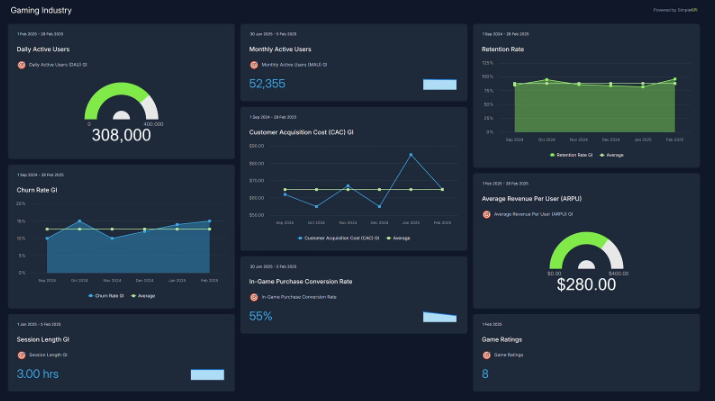
The unit economics of holographic gaming arenas reward two specific design decisions above all others: short session cycles and multiplayer format optimisation.
Short session cycles increase the number of revenue-generating sessions you can operate per hour. A twenty-minute session format that includes a fifteen-minute play period and a five-minute transition generates three sessions per hour per arena. A thirty-minute format generates two. Over a ten-hour operating day, that difference compounds to ten additional sessions daily, which at a competitive per-session rate represents substantial incremental annual revenue from the same physical asset. Session duration should be set at the minimum length that delivers a satisfying competitive experience, not at a round number chosen for administrative convenience.
Multiplayer format optimisation addresses the other side of the throughput equation. A session accommodating twelve players simultaneously generates twelve times the per-player revenue of a solo session in the same arena for the same duration. Designing your arena, your game formats, and your booking system around maximising simultaneous player count per session is the single most direct lever available to improve revenue per square metre. Every design decision that increases your maximum viable simultaneous player count, from arena dimensions to sensor grid density to server processing capacity, is a revenue decision as well as a technology one.
Together, short session cycles and multiplayer optimisation create the financial conditions where a holographic gaming arena generates revenue per square metre that outperforms most conventional entertainment formats operating in comparable urban locations.
Work with Peach Prime Consultancy
Building a holographic gaming arena that performs commercially requires integrating technology decisions, spatial design, revenue modelling, and operational planning into a coherent investment strategy. Peach Prime provides structured advisory support that ensures your immersive concept is matched by the financial discipline and scalability planning required to sustain it.
Our work covers concept validation, technology vendor evaluation, arena layout optimisation, financial feasibility modelling, and operational structuring, designed for investors who want to build venues that perform from opening day and continue to grow beyond it.
Contact Peach Prime today to begin your holographic gaming arena investment assessment.
Peach Prime is a specialist consultancy helping investors and operators build and scale immersive entertainment venues across emerging markets. Visit peachprime.in to learn more.