Most horror attractions are built around one calendar event. Halloween generates the revenue, covers the annual costs, and the venue either closes for the rest of the year or operates at a fraction of its capacity waiting for the next October.
This is not a business model. It is a seasonal pop-up with fixed overhead.
The investors who are building genuinely scalable horror experience businesses are doing something different. They are designing attractions where the experience architecture, the revenue structure, and the operational model work together to generate strong returns across every month of the year, with Halloween as a peak multiplier rather than the sole income event.
This blueprint explains how to build that business.
The Year-Round Horror Business Case
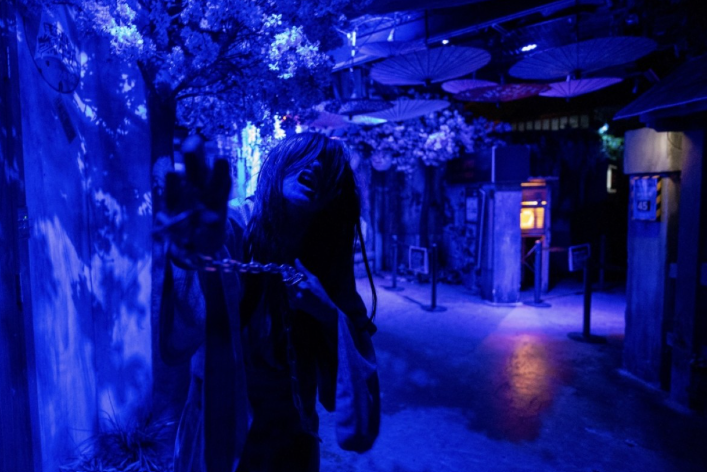
The argument for year-round horror operations rests on a simple observation: the human appetite for fear-based entertainment is not seasonal. Halloween concentrates demand because the cultural moment gives people permission and social context to seek out scare experiences. But the underlying appetite exists throughout the year, and venues that provide a compelling reason to visit outside October consistently find audiences willing to come.
What changes between seasons is not the demand for fear. It is the marketing narrative that contextualises the experience. A Halloween horror attraction is self-explanatory. A year-round horror experience needs to be positioned more precisely: as a premium social entertainment event, a corporate team experience, a date night destination, a competitive group activity, or a themed immersive event. Each of these framings reaches a different segment of the year-round audience with a reason to book that feels personally relevant.
Operators who have solved the year-round positioning problem consistently outperform seasonal-only competitors on revenue per square metre, asset utilisation, and long-term valuation, because their business generates predictable cash flow rather than annual revenue spikes separated by months of low occupancy.
Experience Flow Engineering
The guest journey in a horror experience is itself a narrative product. Every stage of the flow, from the moment guests join the queue to the moment they exit through the retail zone, should be engineered to serve both the experiential and the commercial objectives of the venue.
Queue Storytelling is one of the most underutilised assets in horror attraction design. Guests waiting to enter spend ten to thirty minutes in a physical environment that the operator controls completely. Most operators treat this time as logistical dead space. The most sophisticated operators treat it as the opening act of the horror narrative.
Environmental storytelling elements in the queue, distressed signage, ambient audio that hints at the world guests are about to enter, subtle actor interactions, and visual design that builds dread before a single scare has occurred, prime the psychological state that makes the attraction itself more effective. Guests who enter the experience already in a heightened state of anticipation and mild anxiety are more susceptible to the scares within it. Queue storytelling is simultaneously a guest experience investment and a performance amplifier for everything that follows.
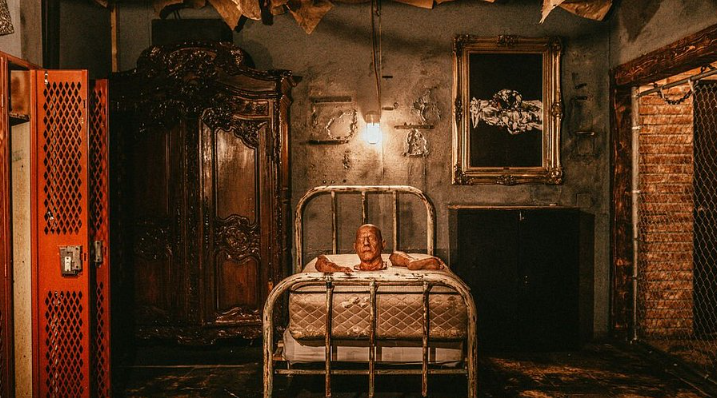
Immersive Scene Progression is the structural core of the horror experience. The sequence of themed environments through which guests travel should follow a deliberate emotional arc, building tension progressively, releasing it at calculated intervals, and reloading dread for the next escalation. Experienced horror attraction designers understand that unrelenting intensity numbs guests rather than frightening them. The contrast between tension and relief, between near-dark silence and sudden explosive shock, is what creates the emotional memory that guests describe to friends afterwards.
Scene progression should also be engineered with throughput in mind. Bottleneck zones, where guests slow or stop due to a scare moment or a narrow passage, create congestion that degrades the experience for groups behind them. Mapping your scene progression against your maximum viable group throughput before construction ensures that the experience can operate at commercial session volumes without degrading in quality.
Climax Chamber is the experiential peak that the entire preceding journey has been building toward. The final scene of a well-designed horror walkthrough delivers the highest-intensity scare moment in the attraction, resolves the narrative tension that has been accumulating, and sends guests out in a state of adrenaline and relief that is the emotional signature of a premium horror experience. The climax chamber requires the highest investment in design, technology, and performance choreography of any single zone in the attraction. It is also the zone most likely to be photographed, filmed, and shared on social media by guests capturing their reaction at the moment of peak intensity. Design it to be extraordinary.
Exit Retail and Photo Zone converts the post-experience adrenaline state into commercial opportunity. Guests exiting a high-quality horror experience are in a uniquely purchase-ready psychological state. They are energised, emotionally open, bonded with their group, and looking for ways to commemorate and share the experience. A well-designed exit zone with professional scare photo capture, merchandise tied specifically to the attraction’s characters and narrative, and atmospheric design that extends the experiential world into the retail environment captures this commercial window effectively.
Revenue Optimisation Beyond Standard Ticketing
The revenue model of a scalable horror experience business extends well beyond per-head entry fees. Each channel below adds meaningful incremental revenue without proportional increases in operating cost.
VIP Night Events unlock a premium tier that the standard operating format cannot accommodate. Exclusive late-night sessions with reduced guest numbers, enhanced actor performance, extended scene interactions, and premium hospitality elements create an experience that is categorically different from the standard walkthrough and justifies pricing that is two to three times the standard ticket rate. VIP events also serve a self-selecting audience of serious horror enthusiasts who become advocates for the venue and generate organic word-of-mouth in the communities most likely to drive repeat visitation.
Themed Seasonal Overlays solve the year-round freshness problem without requiring full content rebuilds. Valentine’s Day horror romance events, summer survival themes, Christmas horror formats, and mid-year special events each give returning guests a contextually novel reason to visit while reusing the majority of the physical infrastructure. The overlay investment, primarily in updated visual dressing, new actor character briefs, and refreshed audio and projection content, is a fraction of the cost of a full scene rebuild while delivering a genuine experience update that markets authentically as something new.
Corporate Horror Team-Building Events are the highest per-head revenue opportunity in the booking calendar and one of the least contested market segments for well-positioned horror attractions. Companies seeking genuinely memorable team experiences that move beyond the standard offsite dinner or escape room format find horror attractions compelling because the shared fear experience creates authentic social bonds that structured corporate team activities rarely achieve. Private access bookings outside standard operating hours, with customisable scare intensity levels, dedicated actor performance, and optional post-experience hospitality packages, command rates that justify the operational investment of running an exclusive session.
Franchise IP Partnerships elevate the commercial profile of your attraction by associating it with established horror entertainment properties that carry their own audience and marketing equity. Licensed horror IP, whether from film franchises, gaming properties, or established horror entertainment brands, brings guests who are motivated by the specific IP as well as the scare experience. Licensing costs need to be modelled carefully against the incremental booking demand they generate and the premium pricing they support, but for venues in competitive markets, IP-driven events are often the differentiator that drives advance bookings over comparable attractions without brand association.
Operational and Safety Planning
A horror experience that is unsafe is not a horror experience. It is a liability. The operational and safety infrastructure of your venue is not a constraint on creative ambition. It is the foundation that makes creative ambition commercially viable.
Actor Training is the human performance investment that most directly determines experience quality and safety compliance simultaneously. Trained scare actors operating within defined choreography frameworks deliver consistent, controlled performance that frightens guests without endangering them. Training programmes should cover character development and performance technique, physical safety protocols and minimum approach distances, guest distress recognition and safe word response procedures, performance stamina management across multi-session days, and escalation protocols for guests who become genuinely distressed rather than theatrically so.
An undertrained actor improvising dangerously in a dark corridor is simultaneously a guest safety risk, a legal liability, and a reputational threat. A professionally trained actor operating within a structured performance framework is your highest-value experiential asset and your most important safety system.
Emergency Exits in a horror attraction require design discipline that balances concealment with accessibility. Exits must be immediately findable by guests in genuine distress and by staff responding to an emergency, while being sufficiently integrated into the thematic environment that they do not break immersion for guests who are experiencing the attraction normally. Regulatory requirements for emergency exit signage, illumination, and clear corridor access must be met unconditionally. Design solutions that comply fully with regulations while maintaining thematic integrity exist and should be specified by an experienced attraction designer rather than resolved as an afterthought.
Crowd Control Systems determine how consistently your experience quality can be maintained across variable session sizes and guest group behaviours. Timed entry spacing, corridor management systems that prevent groups from converging, actor communication systems that provide real-time floor visibility, and staff positioning protocols that allow rapid response to congestion or guest distress events all contribute to an operation that performs reliably across the full range of daily operating conditions.
Fire Compliance and Acoustic Insulation are non-negotiable regulatory obligations that must be resolved at the design stage rather than retrofitted after construction. Horror attraction environments, with their extensive use of scenic fabrication materials, controlled lighting, fog effects, and enclosed spaces, face specific fire compliance requirements that affect material selection, ventilation design, and suppression system specification throughout the venue. Acoustic insulation protects neighbouring tenants and the broader venue environment from the sound design intensity that a premium horror experience requires, and must be planned into the structural design rather than applied superficially to finished walls.
Three Global Case Studies
McKamey Manor (USA) operates at the absolute extreme end of the horror experience spectrum, with an endurance-format product that requires participant consent documentation and has generated global media coverage. As a direct operating model it is not suitable for mainstream investor replication, but as a case study in audience segmentation it is instructive. McKamey demonstrates that a niche of horror enthusiasts exists who will seek out and pay for experiences of extreme intensity that standard attractions do not provide. Understanding where the extreme format boundary sits, and what the mainstream premium horror market looks like in comparison, helps investors calibrate their own product positioning with clarity.
Horror Escape (Asia) has developed horror escape room and walkthrough hybrid formats that perform strongly across Asian markets where the horror entertainment category has grown significantly in recent years. Their model demonstrates that horror experience formats adapt successfully to diverse cultural contexts when the thematic content is developed with local cultural references and sensibilities in mind rather than imported wholesale from Western horror traditions. For investors entering emerging markets, localised horror content development is a commercial advantage, not merely a creative choice.
Fear Factory (USA) operates as a multi-level, multi-zone horror attraction in a large industrial venue, demonstrating the commercial potential of scale in the horror format. Their model of offering multiple distinct horror experiences within a single venue visit, at a combined ticket price that reflects the total experience value, maximises revenue per guest while creating a product that justifies destination-level travel. Their operational longevity in a competitive market is evidence that consistent experience quality and annual content refresh sustain guest loyalty over extended periods.
The Investor Takeaway: Engineering Revenue per Square Foot
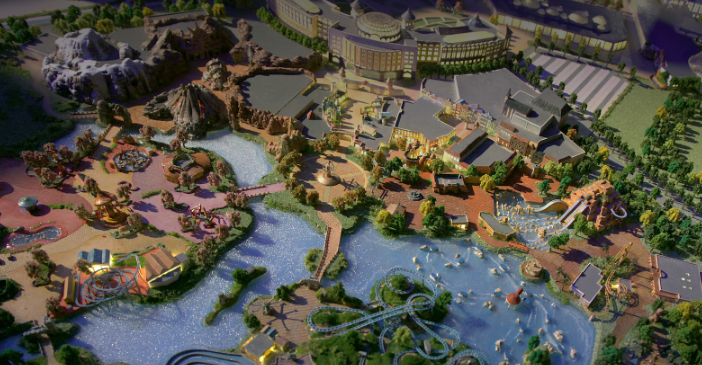
The financial performance of a horror experience venue is, at its core, a function of two variables: the intensity of the experience relative to its duration and the efficiency with which your physical space converts guest flow into revenue.
Short-duration, high-impact experiences deliver more revenue per square foot than long, slow walkthroughs because they allow more groups to move through the same physical space per operating hour. A twenty-minute walkthrough that delivers an extraordinary concentrated experience at a premium price point outperforms a forty-minute attraction priced comparably across every financial metric, from daily revenue to annual asset yield.
The engineering challenge is delivering an experience that feels complete and satisfying within a short duration. This requires more design sophistication, not less. Every scene transition, every scare moment, and every narrative beat must be calibrated to deliver maximum emotional impact within a compressed timeline. Venues that achieve this consistently build the word-of-mouth reputation that sustains occupancy, justifies premium pricing, and generates the repeat visitation revenue that defines long-term financial performance.
Partner with Peach Prime Consultancy
Building a scalable horror experience business that performs year-round requires integrating creative vision with commercial discipline across every decision from concept development to operational launch. Peach Prime provides advisory support that ensures your immersive concept is matched by the financial rigour and operational planning required to sustain it.
Our services cover concept development, experience flow design, vendor coordination, safety compliance planning, financial modelling, and operational structuring, designed for investors who want to build horror attractions that generate strong returns across every season.
Contact Peach Prime today to begin your horror experience business feasibility assessment.
Peach Prime is a specialist consultancy helping investors and operators build and scale immersive entertainment venues across emerging markets. Visit peachprime.in to learn more.