
Experiential entertainment has become one of the most attractive growth categories in modern real estate and leisure investment. From family entertainment centres and immersive museums to digital sports clubs and competitive social venues, these projects can deliver strong returns when designed and operated correctly.
However, many investors make one critical mistake.
They evaluate experiential assets like traditional retail or office space.
That approach often fails.
Unlike passive leased assets, location based entertainment projects depend on throughput, programming quality, guest satisfaction, repeat visitation, and operational discipline. In simple terms, returns are created not only by the building, but by what happens inside the building every day.
For investors and developers, understanding how to structure ROI before capital deployment is essential.
Why ROI in Experiential Projects Works Differently
Traditional real estate models often focus on lease rates, occupancy, and tenant covenant strength.
Experiential projects require additional performance drivers such as:
Guest volume.
Session pricing.
Utilisation rates.
Food and beverage spend.
Repeat visitation.
Membership retention.
Event bookings.
Maintenance uptime.
Content refresh cycles.
Two venues with similar size and capex can produce very different returns depending on operations.
That is why experiential investing should be viewed as a hybrid of real estate, hospitality, and entertainment economics.
Revenue Per Available Hour (RevPAH): A Core Metric Investors Should Use
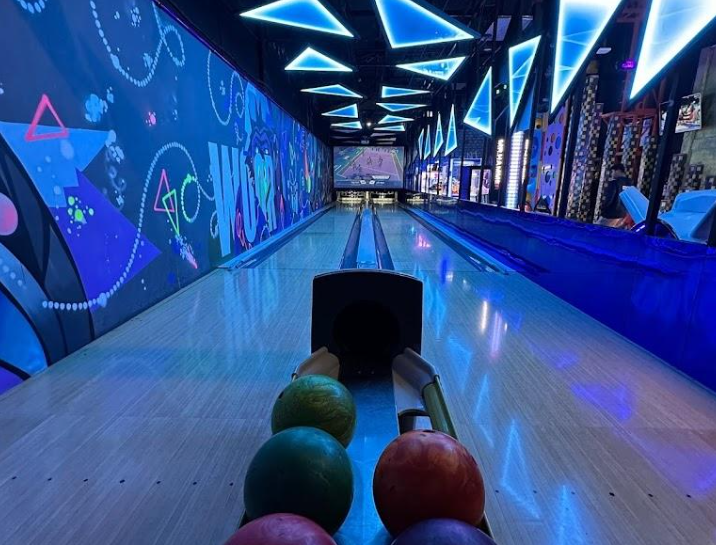
Many attractions operate in timed sessions. Golf simulators, bowling lanes, karting tracks, escape rooms, mini golf, and sports arenas all depend on selling time slots efficiently.
A practical metric is Revenue Per Available Hour (RevPAH).
This measures how much revenue each operational hour can generate from a revenue producing unit such as:
A simulator bay.
A bowling lane.
A karting track session.
An escape room.
A private event room.
A mini golf tee time block.
Higher RevPAH usually indicates stronger pricing, better occupancy, or better secondary spend.
Example
If one simulator bay operates 12 hours daily and generates ₹24,000 in total daily revenue, the RevPAH is ₹2,000.
This simple metric helps investors identify:
Peak hour pricing opportunities.
Underused assets.
Throughput bottlenecks.
Best performing zones.
Expansion priorities.
Layered Revenue Strategy: Ticket Sales Alone Are Not Enough
The strongest experiential venues rarely rely on admissions only.
High performing assets build multiple revenue layers that increase spend per guest and smooth seasonal fluctuations.
Core Revenue Layers
Admission or Session Fees
The primary product such as tickets, hourly bookings, or timed experiences.
Food and Beverage
Often one of the highest margin categories when dwell time is strong.
Merchandise
Branded products, souvenirs, apparel, photos, or collectibles.
Sponsorship Partnerships
Brands may sponsor leagues, spaces, leaderboards, exhibitions, or events.
Corporate Bookings
Team building events, launches, networking nights, and private buyouts.
Membership Subscriptions
Monthly access, priority booking, training benefits, or exclusive pricing.
Seasonal Overlays
Holiday themes, premium nights, limited events, and festival programming.
Premium Upgrades
VIP rooms, fast track access, coaching analytics, private hosts, celebration packages.
The more intelligently these layers are combined, the stronger the ROI profile can become.
Capex vs Lifecycle Cost Planning
Many projects focus too heavily on opening day costs and ignore what happens after launch.
This is dangerous.
A venue may open beautifully but struggle later due to maintenance, outdated content, or expensive refresh needs.
Investors Should Separate Two Cost Buckets
Initial Capex
Fit out, theming, equipment, construction, systems, branding, pre opening expenses.
Lifecycle Costs
Technology replacement.
Content refreshes.
Battery replacements.
Repairs and maintenance.
Software licensing.
Safety upgrades.
Interior wear and tear.
Marketing relaunch campaigns.
Strong ROI planning includes both categories from the beginning.
Global Case Indicators of Strong ROI Models
Dave & Buster’s
Shows the power of combining gaming with hospitality and social occasions.
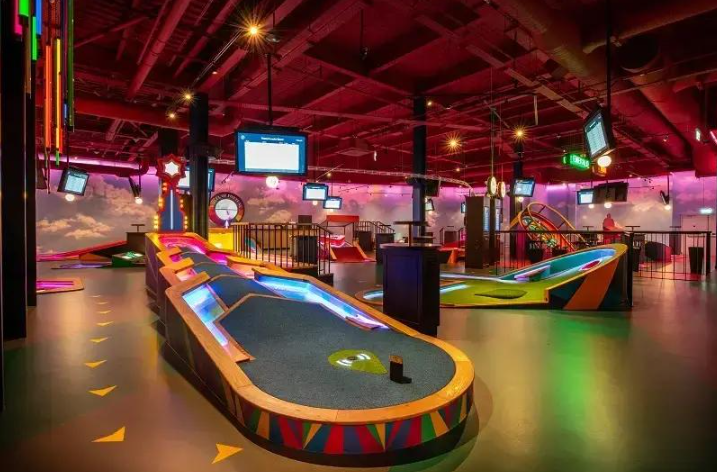
Puttshack
Demonstrates high revenue per square foot through technology enabled mini golf with premium food and beverage integration.
Five Iron Golf
Highlights how memberships and repeat usage can strengthen digital sports economics.
Risk Mitigation Framework for Investors
Good returns are not only about upside. They are also about controlling downside risk.
Structured Feasibility Study
Validates market demand, catchment size, pricing potential, and competition.
Phased Development Model
Launch core zones first, expand later based on performance.
Vendor Due Diligence
Choose proven suppliers with support capability and spare parts reliability.
Safety Compliance Audits
Essential for guest trust, insurance confidence, and brand reputation.
Technology Redundancy Planning
Backup systems reduce downtime and revenue loss.
Working Capital Discipline
Ensure adequate reserves during ramp up periods.
Management Quality
Even strong concepts fail under weak operators.
Why Throughput Matters More Than Many Realise
An attraction may be popular yet still underperform financially if queues are too long or sessions turn slowly.
Throughput planning includes:
Check in efficiency.
Session turnover speed.
Waiver processing.
Queue entertainment.
Staff deployment.
Cleaning cycles.
Equipment reset times.
Peak hour staffing.
Small operational delays can significantly reduce annual revenue.
Why Experienced Planning Reduces Risk
Experienced consultants help align three areas that are often handled separately:
Concept design.
Financial modeling.
Operational reality.
When these are disconnected, investors face:
Overbuilt projects.
Wrong attraction mix.
Poor guest flow.
Low secondary spend.
Unexpected maintenance costs.
Weak return timelines.
Integrated planning improves certainty before money is committed.
What Smart Investors Ask Before Funding
What is the realistic utilisation rate?
How much revenue comes beyond tickets?
How often will refresh investment be needed?
Can the concept scale to multiple locations?
What happens during off peak seasons?
How sensitive is ROI to labour costs?
Is there exit value to strategic buyers?
What management expertise is required?
The best deals answer these questions early.
Work with Peach Prime Consultancy
Peach Prime Consultancy supports investors and developers through feasibility studies, ROI modeling, attraction mix planning, spatial master planning, technical coordination, and commercial strategy.
If you are structuring returns for an experiential project, our team helps convert vision into a disciplined investment case.
FAQs
What is ROI in experiential entertainment?
It is the return generated from invested capital through operating profit, asset value growth, and long term cash flow.
Why is ROI harder to model than retail property?
Because performance depends heavily on operations, utilisation, guest demand, and revenue layering.
What is RevPAH?
Revenue Per Available Hour measures how much revenue a revenue producing unit earns each operating hour.
Why are memberships valuable?
They improve recurring income and increase customer retention.
How important is food and beverage?
Often extremely important because it can significantly lift total spend per guest.
Should projects be phased?
Often yes. Phasing can reduce upfront risk and allow expansion after demand is proven.
What is the biggest hidden cost?
Lifecycle refresh and maintenance expenses are commonly underestimated.
Do experiential assets have resale value?
Yes, especially when brand strength, profitability, and scalability are strong.
What is the biggest investor mistake?
Treating an experiential venue like passive real estate.
Why hire specialist planners?
Because concept design, financial performance, and operations must be aligned from day one.
Final Thought
Experiential entertainment can generate excellent returns, but only when ROI is engineered rather than hoped for.
The winners in this sector are not always the most exciting concepts. They are the projects where guest experience, throughput, financial structure, and operational discipline work together.
For investors and developers, smart capital starts with smart planning.