
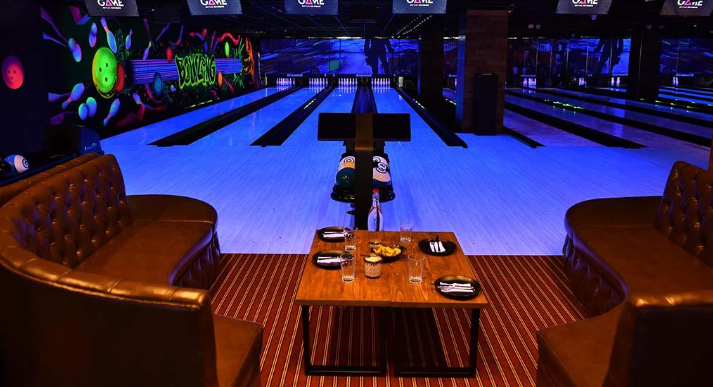
The future of location based entertainment is no longer about games alone or dining alone. Consumers increasingly want complete social experiences where they can eat, compete, celebrate, relax, and stay longer in one destination. This shift has created one of the fastest growing categories in modern leisure development: Food + Play hybrid entertainment spaces.
Across global markets, developers are investing in venues that combine interactive gaming, premium food and beverage, immersive design, and event driven social energy under one roof. These projects are attracting families, young adults, corporates, tourists, and weekend leisure audiences.
For investors, the model is especially attractive because it blends two high value revenue engines: entertainment spending and hospitality spending.
Instead of choosing between play or dining, successful venues monetise both.
Why the Hybrid Model Is Growing So Fast
Traditional entertainment centres often depend heavily on tickets or gameplay revenue. Restaurants depend on table turnover and meal periods. Each model has strengths, but each also has limitations.
Food + Play venues solve this by creating a circular revenue ecosystem.
Guests may arrive for mini golf and stay for dinner.
Friends may book bowling and order drinks throughout the session.
Families may visit an arcade and finish with meals.
Corporates may host events combining games, catering, and private rooms.
This increases:
Longer dwell time.
Higher average spend per guest.
More reasons to revisit.
Better use of real estate.
Stronger weekday and evening demand.
For many developers, it is one of the most commercially efficient leisure models available.
Why Consumers Love Food + Play Destinations
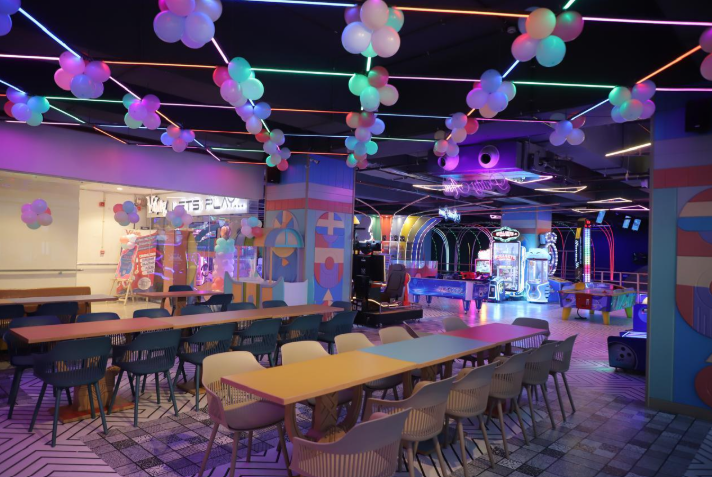
Modern audiences seek convenience and experience.
They do not always want to move between multiple venues for dinner, drinks, and entertainment. They prefer one place that offers atmosphere, activity, and social connection.
This is especially true for:
Date nights.
Birthday celebrations.
Family outings.
Corporate team events.
Weekend group gatherings.
Tourist entertainment nights.
The best hybrid venues become default choices for celebrations and social occasions.
Why the Hybrid Model Outperforms Standalone Attractions
Standalone FEC Challenges
Many family entertainment centres rely on admissions, game cards, or attraction tickets. Revenue can fluctuate if footfall slows.
Standalone Restaurant Challenges
Restaurants depend on meal periods and table turnover. Empty mid afternoon periods can reduce productivity.
Food + Play Advantage
Hybrid venues smooth demand across the day.
Lunch meetings.
Afternoon families.
After work social groups.
Evening celebrations.
Late night adult entertainment.
The same square footage can generate revenue from multiple use cases rather than one narrow demand window.
Core Planning Considerations for Developers
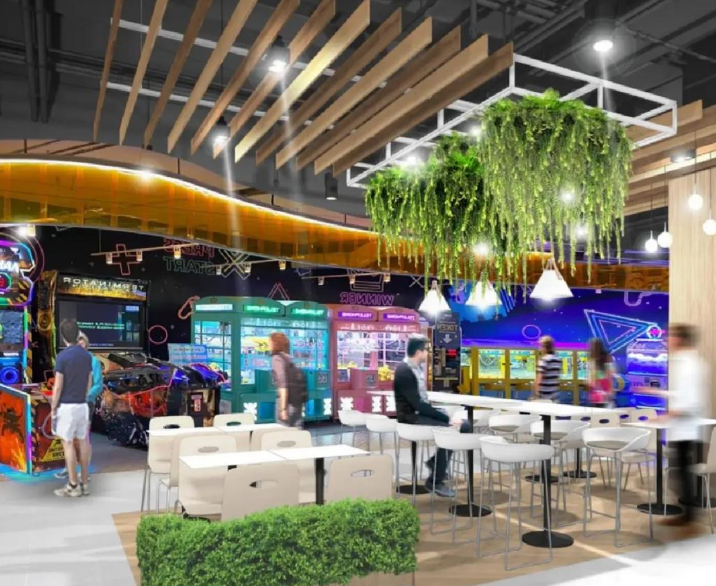
Strong hybrid projects are carefully planned. Poor layouts create noise, congestion, and operational friction.
1. Clear Zoning Strategy
High energy play zones should be separated from relaxed dining areas while still feeling connected.
2. Acoustic Control
Sound treatment is essential. Guests dining should not feel overwhelmed by gaming noise.
3. Integrated POS and Booking Systems
Reservations, gameplay timing, table orders, and event bookings should connect smoothly.
4. Flexible Seating Layouts
Spaces should adapt for birthdays, private parties, corporate bookings, or casual walk ins.
5. Family Safe Circulation
Parents, children, servers, and players must move safely and comfortably through the venue.
6. Visual Identity
Instagrammable interiors, lighting moments, and premium design help organic marketing.
Revenue Engineering and Monetization Strategy
The strongest hybrid venues build multiple revenue layers.
Timed Gaming Sessions
Bowling, simulators, mini golf, darts, karaoke, arcade cards, VR experiences.
Food and Beverage
Often the largest secondary revenue category.
Premium Dining Packages
Celebration menus, date night packages, brunch plus play offers.
Birthday Events
Private tables, game bundles, catering, cakes, hosts.
Corporate Team Building
Meeting spaces, gameplay tournaments, food packages, awards ceremonies.
Membership Programs
Discounted access, priority booking, loyalty benefits.
Sponsorship Opportunities
Branded leagues, event nights, digital screens, product launches.
Dynamic Pricing
Peak hour pricing on weekends, holidays, and special nights can improve yield.
Themed Nights
Trivia nights, sports screenings, singles nights, seasonal festivals, family Sundays.
This diversified model often creates stronger resilience than single income attractions.
Three Global Benchmark Hybrid Entertainment Projects
Dave & Buster’s
A leading example of combining arcade gaming, sports viewing, and full service dining at scale.
Topgolf
Shows how technology based play plus quality food and events can create premium social entertainment.
Bounce Inc
Demonstrates how active play attractions can extend dwell time through lounges, events, and hospitality integration.
Operational Challenges and Risk Mitigation
Hybrid venues can be highly profitable, but complexity must be managed.
Common Challenges
Kitchen speed during peak demand.
Gameplay queue management.
Reservation conflicts.
Cleaning cycles.
Noise complaints.
Staffing balance between hospitality and entertainment.
Safety monitoring.
Large group coordination.
Risk Mitigation Tools
Digital booking systems.
Clear SOPs.
Cross trained staff.
Real time capacity dashboards.
Queue alerts.
Preventive maintenance schedules.
Food safety systems.
Strong floor management.
The guest should feel fun and effortless, even when operations behind the scenes are complex.
Why Dwell Time Matters So Much
Dwell time is one of the most valuable metrics in hybrid entertainment.
If a guest stays 30 minutes, spend is limited.
If a guest stays 3 hours, spending opportunities multiply.
Longer visits increase:
Food orders.
Drink orders.
Additional games.
Dessert purchases.
Merchandise.
Repeat bookings.
Social media exposure.
This is why great hybrid venues are designed to keep guests comfortable, engaged, and moving between zones.
Best Locations for Food + Play Projects
These concepts often perform strongly in:
Shopping malls.
Mixed use developments.
High street nightlife districts.
Tourism zones.
Growing suburban hubs.
Business districts.
University precincts.
The best sites combine visibility, parking, and strong evening demand.
Why Partner with Peach Prime Consultancy
Peach Prime Consultancy supports hybrid entertainment projects through feasibility studies, zoning strategy, attraction planning, hospitality integration, vendor coordination, and revenue modeling.
If you are planning a Food + Play venue, our team helps create seamless guest experiences with strong commercial performance.
FAQs
What is a Food + Play entertainment venue?
It is a destination that combines dining with games or attractions such as bowling, mini golf, arcade, simulators, or immersive play.
Why are these venues profitable?
Because they earn from both entertainment and hospitality spending.
What customers use them most?
Families, young adults, corporates, tourists, and celebration groups.
Is food more important than games?
Both matter. The strongest venues treat each as a core revenue engine.
What attractions work best?
Bowling, mini golf, arcade, golf simulators, darts, karaoke, VR, and active play formats.
Can smaller venues succeed?
Yes. Compact concepts with strong zoning and premium design can perform very well.
Why is acoustic planning important?
Without it, dining comfort can suffer due to excessive noise.
How important are bookings?
Very important for events, parties, and peak hour revenue management.
Can these venues work in malls?
Yes. They are increasingly used as anchor attractions in retail centres.
What is the biggest operator mistake?
Treating food and play as separate businesses instead of one integrated experience.
How do venues increase repeat visits?
Seasonal events, loyalty programs, leagues, themed nights, and refreshed menus.
Why use specialist consultants?
Because layout, guest flow, hospitality, and entertainment economics must work together.
Final Thought
Food + Play hybrid venues are not a short term trend. They reflect how people increasingly want to spend leisure time: socially, actively, and conveniently.
For developers and investors, this model turns square footage into a multi layer revenue destination.
The winners will be the venues that make eating and playing feel like one seamless experience.