
Blogs
Entertainment Takes Centre Stage: The New Anchor of Modern Malls
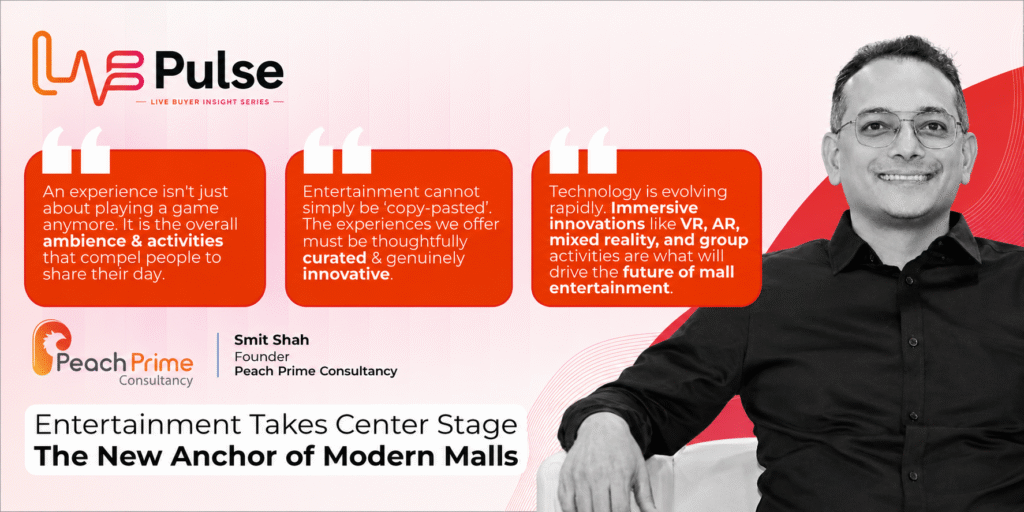
Shopping malls around the world are undergoing one of the most significant transformations in the history of retail. Traditional product focused environments are giving way to experience driven destinations where visitors seek entertainment, social interaction, immersive activities, and genuinely memorable moments. Consumers are no longer arriving at malls primarily to shop. They are seeking places where they can spend quality time, connect with friends and family, participate in engaging experiences, and share those moments across social platforms.
This fundamental shift has placed entertainment at the centre of modern mall development strategy. Across markets, entertainment is becoming one of the strongest drivers of footfall, customer engagement, and repeat visitation.
About This Session
During the latest E&L PULSE Buyer Insight Series, powered by Entertainment & Leisure MENA, Smit Shah, Founder of Peach Prime Consultancy, shared insights into how entertainment is reshaping the future of retail destinations and why immersive experiences are becoming essential for modern mall operators.
The session, titled Entertainment Takes Centre Stage: The New Anchor of Modern Malls, brought together regional buyers, project owners, and industry decision makers to discuss future investments, emerging technologies, evolving visitor expectations, and the growing demand for immersive entertainment experiences across the Entertainment, Attractions, and Leisure sectors. The session was hosted online via the E&L PULSE platform on 19 May 2026.
E&L PULSE serves as a gateway to year round market intelligence and buyer insights within the global Entertainment and Leisure industry, connecting industry professionals through conversations focused on innovation, future trends, and evolving market opportunities.
The Evolution of Malls into Experience Destinations
Over the past decade, the retail industry has witnessed significant structural transformation. The growth of online shopping platforms has changed consumer behaviour permanently, making convenience more accessible than at any point in history. As ecommerce continues to expand, malls around the world are being challenged to offer something that digital platforms fundamentally cannot replicate.
The answer is experiences.
Consumers today seek destinations that provide emotional engagement, interactive entertainment, and social participation. Malls are increasingly positioning themselves as lifestyle hubs that combine retail, dining, entertainment, technology, and community engagement under one roof.
Entertainment attractions including Family Entertainment Centers, immersive digital experiences, interactive museums, VR attractions, esports arenas, indoor adventure parks, experiential art installations, and themed attractions are increasingly becoming key anchors within modern retail developments. Rather than functioning as secondary add-ons, entertainment zones are now acting as primary traffic generators.
Why Entertainment is Becoming the New Mall Anchor
Traditionally, malls relied heavily on department stores and large retail brands to attract visitors. That model has been under sustained pressure for years. Modern consumer behaviour has shifted dramatically, and people now prioritise experiences over transactions. Visitors want destinations that provide excitement, genuine engagement, and meaningful social interaction.
Entertainment creates several distinct advantages for modern retail developments:
Increased Footfall and Dwell Time
Immersive entertainment attractions encourage visitors to spend significantly more time inside malls. Unlike traditional retail visits that may last a short duration, entertainment experiences extend dwell time considerably. Longer visits naturally create more opportunities for dining, shopping, and social interaction throughout the property.
Higher Repeat Visitation
Entertainment concepts provide dynamic and evolving experiences that encourage visitors to return frequently. Seasonal activations, interactive events, immersive storytelling, and social gaming experiences create continuous engagement cycles that pure retail environments cannot match.
Stronger Emotional Connection
People remember experiences far more vividly than purchases. A well designed entertainment destination creates emotional memories that strengthen customer loyalty and elevate the overall brand perception of the retail property over the long term.
Organic Social Media Visibility
Modern consumers actively share visually engaging and immersive experiences online. Attractions with strong ambience, thematic storytelling, and interactive design naturally generate user created content and organic promotion across social platforms, functioning as a continuous marketing channel at zero additional cost to the operator.
Immersive Technology is Driving the Future
One of the key insights shared during the E&L PULSE discussion was the growing role of immersive technologies in shaping the future of entertainment driven retail environments. Technologies including Virtual Reality, Augmented Reality, Mixed Reality, projection mapping, interactive media, AI powered experiences, and immersive storytelling systems are transforming how visitors interact with physical spaces.
Modern audiences expect highly engaging experiences that seamlessly blend physical environments with digital interactivity.
Virtual Reality and Augmented Reality
VR and AR experiences are creating entirely new levels of engagement inside retail destinations. Visitors can now participate in immersive adventures, competitive gaming, interactive simulations, and educational entertainment within highly themed environments. These technologies are particularly attractive to younger audiences who seek interactive and digitally enhanced entertainment.
Interactive Group and Social Experiences
Social entertainment is becoming increasingly central within modern retail destinations. Multiplayer attractions, interactive gaming zones, immersive escape experiences, and collaborative entertainment concepts encourage group participation and deeper social engagement. Consumers are actively seeking activities they can enjoy together with friends and family, and entertainment destinations that cater to this instinct are consistently outperforming those that do not.
Blending Digital and Physical Environments
The future of entertainment lies in seamlessly combining digital technologies with physical storytelling and spatial design. Successful entertainment destinations are no longer simply technology installations. They are carefully curated environments where technology supports storytelling, atmosphere, and emotional engagement rather than replacing it.
Curated Experiences Cannot Be Copied
Another important insight shared during the session was the critical importance of originality and thoughtful curation in entertainment design. Many developers attempt to replicate successful concepts from other markets. However, entertainment experiences cannot simply be transplanted from one location to another.
Every destination has unique demographics, cultural expectations, visitor behaviours, and market dynamics. Successful entertainment projects require four foundational elements:
- Strong Storytelling: People connect emotionally with stories and themes. Whether it is a Family Entertainment Center, themed attraction, immersive museum, or interactive retail zone, storytelling creates the deeper level of engagement that drives return visitation.
- Market Specific Design: Entertainment concepts must be tailored to local audiences and visitor expectations. Understanding consumer psychology, behaviour patterns, and regional trends is critical for long term success.
- Strategic Experience Planning: Attractions must be designed to support operational efficiency, visitor flow, engagement cycles, and repeatability. A successful entertainment destination requires careful planning across design, technology integration, operations, and guest experience.
- Continuous Innovation: Modern visitors constantly seek new experiences. Entertainment destinations that fail to innovate quickly lose relevance. Developers and operators must continuously evolve attractions and engagement strategies to remain competitive.
The Growing Importance of Ambience and Social Engagement
Entertainment today extends well beyond games and attractions. The overall atmosphere, ambience, design language, lighting, music, spatial storytelling, and social interaction opportunities play a major role in shaping visitor experiences. Modern audiences actively seek spaces that feel immersive, visually distinctive, and worth sharing.
Designing Shareable Experiences
Social media has fundamentally transformed how people engage with physical destinations. Visitors gravitate toward spaces that provide visually striking environments and memorable moments. Interactive installations, immersive interiors, thematic environments, and digital engagement zones encourage visitors to capture and share their experiences online. This organic social visibility becomes a powerful and self sustaining marketing channel for entertainment destinations.
Creating Community Driven Spaces
Modern malls are evolving into social hubs where people gather, interact, and spend meaningful time together. Entertainment concepts that encourage collaboration, participation, and community engagement create stronger long term value for retail destinations. Consumers increasingly prioritise experiences that foster connection and shared memories over simple transactional visits.
The Role of Family Entertainment Centers in Modern Malls
Family Entertainment Centers continue to play a critical role in the transformation of retail destinations. FECs provide attractions that appeal across multiple age groups, making them highly effective traffic generators for malls of all scales.
Modern FECs have evolved significantly beyond traditional arcade concepts and now include a broad range of experience types:
- Interactive digital attractions and immersive storytelling experiences
- Indoor adventure zones and edutainment concepts
- Social gaming environments and competitive gaming experiences
- VR and AR attractions within themed experiential environments
- Mixed use entertainment zones designed to serve both families and adult audiences
These attractions help malls position themselves as complete lifestyle and entertainment destinations rather than purely retail environments.
The Future of Retail Entertainment
The future of malls will be driven by experiences that combine entertainment, technology, thoughtful design, and social engagement. Retail destinations that successfully integrate immersive entertainment concepts will hold a significant competitive advantage in attracting visitors and maintaining long term relevance.
As consumer expectations continue to evolve, entertainment will no longer be considered an optional enhancement within retail developments. It will become one of the primary foundations of successful mall strategy.
The next generation of malls will be built around five core pillars:
- Immersive entertainment ecosystems designed as primary anchors, not afterthoughts
- Experience driven design strategies that prioritise emotion, atmosphere, and flow
- Technology integrated attractions that respond to and evolve with visitor expectations
- Community engagement spaces that foster belonging and repeat visitation
- Social entertainment environments purpose built for shareability and organic visibility
About Peach Prime Consultancy
Peach Prime Consultancy specialises in the planning, design, and development of entertainment destinations, Family Entertainment Centers, and immersive retail experiences across South Asia and international markets. Led by Smit Shah, the consultancy brings deep expertise in market strategy, experience design, and FEC development to projects spanning multiple countries and entertainment verticals.
Learn more at peachprime.in.