
A strategic development guide for investors and developers building cinematic, story-driven escape experiences that deliver controlled capacity, premium pricing, and the content repeatability that supports long-term brand scalability.
Introduction: The Evolution of the Escape Room
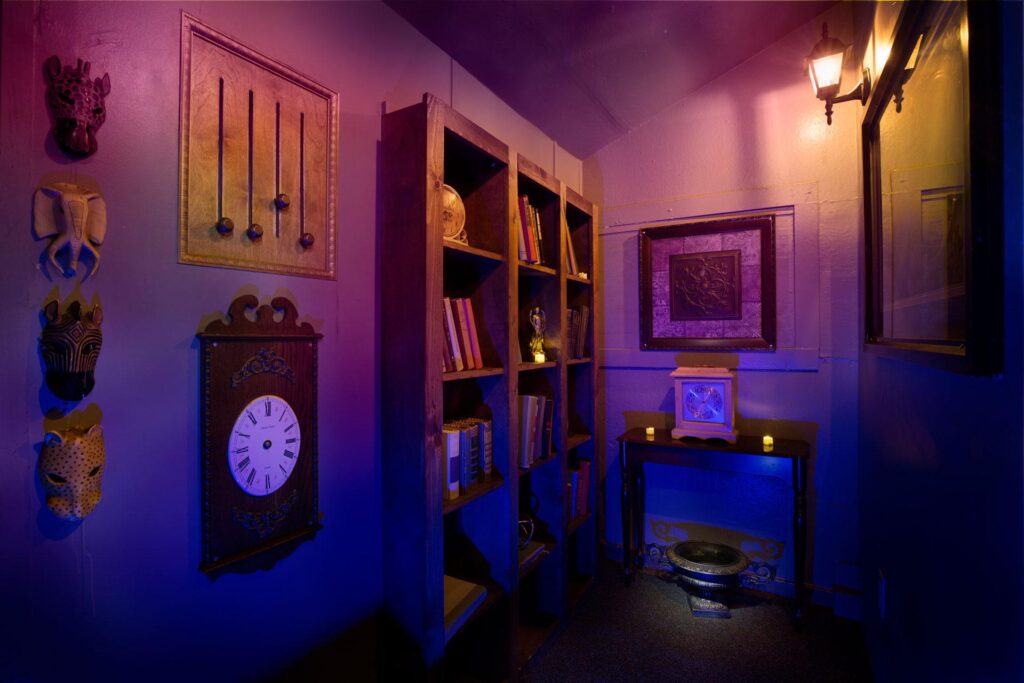
The escape room has undergone one of the most dramatic transformations in the modern entertainment sector. What began in the early 2010s as a novelty format of padlocks, combination codes, and printed clues in a decorated room has evolved, in its most ambitious and commercially successful iterations, into something that resembles a live-action cinematic experience more than a puzzle game. The rooms that are driving the market forward today are not rooms at all in the conventional sense. They are storyworlds: multi-chamber environments with custom scenic fabrication, automated puzzle mechanisms, synchronised lighting and audio design, projection-mapped surfaces, and narrative arcs that carry players through an emotional journey with a genuine beginning, middle, and end.
This evolution is commercially significant for two reasons. First, it has created a meaningful quality stratification in the market, distinguishing premium escape experiences from commodity ones in ways that justify dramatically higher ticket pricing. Second, it has opened the door to the kind of intellectual property development, brand extension, and repeat visitation mechanics that are the foundation of a scalable entertainment business rather than a single-location novelty. The most successful premium escape room operators are not running escape rooms. They are managing entertainment brands with multiple story properties, loyal member bases, corporate event pipelines, and merchandise ecosystems that generate revenue far beyond the hourly session ticket.
This guide provides a structured framework for understanding how to build an escape experience at this level: from the story architecture and technology investment that create the foundation to the operational systems, revenue structure, and brand development strategy that sustain commercial performance over the long term.
MARKET EVOLUTION | Modern audiences search specifically for cinematic escape room design, immersive escape game experience, high-tech puzzle attractions, and interactive adventure rooms. The expectation is no longer decorated rooms with padlocks. It is theatrical lighting, projection mapping, automated effects, hidden passageways, and a complete emotional arc that makes the visitor feel they have stepped inside a story. |
The Shift from Basic Rooms to Immersive Storyworlds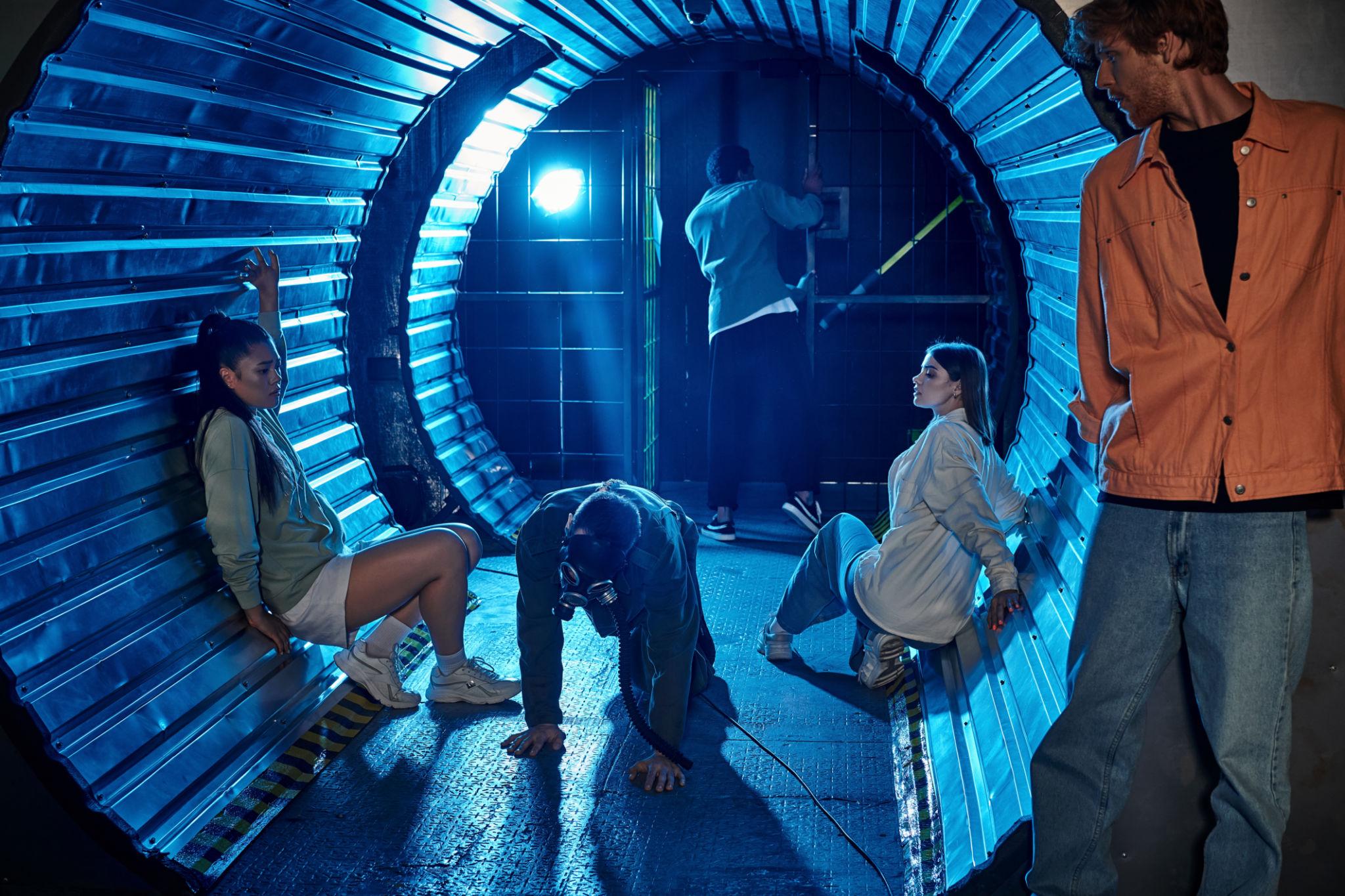
The distinction between a standard escape room and a premium immersive escape experience is not primarily a matter of budget. It is a matter of design philosophy. Standard escape rooms are primarily puzzle delivery mechanisms: the scenic environment exists to justify the presence of the puzzles, and the quality of the experience is defined by the cleverness and fairness of the challenges. Premium immersive escape experiences are primarily story delivery mechanisms: the puzzles exist to advance a narrative, and the quality of the experience is defined by the emotional engagement of the story world as much as by the intellectual satisfaction of the challenge.
This philosophical shift has profound implications for every design decision. Scenic fabrication must create environments that are convincingly real within the logic of the story world, not merely decorated with thematic props. Sound design must create an ambient audio environment that sustains the emotional register of each story beat, not merely provide ambient noise. Puzzle mechanisms must feel like organic elements of the story environment, not obvious game constructs placed within a decorated room. And the narrative arc must create genuine tension, discovery, and resolution that make visitors feel something, not merely give them a set of problems to solve before a buzzer sounds.
The Technology Layer That Makes Immersion Possible
The technology systems that enable genuinely immersive escape experiences have become significantly more accessible and cost-effective over the past several years, which has lowered the barrier to premium execution for operators who understand what to invest in. Projection mapping systems allow static scenic surfaces to carry dynamic narrative content that responds to story state changes. RFID-based puzzle mechanisms allow physical objects to carry invisible digital identities that trigger story events when moved, combined, or placed in specific positions. Automated show control platforms allow all lighting, audio, projection, and mechanical puzzle elements to be synchronised and triggered through a single interface, enabling the kind of precision-timed cinematic moments that define the most memorable escape experiences. And centralised game master dashboards provide full real-time visibility of player progress, hint deployment, and mechanical system status that makes high-throughput premium escape operation commercially viable.
Theatrical Lighting and Spatial Audio as Story Tools
Lighting and audio are the two design dimensions most frequently underinvested in escape room development and the two that most powerfully determine the emotional quality of the experience. Lighting that shifts in colour temperature, intensity, and directionality as the story progresses communicates narrative state changes with immediate emotional impact: the cold blue of an opening scene, the warm amber of a revelation moment, the pulsing red of an escalating threat. Spatial audio that creates directional sound environments, placing character voices from specific directions, ambient environmental sounds from specific distances, and mechanical story events from specific locations within the room, creates a sense of presence and spatial reality that makes the story world feel genuinely inhabited. These systems require creative direction as much as technical specification, and the quality of their creative application is as important as the quality of their installation.
Building a Brand, Not Just a Room
The operators generating the strongest long-term commercial performance in the premium escape room sector are not thinking room by room. They are thinking brand by brand: developing story universes with multiple properties, recurring characters, and episodic narrative structures that create the repeat visitation mechanics and community investment that sustain a business over years rather than months.
Intellectual Property Development and Story Universe Architecture
A premium escape room concept that is designed as a self-contained puzzle experience with no narrative connection to other rooms has a commercial ceiling defined by the number of first-time visitors in its market. A premium escape room concept designed as one chapter in a larger story universe, with recurring characters, unresolved narrative threads, and a sequel room that picks up where the first leaves off, has no such ceiling. Players who are genuinely invested in the story want to complete the next chapter. They return, they bring new people who have heard about the experience, and they become the advocates who build the venue’s reputation in exactly the most commercially valuable audience segments.
Building this kind of story universe requires investment in narrative development that goes beyond the brief of a conventional escape room designer. It requires the skills and perspective of a storyteller: someone who can design a multi-chapter arc with sufficient depth and unresolved tension to sustain engagement across multiple visits, and who can create characters compelling enough that players genuinely care what happens to them. This investment in narrative quality is the single highest-return creative expenditure available to a premium escape room developer.
Merchandise, Digital Leaderboards, and Loyalty Memberships
The extension of the escape brand into physical merchandise, digital competitive engagement, and loyalty membership programmes transforms the relationship between the operator and their most enthusiastic visitors from a transactional one, where the visitor buys a ticket and the operator delivers a session, into a community relationship, where the visitor is invested in the brand as a whole and generates value for the operator through advocacy, repeat visits, and merchandise spending between sessions. Story-world merchandise that reflects the specific narrative and visual language of the escape universe generates the strongest conversion among highly engaged visitors. Digital leaderboards that track completion times, hint counts, and achievement records across multiple visits create the competitive identity investment that motivates return visits. And loyalty membership programmes that reward engagement with priority booking, exclusive content access, and member-only events create the community infrastructure that makes members feel they belong to something larger than a series of individual sessions.
Revenue Model and Scalability Strategy
The premium escape room format generates revenue across a broader range of channels than almost any other indoor entertainment format, and the precision of the time-controlled session model makes revenue forecasting unusually reliable for a leisure asset. The following table maps the primary revenue streams and their commercial profiles.
Revenue Stream | Format | Commercial Profile |
Premium Ticket Sales | Standard, premium, and VIP session tiers | Primary, high-margin |
Corporate Team-Building | Exclusive session hire with facilitated debrief | High-yield B2B |
Birthday and Private Packages | Group hire with F&B, merchandise, and post-room lounge | Premium, pre-booked |
Seasonal Story Upgrades | New narrative content or room variants on seasonal calendar | Demand surge, social media driver |
Merchandise and IP Extensions | Story-world collectibles, character goods, branded apparel | Ancillary, brand-extending |
Loyalty Memberships | Season pass access, priority booking, and exclusive events | Recurring, loyalty-building |
F&B and Post-Room Lounge | Themed food and beverage in a dedicated debrief social space | Ancillary, dwell-extending |
Premium Ticket Pricing and Session Architecture
Premium escape room ticket pricing is justified by the quality of the experience and sustained by the consistency of its delivery. Tiered pricing structures that offer a standard session, a premium session with pre-room briefing enhancements and post-room debrief in a dedicated lounge, and a VIP experience with a private host and additional theatrical elements allow the operator to capture the full range of spending willingness within their visitor demographic. The time-controlled session model creates the revenue-per-available-hour (RevPAH) metric that is the most important financial performance indicator for a premium escape operation, and every operational efficiency gain that reduces reset time between sessions or increases session capacity directly improves the RevPAH performance that determines the long-term financial performance of the venue.
Corporate Team-Building as a Recurring Revenue Engine
Corporate team-building bookings are among the most commercially valuable and operationally reliable revenue streams available to a premium escape room operator. Corporate groups typically book in advance, arrive in predictable numbers, spend more on food and beverage add-ons than leisure visitors, and generate internal word-of-mouth referrals that produce subsequent bookings from other teams within the same organisation. Developing a corporate-specific event product, with a structured team debrief facilitated by a trained host that connects the escape experience to specific leadership, communication, and problem-solving themes, commands a premium price point that reflects its professional development value and distinguishes the venue’s corporate offering from a simple group booking option.
Operational Excellence: Automation, Reset Efficiency, and Safety
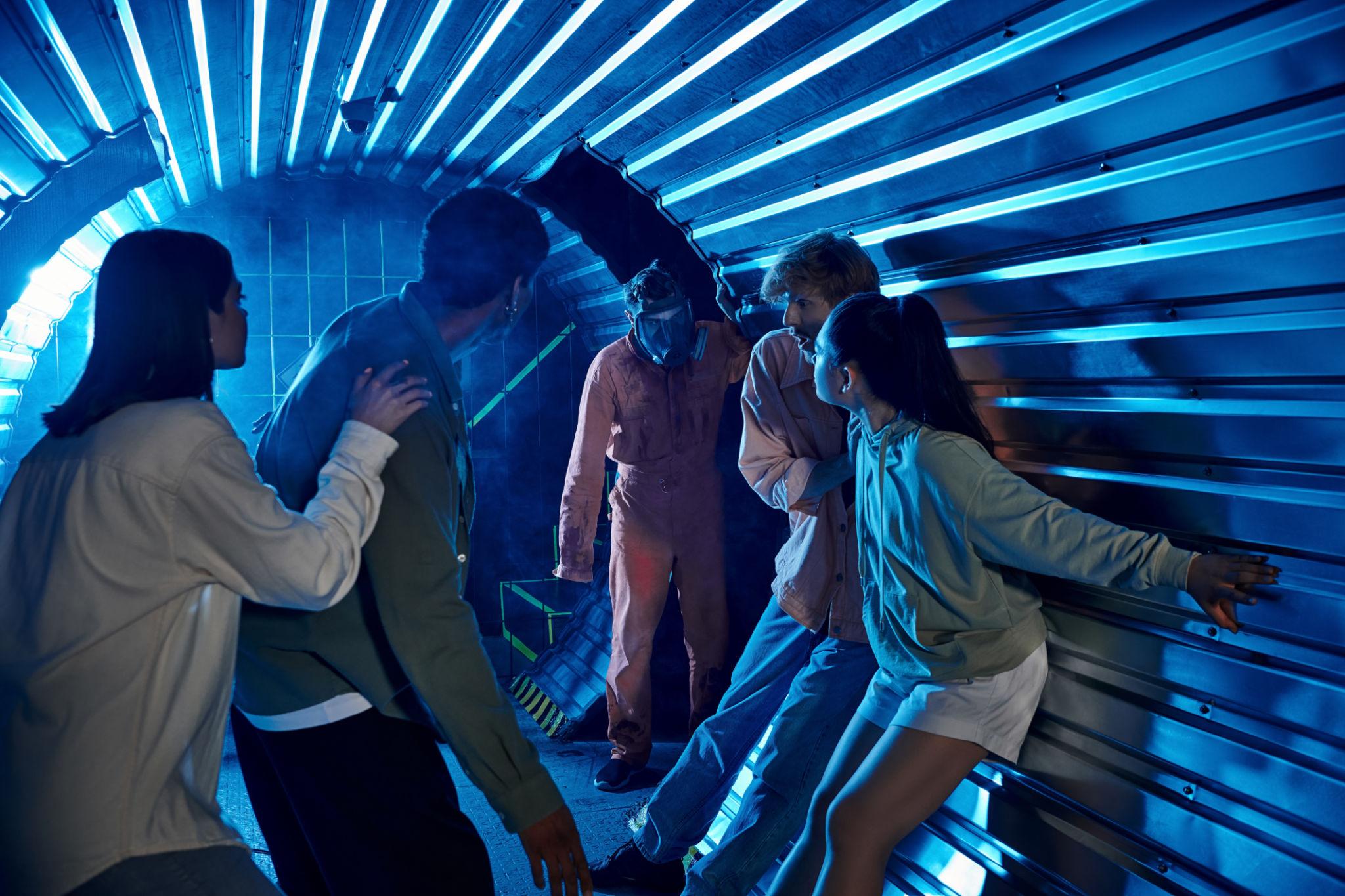
The operational quality of a premium escape room is as important to its commercial performance as the creative quality of its story and scenic design. A beautifully designed room that resets inconsistently, has mechanical systems that fail during sessions, or requires excessive staff time between groups will generate negative reviews regardless of the quality of the experience it delivers when everything works. Operational excellence is not a background function that supports the creative experience. It is a core component of the premium experience itself, and the investment required to achieve it must be built into the development budget from the outset.
Automation and Show Control Systems
Automation is the operational investment that most directly determines the scalability and throughput efficiency of a premium escape operation. RFID-based puzzle mechanisms that reset automatically, magnetic lock sequences that release on authenticated game master command, and show control systems that restore all lighting, audio, projection, and mechanical elements to their starting states with a single action reduce the manual labour required between sessions and minimise the risk of inconsistent reset quality that creates unequal experiences for successive visitor groups. The capital investment in automation systems is consistently recovered through operating cost reduction and throughput improvement within the first two to three years of operation.
Safety Compliance and Guest Protection
Premium escape rooms operate within a specific risk environment that requires careful safety design and strict operational discipline. Emergency egress must be clearly marked, unobstructed at all times, and operable by visitors without staff assistance regardless of the puzzle state. CCTV coverage of all room areas must be maintained throughout every session, with a dedicated game master monitoring the feed and able to intervene immediately in any situation that raises a safety concern. Mechanical systems that lock or restrain visitors, whether intentionally as part of a puzzle mechanic or incidentally through a system failure, require fail-safe mechanisms that allow immediate release from the game master station. Regular technical inspection of all mechanical, electrical, and pneumatic systems is a mandatory operational standard, not a discretionary maintenance decision.
Global Leaders in Premium Escape Experiences
The premium escape room sector has produced a small number of genuinely world-class operators whose models provide direct and instructive precedents for new venue developers. The following three represent distinct approaches to the premium positioning and brand development challenge.
01 | The Escape Game Nashville, USA and Multiple Locations The Escape Game is arguably the most commercially successful premium escape room brand in the United States and represents the most rigorous execution of the high production value, consistent storytelling model in the sector. Operating across more than two dozen locations nationally, The Escape Game has built a brand that is recognised for the reliability of its experience quality: visitors who have played a room in one city know with confidence that a room in another city will meet the same standard. This consistency, which requires exceptional operational discipline across a multi-site estate, is the commercial foundation on which The Escape Game’s national expansion has been built. Each room is designed around a distinct narrative world with full scenic fabrication, automated puzzle mechanics, and a clearly defined emotional arc. The company’s emphasis on reliable, cinematic detail, combined with the customer service culture that ensures guests are supported without having their experience disrupted, creates the combination of exceptional visitor satisfaction and strong repeat and referral bookings that drive its commercial performance. For developers planning a premium escape concept with scaling ambitions, The Escape Game provides the most directly applicable model of how consistent operational excellence translates into scalable brand equity. |
02 | SCRAP Real Escape Game Tokyo, Japan and Global SCRAP pioneered the large-scale event-style escape experience and remains one of the most creative and commercially distinctive operators in the global market. Where most escape rooms confine their experience to a fixed physical space accommodating groups of four to eight people, SCRAP’s event format scales to hundreds of simultaneous participants within a larger venue environment, creating the communal energy and competitive spectacle of a live event rather than an intimate group experience. This format unlocks revenue opportunities and audience reach that the conventional room format cannot access: ticketed public events with a live audience, licensed IP collaborations with major entertainment brands, and the spectator dimension that allows social media content creation from both participants and observers. SCRAP’s seasonal storyline model, which introduces new narrative content and licensed IP collaborations on a regular calendar, demonstrates the commercial value of treating the escape format as a content platform rather than a fixed product, and the brand loyalty it generates among its dedicated audience illustrates how deeply people can invest in an escape experience brand when the quality and creativity of the content consistently rewards that investment. |
03 | Escape Hunt Global Locations Escape Hunt represents the franchise and operational standardisation end of the premium escape room market and has built one of the most geographically diverse escape room brands in the world through a model that balances creative ambition with the operational consistency that franchise scalability requires. Operating across dozens of countries, Escape Hunt demonstrates the viability of the premium escape format in markets with very different cultural contexts and consumer spending profiles, which is directly relevant for developers planning venues in emerging markets including India. The brand’s franchise model, which provides standardised immersive design templates, operational playbooks, and technology specifications that allow new operators to open venues with reduced development time and lower risk of the quality inconsistencies that damage reputation in a market where visitor reviews are the primary acquisition channel, illustrates one viable pathway to rapid geographic expansion for operators with strong brand concepts and rigorous quality standards. |
Frequently Asked Questions
The following questions address the most important investment and planning considerations for developers entering the premium escape room market.
What is the typical capital investment required to build a premium escape room? |
A single premium escape room of 60 to 120 square metres with full scenic fabrication, automated puzzle mechanisms, show control integration, projection mapping, and professional lighting and audio typically requires a capital investment of INR 80 lakh to 2.5 crore depending on the complexity of the automated systems, the quality of the scenic fabrication, and the specification of the technology layer. Multi-room venues with a shared reception, waiting lounge, and post-room debrief area require additional investment in the common areas that typically adds 20 to 30 per cent to the room-specific budget. Operators should plan for a contingency of 15 to 20 per cent on top of itemised cost estimates, as the integration of automation, scenic, and technology systems in a complex room environment consistently surfaces unforeseen requirements during the installation phase. |
How many rooms are needed to build a commercially viable premium escape venue? |
A minimum of two to three rooms is generally required for commercial viability in a premium escape venue, as a single-room operation cannot generate sufficient hourly revenue to cover the fixed costs of a dedicated venue location with full staffing and operational infrastructure. Two rooms allow simultaneous group scheduling that maximises throughput during peak demand periods and provides redundancy when one room requires maintenance. Three rooms create the portfolio depth that supports the narrative universe development and repeat visitation mechanics that define a premium brand, and provide the revenue base to justify a full-time creative and operational team. Developers should plan for a three-room minimum from the outset, even if the initial phase opens with two rooms, to avoid the costly spatial retrofitting required when a two-room venue outgrows its footprint. |
How does an escape room brand sustain repeat visitation? |
Repeat visitation in a premium escape room brand is sustained through four mechanisms that must all be actively maintained. The first is story universe depth: rooms designed as chapters in a larger narrative arc give players who have completed one room a genuine reason to return and continue the story. The second is sequel content development: new rooms and seasonal story upgrades on a planned calendar give the existing audience ongoing reasons to visit. The third is competitive engagement: digital leaderboards, completion time rankings, and achievement systems create the performance motivation that brings competitive visitors back to improve their records. The fourth is community investment: loyalty memberships, exclusive member events, and behind-the-scenes content that makes engaged visitors feel they are part of the brand’s community rather than simply customers of it. |
What operational systems are most critical for a premium escape room? |
The four operational systems most critical to premium escape performance are the show control platform, the game master monitoring and communication system, the automated reset system, and the booking and capacity management platform. The show control platform governs the synchronised operation of all lighting, audio, projection, and mechanical puzzle elements and is the operational nervous system of the room experience. The game master monitoring system provides real-time visibility of player progress and room system status, enabling the precise and timely hint delivery and technical intervention that protects experience quality and manages player welfare. The automated reset system determines how quickly and consistently the room can be restored to its start state between sessions, which directly governs throughput capacity. And the booking platform determines how efficiently advance capacity can be sold, managed, and reported across all session types. |
What is the expected payback period for a premium escape room venue? |
Well-designed and well-operated premium escape venues in strong urban markets typically achieve payback within 24 to 42 months for a two to three room operation. The key variables are average ticket yield, session occupancy rate, and the proportion of corporate and group bookings in the revenue mix. Venues that develop strong corporate team-building revenue from the outset consistently achieve payback at the faster end of this range, as corporate bookings carry higher per-head yield and generate more reliable advance revenue than leisure bookings alone. Premium venues in tourist-heavy locations benefit from higher year-round demand that further compresses the payback timeline. |
How should a premium escape room market itself to attract corporate clients? |
Corporate client acquisition for a premium escape room requires a dedicated B2B sales approach rather than reliance on the consumer marketing channels that drive leisure bookings. The most effective channels are direct outreach to HR directors, event managers, and office managers at target organisations within a realistic geographic catchment, combined with a clear corporate event product offer that is easy to communicate, book, and justify internally. The product must articulate its team-building value in the language that corporate buyers use: communication, leadership, problem-solving under pressure, and shared achievement. A dedicated corporate booking pathway with flexible scheduling for weekday evenings and half-day formats, a facilitated post-room debrief option, and a clear group pricing structure that includes food and beverage adds significant conversion over a standard group ticket offer. |
Develop with Peach Prime Consultancy
Building a premium escape room brand that delivers cinematic story experiences, sustains strong repeat visitation, and scales commercially requires the integrated specialist expertise to navigate story architecture, technology specification, operational system design, and financial modelling simultaneously. The creative and commercial decisions made at the design stage shape the performance of the venue for its entire operating life.
Peach Prime Consultancy supports premium escape room development through feasibility analysis, story architecture planning, technology integration strategy, operational playbook design, and financial modelling for investor presentations. We bring deep expertise in immersive entertainment development and the structured planning methodology that ensures every escape concept we support delivers both creative impact and commercial strength.
Visit www.peachprime.in to learn more or contact our team to arrange a strategic planning consultation.
WHAT PEACH PRIME DELIVERS | Story architecture and narrative universe design, technology specification and automation system planning, scenic design briefing and vendor coordination, operational playbook development, revenue architecture and financial modelling, and full investor presentation support. |