
A comprehensive planning guide for developers designing immersive role-play miniature cities that deliver educational impact, operational efficiency, and sustainable commercial performance across families, schools, and institutional visitors.
Introduction: The Role-Play City as an Edutainment Asset
A role-play miniature city is one of the most complex and most rewarding formats in the global edutainment sector. It requires more than themed spaces and costumed children. It demands a level of operational choreography, educational structuring, and experiential design that rivals the most sophisticated adult entertainment venues, applied to an audience of children ranging from three to fourteen years old with genuinely diverse developmental needs, attention spans, and engagement motivations.
When executed with the rigour this complexity demands, a role-play city delivers commercial outcomes that most family entertainment formats cannot match. The structured participation cycle, where children earn virtual currency, complete tasks across multiple city establishments, and return to spend and earn again, creates dwell times of two to three hours or more. The educational dimension creates strong institutional relationships with schools and the credibility that generates government and NGO funding partnerships. The brand integration opportunities within city establishments create long-term corporate sponsorship revenue that transforms the commercial model from a ticketed attraction into a media and brand platform. And the combination of all three creates the multi-demographic appeal, from toddlers in supervised play zones to primary school groups on curriculum-aligned visits to corporate sponsors seeking family-demographic brand placement, that makes a well-designed role-play city one of the most commercially diversified entertainment assets available to a developer.
MARKET SIGNAL | Growing demand for role-play city for kids, edutainment city concept, interactive career experience centre, and immersive children’s learning park reflects strong consumer appetite for family entertainment formats that combine genuine developmental value with high engagement quality, making the role-play city model a compelling investment for developers targeting the premium family market. |
STEP 1 | City Master Planning and Zoning |
The physical master plan of a role-play city is its most foundational design document and the framework within which every subsequent operational, educational, and commercial decision is made. A well-designed master plan creates a spatial organisation that is simultaneously navigable for children operating independently, observable for safety supervision by staff and accompanying parents, and flexible enough to accommodate the variety of programming formats, from free-flow individual exploration to structured school group circuit visits, that the venue must support simultaneously.
Thematic District Organisation
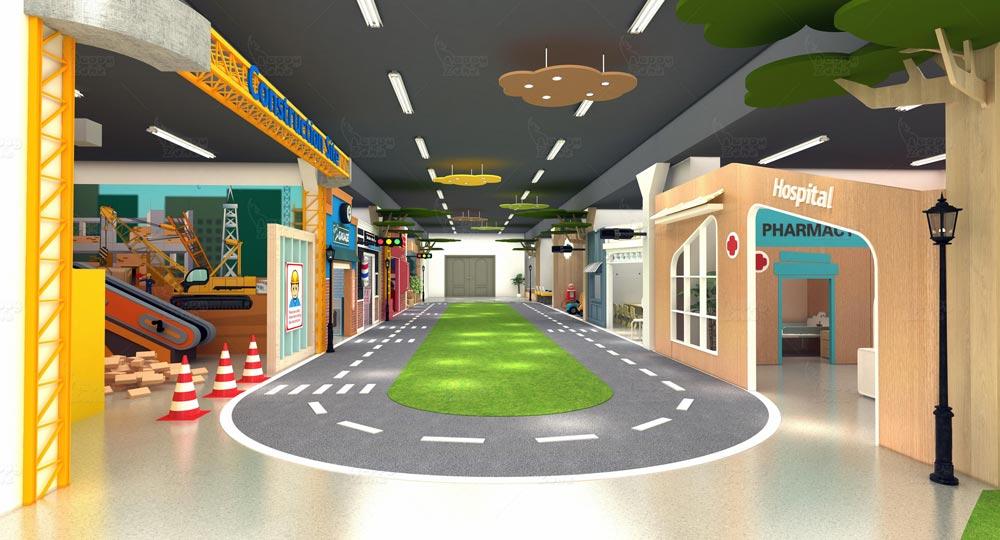
Organising the city into distinct thematic districts creates the spatial clarity that allows children to understand and navigate the environment independently while creating the narrative coherence that makes the city feel like a genuine world rather than a collection of themed rooms. Well-established district themes with strong child engagement and broad curriculum relevance include healthcare, media and broadcasting, transportation and logistics, food production and hospitality, construction and engineering, public safety and emergency services, and retail and finance. Each district should contain two to four distinct establishments that offer different role-play activities within the district’s professional theme, providing enough variety within each zone to sustain engagement across multiple visits without requiring children to move between districts to access fresh content.
Supervision Visibility and Safety Zoning

Central supervision visibility across the full venue floor is a safety design requirement that must be integrated into the spatial plan from the earliest stages of design rather than addressed through retrospective camera and monitoring systems. The city layout should be designed so that the central supervision station has unobstructed sightlines to all activity areas, or alternatively that each district has a dedicated supervision position with full sightlines within its boundary. Age-specific zones, separating the toddler and young child areas from the activities designed for older children, are a safety and experience quality requirement that must be reflected in both the spatial plan and the operational supervision protocols.
Circulation and Parent Viewing Integration
Clear, wide circulation paths between districts allow efficient movement of child groups and staff during scheduled transitions and provide the emergency egress routes that safety compliance requires. Parent viewing lounges, positioned with sightlines into the active play areas, serve both a visitor experience function and a commercial one: parents who are comfortable and engaged while their children play will spend more on food and beverage, stay longer, and return more frequently than those who spend the visit standing anxiously on the periphery of the play environment.
STEP 2 | Digital Economy and Engagement Systems |
The digital economy of a role-play city, the system through which children earn virtual currency through job activities and spend it at city establishments, is the engagement mechanism that creates the structured participation cycle distinguishing this format from passive play environments. This system must be designed to be simultaneously motivating for children, manageable for parents, and operationally efficient for the venue team.
RFID Wristbands and Digital Banking
RFID wristband systems that link each child’s participation record to a digital profile create the technological foundation of the city economy. Each job activity completed earns a defined currency amount that is added to the child’s digital account in real time. Currency can be spent at city retail and hospitality establishments, creating the authentic spending experience that develops financial literacy while generating the internal commercial transaction data that helps operators understand which establishments have the strongest engagement and revenue contribution. The RFID system also enables the safety and supervision functions of continuous location awareness, allowing staff to quickly locate any child within the venue if a welfare concern arises.
Task-Based Reward Systems and Gamification
Task-based achievement systems that award digital badges, unlock premium activities, or provide visible recognition for completing specific combinations of city jobs create the gamification layer that extends engagement beyond the currency earning and spending cycle. Children who are motivated by achievement and collection mechanics will pursue specific badge combinations that encourage them to engage with a broader range of city establishments than free exploration alone would produce, increasing both dwell time and per-visit experience depth. The achievement data generated by these systems also provides operationally valuable insight into which activities are most and least engaged, informing both programming decisions and establishment configuration.
STEP 3 | Capacity and Programming Optimisation |
The operational orchestration of a role-play city, managing the simultaneous flow of multiple child groups through a network of establishments with defined capacity limits, is one of the most complex operational challenges in the family entertainment sector. Capacity planning must address not simply the total number of children admitted to the venue at any one time but the distribution of those children across establishments, the temporal sequencing of their movement through the city, and the management of peaks and bottlenecks that develop when popular establishments attract more children than their activity capacity can accommodate simultaneously.
Batch Group Entry and School Programme Integration
Timed batch entry, where groups enter the venue at staggered intervals and are oriented toward different starting districts, manages the initial distribution challenge and prevents the congestion at popular establishments that would develop if all groups started from the same point simultaneously. School group integration requires a separate operational framework from general admission family visits: school groups arrive in predictable numbers at scheduled times, follow a structured circuit that visits specific establishments in a defined sequence, and require facilitated group transitions between activities that general admission families do not. Designing the operational systems to support both formats simultaneously, without either constraining the freedom of general admission visitors or compromising the structure of school group programmes, is the operational planning challenge that most frequently determines the success of the school partnership revenue stream.
Seasonal Events and Rotating Activities
Seasonal overlay events, where limited-time activities and themed experiences are introduced on a planned calendar, generate the media-worthy announcements and time-limited motivation to return that sustain attendance beyond the first visit cycle. New career module introductions, which add fresh establishment types and job activities to the city’s roster on a planned schedule, give the existing visitor audience new experiences to discover and give potential new visitors a reason to visit a venue they may have heard about but not yet chosen to attend. Both seasonal events and new module introductions should be planned as part of a multi-year content roadmap developed before the venue opens rather than developed reactively in response to attendance trends.
International Case Studies
01 | Pororo Park Role Play Zones Singapore Pororo Park’s character-based role-play zones in Singapore demonstrate the commercial power of strong intellectual property integration in a role-play format. The Pororo characters, which are deeply familiar and emotionally resonant for the primary target demographic of Korean and Southeast Asian families, create an immediate emotional entry point for children that makes the role-play activities feel like genuine participation in a beloved story world rather than simply wearing a costume in a themed room. The venue’s commercial performance reflects the brand loyalty premium that licensed IP delivers in the family entertainment market, and its expansion across multiple Asian markets demonstrates the scalability of a role-play concept built on a globally recognised children’s brand. |
02 | LEGOLAND Discovery Center Global LEGOLAND Discovery Centers represent the integration of structured role-play activity with one of the world’s most powerful children’s toy brands, demonstrating how a role-play format can be commercially strengthened by deep alignment between the play activities, the educational content, and the brand identity of a globally recognised IP partner. The LEGO building and construction activities that form the core of the Discovery Center experience are simultaneously play activities, educational experiences in spatial and structural reasoning, and commercial demonstrations of the LEGO product range, creating a three-dimensional value proposition that serves children, parents, and the brand partner simultaneously. For role-play city developers considering the commercial and educational benefits of IP partnerships, the LEGOLAND Discovery Center model illustrates the depth of integration that creates genuine mutual value rather than superficial co-branding. |
03 | Citta dei Bambini e dei Ragazzi Genoa, Italy The Citta dei Bambini e dei Ragazzi in Genoa is one of Europe’s most respected interactive children’s museums and one of the founding precedents for the role-play city concept as a genuinely educational rather than purely entertainment-oriented format. The venue’s hands-on interactive city concept, which places scientific exploration, social role understanding, and physical skill development at the centre of its activity design, has earned strong institutional relationships with educational authorities and generated the curriculum alignment that drives consistent school group visitation. For developers seeking to position their role-play city as a genuine educational resource with institutional credibility rather than simply a premium entertainment venue, the Genoa model provides the most directly applicable precedent for how educational depth and visitor engagement quality can be combined within a commercially viable attraction format. |
Future-Proofing the Mini City Investment
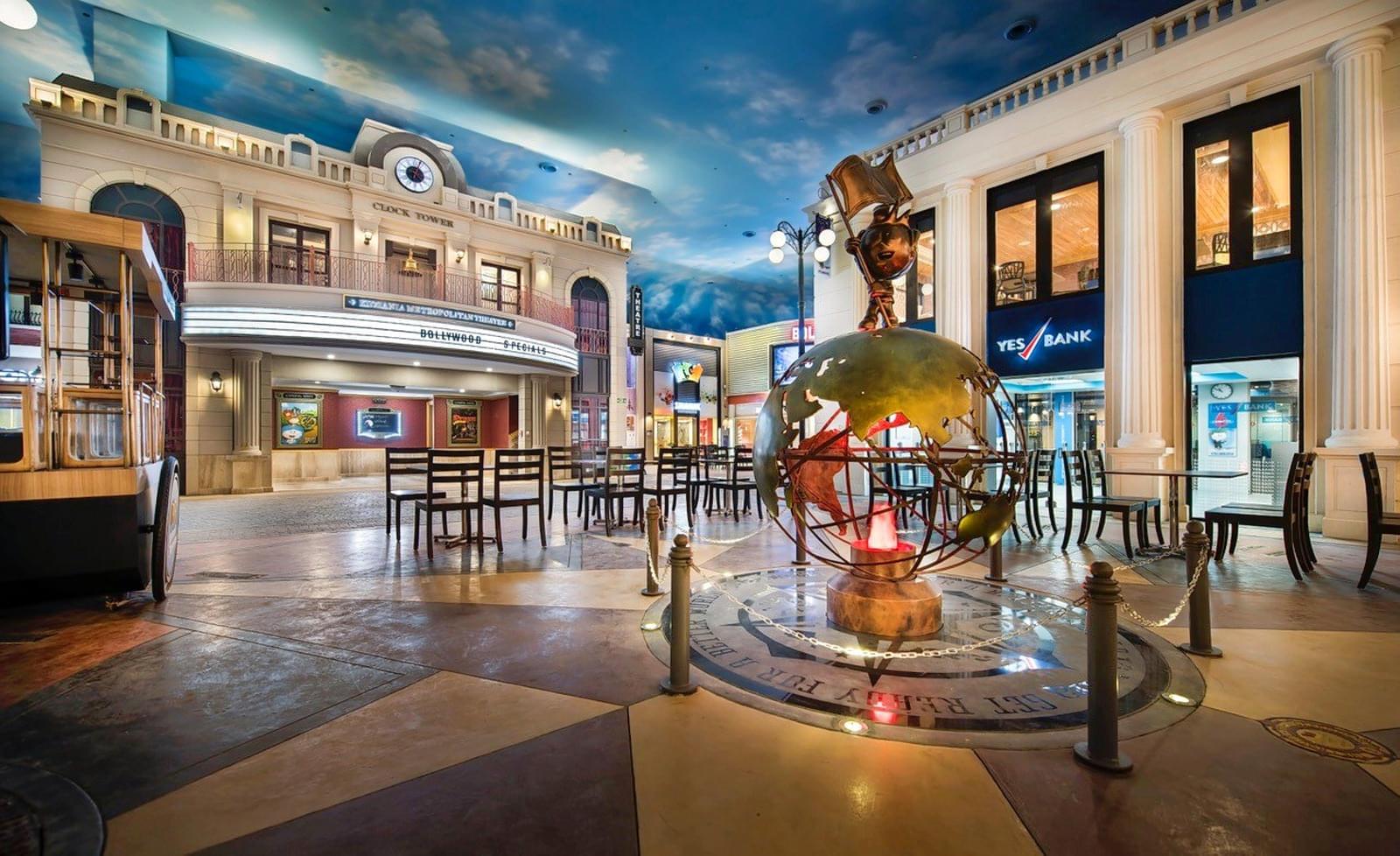
Sustaining commercial performance in a role-play city over a multi-year operating lifecycle requires active investment in content development, technology evolution, and institutional relationship building. New career modules that introduce contemporary and aspirational professional roles, digital leaderboards that create competitive engagement among regular visitors, educational partnerships that bring curriculum-aligned programming into the venue, and seasonal overlay events that give the existing audience new experiences to discover are the content investment mechanisms that maintain relevance and repeat visitation motivation. Technology upgrades to the RFID and digital banking systems, as more sophisticated platforms become commercially available, improve the quality of the gamification experience and the richness of the operational data that informs programming decisions.
Frequently Asked Questions
The following questions address the most important planning considerations for role-play city developers.
What is the minimum floor area required for a commercially viable role-play city? |
A minimum viable role-play city with six to eight distinct career establishments, an orientation theatre, parent viewing lounges, and circulation space typically requires 8,000 to 12,000 square feet of net usable floor area. Mid-scale venues offering twelve to sixteen establishments with dedicated school programme spaces, a café, and retail areas typically require 15,000 to 25,000 square feet. Larger flagship venues of the KidZania format scale require 50,000 square feet or more. Developers should resist the temptation to compress the floor area below 10,000 square feet, as the spatial quality of the city environment, specifically the sense that children are genuinely navigating a real city rather than a corridor of themed rooms, requires sufficient floor plate to create meaningful urban scale. |
How should establishments be selected to maximise both educational value and commercial appeal? |
Establishment selection should be driven by three criteria applied simultaneously. Educational value, specifically the curriculum relevance of the professional role and the developmental appropriateness of the activities it supports, determines the institutional credibility that drives school partnership and government funding opportunities. Child engagement quality, meaning the degree to which the activities are genuinely compelling, physically active, and immediately rewarding for the target age groups, determines the visit satisfaction and repeat visitation rates that underpin general admission commercial performance. Sponsorship attractiveness, meaning the alignment between the establishment’s professional theme and the brand category of potential corporate partners, determines the long-term brand partnership revenue potential that transforms the commercial model from a ticketed attraction into a media platform. Establishments that score highly on all three criteria simultaneously should be prioritised in the initial venue design. |
What is the role of brand partnerships in the role-play city business model? |
Brand partnerships within role-play city establishments are among the most commercially distinctive and financially significant revenue opportunities available to the format. A banking establishment sponsored by a financial services brand, a television studio sponsored by a media company, or a supermarket establishment sponsored by a consumer goods manufacturer creates a commercial relationship that generates ongoing sponsorship revenue, provides the brand partner with genuine family-demographic engagement, and adds authenticity and production value to the establishment environment through the brand partner’s design and content investment. Well-structured brand partnerships typically cover a multi-year term and include guaranteed visibility commitments across the establishment environment, the venue’s digital and marketing channels, and any events or activations associated with the establishment. The total sponsorship revenue from a fully commercialised role-play city with twelve to sixteen branded establishments can represent 20 to 35 per cent of total annual revenue, which fundamentally changes the financial profile of the investment. |
How should the RFID digital economy be designed to maximise child engagement? |
The RFID digital economy should be calibrated to create the intrinsic motivation of genuine financial management within the city rather than simply a points-accumulation system. Children should earn sufficient currency from each job activity to feel that their work has genuine value within the city economy, but the pricing of spending opportunities should create real choices and genuine constraint, so that children must prioritise their spending rather than simply purchasing everything available without consideration. The earning rate, spending prices, and premium experience costs should be calibrated through pre-opening testing with real children across the target age range to ensure that the economic experience feels authentic and motivating rather than either too easy or too frustrating. Currency that cannot be carried over between visits, creating a spending motivation within each visit that prevents hoarding, is a design choice that improves both the quality of the in-visit experience and the dwell time that visiting families generate. |
What are the most important safety planning considerations for a role-play city? |
Safety planning for a role-play city must address the specific challenges of an environment where children are moving independently through a complex multi-zone space, interacting with a range of activity props and equipment, and engaging with staff in role-play scenarios where the boundaries between facilitation and supervision can blur. All activity props must meet the safety standards for children’s play equipment relevant to the age groups using them. All staff must be trained in child welfare procedures, emergency protocols, and the specific safety requirements of each establishment they manage. The RFID wristband system must enable rapid location confirmation of any child in the venue within 30 seconds. All entrances and exits must be monitored continuously to prevent unsupervised child departure. And the adult supervision structure must ensure that no zone of the venue is ever without a trained staff member present during operating hours. |
What is the expected payback period for a role-play city investment? |
Payback periods for role-play cities vary significantly based on scale, market, and the quality of commercial development, but well-designed mid-scale venues in strong urban markets with active school partnership and sponsorship revenue programmes typically achieve payback within 42 to 60 months. Venues that secure multi-year brand partnership agreements before opening substantially accelerate payback by providing advance revenue receipts that reduce the initial equity funding requirement. The school programme revenue stream, which fills weekday daytime capacity at premium group rates, is the variable that most consistently differentiates venues achieving payback at the faster end of the range from those that rely primarily on weekend general admission traffic. |
Partner with Experienced Edutainment Planners
Peach Prime Consultancy delivers end-to-end planning for immersive role-play cities, ensuring creative excellence, operational efficiency, and financial sustainability from concept through to opening and beyond. Our services cover feasibility studies, thematic planning, spatial zoning, technology coordination, and revenue modelling for investor presentations. Visit www.peachprime.in to explore our services or arrange a strategic planning consultation.
WHAT PEACH PRIME DELIVERS | City master planning and district zoning, RFID digital economy design, capacity and operational choreography planning, school programme and sponsorship development strategy, revenue architecture and financial modelling, and full investor presentation support. |