

A technical planning and investment guide for developers building tournament-grade esports facilities that deliver broadcast-quality production, structured competitive programming, and scalable multi-stream revenue from opening day.
Introduction: The Infrastructure Case for Tournament-Ready Esports
The esports industry has reached a stage of commercial maturity at which the most significant constraint on its growth is no longer audience or participant demand but physical infrastructure quality. The competitive gaming events, organised leagues, and professional team operations that generate the highest-value revenue streams for venue operators require a level of technical precision, broadcast capability, and spatial design sophistication that the vast majority of existing venues in most markets cannot adequately provide. This infrastructure gap is a commercial opportunity of genuine and specific dimensions for developers willing to invest in the specification quality that the professional esports market requires.
A tournament-ready esports facility is not simply a room with high-performance gaming computers and fast internet. It is a purpose-designed competitive sports venue that has been engineered for the simultaneous management of player performance, spectator engagement, and professional broadcast production, with the technical infrastructure redundancy that prevents the unplanned interruptions that would be catastrophic for live competitive events. This engineering complexity requires specialist planning expertise and a capital investment discipline that ensures every specification decision serves the competitive, commercial, and broadcast objectives of the venue rather than being driven by cost reduction or generic technology selection.
This guide provides a complete planning framework for a tournament-ready esports facility, structured across the three phases that define the development challenge: spatial and spectator planning, technology and broadcast integration, and operational programming and revenue architecture.
INFRASTRUCTURE GAP OPPORTUNITY | Professional esports tournaments require network latency, broadcast production quality, and acoustic design standards that most existing venues cannot meet. Developers who invest in tournament-grade infrastructure position their venues as the default choice for game publishers and tournament operators seeking credible competitive facilities, creating preferential access to the most commercially valuable events in the market. |
PHASE 1 | Spatial and Spectator Planning |
Competition Floor and Player Zone Design
The competition floor of a tournament-ready esports facility must be designed around the specific spatial requirements of the player experience: the ergonomic setup of each station, the privacy between adjacent player positions that prevents visual distraction during competition, and the acoustic environment that allows clear in-team communication without interference from spectator noise or adjacent station audio. Tournament-standard player stations require a minimum of 1.5 metres of width and 1.2 metres of depth per position to accommodate the hardware footprint of tournament-grade equipment plus the peripheral space for player comfort during extended competition periods. Stations should be grouped in team clusters of five positions for team-based esports titles, with acoustic barriers between teams that maintain team communication integrity during live play.
Spectator Zone and Sightline Architecture
The spectator zone of a tournament-ready facility must deliver the viewing experience that live esports audiences expect: clear sightlines to the primary gameplay display content on large-format LED walls, physical proximity to the competition floor that creates the shared energy of live competition without visual obstruction, and the comfort infrastructure of appropriate seating, unobstructed circulation pathways, and accessible food and beverage service during events. Tiered seating arrangements, where spectator rows are stepped at sufficient vertical intervals to eliminate sightline blocking between rows, provide the viewing clarity that distinguishes a genuine spectator venue from a flat-floor space with chairs. Minimum LED wall sizing of P2.5 or P3 pixel pitch at the primary viewing dimensions of the spectator zone ensures that game content is legible and engaging at the back of the spectator area.
Commentator and Technical Staff Zones
Professionally managed esports events require dedicated, acoustically isolated spaces for commentary teams, broadcast production staff, and technical operations management that must operate independently of both the player zone and the spectator zone without any cross-zone audio or visual interference. Commentary booths require full acoustic isolation from the competition floor and spectator area, with glass viewing panels that provide unobstructed sightlines to the player zone and LED displays while maintaining complete sound isolation. The technical operations centre, housing the network management, broadcast encoding, and show control systems that manage the event’s technical infrastructure, requires physical security from unauthorised access and direct communication channels to all technical staff positions throughout the venue.
PHASE 2 | Technology and Broadcast Integration |
Core Gaming and Network Infrastructure
The network infrastructure of a tournament-ready facility is its most critical and most unforgiving technical requirement. Tournament-standard competitive gaming demands end-to-end latency that is imperceptible to players across all stations simultaneously, which requires dedicated low-latency fiber connectivity, purpose-designed esports VLAN architecture that isolates competitive traffic from all other venue data streams, and a redundant secondary ISP connection with automatic failover that activates within seconds of primary connection failure. Hardware specifications for tournament-grade gaming stations should be validated against the current minimum specifications published by the game publishers of the primary titles the facility plans to support, as these specifications are updated with title version releases and must be maintained to ensure the venue remains eligible for official competitive events.
Broadcast and Streaming Production Systems
The broadcast production infrastructure transforms a gaming venue into a media platform and is the investment that unlocks the streaming partnership revenue, brand sponsorship value, and game publisher relationship that distinguish a commercial esports facility from a gaming lounge with a large screen. Professional cameras positioned for clean player capture, audience reaction capture, and overhead competition floor coverage provide the broadcast content variety that professional streaming productions require. Hardware capture cards and professional streaming encoders must be specified for the combined bitrate of all simultaneous game feed streams at the target resolution and frame rate, with appropriate network bandwidth headroom above the sum of all stream requirements. UPS backup systems protecting all broadcast infrastructure against power interruption are non-optional for any venue planning to host live broadcast events.
PHASE 3 | Operational Programming and Revenue Planning |
The operational programming model of a tournament-ready esports facility is the commercial architecture that converts the technical infrastructure investment into sustainable revenue across the full operating calendar rather than only during major tournament events.
- Structured league programming: weekly amateur competitive leagues across three to five primary game titles that fill station capacity with advance-booked participants and create the community engagement that sustains long-term venue relevance
- Amateur tournament calendar: monthly open tournaments for each primary game title with defined bracket formats, entry fees, and prize structures that create competitive occasions motivating practice investment and community participation
- Influencer and content creator events: dedicated sessions for gaming content creators and streamers who use the venue’s broadcast infrastructure to produce their own content, generating social media reach and brand visibility in exchange for venue hire fees
- School and youth competitive programmes: curriculum-linked technology competitions for school age participants that position the venue as a legitimate educational destination and generate institutional school partnership revenue during weekday daytime capacity
- Corporate gaming nights: exclusive venue hire for corporate teams seeking an unusual, competitive, and technologically impressive team event that commands premium pricing and generates B2B referral networks
- Subscription-based practice access: monthly memberships for competitive players who want consistent access to tournament-grade equipment for practice and preparation
International Reference Projects
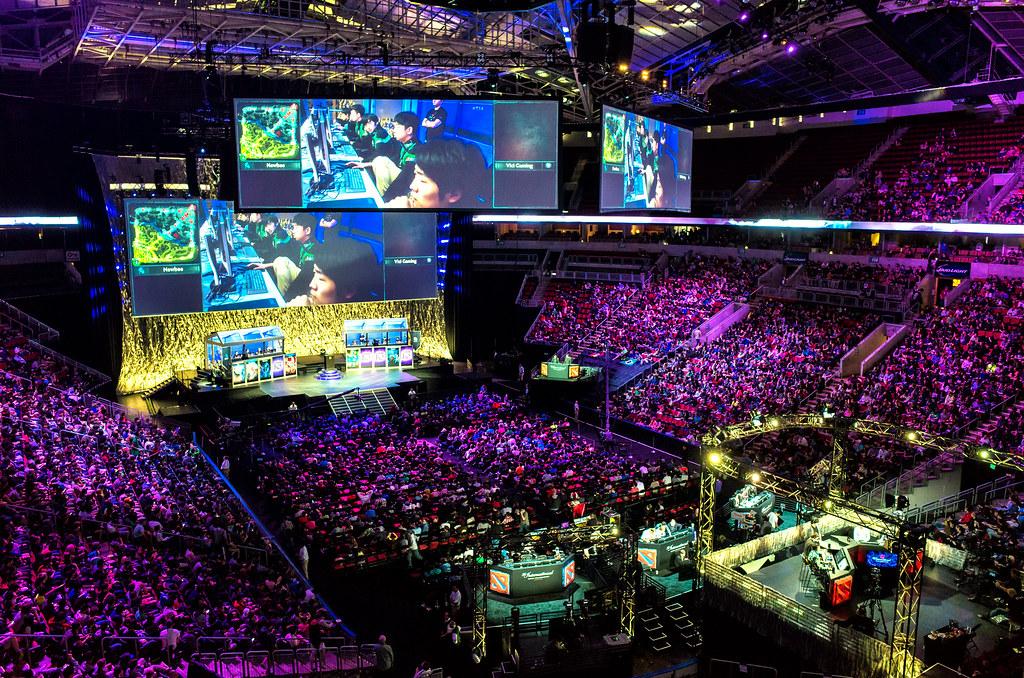
01 | Blizzard Arena Los Angeles, USA Blizzard Arena represents the purpose-built, publisher-owned tournament venue model at its most commercially complete, having been designed specifically to host the Overwatch League with the broadcast production standards, player experience quality, and spectator environment that a professionally managed esports league requires. The arena’s investment in broadcast-quality camera systems, professional commentary infrastructure, and LED display specifications calibrated for both in-venue spectators and streaming audiences reflects the recognition that the most commercially valuable esports events are media productions as much as live sports events, and that the venue infrastructure must serve the production objectives of the broadcast as much as the experience objectives of the live audience. For developers planning a facility with broadcast partnership ambitions, the Blizzard Arena model illustrates the specification level that professional esports publishers and broadcast partners require. |
02 | Red Bull Gaming Sphere London, UK The Red Bull Gaming Sphere in London demonstrates the hybrid community engagement and competitive programming model that combines brand sponsorship integration with genuine grassroots esports development. Operated as a joint venture between Red Bull’s global sports marketing organisation and local esports community partners, the venue’s programming philosophy places as much emphasis on developing emerging competitive talent and community participation as on hosting high-profile sponsored events, which creates the authentic community investment that sustains long-term relevance beyond the initial media coverage of the Red Bull brand association. The venue’s success in attracting genuine competitive community engagement rather than only brand-attracted visitors demonstrates the importance of community-first programming philosophy for venues seeking durable commercial performance rather than event-driven spikes. |
03 | Shanghai Oriental Sports Center Esports Events Shanghai, China The adaptation of Shanghai’s Oriental Sports Center for large-scale esports tournament events demonstrates the commercial viability of the multi-purpose sports venue model for major esports events, specifically the events at the scale that permanent purpose-built esports facilities cannot accommodate within their fixed capacities. For developers planning facilities in markets where major esports events would attract audiences larger than a purpose-built facility can seat, the Shanghai model illustrates how flexible venue conversion can serve the largest event occasions while a permanent facility serves the ongoing community and broadcast programming that generates the consistent recurring revenue the investment requires. |
Future-Proofing the Esports Facility Investment
The technology landscape of competitive gaming evolves faster than almost any other entertainment sector, with new game titles, new peripheral standards, and new broadcast technologies emerging on a cycle that outpaces most other commercial real estate investment horizons. Future-proofing an esports facility investment requires three specific design disciplines. First, hardware upgrade pathways: all gaming stations should be specified with internal component upgrade access that allows CPU, GPU, and memory upgrades without full station replacement, extending the operational life of the hardware investment across multiple technology generations. Second, adaptable seating and floor configurations: modular seating systems and clear-span floor plates allow the spectator and competition floor layouts to be reconfigured as different event formats and game titles with different spatial requirements are introduced. Third, game publisher and sponsor partnership development: active engagement with game publishers for official competitive rights and with technology sponsors for equipment partnership agreements ensures the venue remains connected to the commercial investments that sustain the esports sector’s growth.
Frequently Asked Questions
What distinguishes a tournament-ready esports facility from a standard gaming lounge? |
A tournament-ready esports facility differs from a standard gaming lounge across three fundamental dimensions. Technical infrastructure: the network, hardware, and power specifications are calibrated to professional tournament standards rather than consumer-grade gaming, with redundancy systems that protect against interruption during live competitive events. Spatial design: the venue is organised specifically to serve the simultaneous requirements of competitive players, live spectators, commentary teams, and broadcast production staff rather than simply providing comfortable gaming seating in an open floor plan. Operational programming: the venue is managed as a competitive sports venue with structured league calendars, official tournament operations, and broadcaster relationships rather than as a walk-in gaming facility where visitors play independently without structured competitive context. |
How should network infrastructure be specified for a tournament-grade facility? |
Tournament-grade network infrastructure requires a minimum of 1 Gbps dedicated symmetric fiber connectivity per simultaneous competitive session, with a redundant secondary ISP connection providing automatic failover within three seconds of primary connection failure. The local area network must use purpose-designed esports VLAN architecture that isolates competitive gaming traffic from spectator WiFi, administrative systems, and broadcast encoder traffic on separate network segments with independent switching infrastructure. Network latency from gaming stations to the external internet gateway must not exceed 10 milliseconds under full competitive load, which requires both the correct fiber specification and the correct network architecture rather than simply adequate bandwidth. All network infrastructure should be designed by a specialist with documented esports venue experience rather than a general commercial IT contractor. |
What is the minimum viable broadcast infrastructure for hosting professional esports tournaments? |
The minimum viable broadcast infrastructure for professional tournament hosting includes three to five professional cameras with fixed and PTZ (pan-tilt-zoom) capabilities positioned for player capture, overhead competition floor coverage, and audience reaction recording; hardware capture cards for clean game feed acquisition from a minimum of two simultaneous game streams; a professional streaming encoder capable of outputting at 1080p60 or 4K30 to primary streaming platforms; a redundant internet uplink of minimum 20 Mbps dedicated exclusively to streaming data; and an acoustically isolated commentary booth with direct monitoring feeds from all game streams and a communication channel to technical operations. This specification will support streaming to major platforms and satisfies the minimum requirements of most tier-two and tier-three professional tournament organisations. |
How does an esports facility attract game publisher partnership relationships? |
Game publisher partnership relationships, which provide official competitive rights, co-marketing support, and in some cases prize funding for venue-hosted events, are developed through a combination of technical credibility demonstration and community development evidence. Publishers evaluate venue partners on three criteria: technical infrastructure quality relative to their published minimum specifications, the size and engagement level of the competitive community the venue has developed for the relevant title, and the venue team’s professionalism in operating competitive events to the standards that protect the integrity of the publisher’s competitive ecosystem. Venues that invest in the correct technical infrastructure, develop an active amateur competitive community around a specific title, and demonstrate professional event management through a track record of well-executed events will attract publisher attention within twelve to eighteen months of opening. |
What are the most important operational disciplines for a tournament-ready facility? |
The three most commercially consequential operational disciplines for a tournament-ready esports facility are technical reliability management, competitive programming consistency, and community development investment. Technical reliability management requires a preventive maintenance schedule that tests all hardware, network, and broadcast systems weekly under simulated competitive load conditions, replacing degrading components before failure rather than after. Competitive programming consistency requires a league calendar that runs on a reliable weekly schedule without cancellations, with professional administration and referee management that ensures the competitive integrity that serious players require. And community development investment requires the venue team to engage actively with the competitive gaming community through social media, community events, and the individual player relationships that make the venue feel like a community home rather than a commercial facility. |
What is the expected return profile for a tournament-ready esports facility investment? |
A well-specified and well-operated mid-scale tournament-ready esports facility in a market with an active competitive gaming community typically generates positive operating cash flow within 12 to 18 months of opening as the community programming and league subscription revenue matures. Full investment payback typically requires 48 to 60 months, reflecting the capital intensity of tournament-grade infrastructure relative to consumer-grade gaming lounge investment. Venues that secure naming rights agreements and major tournament hosting contracts within the first two years significantly accelerate this timeline through the large advance revenue receipts these agreements provide. The Indian market, with its large and rapidly growing competitive gaming community and limited supply of professional-grade tournament facilities, represents a timing opportunity that early-moving developers with the right infrastructure specification are positioned to capture disproportionately. |
Develop with Experienced Entertainment Strategists
Peach Prime Consultancy provides end-to-end esports facility planning including master planning, technology vendor coordination, safety compliance, and financial feasibility modelling. If you are developing a tournament-ready esports arena, our expertise ensures performance, reliability, and return on investment alignment. Visit www.peachprime.in to arrange a strategic planning consultation.
WHAT PEACH PRIME DELIVERS | Technical infrastructure specification, spatial and spectator planning, broadcast system design briefing, programming strategy and league development, sponsorship and publisher partnership strategy, revenue modelling, and investor presentation support. |