
A strategic investment guide for developers planning Hybrid Social Entertainment Centers as next-generation mall anchors, exploring the layered monetisation model, infrastructure requirements, and global benchmarks that define the format.
Introduction: The Anchor Tenant Problem and the SEC Solution
The traditional mall anchor model is in structural decline across every major retail market globally. Department stores, cinema multiplexes, and hypermarkets that once reliably generated the footfall that justified commercial property valuations are losing their draw as consumers migrate online for routine purchases and toward experiential leisure for discretionary spending. Developers and property owners who have built their business models around the guaranteed footfall of traditional anchor tenants are confronted with a replacement problem of genuine commercial urgency: what format can anchor a modern mixed-use development with the footfall generation, dwell time extension, and cross-retail spend stimulation that traditional anchors once provided?
The Hybrid Social Entertainment Center is the format that the most commercially sophisticated property developers globally have identified as the answer to this question. Unlike single-category entertainment venues that serve only a narrow audience or time-of-day, the SEC integrates competitive social gaming, immersive attractions, digital sports simulators, themed food and beverage, live events, and nightlife energy under one unified brand and operational umbrella. This integration creates the multi-demographic, multi-time-of-day draw that is the defining commercial characteristic of an effective anchor tenant.
This guide provides the complete planning and investment framework for an SEC development: from the evolution of the format out of traditional FEC models through to the infrastructure requirements, revenue architecture, operational strategy, and risk mitigation disciplines that determine whether an SEC becomes the high-performance anchor its development cost requires.
MARKET SIGNAL | Growing global search demand for competitive socializing venues, eatertainment destinations, tech-enabled gaming lounges, and immersive social experience hubs reflects a fundamental shift in how urban consumers structure their discretionary time and spending. The SEC is the physical infrastructure that captures this demand at scale. |
From FEC to SEC: The Evolution of Location-Based Entertainment
Traditional Family Entertainment Centers were built on a model of children-first attraction programming: arcades, soft play, trampolining, and ride systems designed primarily for the under-twelve demographic, with parents accommodated as passive accompaniers rather than active participants. This model served the market adequately in an era when digital home entertainment was limited and discretionary family spending was growing, but it has struggled increasingly as the demographic profile of leisure consumers has shifted and the quality expectations of adult entertainment audiences have risen.
The Social Entertainment Center is the format that has emerged from the recognition that the most commercially valuable demographic for location-based entertainment is not children but the 18 to 45 age group: young professionals, Gen Z adults, millennial couples and groups, and corporate teams who are seeking social experiences that combine competitive engagement, visual spectacle, and quality food and beverage in an environment that feels genuinely premium rather than functional. This demographic has substantially higher per-capita spending capacity than the family market, spends more on food and beverage, is more likely to book premium experiences in advance, and generates the social media content that drives new customer acquisition through peer advocacy.
The Attraction Mix That Defines an SEC
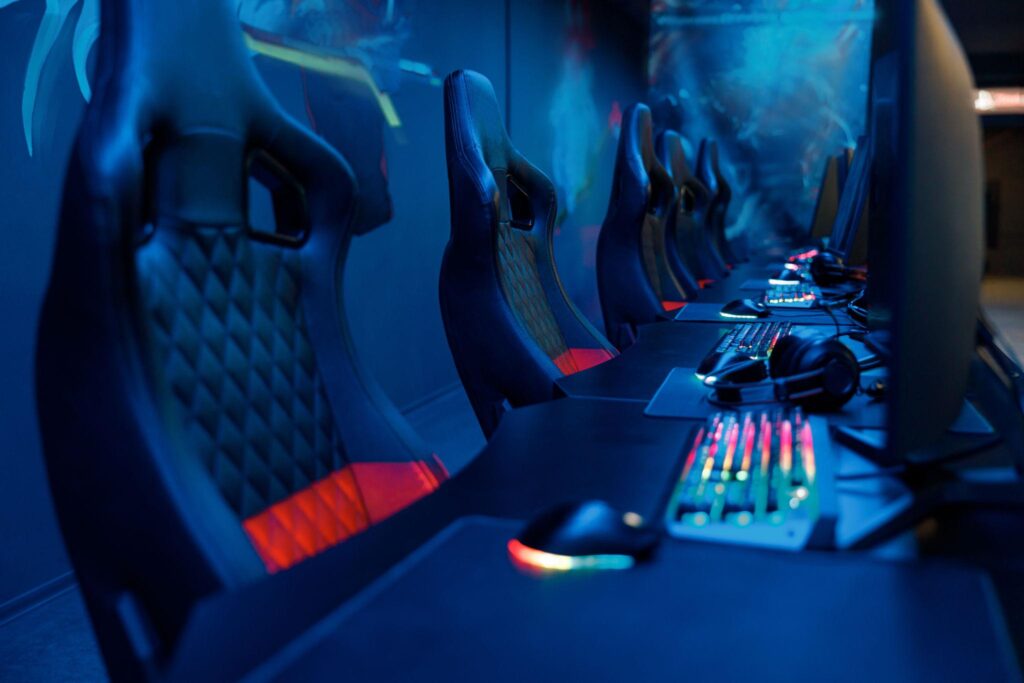
The defining characteristic of an effective SEC is the integration of complementary attraction categories that serve different demographic preferences within a single visit, extending dwell time beyond what any individual attraction could sustain. The most commercially productive attraction combinations include digital sports arenas where visitors compete across augmented reality bowling, virtual reality battle zones, and interactive golf simulators; social gaming formats including smartboard interactive darts, shuffleboard, and tabletop gaming in lounge environments; escape room and immersive experience zones that serve the group challenge-seeking segment; themed mini-golf that appeals across all age groups within the target demographic; and curated dining spaces that are quality destinations in their own right rather than utilitarian catering services.
Why SECs Drive Higher Revenue per Square Foot
The revenue per square foot performance of a well-operated SEC consistently exceeds that of single-category entertainment venues and most retail anchors because the layered monetisation model captures value from the same visitor across multiple channels within a single visit. A visitor who arrives for a bowling session, extends their stay for dinner, books a VR experience before leaving, and purchases a round of cocktails at the bar has generated revenue across four distinct channels from a single visit decision that cost the operator one customer acquisition investment.
This layered capture is the commercial foundation that makes the SEC format financially superior to single-category attractions of comparable floor area, and it is the metric that property developers and investors should use to evaluate SEC proposals: not revenue per hour per attraction but revenue per square foot per year across the full range of monetisation channels.
Revenue Layer | Format | Commercial Profile |
Gaming Sessions | Hourly and per-game pricing across all attraction formats | Primary, volume-driven |
Premium Bookings | Advance-reserved premium packages with enhanced access and F&B inclusion | High-margin, advance-booked |
Membership Subscriptions | Monthly access programmes with priority booking and loyalty benefits | Recurring, community-building |
Corporate Team-Building | Exclusive session hire with facilitated competitive programming | High-yield B2B |
Nightlife and Live Events | DJ nights, brand activations, league finals, and seasonal events | Demand surge, brand-building |
Food and Beverage | Quality dining, cocktail bar, and themed F&B throughout the venue | Ancillary, dwell-extending |
Merchandise | Branded apparel, gaming accessories, and venue collectibles | Ancillary |
Sponsorship Integrations | Brand visibility within specific attraction zones and events | Incremental, long-term |
Core Infrastructure and Planning Requirements
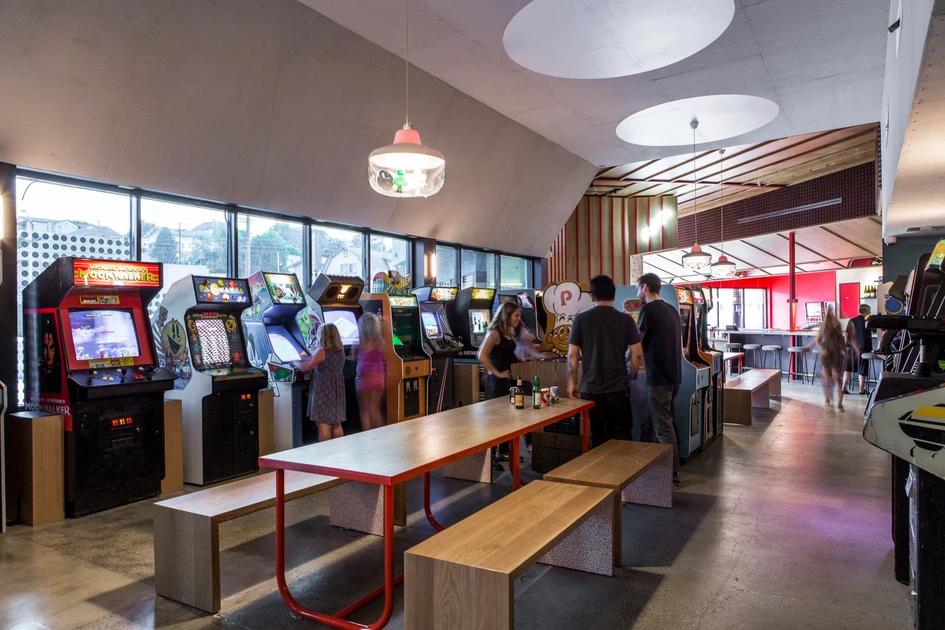
The physical infrastructure of an SEC must support the simultaneous operation of multiple attraction types across different energy levels, acoustic requirements, and visitor density profiles without any zone degrading the quality of adjacent zones. This infrastructure complexity distinguishes SEC development from single-category venue development and requires integrated specialist planning across architectural, acoustic, technology, and operational disciplines.
- Zoned entertainment clusters that separate high-energy competitive gaming areas from quieter lounge and dining zones through spatial separation and acoustic treatment, preventing the sound and energy profile of loud gaming areas from undermining the comfort of diners and social loungers
- Integrated point-of-sale and digital booking systems that allow seamless visitor movement across attraction types and dining without the friction of separate payment and booking workflows for each zone
- Advanced AV and lighting control systems with zone-specific programming that can transition the venue between its family daytime, young adult evening, and late-night event energy profiles without physical reconfiguration
- Acoustic treatment and sound zoning designed by specialist acoustic consultants who understand the specific frequency and decibel profiles of each attraction type and can specify the treatment required to contain them within their zones
- Flexible event staging areas that can accommodate live performance, brand activation, competitive league finals, and corporate award events without requiring construction activity between formats
- Scalable attraction modules designed for periodic refresh, where individual attraction zones can be updated or replaced without disrupting the operation of adjacent zones
Global Benchmark SEC Concepts
01 | Topgolf Global Locations Topgolf is arguably the most successful Social Entertainment Center concept in the world and the format that most clearly demonstrates the commercial power of integrating technology-driven sports entertainment with premium hospitality and a strong events programme. Its driving range bay format, where players of all skill levels compete in gamified shot challenges using ball-tracking technology that scores accuracy and distance in real time, creates the competitive social engagement that motivates groups to extend their sessions well beyond what traditional practice range visits would produce. The result is an average dwell time of two to three hours per visit and a per-capita spending rate that reflects the quality of the food, beverage, and experience. For SEC developers, Topgolf illustrates how a single technology innovation applied to an existing leisure activity, specifically ball-tracking that enables gamified competition, can create an entirely new entertainment category with global commercial viability. |
02 | Dave and Buster’s USA Dave and Buster’s is the most scaled SEC format in North America and the most directly instructive model for developers planning integrated arcade, sports viewing, and dining venues. Operating across hundreds of locations, the brand has built one of the most robust loyalty and membership programmes in the entertainment sector, creating a recurring customer base whose spending predictability provides the financial stability to support aggressive new location development. The integration of sports bar viewing, competitive multiplayer gaming, and full-service dining creates the multi-occasion venue identity that drives both spontaneous visits and planned group events within the same location. Dave and Buster’s loyalty programme data demonstrates the compounding commercial value of customer recognition: members visit more frequently, spend more per visit, and are significantly more likely to book the premium experience packages that carry the highest margin contribution. |
03 | Puttshack USA and UK Puttshack represents the premium positioning end of the technology-enabled social mini golf format and is the most commercially instructive example of how a traditional low-investment leisure activity can be transformed into a premium competitive social entertainment destination through the combination of proprietary technology, chef-driven dining, and high-end interior design. Its ball-tracking mini golf system, which automates scoring and introduces gamified hole challenges without requiring players to manually manage scorecards, reduces the friction that traditional mini golf imposes on social groups and allows players to focus on the competitive and social dimensions of the experience. Combined with a hospitality programme that positions Puttshack as a quality dining destination rather than a sports bar with golf, the venue has achieved premium ticket pricing and per-capita spending rates that significantly exceed the category norms for mini golf venues. |
Operational Strategy and Risk Mitigation
The operational complexity of an SEC, combining entertainment operations, food and beverage service, event management, technology maintenance, and hospitality standards simultaneously across a large and varied venue, is the most significant management challenge in this category and the dimension most frequently underestimated in the development planning phase. Staff who are trained only in entertainment operations and lack the service standards of hospitality professionals will consistently disappoint the quality expectations of the adult demographic that generates the highest per-capita spending. Staff who are trained only in hospitality service and lack the operational confidence to manage the technical and safety dimensions of attraction operation will create the friction and inconsistency that undermine the competitive gaming experience.
Cross-training the SEC team to operate competently across both entertainment and hospitality functions, supported by clear operational procedures for peak-hour scheduling, digital reservation management, kitchen order coordination, and attraction safety supervision, is the human capital investment that makes the difference between an SEC that consistently delivers the multi-dimensional experience its concept promises and one that excels in one dimension at the expense of another.
Frequently Asked Questions
What floor area is required for a commercially viable Social Entertainment Center? |
A minimum viable SEC with a meaningful mix of three to four attraction categories, a quality food and beverage operation, and event hosting capability typically requires 15,000 to 20,000 square feet of net usable floor area. Mid-scale venues with five to seven attraction categories, a full kitchen operation, a cocktail bar, and dedicated event space typically require 25,000 to 40,000 square feet. Large-format flagship SECs of the Topgolf or Dave and Buster’s scale require 50,000 square feet and above. Developers should resist the temptation to compress the floor area below 15,000 square feet to reduce rental cost, as the variety of attraction categories required to serve the multi-demographic adult target audience cannot be delivered adequately at smaller scales. |
How does an SEC compete with traditional cinema multiplexes as a mall anchor? |
An SEC offers three structural advantages over a cinema multiplex as a mall anchor. First, its dwell time per visit is typically longer and more variable: cinema visitors arrive, watch a fixed-duration film, and leave with limited opportunity to extend their visit, while SEC visitors frequently extend their sessions across multiple attraction types when the venue quality motivates them to do so. Second, an SEC generates food and beverage revenue per visitor that is significantly higher than cinema concession revenue, with quality restaurant dining and cocktail bar spending contributing to per-capita yields that no cinema format can match. Third, an SEC serves the evening and late-night entertainment demand that cinemas capture inadequately, generating the extended operating hours and event programme that make it a genuinely multi-occasion anchor rather than a single-format visitor generator. |
What technology systems are most critical to SEC operational performance? |
The four technology systems most critical to SEC performance are the integrated booking and point-of-sale platform, the AV and lighting control infrastructure, the attraction-specific gaming and scoring systems, and the loyalty and customer data platform. The integrated booking and POS platform determines how efficiently visitors can move between attraction types and food and beverage service, and its quality has a direct impact on per-visit spend capture and queue management effectiveness. The AV and lighting control infrastructure enables the venue energy transitions between daytime family programming and evening adult social experiences that are essential to the SEC’s multi-demographic appeal. The gaming and scoring systems of individual attraction formats are the technology investments that create the competitive engagement motivating extended dwell time. And the loyalty platform generates the customer data and retention programme that converts first-time visitors into repeat customers. |
How should an SEC manage the transition between family daytime and adult evening programming? |
Managing the transition between family daytime and adult evening programming requires both physical design decisions made during development and operational protocols established before opening. Physical design decisions include separate entrance pathways for family and adult visitor flows, flexible seating configurations that can shift from family-facing arrangements to cocktail lounge layouts between operating periods, and F&B zone design that can accommodate both all-ages dining and adults-only bar service within the same space through acoustic and visual screening. Operational protocols include a defined transition time, typically mid-afternoon to early evening, during which the venue shifts its attraction programming, lighting and music profile, and staffing configuration from the family entertainment to the adult social entertainment mode. Clear communication through the booking system about the family and adult operating periods manages visitor expectations and prevents the demographic friction that occurs when families and late-night social groups share the same space simultaneously. |
What is the optimal food and beverage model for an SEC? |
The food and beverage model that consistently generates the strongest financial contribution in an SEC is a hybrid of quality casual dining and cocktail bar service, positioned as a destination dining experience rather than a catering service attached to the entertainment. This positioning requires a kitchen capable of delivering quality restaurant-standard food at volume during peak periods, a cocktail programme with enough creativity and execution quality to attract dedicated bar visitors who are not necessarily gaming, and service standards that match the food and beverage quality rather than defaulting to the more transactional service culture of entertainment venues. The F&B positioning should be communicated distinctly from the entertainment offering in the venue’s marketing, to establish it as a quality dining option for the catchment area independently of the entertainment draw. |
What is the expected investment and payback timeline for a mid-scale SEC? |
A mid-scale SEC of 25,000 to 35,000 square feet with a quality attraction mix, full restaurant and bar operation, and event hosting capability typically requires a total development investment of INR 15 to 35 crore depending on fit-out specification, technology selection, and property market rental rates. Well-operated mid-scale venues in strong urban markets with active corporate event programming and a quality F&B operation typically achieve payback within 36 to 54 months. Venues that secure long-term corporate partnership agreements and develop a strong membership base from the outset achieve payback at the faster end of this range through the advance revenue and financial predictability these channels provide. |
Why Develop with Peach Prime Consultancy
Peach Prime Consultancy provides feasibility studies, spatial master planning, attraction mix strategy, and financial modelling for Social Entertainment Centers. If you are planning a large-scale SEC project, our team ensures it becomes a sustainable, high-yield urban entertainment destination. Visit www.peachprime.in to arrange a planning consultation.
WHAT PEACH PRIME DELIVERS | Feasibility analysis and site evaluation, attraction mix optimisation, spatial master planning and flow design, AV and technology specification briefing, F&B concept integration, revenue architecture modelling, and full investor presentation support. |