
Why the GCC Has Become One of the World’s Most Attractive Entertainment Development Markets
The Gulf Cooperation Council (GCC) region has rapidly emerged as one of the most ambitious and investment-driven entertainment development markets globally. Across the United Arab Emirates, Saudi Arabia, Qatar, Bahrain, Kuwait, and Oman, governments and private developers are investing heavily in tourism infrastructure, destination districts, mixed-use mega projects, and experiential entertainment ecosystems designed to diversify economies beyond oil dependency.
Large-scale initiatives such as Saudi Arabia’s Vision 2030, the UAE’s tourism expansion strategy, and the region’s growing focus on lifestyle-led urban development are reshaping the entertainment landscape across the Middle East. Experiential entertainment is no longer viewed as a supplementary leisure category. It is increasingly positioned as a core economic driver supporting tourism growth, mixed-use real estate performance, destination branding, and international investment attraction.
However, entering the GCC entertainment market requires far more than importing successful entertainment concepts from other regions. The GCC consumer environment is highly sophisticated, operational expectations are exceptionally high, and competition within premium entertainment categories is intensifying rapidly.
Developers entering the region must understand that GCC entertainment projects are evaluated not only on attraction quality, but on architectural scale, experiential spectacle, hospitality integration, climate adaptation, operational sophistication, and long-term destination value.
Projects that succeed in the GCC are those built through structured regional planning, disciplined feasibility analysis, and execution strategies aligned with the unique economic, cultural, and tourism dynamics of the region.
This guide explores the strategic framework experiential developers should follow when entering the GCC entertainment market.
The GCC Entertainment Opportunity
The GCC entertainment sector benefits from several structural advantages that continue driving investment growth across the region.
These include:
- Strong government-backed tourism expansion
- Large-scale mixed-use development pipelines
- High discretionary consumer spending
- Young demographic populations
- Strong mall and destination culture
- Growing demand for family and social entertainment
- International tourism growth
- Year-round climate-driven indoor entertainment demand
Unlike many mature Western entertainment markets, the GCC still offers substantial white-space opportunities for developers capable of delivering premium experiential formats at international standards.
At the same time, the market is becoming increasingly competitive, making strategic positioning and operational quality critical success factors.
Step 1: Market and Location Alignment
The first and most important strategic decision for any GCC entertainment project is market and location alignment.
Location selection within the GCC cannot rely solely on population density or retail traffic assumptions. Projects must align with broader destination ecosystems capable of supporting long-term visitor demand.
Prioritizing Tourism and Destination Corridors
The strongest-performing entertainment projects in the GCC are typically positioned within:
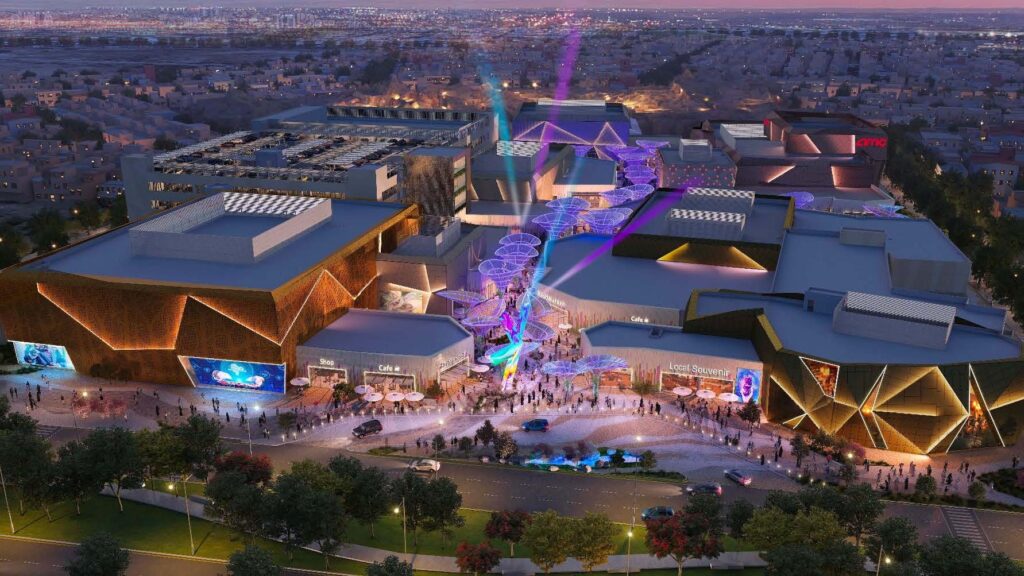
- Mixed-use mega developments
- Tourism-driven waterfront districts
- Integrated hospitality destinations
- Lifestyle retail corridors
- Entertainment-focused urban masterplans
- Large-format destination malls
Projects integrated into broader tourism ecosystems benefit from diversified visitor sources, including:
- Local residents
- Regional visitors
- International tourists
- Corporate groups
- Hospitality-linked audiences
This diversification significantly improves demand resilience and year-round attendance performance.
Understanding GCC Footfall Dynamics
Unlike traditional retail-focused markets, GCC entertainment developments often rely on a combination of resident visitation and tourism-driven destination traffic.
Developers must therefore evaluate:
Demand Variable | Strategic Importance |
Resident Catchment Size | Local repeat visitation |
Tourism Volume | International demand generation |
Hospitality Integration | Hotel-driven visitor flow |
Climate Conditions | Indoor entertainment dependency |
Seasonal Tourism Peaks | Revenue fluctuation management |
Infrastructure Accessibility | Visitor convenience and scalability |
Footfall forecasting in the GCC must incorporate both local behavioural patterns and tourism ecosystem performance.
Step 2: Attraction Mix and Scale Planning
The GCC entertainment market consistently rewards projects that deliver spectacle, immersion, and large-scale experiential impact.
Unlike smaller regional markets where compact concepts may succeed, GCC audiences generally expect premium production value, visually impressive environments, and technologically advanced attractions.
Why Scale Matters in the GCC
Large-scale entertainment environments align strongly with the region’s broader development philosophy, which emphasizes landmark destinations and globally competitive visitor experiences.
Successful GCC entertainment projects typically include:
- Immersive walkthrough environments
- Projection mapping galleries
- Large-format Social Entertainment Centers
- VR and AR adventure parks
- Interactive museums
- Competitive social sports venues
- Indoor adventure attractions
- Experiential dining integration
- Multi-sensory storytelling environments
The objective is not simply to provide entertainment but to create destination-scale experiences capable of generating social visibility and tourism draw.
Designing for Social and Group-Based Entertainment
GCC entertainment demand is heavily influenced by social and family-oriented leisure behaviour.
As a result, attraction planning should prioritize:
- Group participation formats
- Multi-generational entertainment
- Hospitality integration
- VIP and premium booking options
- Event-driven programming
- Social media engagement opportunities
- Indoor climate-controlled comfort
Experiential environments that support family gatherings, social celebrations, and premium hospitality experiences generally achieve stronger commercial performance.
Step 3: Financial Structuring and Partnership Models
Entertainment development within the GCC often involves complex financial ecosystems supported by institutional investors, mixed-use developers, sovereign-backed entities, and strategic operating partners.
Common GCC Partnership Structures
Developers entering the region frequently pursue partnerships with:
- Local real estate developers
- Sovereign investment entities
- Mall operators
- Hospitality groups
- Tourism authorities
- Destination development companies
These partnerships provide advantages including:
- Local market access
- Regulatory navigation support
- Infrastructure integration
- Investor credibility
- Operational scalability
- Financial risk sharing
Joint venture models remain one of the most common market entry pathways for international experiential developers.
Structured Capital Deployment
Given the scale and technical complexity of GCC entertainment projects, phased capital deployment strategies are increasingly important.
Phased execution allows developers to:
- Reduce upfront financial exposure
- Validate market response
- Expand attractions incrementally
- Optimize operational performance before scaling
- Improve investor confidence
This strategy is particularly important for emerging experiential formats entering the GCC for the first time.
Understanding GCC Consumer Expectations
The GCC entertainment audience has developed exceptionally high standards due to exposure to premium international hospitality, luxury retail, and destination-scale tourism developments.
Visitors increasingly expect:
- International-quality design standards
- Seamless digital integration
- Personalized guest experiences
- Premium hospitality service
- Climate-controlled comfort
- High visual production quality
- Operational reliability
- Safety and cleanliness excellence
Projects that fail to meet these expectations often struggle to maintain repeat visitation despite strong opening performance.
Climate-Controlled Infrastructure Planning
Climate adaptation is one of the defining operational considerations for GCC entertainment development.
Extreme outdoor temperatures during much of the year create sustained demand for high-quality indoor entertainment environments.
Key Infrastructure Priorities
Entertainment projects within the GCC must prioritize:
- Advanced HVAC systems
- Energy-efficient cooling strategies
- Indoor comfort optimization
- Queue management environments
- Heat-resistant material selection
- High-capacity ventilation systems
- Indoor crowd flow management
Climate-controlled comfort directly impacts visitor dwell time and operational sustainability.
Risk Mitigation Framework for GCC Entertainment Projects
Entering the GCC market successfully requires structured risk mitigation across operational, financial, cultural, and technical dimensions.
Critical Risk Management Areas
Detailed Feasibility and Demand Analysis
Projects must validate tourism demand, demographic alignment, and competitive positioning before investment commitment.
Regional Safety Compliance
Entertainment developments must comply with GCC-specific safety regulations, operational certifications, and international engineering standards.
Cultural Programming Alignment
Attractions and operational programming should align with local cultural expectations while maintaining international appeal.
Operational SOP Development
Structured operational systems ensure consistency across guest experience, maintenance, safety, and hospitality delivery.
Technology Lifecycle Planning
Developers should account for long-term technology maintenance and upgrade cycles within rapidly evolving experiential formats.
Risk mitigation planning significantly improves investor confidence and long-term project sustainability.
International Entertainment Brands with Successful GCC Presence
01 — Warner Bros. World
Abu Dhabi, UAE
Warner Bros. World demonstrates the commercial power of large-scale IP-driven indoor entertainment within the GCC market.
Its climate-controlled immersive environment, strong storytelling integration, and premium thematic execution have positioned it as one of the region’s most successful destination entertainment projects.
The project illustrates how internationally recognized intellectual property combined with operational excellence can drive substantial tourism demand.
02 — Ski Dubai
Mall of the Emirates, UAE
Ski Dubai remains one of the most iconic examples of climate-adaptive experiential entertainment globally.
By introducing an indoor snow environment within a desert climate, the project created a globally recognizable experiential attraction that significantly enhanced destination tourism and mall positioning.
Its success demonstrates the GCC market’s appetite for unique, high-impact experiential concepts.
03 — KidZania
UAE and Saudi Arabia
KidZania successfully localized its global edutainment model for GCC family audiences through strong operational systems and culturally aligned programming.
Its family-focused positioning, educational entertainment model, and scalable operational framework have supported successful regional expansion.
The project highlights the importance of combining operational consistency with localized audience engagement strategies.
Future-Proofing Entertainment Investments in the GCC
The GCC entertainment market continues evolving rapidly as governments expand tourism ambitions and consumers demand increasingly sophisticated experiences.
Future-ready projects should prioritize:
- Flexible attraction infrastructure
- Modular expansion capability
- Digital engagement integration
- Data-driven visitor analytics
- Sustainable operational systems
- Hybrid entertainment formats
- Scalable programming strategies
Developers who build adaptive operational ecosystems rather than fixed-format attractions will be better positioned for long-term market relevance.
Why Strategic Planning Matters More in the GCC
The scale of GCC entertainment investment means that operational inefficiencies and planning mistakes can carry substantial financial consequences.
Projects that succeed typically share several characteristics:
- Strong feasibility discipline
- Premium architectural positioning
- Structured technical coordination
- Scalable operational systems
- Tourism ecosystem integration
- High hospitality standards
- Long-term programming strategy
Entertainment developments that lack these foundations often struggle despite significant capital investment.
Frequently Asked Questions
Why is the GCC attractive for experiential entertainment development?
The GCC offers strong tourism growth, high consumer spending, large-scale mixed-use developments, and significant government investment in entertainment infrastructure, creating strong long-term market potential.
What types of entertainment concepts perform best in the GCC?
Large-scale immersive attractions, Social Entertainment Centers, indoor adventure parks, projection-based experiences, VR attractions, and family-oriented experiential destinations perform particularly well.
Why is climate-controlled infrastructure important in the GCC?
Extreme outdoor temperatures create strong demand for high-quality indoor entertainment environments. Visitor comfort directly impacts dwell time, operational sustainability, and repeat visitation.
How do developers typically enter the GCC market?
Many developers enter through partnerships with local developers, sovereign-backed investment entities, mall operators, or hospitality groups that provide regional expertise and infrastructure support.
Why is spectacle important in GCC entertainment projects?
The GCC market strongly values landmark experiences and premium destination positioning. Large-scale visually immersive environments generate stronger tourism appeal and social visibility.
What operational factors are most important for long-term success?
Operational consistency, hospitality quality, technical reliability, safety compliance, cultural alignment, and structured programming are critical for maintaining long-term performance.
Work with Experienced Entertainment Strategists
Developing experiential entertainment projects in the GCC requires strategic market understanding, technical coordination, financial discipline, and operational expertise.
Peach Prime Consultancy provides advisory and planning services for experiential entertainment projects across the GCC, supporting developers from concept validation and feasibility analysis through master planning, technical coordination, financial modeling, and operational readiness strategy.
Our structured development approach helps enhance investor confidence, reduce execution risk, and create entertainment destinations positioned for long-term commercial sustainability within the rapidly evolving GCC market.
Visit www.peachprime.in to arrange a strategic consultation.