

Blogs
Theme Park Capacity Planning: How Smart Visitor Management Improves Park Performance
Every visitor expects a theme park experience that is exciting, comfortable, and well organized. While attractions often receive the most attention, the real success of a park depends on how efficiently it handles visitor movement. Overcrowded pathways, long queues, and limited facilities can reduce guest satisfaction, even in parks with world-class rides.
Theme Park Capacity Planning helps developers create parks that can handle visitor demand efficiently while maintaining safety, comfort, and operational excellence. Instead of reacting to crowding after opening, capacity planning addresses these challenges during the design stage.
Start Planning Before Construction Begins
Capacity planning should begin long before the first attraction is installed. During the master planning stage, developers estimate expected daily visitors, peak-season attendance, and future growth. These figures influence everything from ride placement and parking capacity to restaurant sizes and utility infrastructure.
Planning early avoids expensive modifications later and ensures the park can operate smoothly from day one.
Think Beyond Ride Capacity
Many people assume capacity planning is only about how many people a ride can handle. In reality, every part of the park affects overall performance.
Walkways, food courts, ticket counters, restrooms, parking areas, retail outlets, waiting zones, and emergency exits all contribute to the visitor experience. If any of these areas become overcrowded, the entire park feels congested regardless of how many attractions are available.
Design Visitor Flow, Not Just Attractions
A successful theme park encourages visitors to explore naturally instead of gathering in one location.
Wide pathways, multiple circulation routes, shaded resting areas, clear directional signage, and strategically placed attractions help distribute crowds evenly throughout the park. Well-planned layouts also improve safety and reduce congestion during weekends and holidays.
Visitor flow should always be considered alongside attraction planning rather than as a separate design element.
Balance High- and Low-Demand Attractions
Every park has attractions that naturally draw larger crowds. Capacity planning helps spread visitors across the site by balancing major rides with family attractions, interactive experiences, dining spaces, retail stores, and entertainment zones.
This approach reduces pressure on popular rides while encouraging guests to spend more time exploring different areas of the park.
Reduce Waiting Without Adding More Rides
Improving visitor satisfaction isn’t always about installing new attractions.
Virtual queue systems, digital wait-time displays, timed entry passes, shaded queue areas, and interactive waiting experiences can significantly improve the guest experience. Even simple operational improvements often reduce perceived waiting times without increasing construction costs.
Plan Infrastructure for Peak Days
Weekends, holidays, and festival seasons often bring visitor numbers that are two or three times higher than normal days.
Parking facilities, ticket counters, restaurants, restrooms, internal roads, security checkpoints, and public seating should all be designed to accommodate peak demand rather than average attendance. Proper infrastructure planning helps maintain smooth operations throughout the year.
Use Data to Improve Operations
Modern technology has transformed capacity management.
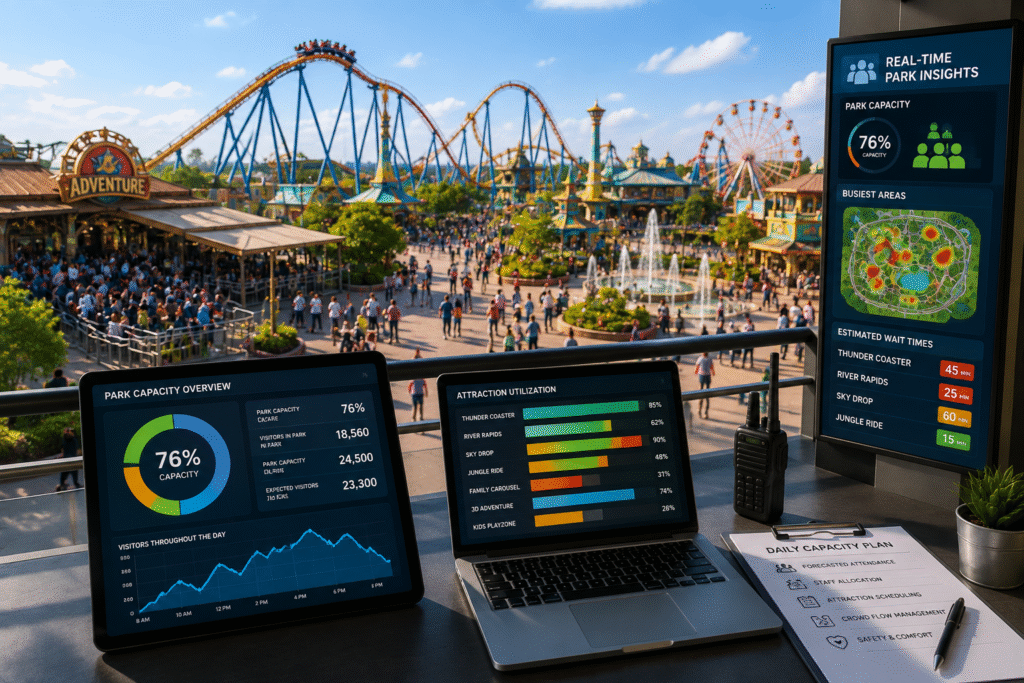
Digital ticketing, visitor tracking, mobile applications, occupancy monitoring, and real-time analytics help operators understand crowd movement throughout the day. This information allows staff to respond quickly, redirect visitors, and improve operational efficiency without disrupting the guest experience.
Plan for Future Expansion
A successful theme park should never be designed only for today’s requirements.
Future attractions, hotels, water parks, event spaces, and entertainment zones should be considered during the initial planning stage. Reserving expansion areas and utility capacity reduces redevelopment costs and allows the park to grow without interrupting existing operations.
Why Capacity Planning Matters
Effective capacity planning creates a better experience for visitors while improving business performance.
Shorter waiting times, smoother visitor movement, efficient staffing, better resource utilization, and improved guest satisfaction all contribute to stronger revenue and higher customer loyalty. Instead of solving operational problems after opening, developers can prevent many of them through smart planning.
Why Choose Peach Prime Consultancy?
Peach Prime Consultancy provides complete theme park planning and consultancy services across India. Our expertise includes Theme Park Master Planning, Capacity Planning, Infrastructure Planning, Engineering, Feasibility Studies, Project Management, and Turnkey Theme Park Solutions.
Whether you’re developing a new amusement park or expanding an existing destination, our team helps create efficient, visitor-friendly parks designed for long-term growth.
Conclusion
Theme Park Capacity Planning is the foundation of a successful amusement park. By considering visitor flow, attraction capacity, infrastructure, technology, and future expansion during the planning stage, developers can create parks that operate efficiently while delivering memorable guest experiences.
With expert planning from Peach Prime Consultancy, your theme park can achieve the perfect balance between operational efficiency, visitor satisfaction, and sustainable business success.