
Blogs
Visitor Flow in Attractions: How Smart Movement Planning Creates Better Guest Experiences
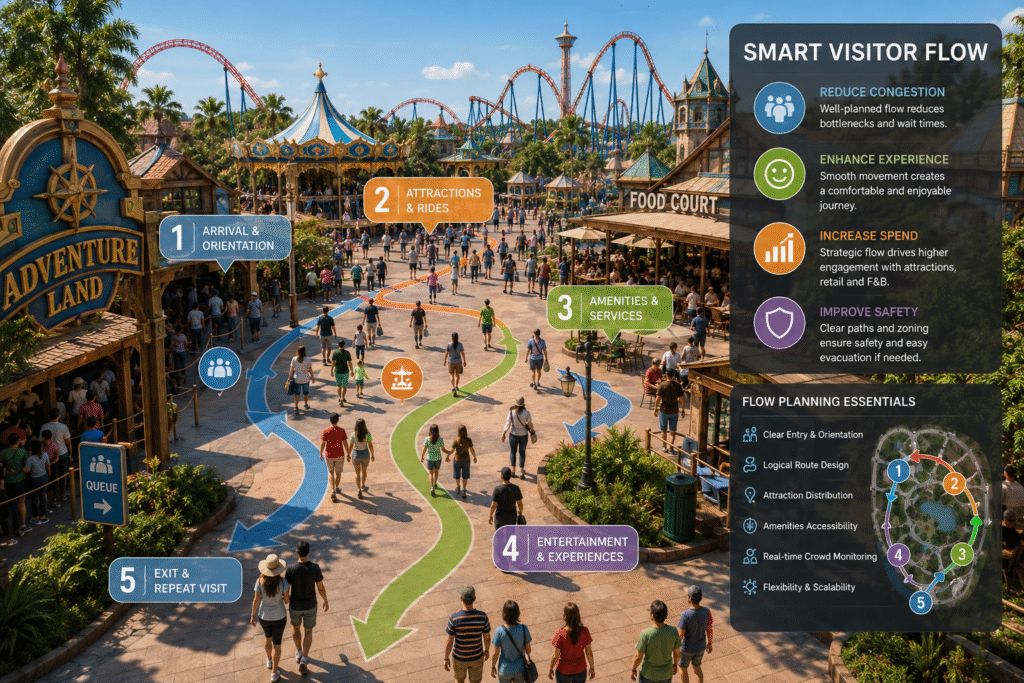
Great attractions are remembered for more than exciting rides or impressive exhibits. Visitors also remember how easy it was to explore the space, how quickly they reached attractions, and whether the overall experience felt comfortable. Even the best-designed destination can disappoint guests if they spend too much time waiting or navigating crowded areas.
That’s where Visitor Flow in Attractions becomes essential. Smart movement planning helps visitors move naturally through a venue, reduces congestion, improves safety, and enhances the overall guest experience. Whether you’re designing a theme park, museum, aquarium, Family Entertainment Center (FEC), or science center, visitor flow should be a key part of the planning process.
Think Like a Visitor
Every visitor follows a journey from arrival to departure. They purchase tickets, enter the attraction, explore different areas, take breaks, visit cafés or retail stores, and finally leave.
When this journey feels simple and intuitive, guests enjoy their visit without noticing the planning behind it. When it doesn’t, long queues, confusing layouts, and crowded spaces quickly become frustrating.
Designing around visitor behaviour creates smoother experiences and encourages people to spend more time enjoying the attraction.
Plan Movement Before Finalizing the Layout
Visitor flow should be considered during the earliest design stages, not after construction begins.
The location of entrances, exits, attractions, restaurants, seating areas, washrooms, and retail spaces all influence how people move through the venue. A carefully planned layout naturally distributes visitors across the attraction instead of creating congestion in one area.
Early planning also reduces expensive design changes later in the project.
Create Natural Walking Routes
Visitors should never feel lost or forced to backtrack.
Wide pathways, multiple circulation routes, open gathering spaces, and clear visual connections between attractions make movement effortless. Instead of directing everyone toward one location, successful attractions encourage guests to discover different experiences throughout the venue.
Comfortable circulation also improves safety during busy periods.
Reduce Waiting Time Wherever Possible
Waiting is often the least enjoyable part of any attraction.
Digital ticketing, timed entry systems, virtual queues, real-time wait-time displays, and shaded waiting areas help improve visitor satisfaction. Interactive queue experiences can also make waiting feel shorter while keeping guests engaged.
Small operational improvements often have a greater impact than adding new attractions.
Support Visitor Comfort
People stay longer when they feel comfortable.
Resting areas, cafés, drinking water stations, seating, family facilities, shaded spaces, and clean washrooms should be placed where visitors naturally need them. These amenities improve the overall experience while encouraging additional spending on food, retail, and entertainment.
Comfort is just as important as the attractions themselves.
Make Navigation Simple
Good wayfinding removes confusion and helps visitors enjoy every part of the attraction.
Clear signage, colour-coded zones, interactive maps, digital displays, and recognizable landmarks guide visitors without overwhelming them. Easy navigation reduces unnecessary crowding and helps guests spend more time exploring instead of searching for directions.
Design for Peak Crowds
Weekends, holidays, and special events often bring significantly larger crowds.
Successful attractions prepare for these busy periods by providing wider circulation routes, flexible queue systems, additional staff, temporary waiting areas, and efficient crowd management strategies. Planning for peak attendance helps maintain a consistent visitor experience throughout the year.
Use Technology to Understand Visitor Behaviour
Modern attractions rely on real-time data to improve operations.
Digital ticketing, occupancy monitoring, footfall analytics, mobile applications, and visitor tracking systems provide valuable insights into crowd movement and attraction performance. These tools help operators identify congestion points, improve staffing, and make better operational decisions.
Plan for Future Growth
Visitor expectations continue to evolve, so attractions should be designed with flexibility in mind.
Future exhibits, entertainment zones, cafés, retail outlets, or new technologies should be considered during the initial planning stage. Flexible layouts make expansion easier while reducing future renovation costs.
Why Visitor Flow Matters
Effective visitor flow improves every part of an attraction.
Guests spend less time waiting, staff can manage operations more efficiently, facilities perform better during peak periods, and businesses benefit from higher customer satisfaction and longer visitor stays.
Rather than being an operational detail, visitor flow is one of the most important factors influencing the overall success of an attraction.
Why Choose Peach Prime Consultancy?
Peach Prime Consultancy provides complete attraction planning and design services for theme parks, museums, aquariums, Family Entertainment Centers, science centers, and other entertainment destinations across India.
Our expertise includes Visitor Flow Planning, Master Planning, Attraction Design, Infrastructure Planning, Engineering, Project Management, and Turnkey Attraction Solutions. We create environments that balance operational efficiency with memorable visitor experiences.
Conclusion
Visitor Flow in Attractions is about much more than managing crowds. It shapes how visitors experience every part of a destination, from arrival and exploration to relaxation and departure.
By combining thoughtful layouts, clear navigation, smart technology, and future-ready planning, attractions can improve guest satisfaction while operating more efficiently. With expert guidance from Peach Prime Consultancy, you can design attractions that are engaging, organized, and built for long-term success.