
Blogs
Experience Led FEC Design vs the Equipment First Model
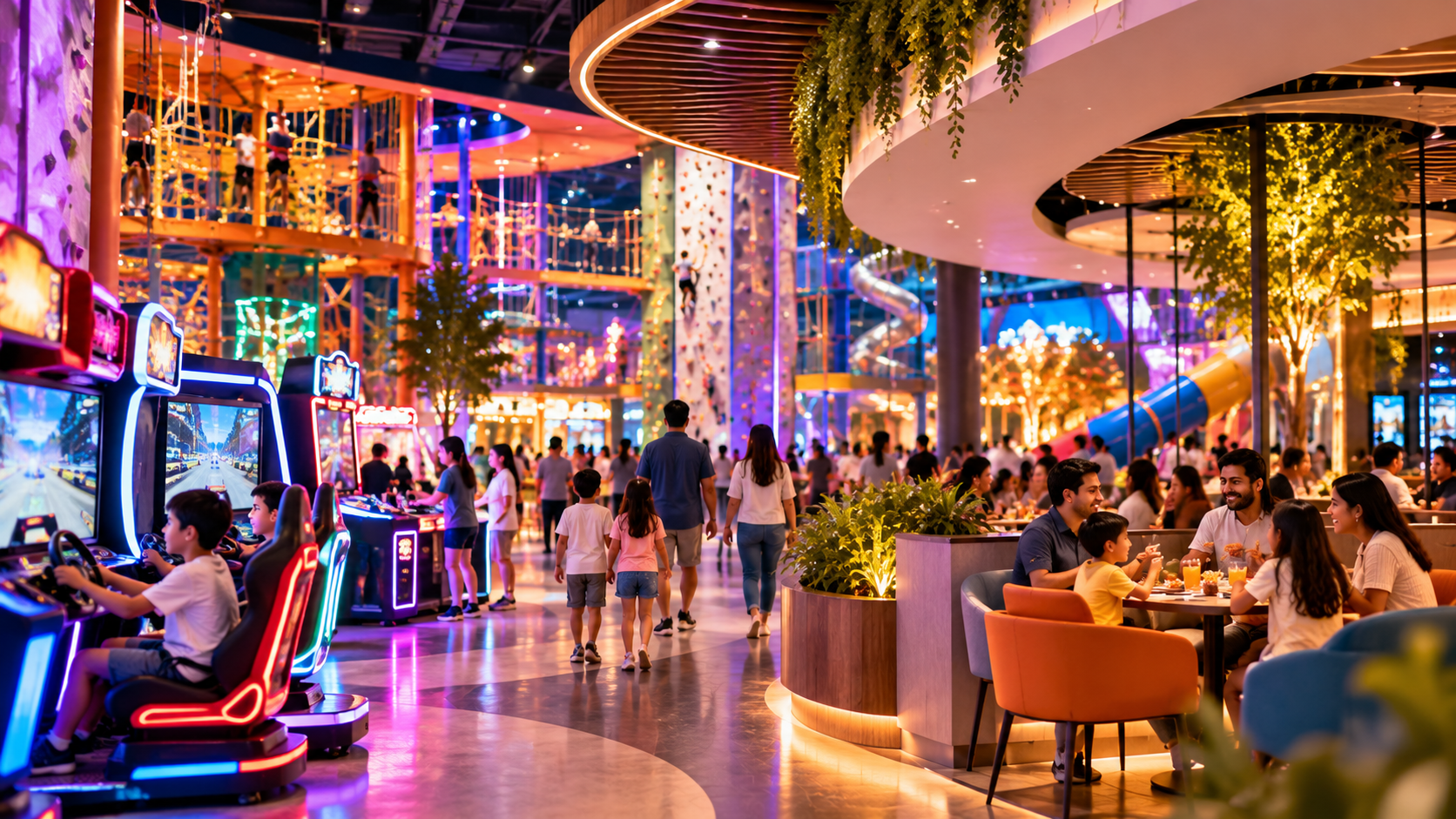
There are two ways to plan a family entertainment centre, and they produce two very different venues.
The first starts with the equipment catalogue. The second starts with the group and the whole visit. The equipment can be exactly the same in both cases. What changes is the order of decisions, and the order of decisions changes almost everything else.
The equipment first model
The equipment first model is the one most operators and most consultants still default to. The process looks like this.
Choose the mix of rides, games and attractions. Negotiate with suppliers. Lay the equipment out on the floor plan. Then fit the queues, the seats, the food service and the back of house into whatever space is left.
Every zone works alone. The arcade sits in one corner, soft play in another, bowling and VR in their own rooms, redemption at the exit and food at the edge or in a separate court. Each zone has its own queue and often its own payment flow. Parents and non players usually end up on a bench at the side of whichever zone the children chose first.
This model has one real strength. It is quick to plan and easy to compare on paper. Equipment catalogues give you clear specifications and known footprints, so a floor plan comes together fast and the capital budget is easy to defend to investors.
The problem shows up in operation. Group visits become a series of separate transactions in separate rooms. Non players disconnect. Food is a 20 minute diversion that often ends the visit. Dwell time stalls at the length of the shortest attention span in the group.
The experience led model
Experience led planning flips the order. The process looks like this.
Start with the group. A visit is almost never one customer. It is a child, a parent, a teenager, a few friends and someone who does not want to play at all. Each person needs a role.
Then plan the whole visit. Arrival. Play. Pause. Ending. Arrival sets the expectations the group walks in with. Play delivers the peak. Pause keeps the group together through food and seating. The ending shapes the memory the group carries home.
Only after that do you choose the equipment to serve the plan.
Play, seating and food share one view. Every member of the group has a role. The next choice is visible from where the group is already sitting, so one more round, a food order, a new zone or a return booking all stay in reach.
The equipment can be the same. The order of decisions changes.
Side by side comparison
Dimension | Equipment first | Experience led |
Starting point | Equipment catalogue | The group and the visit |
Food | At the edge or in a separate court | Served inside the activity |
Non players | On a bench at the side | Have a defined role |
Flow between zones | Each zone works alone | Each next choice is visible from the current one |
Payment | Per zone, often per activity | Open tab or one wallet across the visit |
Dwell time outcome | Capped at the shortest attention span | Grows as each group member finds a reason to stay |
What stays the same
Experience led planning does not reject the equipment catalogue. The rides, the arcade cabinets, the simulators, the climbing walls, the darts and the mini golf all still appear. The suppliers do not change.
The capital budget often does not change either. The equipment line is still the biggest number on the sheet, and the categories are familiar to any investor who has backed an FEC before.
What changes
The floor plan changes. Zones give way to bays. A bay is one game, one table and one group, with service routes behind the seats and a clear sightline back into the action.
The food model changes. The court moves out, and in come kitchen outputs that reach the table where the group is already playing. Shareable formats replace long sit down menus. Service staff route behind the seating rather than through the game.
The programming calendar changes. A year of weekly league nights, monthly tournaments, seasonal overlays and birthday celebrations is planned before the venue opens, not after. The light, the music and the menu shift by time of day so the same floor can host families in the morning and office teams in the evening.
The payment flow changes. One open tab across the group reduces friction between the next ride and the next round of food.
Who should consider which
A small venue with one dominant attraction, a tight budget and a single clear audience may still get a reasonable result from the equipment first model.
Any venue that depends on groups, repeat visits, food revenue or events should plan the experience first. That covers almost every FEC in a mall, a resort, a destination precinct or a mid to large standalone format.
The gap between the two models shows up in the commercial numbers within the first year. Spend per head, length of visit and repeat visit rate all move together, and all three track the quality of the plan more than the quality of the equipment.
Where to start if you are already open
An existing venue cannot be replanned overnight. But most of the gap can close with three small moves.
Pick one zone and turn it into a bay. One game, one table, one group. Move the seating so every chair faces the action, and run service behind the seats.
Pick one quiet weekday morning and give it a different audience. A toddler session, a school group, a club meet, a workshop. Different light, different menu, same floor.
Pick one quarter and launch a seasonal overlay inside your busiest attraction. A themed challenge, a leaderboard, a limited edition reward.
Each of these is low cost, reversible and fast. Together they are the start of an experience led venue.