

Blogs
Adventure Park Safety Standards: Essential Practices for Building Safe Adventure Experiences
Adventure parks are becoming increasingly popular among families, tourists, schools, and corporate groups because they offer exciting outdoor experiences through activities like zip lines, rope courses, climbing walls, obstacle challenges, and adventure trails.
However, the success of any adventure park depends on more than thrilling attractions. Visitors must feel safe and confident while participating in activities. This is why Adventure Park Safety Standards play a critical role in every stage of development, from initial planning and design to construction, operation, and maintenance.
A professionally planned adventure park creates a balance between excitement and safety. By following proper safety practices, developers can reduce risks, improve visitor trust, and build a destination that delivers memorable experiences for years.
Safety Planning Should Begin Before Development
Safety should be considered from the earliest stages of an adventure park project. Before construction begins, developers need to evaluate important factors such as site conditions, terrain, visitor capacity, attraction types, weather conditions, emergency accessibility, and operational requirements.
A detailed Adventure Park Safety Planning process helps identify possible challenges and allows designers to create solutions before they become costly problems. Early planning also improves the overall efficiency of the project by ensuring safety requirements are included in the design itself.
Designing Attractions with Safety in Mind
The foundation of a safe adventure park starts with intelligent design. Every attraction, including zip lines, rope courses, climbing walls, suspension bridges, and aerial activities, should be planned with proper engineering principles and safety considerations.
Adventure Park Design should focus on structural stability, safe visitor movement, equipment placement, maintenance access, and emergency response requirements. A well-designed layout not only protects visitors but also helps operators manage the attraction more effectively.
Professional planning ensures that adventure activities provide excitement while maintaining controlled and predictable conditions.
Managing Risks Through Proper Assessment
Adventure activities naturally involve a certain level of risk, which makes Risk Assessment an essential part of adventure park development.
A professional evaluation considers equipment performance, environmental conditions, visitor behavior, operational procedures, and emergency response capabilities. Identifying potential risks early allows operators to implement preventive measures and create safer experiences.
Effective risk management does not remove adventure from the experience. Instead, it ensures that challenges are carefully controlled and managed.
Selecting Quality Equipment and Materials
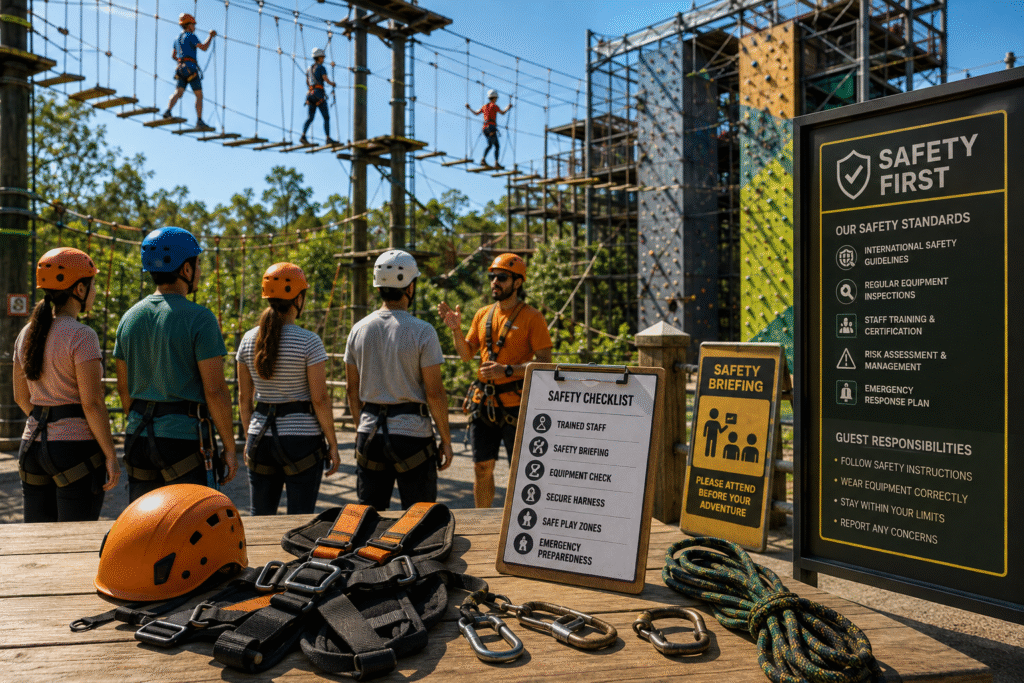
Adventure Park safety depends heavily on the quality and reliability of equipment. Harnesses, helmets, cables, anchors, pulleys, platforms, and climbing systems must be selected carefully and maintained regularly.
Adventure Park Equipment Safety requires routine inspections to identify wear, damage, corrosion, or improper installation. Regular equipment checks improve visitor protection while extending the operational life of the attractions.
Using reliable equipment from trusted manufacturers also helps maintain consistent safety standards throughout the park.
Importance of Strong Engineering
Behind every successful adventure attraction is detailed engineering. Structures such as towers, platforms, bridges, climbing walls, and support systems must be designed to handle operational loads, environmental conditions, and continuous visitor usage.
Adventure Park Engineering Standards help ensure that structures are built with suitable materials, accurate calculations, and proper construction techniques.
Strong engineering creates a safer environment while reducing future maintenance challenges and improving long-term reliability.
Using Effective Safety Protection Systems
Many adventure attractions involve heights and physical challenges, making safety protection systems extremely important.
Modern adventure parks use advanced safety solutions such as secure harness systems, continuous belay systems, protective equipment, reliable anchor points, and controlled access areas to reduce the possibility of accidents.
Properly designed protection systems allow visitors to enjoy adventurous activities while maintaining a high level of security.
Training Staff for Safe Operations
Trained employees are one of the most important parts of adventure park safety. Even the best-designed attraction requires skilled supervision and proper operational procedures.
Adventure Park staff should understand equipment handling, visitor instructions, inspection routines, emergency communication, and rescue procedures.
Continuous staff training helps employees manage daily operations confidently and respond effectively during unexpected situations.
Preparing Emergency Response Procedures
Every adventure park should have a detailed emergency response strategy before welcoming visitors.
Emergency planning includes rescue procedures, first-aid support, communication systems, evacuation methods, and staff responsibilities during emergencies.
Regular safety drills help employees stay prepared and improve response time during real situations. Proper emergency management increases visitor confidence and supports smooth park operations.
Regular Maintenance Ensures Long-Term Safety
Adventure Park safety is an ongoing process. Attractions require regular inspections, preventive maintenance, equipment servicing, and safety evaluations throughout their operating life.
Routine maintenance helps identify potential issues before they affect visitors and ensures that all equipment continues to perform safely.
Maintaining proper inspection records also helps operators monitor equipment conditions and maintain compliance with safety requirements.
Clear Instructions Improve Visitor Safety
Visitors should always understand how to participate safely before entering any attraction.
Clear safety instructions, signage, age requirements, height restrictions, operating guidelines, and proper use of protective equipment help reduce confusion and improve visitor confidence.
A well-informed visitor is more likely to enjoy the experience safely and responsibly.
Maintaining Safety Compliance
Adventure parks must follow applicable safety regulations, engineering requirements, and operational guidelines to maintain quality standards.
Adventure Park Safety Compliance includes regular inspections, safety certifications, structural evaluations, and continuous improvement of operational procedures.
Working with experienced safety professionals helps developers stay updated with industry practices and create safer adventure destinations.
Why Professional Safety Planning Matters
Developing a safe adventure park requires expertise in design, engineering, risk management, operations, and visitor experience planning.
Professional Adventure Park Consultants help integrate safety into every stage of development, including concept planning, attraction design, engineering, installation, testing, and operational management.
With expert guidance, developers can create adventure parks that deliver exciting experiences while maintaining strong safety standards.
Why Choose Peach Prime Consultancy?
Peach Prime Consultancy provides complete planning, design, engineering, and project management solutions for adventure parks, outdoor recreation facilities, and adventure tourism destinations across India.
Our expertise includes Adventure Park Consultancy, Adventure Park Planning, Adventure Park Design, Safety Planning, Engineering Services, Feasibility Studies, Infrastructure Development, and Project Management.
We combine creative ideas with technical expertise to develop adventure destinations that are engaging, safe, efficient, and designed for long-term success.
Conclusion
Adventure Park Safety Standards are the foundation of every successful adventure destination. Safe design, quality equipment, trained staff, proper maintenance, and emergency preparedness work together to protect visitors while improving operational performance.
Safety should not be treated as an additional feature. It should be integrated into every decision from the beginning of planning to daily park operations.
By partnering with experienced professionals like Peach Prime Consultancy, developers can create adventure parks that offer unforgettable experiences while maintaining trust, reliability, and long-term success.