A planning guide for developers creating permanent, year-round immersive horror walkthrough attractions that operate as destination entertainment anchors through cinematic scare design, reliable technology integration, and structured operational programming.
Introduction: The Commercial Case for Permanent Horror Attractions
Horror as an entertainment category generates extraordinary consumer engagement relative to its infrastructure cost, because the emotional response it creates, the physical arousal of genuine fright within a safe and controlled environment, is one of the most intense and memorable experiences that a public attraction can deliver. This intensity creates the post-visit conversation, the social media sharing, and the word-of-mouth advocacy that are the most commercially productive marketing outcomes available to an entertainment venue, and it does so with a natural spontaneity that cannot be manufactured through conventional advertising.
The seasonal haunted house model has demonstrated the commercial power of horror entertainment for decades, but it has two structural limitations that permanent, year-round horror walkthrough attractions resolve. First, seasonal operation confines revenue to a narrow calendar window, typically six to ten weeks around Halloween, that is insufficient to support the quality of scenic investment and technology systems that genuinely cinematic horror environments require. Second, the temporary nature of seasonal attractions creates a ceiling on experience quality, because the construction and scenic standards appropriate for a six-week pop-up are substantially lower than those available to a permanent venue with a multi-year amortisation horizon for its capital investment.
A well-designed permanent horror walkthrough attraction, built to cinematic scenic standards with professional animatronics, integrated technology systems, and structured group capacity management, can operate profitably year-round and generate the per-square-foot revenue performance that justifies its development cost. This guide provides the complete planning framework for developing such an attraction.
MARKET INSIGHT | Investors exploring immersive horror design, animatronic haunted environments, projection-based scare attractions, and experiential fear installations are entering a market where permanent high-quality horror attractions are significantly undersupplied relative to demonstrated consumer demand, particularly in major urban markets in India where the format has little existing competition. |
Creating Cinematic Scare Environments
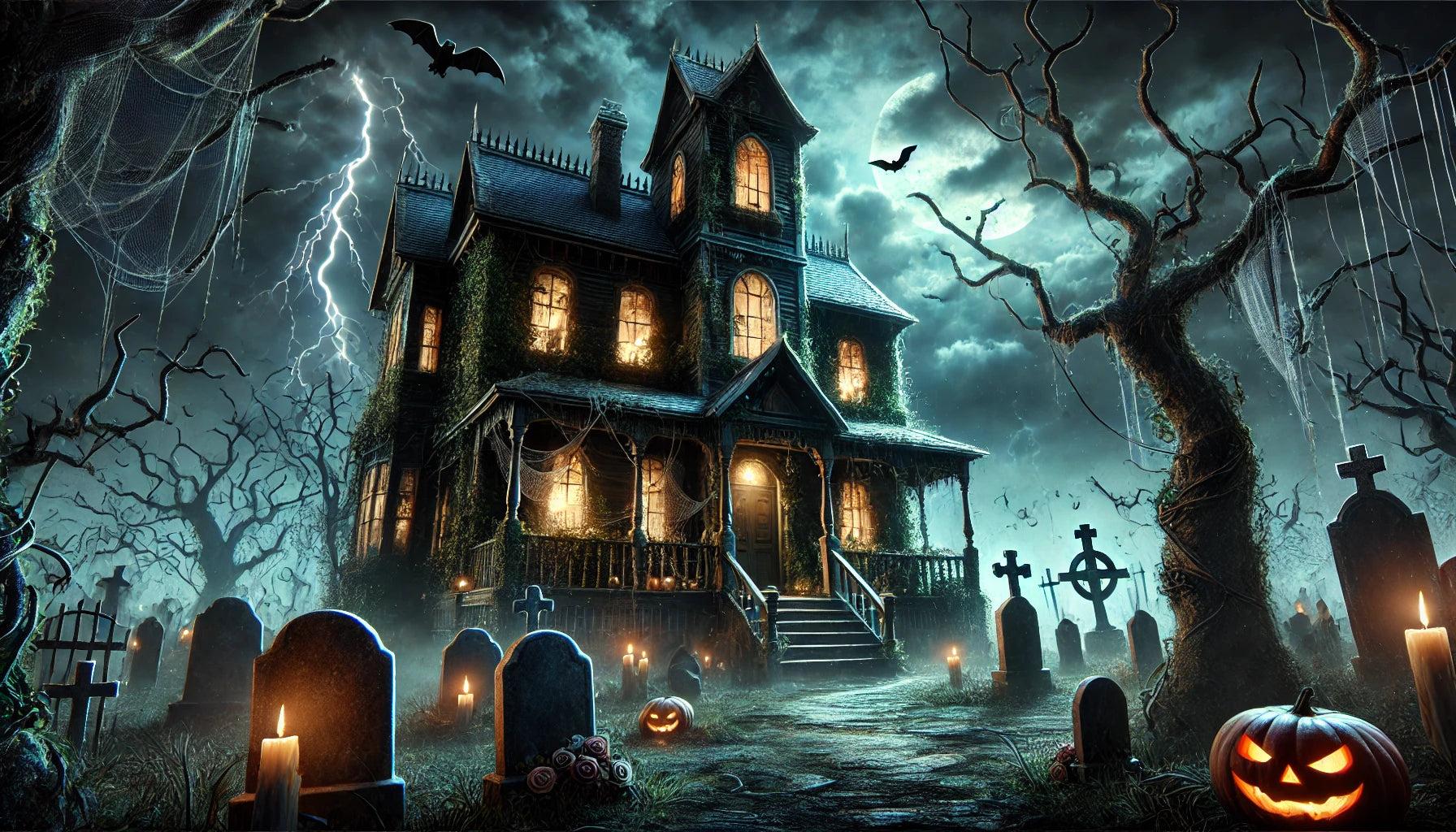
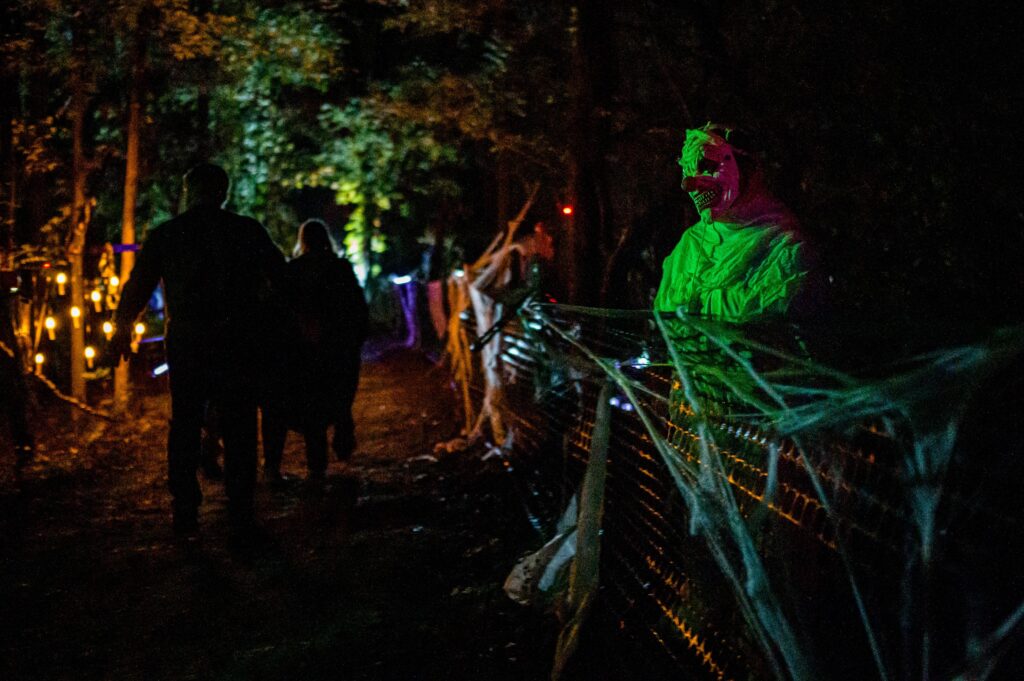
The design philosophy of a high-impact horror walkthrough attraction must begin with the understanding that the most effective scares are not the loudest or the most sudden but the ones that create genuine dread through atmospheric storytelling before any active scare event occurs. A visitor who is emotionally engaged with the narrative of the environment, who believes in the reality of the threat the world around them contains, experiences the same scare stimulus with dramatically greater intensity than a visitor who is simply walking through a decorated corridor waiting for something to jump out at them.
Layered Narrative Progression
The narrative architecture of a horror walkthrough should be structured as a film script: with an establishment phase that introduces the world and its threat, a development phase that deepens the visitor’s engagement with the story and builds dread through implication and atmosphere, and a climax phase that delivers the most intense scare experiences at the moment of maximum emotional investment. Each zone should advance the story rather than simply presenting a new scare type, so that visitors are continuously experiencing a deepening narrative rather than a sequence of independent set pieces. Character consistency, where recurring horror entities are established early in the walkthrough and reappear in unexpected contexts later, creates the psychological continuity that makes the experience feel like a coherent world rather than a series of themed rooms.
Core Design Elements
- Dark corridor transitions between chambers that create the suspense of the unknown and prime visitors for the reveal of the next environment
- Surprise reveal chambers where the transition from a narrow, oppressive space to a larger, dramatically lit environment creates the shock of sudden disclosure
- Hidden performer pathways that allow live actors to appear in unexpected positions relative to visitor expectations, creating the unpredictability that technology alone cannot replicate
- Controlled crowd flow systems that manage the spacing between visitor groups through timed entry intervals, preventing the experience degradation that occurs when successive groups are too close together
- Atmospheric lighting transitions between zones that communicate the emotional register of each chapter without explicit narrative exposition
- Spatial audio environments that create the acoustic reality of each zone’s horror setting with directional sound placing threats at specific positions around the visitor
Technology Integration for Modern Horror Attractions
The technology layer of a permanent horror walkthrough attraction is the infrastructure that transforms a well-designed scenic environment into a reliably repeatable cinematic experience. Without technology integration, the quality of the experience is determined by the performance consistency of live performers, whose variability across hundreds of daily sessions inevitably creates quality inconsistency. With technology integration, the core atmospheric and scare architecture of each zone operates consistently for every visitor group regardless of the time of day or the energy level of the performing cast.
- Programmable DMX lighting control: the industry standard protocol for entertainment lighting that enables the precise, scene-by-scene lighting programming that creates the atmospheric quality of a professionally lit film environment
- Synchronised sound design through zoned speaker systems: directional speaker arrays that create the acoustic reality of each zone’s world, with sub-bass frequencies that create the physical sensation of dread rather than simply the auditory one
- Projection mapping illusions: dynamic visual content applied to architectural surfaces that create the appearance of moving, breathing, or transforming environments without physical mechanical systems
- RFID-triggered effects: proximity-sensing systems embedded in the walkthrough path that trigger specific scare effects precisely as each visitor group reaches the optimal position for maximum impact, replacing the inconsistency of manual performer triggering with precisely timed automated delivery
- Centralised show control systems: the operational platform that manages the coordination of all lighting, audio, projection, and animatronic systems from a single interface, enabling the game master to monitor and control the full experience in real time
Operational Efficiency and Safety Compliance
The operational discipline of a permanent horror walkthrough is as important to its commercial performance as its creative quality. An extraordinary experience that runs with unsafe crowding, unreliable scare mechanisms, or inadequate emergency response protocols will generate the catastrophic negative incidents that destroy reputation regardless of the quality of the baseline experience it delivers to the majority of visitors.
Safety Planning Essentials
Emergency exits must be clearly marked and accessible from every zone in the walkthrough, operable without staff assistance, and tested weekly to confirm that they function correctly and that the exit pathway remains clear and navigable. CCTV monitoring of every zone in the walkthrough must be continuous throughout operating hours, with a dedicated game master monitoring the feed and able to halt the experience and initiate emergency protocols immediately. Visitor group sizes must be managed within the maximum capacity of each zone, with a minimum spacing interval between groups maintained through timed entry windows rather than self-paced admission. All animatronic and pneumatic scare systems must be inspected before each operating day and maintained on a documented preventive maintenance schedule that identifies and resolves mechanical issues before they create system failures during operation.
Live Actor Management
Live performers are the element that elevates a technology-driven horror walkthrough from impressive to genuinely terrifying, because the unpredictability and responsiveness of a skilled horror performer creates an immediacy that no automated system can replicate. Managing performers across multiple daily sessions requires a training programme that establishes the specific character behaviours, scare timing principles, and audience management techniques that protect both visitor welfare and performer safety. Performer rotation schedules that prevent the physical and psychological fatigue of extended horror performance, combined with post-shift debrief processes that address any visitor welfare concerns that arose during sessions, are the operational standards that protect both the experience quality and the legal compliance of live performance in a commercial horror context.
Revenue Architecture
- Standard admission with timed entry windows that manage crowd density and ensure consistent experience quality for every group
- Premium private group hire with exclusive walkthrough access and a dedicated live performance team for the duration of the session
- Corporate event bookings for team nights, client entertainment, and brand activation events that command premium pricing and fill weekday evening capacity
- Birthday packages with horror-themed event management, pre-walkthrough social space, and post-experience food and beverage
- Seasonal programming upgrades for Halloween, Day of the Dead, and other culturally relevant horror occasions that create demand surge periods and media coverage
- Branded merchandise including story-world collectibles, character-themed apparel, and photography packages from in-walkthrough photo moments
- Social media content creation partnerships with horror and entertainment content creators who generate organic reach in exchange for complimentary access
Frequently Asked Questions
What is the ideal group size for a horror walkthrough experience? |
The commercially optimal and experientially most effective group size for a horror walkthrough is four to eight visitors. Groups smaller than four create an experience that feels lonely rather than communally frightening, which reduces the social energy that amplifies individual scare responses and generates the shared experience stories that drive post-visit advocacy. Groups larger than ten create the crowd dynamics that reduce the intimacy of the horror environment and allow some group members to insulate themselves from scare stimuli by positioning themselves within the group rather than at its vulnerable perimeters. The group size management system should be enforced through the booking platform and the entry scheduling rather than relying on visitor self-selection, with overflow visitors from larger parties allocated to sequential entry windows. |
How does a year-round horror attraction sustain demand outside Halloween season? |
Sustaining demand outside Halloween season requires treating horror as a year-round entertainment genre rather than a seasonal novelty, which in turn requires a marketing and programming strategy that creates ongoing occasion relevance throughout the calendar. Monthly themed event nights that connect to different aspects of the horror genre, from supernatural folklore to psychological thriller to gothic romance, create programming variety that serves different audience preferences and creates new booking occasions for returning visitors. Corporate and social group bookings that position the horror walkthrough as an unusual and memorable evening experience rather than a theme-dependent attraction create B2B demand that is not season-sensitive. And ongoing social media content production that maintains the venue’s presence within horror fan communities and experience-seeking demographic channels sustains awareness and demand generation continuously rather than only during the seasonal spike. |
What are the key differences between seasonal and permanent horror attraction design? |
Permanent horror attraction design differs from seasonal construction across three dimensions that have direct commercial consequences. Material specification: permanent attractions require scenic materials specified for public venue durability under daily visitor contact, which means commercial-grade finishes, sealed surfaces, and structurally engineered scenic elements rather than the theatrical materials that are appropriate for a six-week seasonal event. Technology investment: permanent attractions justify the investment in integrated show control, RFID-triggered effects, and professional animatronics that are cost-prohibitive for seasonal operations, creating a quality ceiling that seasonal attractions cannot reach. Safety compliance: permanent commercial venues are subject to ongoing building and entertainment licence inspections that require construction and safety standards substantially higher than those applicable to temporary events, which means permanent horror attractions must be designed to commercial venue safety codes from the outset rather than adapted to them retrospectively. |
How can a horror attraction effectively incorporate live performers alongside automated technology? |
The most effective integration of live performers with automated technology systems creates a layered experience where the technology delivers the consistent atmospheric foundation, the precisely timed mechanical scares, and the environmental storytelling that would be impossible to perform reliably by human performers across hundreds of daily sessions, while live performers deliver the improvised, responsive, and physically present encounters that technology cannot replicate. The specific zones most effective for live performer integration are those that involve close-proximity interaction with visitors, pursuing or cornering visitors within defined spatial constraints, and the character revelation moments where a performer’s specific physical and vocal presence creates a more frightening encounter than any animatronic equivalent. The zone design must provide the hidden pathways, performer concealment positions, and safe performer movement routes that allow live actors to operate effectively and safely within the same environment as visitors. |
What visitor welfare safeguards are essential for a horror walkthrough? |
Essential visitor welfare safeguards include a comprehensive pre-entry consent and health screening process that informs visitors of the physical and psychological intensity of the experience and screens for contraindications including heart conditions, epilepsy, claustrophobia, and pregnancy; a clearly communicated and consistently enforced safe word or distress signal that immediately halts the live performance and guides the visitor to the nearest exit; a trained first response protocol for staff that addresses both physical and psychological distress events that occur within the walkthrough; a post-experience support provision for visitors who experience delayed anxiety responses after exiting; and a rigorous minimum age policy enforced at the point of sale and at entry. The welfare safeguard documentation should be reviewed by a legal advisor familiar with commercial entertainment venue liability standards in the relevant jurisdiction before the venue opens. |
What is the payback period for a permanent horror walkthrough attraction? |
A well-designed permanent horror walkthrough of 5,000 to 10,000 square feet with professional animatronics, integrated technology systems, and quality scenic fabrication, operated in a strong urban market with active corporate and group event development, typically achieves payback within 30 to 48 months. The key variables are the quality of the experience relative to competitive alternatives in the market, which determines the ticket pricing tolerance and the organic advocacy rate; the corporate and private group event revenue development, which carries higher per-head yield than general admission and generates advance booking revenue; and the efficiency of the entry scheduling system, which determines how close to the theoretical throughput maximum the venue operates during peak hours. |
Partner with an Experienced Immersive Design Consultant
Peach Prime Consultancy specialises in immersive attraction development, combining storytelling, engineering precision, and commercial planning. If you are planning a permanent horror walkthrough attraction or immersive scare maze, our team can guide you from concept development through to full-scale execution. Visit www.peachprime.in to arrange a planning consultation.
WHAT PEACH PRIME DELIVERS | Narrative and scare architecture design, scenic and technology specification, DMX and show control planning, safety compliance coordination, capacity and throughput modelling, revenue architecture, and investor presentation support. |