
A technical and operational planning guide for developers designing VR exploration arenas that deliver immersive multiplayer experiences, high session throughput, and scalable content refresh without the capital reinvestment cycles of physical attraction development.
Introduction: Engineering VR Arenas for Commercial Performance
The difference between a VR attraction that generates strong commercial performance over a multi-year operating lifecycle and one that disappoints within its first two years is almost never the quality of the VR content it offers on day one. It is the quality of the engineering decisions made before day one: the spatial design that determines how many simultaneous sessions can run efficiently, the technology integration that determines how reliably the experience performs under full operational load, the visitor flow architecture that determines how quickly groups can transition from arrival through preparation to their session and exit, and the content refresh infrastructure that determines whether new experiences can be introduced without capital reinvestment.
This technical blueprint addresses each of these engineering dimensions in sequence, providing the specification framework and operational planning guidance that developers and their technology consultants can use to design VR exploration arenas that are both experientially excellent and commercially optimised from the first day of operation.
TECHNICAL PRINCIPLE | Building a high-performance VR exploration arena requires more than installing premium headsets in a clear space. It requires the integration of spatial design, IT infrastructure, visitor flow engineering, and content management systems that collectively determine the quality ceiling of the experience and the commercial efficiency of its delivery. |
Spatial Planning and Visitor Flow
The spatial design of a VR exploration arena is the primary determinant of its session throughput capacity and its visitor experience quality. These two objectives are in tension in ways that must be explicitly managed in the design process: maximising session throughput requires minimising the time between session groups, which in turn requires that gear-up, briefing, and debrief functions operate in parallel with active sessions rather than sequentially; but maximising visitor experience quality requires that each group receives thorough and unhurried preparation that ensures they are fully oriented and equipped before their session begins. Resolving this tension requires spatial separation of the preparation and active session functions into distinct zones that can operate simultaneously.
Arena Zone Design
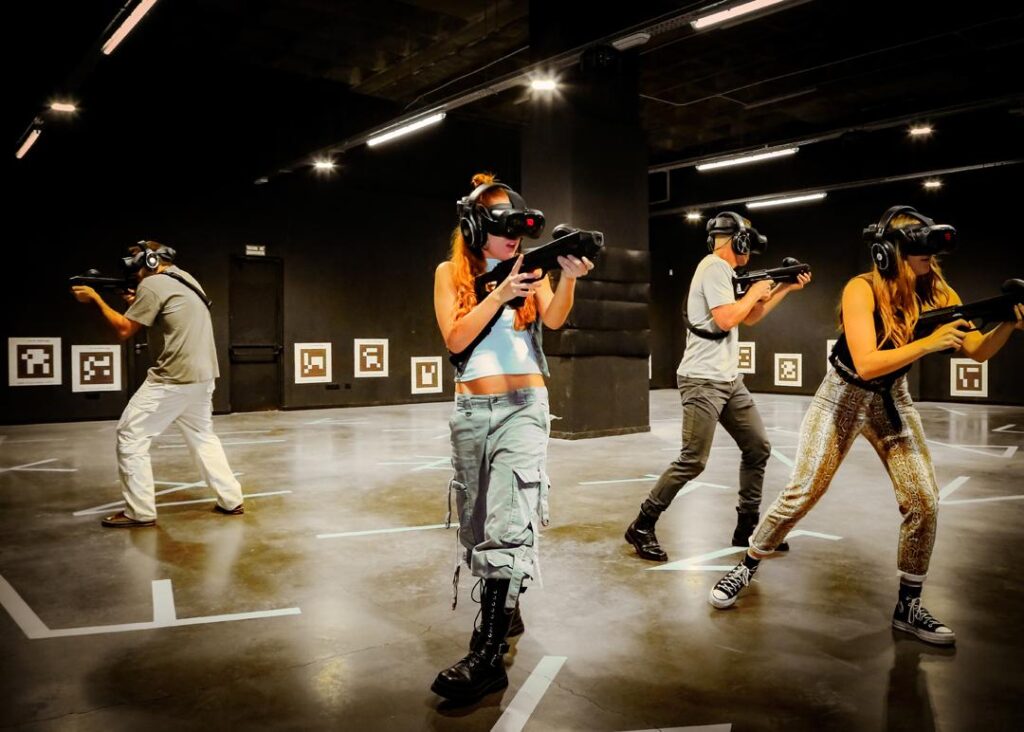
The free-roam VR arena itself must be designed around three spatial requirements simultaneously. First, the minimum clear floor area required by the VR platform’s tracking system to support the target number of simultaneous players: most commercial free-roam platforms require a minimum of 150 square feet per simultaneous player, with generous additional margin to prevent physical proximity between players during the dynamic movement of active gameplay. Second, the ceiling height required by the tracking sensor infrastructure: overhead tracking systems typically require sensor mounting heights of 2.5 to 3.5 metres, with additional clearance above for cable management and maintenance access. Third, the floor surface specification: the arena floor must be level within the tolerance of the tracking system’s spatial calibration, smooth enough to allow confident movement without trip hazards, and surfaced with a material that provides adequate grip for the rapid directional changes of active gameplay.
Briefing Rooms and Gear-Up Zones
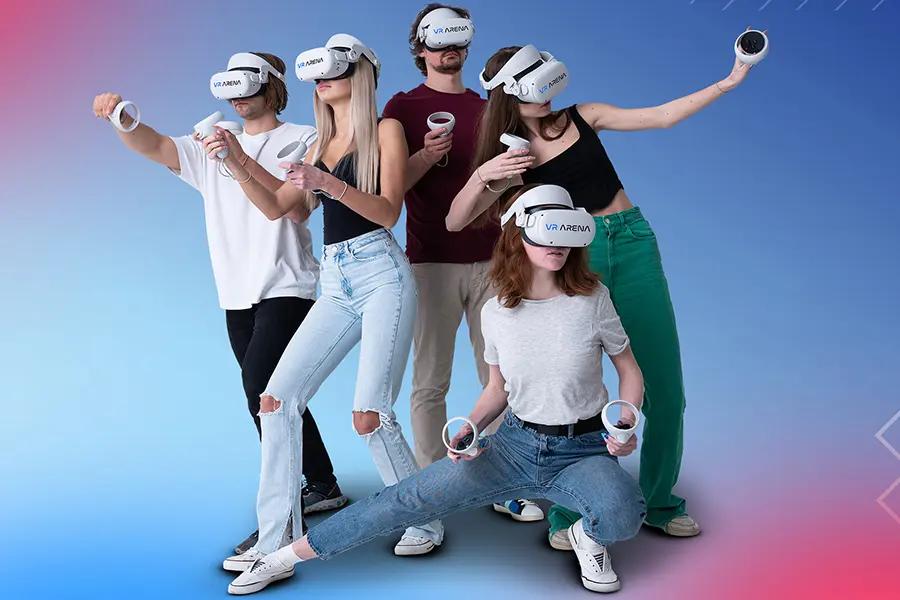
Briefing rooms must be sized to accommodate the maximum group size for a single session in a comfortable standing or seated arrangement, with audio-visual display capability for the safety and experience introduction content and adequate acoustic separation from adjacent active arenas to prevent the distracting noise of active sessions from interrupting the briefing process. Gear-up zones must provide the headset fitting, haptic vest donning, and controller assignment workflow with enough space per player to allow simultaneous fitting for all group members rather than sequential processing that extends the transition time. Both spaces should be designed for efficient cleaning and disinfection between groups, with appropriate storage for sanitisation equipment and spare components.
Spectator Viewing and Debrief Areas
Spectator viewing areas, where accompanying non-playing visitors or subsequent session groups can observe active gameplay through large-format external displays showing the VR perspective of selected players, serve both an entertainment function and a commercial one: spectators who watch a compelling session before their own are entering their experience with elevated anticipation and reduced anxiety about the unfamiliar technology, which improves their in-session engagement quality and their post-session satisfaction. Debrief spaces, where groups can review their mission performance data, share photographs, and extend their social experience after the VR session, create the dwell time that increases per-visit food and beverage spending and the conversational engagement that generates the social media content and advocacy that is the venue’s most effective marketing channel.
Technology Integration
VR Hardware and Tracking Systems
High-resolution VR headsets specified for the target visual quality of the experience content, with sufficient field of view, refresh rate, and display resolution to deliver the cinematic quality that premium positioning requires, are the hardware investment that most directly determines the immersive ceiling of the experience. Full-body tracking integration, where position data from headset, hand controllers, and body-worn trackers is combined to create a complete digital avatar of each player in the shared virtual environment, provides the presence and social awareness that makes multiplayer VR genuinely collaborative rather than simply simultaneous. Centralised content management systems that allow the game master to select, launch, monitor, and terminate sessions from a single interface, and that maintain real-time visibility of all player positions and system status during active sessions, are the operational nerve centre of the venue.
IT Infrastructure and Redundancy
The server infrastructure must provide the simultaneous processing capacity for all active arenas at peak operational load, with redundant server components that maintain session quality if a primary component fails during operation. Low-latency wireless networking, implemented through WiFi 6 or millimetre-wave systems rather than standard commercial WiFi, provides the sub-20-millisecond round-trip communication between headsets and servers that prevents the motion sickness latency threshold. Redundant power backup through UPS systems protecting all server, networking, and display infrastructure ensures that power quality events do not interrupt active sessions, which is the most common source of catastrophic negative reviews in VR venue operation. Building-level cooling infrastructure must maintain server room temperatures within the operating range of the hardware under full operational load in the ambient temperature conditions of the venue location.
International Case Studies
01 | Hologate Arena Munich, Germany Hologate Arena’s compact multiplayer VR platform has become one of the most widely deployed and operationally proven VR systems in the global FEC market, precisely because its design philosophy prioritises the operational requirements of commercial venue integration as much as the technical quality of the VR experience. Its quick reset cycle, which allows a new group to begin their session within minutes of a previous group’s exit without requiring technical recalibration, makes it viable for high-throughput FEC environments where session frequency is the primary revenue driver. Its small physical footprint, which can be installed within an existing FEC floor plan without dedicated arena construction, provides a low-barrier entry point for operators wanting to add VR to an established venue. For developers planning VR as one component of a larger entertainment mix, Hologate provides the most operationally practical integration model available. |
02 | Dreamscape Immersive Los Angeles, USA Dreamscape Immersive represents the premium end of the physical-virtual hybrid experience spectrum, combining purpose-built physical environments with high-resolution VR content to create experiences that feel convincingly real at the intersection of the physical and digital worlds. The company’s investment in custom physical prop fabrication, haptic floor systems, and motion platform integration alongside its VR content development reflects the commitment to full sensory engagement that distinguishes premium from standard location-based VR. Its brand partnership model, developing licensed VR experiences for major entertainment IP owners, generates content with pre-existing audience demand that reduces the marketing investment required to drive new visitor acquisition. For developers targeting premium market positioning with flagship venue ambitions, the Dreamscape model illustrates the combination of physical and digital investment that justifies premium pricing. |
03 | VR Park Dubai Dubai, UAE VR Park Dubai demonstrates the commercial viability of the large-scale, multi-experience VR entertainment centre integrated within a major mall environment, operating as an anchor entertainment tenant that draws destination footfall to the Dubai Mall’s entertainment floor. The venue’s breadth of VR experiences, spanning multiple game genres and social formats within a single branded attraction, creates the variety that justifies extended dwell time and supports the price anchoring that makes individual experience pricing feel accessible relative to the value of the full menu. Its integration within the world’s most visited retail mall illustrates how location quality and footfall infrastructure amplify the commercial performance of a well-designed VR venue beyond what standalone destination operation would generate. |
Scaling and Content Refresh Strategy
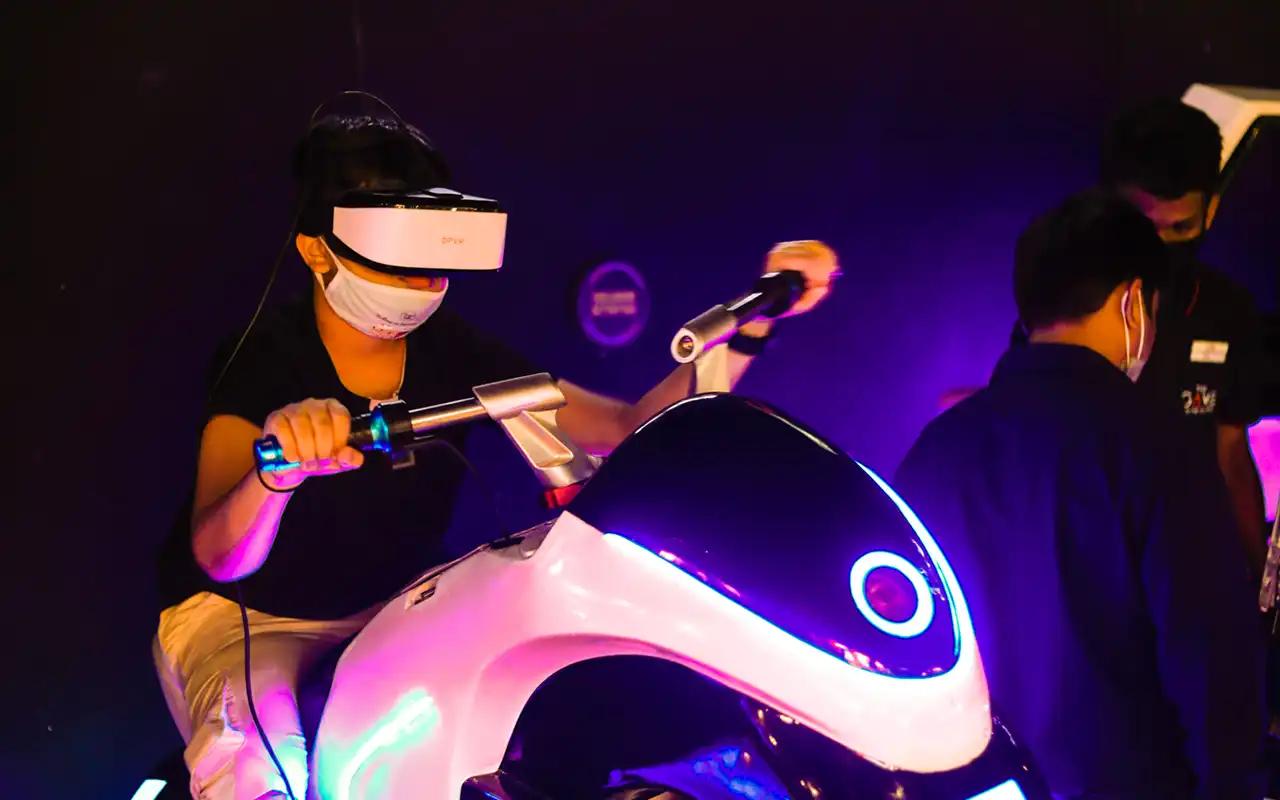
A rotating content library, managed through the centralised content management system rather than through hardware replacement, is the operational mechanism that sustains repeat visitation motivation and justifies the subscription membership programmes that create recurring revenue. Seasonal mission overlays, which introduce new narrative and visual content for limited periods aligned with cultural moments and holidays, create the time-limited motivation to return that sustains attendance between major new content releases. Competitive tournament events, structured around specific missions with leaderboard scoring and prize formats, create community occasions that generate event-driven revenue and the social media content that amplifies the venue’s brand reach to the competitive gaming audience. The content refresh investment should be budgeted as a fixed percentage of annual revenue rather than a discretionary expense, with a target of 15 to 20 per cent of revenue reinvested in content development and technology upgrade annually to maintain the competitive quality standard that premium pricing requires.
Frequently Asked Questions
What is the most important technical specification to get right in a VR arena? |
The most important technical specification in a free-roam VR arena is the tracking system accuracy and reliability, because every other quality dimension of the experience depends on it. If the tracking system cannot maintain accurate player position data within two to three centimetres at all points of the arena simultaneously, the safety boundaries that prevent physical contact between players and with arena walls will fail to trigger reliably, creating safety incidents and the immediate trust loss with the affected group that generates the most severe negative reviews. Physical safety boundary accuracy is not a secondary specification that can be traded off against other factors: it is the baseline requirement above which all other quality investments operate, and it must be confirmed through rigorous pre-opening testing under full player load before the venue accepts paying visitors. |
How long does a VR arena session typically last and how many sessions per day can a single arena deliver? |
A complete VR arena session, including gear-up, safety briefing, active gameplay, and debrief, typically runs 45 to 75 minutes for a standard 20 to 30-minute gameplay mission. With a 10-minute changeover window between sessions for equipment sanitisation, headset charging assessment, and arena reset, a single arena can deliver approximately eight to ten complete sessions per operating day during a 12-hour operating period. The optimal session scheduling model uses staggered start times across multiple arenas so that changeover activities for one arena do not coincide with gear-up and briefing activities for another, maintaining a consistent flow of active sessions and preventing the staff bottlenecks that reduce session frequency below the theoretical maximum. |
How should a VR arena manage the hygiene requirements for shared headsets? |
Shared headset hygiene management requires a documented sanitisation protocol that addresses the primary contact points: the inner foam facial interface, the external headset shell, hand controllers, and any haptic vest or body-worn tracker components. The facial interface is the highest-priority hygiene component and should be either replaced between sessions with disposable foam inserts or cleaned with an approved antimicrobial solution and dried completely before the next use. A visible and performative sanitisation ritual, where staff clean and prepare equipment in full view of the waiting group, serves both the functional hygiene purpose and the customer confidence purpose of demonstrating that the venue takes hygiene seriously. Permanently displaying the sanitisation protocol on signage within the briefing room addresses the hygiene anxiety that is the most common barrier to first-time VR venue visits from hygiene-conscious consumers. |
What content genres perform best in a location-based VR context? |
The content genres that consistently generate the strongest group engagement and repeat visit motivation in a location-based VR context are cooperative multiplayer survival experiences, where a group of players must collaborate to overcome environmental threats or enemies with clear collective objectives and individual role differentiation; competitive multiplayer combat, where players compete directly against each other or in teams with real-time scoring visible throughout the session; and exploratory adventure experiences, where players navigate a richly detailed virtual environment discovering story content, solving puzzles, and completing objectives at their own pace. Horror survival is a high-engagement genre for appropriate age groups but requires careful management of accessibility for visitors with anxiety or phobia sensitivities. Sports simulation experiences, while popular in home VR, typically generate lower engagement in commercial group VR because the competitive format suits pairs rather than groups, reducing the social energy that drives advocacy. |
What operational metrics are most important for managing a VR arena? |
The four operational metrics most critical to VR arena management are session occupancy rate, equipment uptime percentage, average group size per session, and net promoter score per session type. Session occupancy rate measures the proportion of available session slots filled with paying visitors, which is the primary throughput efficiency indicator. Equipment uptime percentage measures the proportion of operating hours during which all equipment is functioning correctly, which determines how consistently the revenue model’s capacity assumptions are being achieved. Average group size per session measures the social group composition of demand, with groups of four to six generating the highest per-session revenue and the strongest social media amplification. Net promoter score per session type identifies which content experiences are generating the strongest advocacy and which are underperforming relative to visitor expectations, informing content library curation decisions. |
How does a VR arena justify premium pricing to first-time visitors? |
Justifying premium pricing to first-time visitors requires communicating three dimensions of value before the visitor experiences the session: the technology quality differential between location-based VR and home VR that makes the experience impossible to replicate independently; the social multiplayer dimension that creates a shared adventure memory rather than a solitary entertainment experience; and the cinematic storytelling quality of the specific experience they are about to have. Marketing content that showcases the actual VR environment through player-perspective footage and social media content from previous visitors communicates the visual quality and excitement level of the experience more convincingly than any product description. The venue team’s enthusiasm and professionalism during the briefing and gear-up process is the in-venue communication of the same value message, and its quality has a direct impact on whether first-time visitors feel confident that the premium price they have paid will be delivered upon by their session. |
Partner with Experienced Immersive Consultants
Peach Prime Consultancy delivers end-to-end immersive attraction planning including technical coordination, revenue modelling, and operational playbooks. If you are developing a VR exploration arena, our expertise ensures your investment is future-ready and commercially optimised. Visit www.peachprime.in to arrange a planning consultation.
WHAT PEACH PRIME DELIVERS | Arena and venue spatial design, VR platform and hardware specification, IT and network infrastructure planning, visitor flow and throughput optimisation, content refresh strategy, operational playbook development, and investor presentation support. |