
Why Entertainment Is Becoming the Core Infrastructure of Modern Retail
The global shopping mall industry is undergoing one of the most significant structural shifts in its history. Traditional retail-driven mall models that once relied on fashion anchors, department stores, and passive shopping behaviour are facing increasing pressure from e-commerce convenience, changing consumer habits, and declining dwell times. Across mature and emerging markets alike, developers are recognizing that the future of successful retail destinations no longer lies in transactional shopping alone. It lies in creating immersive, socially engaging, experience-driven ecosystems where entertainment functions as the primary driver of visitation.
Consumers today visit malls not simply to purchase products but to spend meaningful leisure time. They seek environments that combine entertainment, dining, culture, social interaction, and digital engagement within a single destination. This behavioural shift has transformed entertainment from a supplementary mall attraction into a critical infrastructure component that determines footfall sustainability, tenant performance, and long-term asset valuation.
For developers, this transition requires more than inserting isolated attractions into vacant retail spaces. True entertainment-led retail transformation demands a comprehensive rethinking of spatial planning, circulation strategy, operational programming, tenant integration, and revenue architecture. Malls that approach entertainment as infrastructure rather than temporary tenancy are emerging as the next generation of high-performing mixed-use destinations.
This blueprint explores the strategic framework developers should follow when repositioning traditional malls into experiential entertainment ecosystems that generate long-term commercial resilience.
The Shift from Retail-Centric to Experience-Centric Development
For decades, the commercial success of malls depended on retail anchors such as department stores, hypermarkets, and multiplex cinemas. These anchors generated predictable footfall that supported smaller inline tenants and justified premium leasing structures. However, consumer priorities have evolved dramatically.
Digital commerce now satisfies routine purchasing behaviour with greater convenience than physical retail can provide. As a result, the primary reason consumers visit physical destinations has shifted toward experiences that cannot be replicated online: social interaction, competitive entertainment, immersive storytelling, live events, and curated leisure environments.
This evolution has created a new development imperative. Modern malls must function as entertainment ecosystems capable of sustaining extended dwell times, encouraging repeat visitation, and activating multiple demographic groups throughout the day and evening.
Entertainment-led ecosystems achieve this by integrating attractions, food and beverage, event spaces, cultural programming, and digital engagement into a unified visitor journey rather than treating each component as a separate operational silo.
Step 1: Recalibrating the Anchor Strategy
The first and most critical transformation step involves redefining the role of the mall anchor. Underperforming retail anchors occupying large-format floor areas represent some of the greatest repositioning opportunities within modern retail assets.
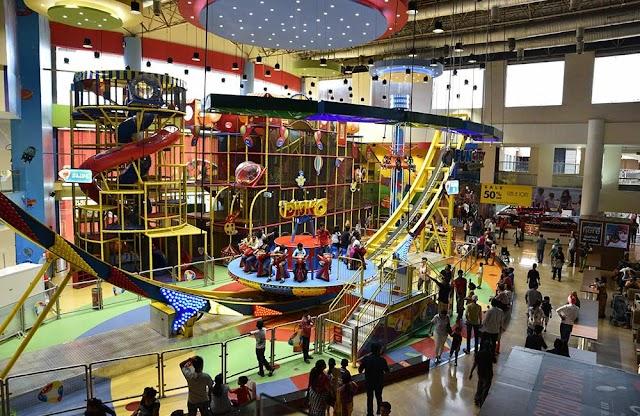
Instead of replacing one traditional retailer with another, forward-thinking developers are introducing experiential anchors capable of generating consistent, multi-demographic traffic across all operating periods.
These experiential anchors include:
- Hybrid Social Entertainment Centers combining gaming, dining, and nightlife
- Digital sports arenas with simulator-based competitive experiences
- Immersive museums and interactive storytelling attractions
- Competitive active entertainment zones including climbing, karting, and augmented sports
- Family edutainment destinations with technology-enabled attractions
- Multi-format esports and gaming lounges
- Live performance and event-driven entertainment venues
Unlike conventional retail tenants that depend heavily on weekend traffic, experiential anchors generate visitation throughout weekdays, evenings, holidays, and special event periods. They also create stronger emotional engagement, which improves repeat visitation and customer loyalty.
The commercial advantage of experiential anchors lies not only in direct rental value but in their ability to stimulate surrounding tenant performance. Visitors drawn by entertainment attractions spend more time within the property, increase food and beverage consumption, and engage with adjacent retail categories during extended visits.
Why Entertainment Anchors Outperform Traditional Retail Anchors
Anchor Type | Primary Visitor Behaviour | Average Dwell Time | Revenue Spillover Potential |
Department Store | Transaction-focused | Low to Moderate | Limited |
Hypermarket | Functional shopping | Low | Minimal |
Cinema Multiplex | Fixed-duration entertainment | Moderate | Moderate |
Experiential Entertainment Anchor | Multi-activity social engagement | High | Significant |
The most commercially successful malls increasingly prioritize anchors that encourage visitors to stay, socialize, dine, and participate rather than simply transact.
Step 2: Spatial Zoning and Visitor Flow Optimization
Entertainment ecosystems succeed only when supported by intelligent circulation planning and spatial zoning strategies. Poor visitor flow distribution remains one of the most common reasons entertainment integrations fail to improve overall mall performance.
Developers must design entertainment clusters that function as interconnected activity districts rather than isolated attractions.
Creating Entertainment Districts Within the Mall
Clustering complementary attractions within defined zones creates concentrated energy that encourages visitors to explore adjacent experiences organically. For example:
- Competitive gaming zones positioned beside sports bars and nightlife concepts
- Family entertainment districts integrated with casual dining and edutainment
- Immersive attractions connected to themed retail and experiential dining
- Event plazas surrounded by flexible activation spaces and F&B outlets
This clustering strategy improves visitor circulation efficiency while maximizing cross-spending opportunities between entertainment and hospitality operators.
Vertical Integration and Footfall Distribution
Multi-level malls often struggle with uneven footfall distribution, where upper levels experience significantly lower visitor traffic. Entertainment-led planning solves this challenge through strategic vertical integration.
Key planning principles include:
- Positioning escalators adjacent to entertainment anchors
- Creating visible attraction frontage from multiple floors
- Designing open visual corridors that expose upper-level activity
- Using event activations to pull visitors vertically through the property
- Integrating destination dining on higher levels to support upward circulation
Well-planned visitor movement transforms entertainment attractions into circulation drivers that distribute traffic more evenly throughout the development.
Step 3: Building a Revenue Diversification Model
One of the most important commercial advantages of experiential ecosystems is their ability to generate layered revenue streams beyond traditional rental income.
Entertainment anchors increase asset productivity through multiple monetisation channels simultaneously.
Revenue Streams Within an Experiential Mall Ecosystem
Revenue Channel | Commercial Contribution |
Entertainment Ticketing | Direct attraction revenue |
Food and Beverage | Extended dwell-time spending |
Event Hosting | Corporate and social event revenue |
Sponsorship Activations | Brand partnerships and advertising |
Seasonal Programming | Peak-period revenue acceleration |
Digital Engagement | Loyalty and CRM monetisation |
Experiential Leasing | Premium retail positioning |
This diversification creates greater financial resilience compared to retail-only mall models that depend heavily on tenant occupancy performance.
The Role of Programming in Ecosystem Success
Programming is the operational layer that keeps entertainment ecosystems active and relevant over time. Developers who fail to invest in long-term programming strategy often experience declining novelty value after launch.
Successful experiential malls maintain continuous activation through:
- Esports tournaments
- Music festivals
- Cultural showcases
- Brand collaborations
- Seasonal themed events
- Corporate competitions
- Community engagement programs
- Influencer and social media activations
These recurring events create reasons for repeat visitation while strengthening emotional connection between the destination and its catchment audience.
International Case Studies in Entertainment-Led Retail Transformation
01 — ICONSIAM
Bangkok, Thailand
ICONSIAM demonstrates how cultural storytelling, experiential retail, and entertainment programming can transform a shopping destination into an international tourism landmark.
The development integrates immersive cultural attractions, waterfront entertainment experiences, luxury retail, and event-driven programming into a unified visitor ecosystem. Its success lies in positioning the mall as a destination experience rather than a transactional retail center.
Developers studying ICONSIAM should observe how experiential layering encourages visitors to spend entire days within the destination across multiple activity categories.
02 — VivoCity
Singapore
VivoCity represents one of the strongest examples of experiential waterfront retail integration in Asia. Its entertainment strategy combines family attractions, event programming, outdoor social spaces, cinema experiences, and destination dining within a highly connected circulation framework.
The property succeeds because entertainment is integrated into the mall’s architectural identity rather than treated as a secondary tenant category.
The development also demonstrates how public realm activation and open social environments significantly increase dwell time and visitor satisfaction.
03 — SM Mall of Asia
Philippines
SM Mall of Asia illustrates the commercial power of event-driven entertainment ecosystems at large scale. The development integrates arenas, outdoor event spaces, attractions, entertainment districts, and cultural programming to maintain year-round activation.
Its strategy focuses heavily on festivals, concerts, large-scale public events, and destination entertainment programming that continuously refresh visitor engagement.
This operational emphasis on activation ensures the property remains socially relevant beyond traditional shopping behaviour.
Future-Proofing Mall Assets Through Adaptive Entertainment Planning
Consumer entertainment preferences continue evolving rapidly due to technological innovation, digital culture, and changing social behaviour. Developers must therefore design entertainment ecosystems with long-term flexibility in mind.
Key Future-Proofing Strategies
Modular Attraction Planning
Entertainment zones should allow attraction replacement and technology upgrades without major structural reconstruction.
Phased Capital Deployment
Developers can reduce investment risk through phased implementation strategies that expand entertainment offerings based on market response.
Digital Engagement Infrastructure
Integrated mobile applications, loyalty systems, CRM platforms, and analytics tools improve personalization and operational intelligence.
Data-Driven Tenant Optimization
Visitor analytics help developers refine tenant mix decisions based on dwell patterns, engagement metrics, and spending behaviour.
Hybrid Physical-Digital Experiences
Future-ready entertainment ecosystems increasingly combine physical attractions with gamification, augmented reality, and social media integration.
The ability to adapt continuously is becoming one of the defining characteristics of commercially resilient mall assets.
Operational Integration: The Hidden Success Factor
Entertainment-led malls are operationally more complex than traditional retail developments. Success depends on integrating multiple operational systems seamlessly across attractions, hospitality, events, security, technology, and customer experience management.
Developers must establish:
- Centralized event coordination systems
- Unified visitor data platforms
- Cross-tenant operational standards
- Dynamic staffing and security protocols
- Integrated digital booking systems
- Consistent experiential branding across all touchpoints
Without strong operational integration, even high-investment entertainment ecosystems can fail to deliver the cohesive visitor experience required for long-term success.
Why Developers Are Prioritizing Entertainment-Led Repositioning
The commercial rationale behind experiential transformation is increasingly clear:
- Higher visitor dwell times
- Increased cross-category spending
- Greater resilience against e-commerce disruption
- Stronger social media visibility
- Improved destination branding
- Enhanced tenant demand
- Increased property valuation potential
- Better long-term asset differentiation
As retail markets become more competitive, experiential ecosystems provide developers with a sustainable pathway toward future-ready mixed-use destinations.
Frequently Asked Questions
What is an experiential mall ecosystem?
An experiential mall ecosystem is a retail destination where entertainment, food and beverage, events, culture, and social engagement are integrated into the visitor experience alongside traditional retail. The goal is to maximize dwell time, repeat visitation, and destination appeal.
Why are developers replacing traditional anchors with entertainment concepts?
Traditional retail anchors are generating declining footfall due to e-commerce growth and changing consumer behaviour. Entertainment concepts create stronger emotional engagement, longer visits, and higher spending across multiple categories within the mall ecosystem.
How does entertainment improve mall revenue performance?
Entertainment increases visitor dwell time, drives food and beverage spending, supports event hosting revenue, improves sponsorship opportunities, and enhances adjacent retail performance through increased footfall circulation.
What role does programming play in experiential retail success?
Programming keeps the destination dynamic and socially relevant. Tournaments, festivals, concerts, seasonal events, and community activations encourage repeat visitation and maintain long-term audience engagement.
How can malls future-proof entertainment investments?
Future-proofing strategies include modular attraction design, phased investment planning, digital engagement systems, CRM integration, and flexible operational infrastructure that allows evolving entertainment formats over time.
What size mall benefits most from entertainment-led transformation?
Both regional malls and mixed-use urban developments benefit significantly from experiential repositioning. The optimal entertainment mix depends on catchment demographics, available floor area, tourism demand, and competitive market conditions.
Work with Experienced Entertainment Strategists
Entertainment-led mall transformation requires far more than attraction procurement. It demands strategic master planning, circulation design, revenue architecture development, operational integration, and long-term experiential programming.
Peach Prime Consultancy provides end-to-end advisory for mall repositioning and entertainment ecosystem development projects, including feasibility studies, attraction mix planning, spatial master planning, operational strategy, vendor coordination, and investment modelling.
By partnering with experienced entertainment strategists, developers can transform underperforming retail assets into future-ready experiential destinations that generate sustainable commercial differentiation and long-term value creation.
Visit www.peachprime.in to arrange a strategic planning consultation.