
Blogs
FEC Consultant in India: How to Choose the Right Partner for Your Project
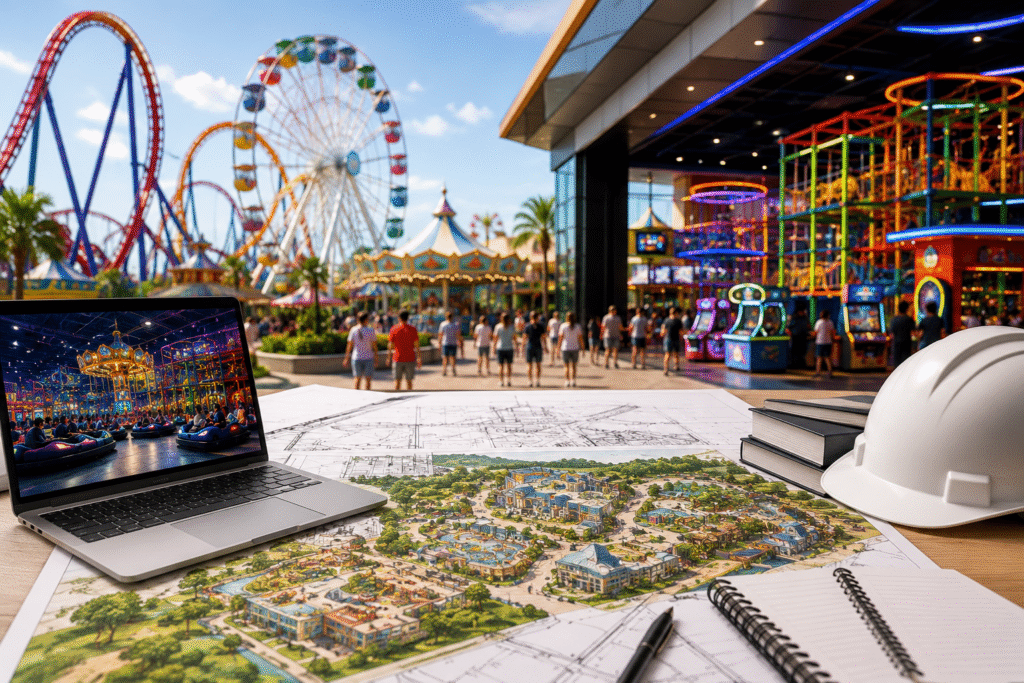
India’s family entertainment centre sector has moved well past the era of a few arcade machines bolted onto a mall corridor. Mall developers now treat FECs as anchor draws, standalone operators are opening in Tier 2 and Tier 3 cities, and investors expect a real feasibility case before committing capital. That shift has created demand for a new kind of partner: an FEC consultant who can take a project from a blank floor plate to a profitable, safety compliant, guest ready venue. This guide walks through what an FEC consultant actually does, and how decision makers should evaluate one before signing a mandate.
Why the FEC Consultant Role Exists
The Indian FEC market has grown quickly on the back of mall expansion and rising disposable income, with industry estimates placing the domestic FEC industry at around INR 1,100 crore annually and still climbing. More than 350 new FECs opened across the country in a single recent year, and a large share of that growth is now happening in Tier 2 and Tier 3 cities rather than the metros that led the first wave. That pace of expansion has outrun the supply of experienced operators, which is exactly why developers and first time operators are bringing in specialist consultants rather than assembling equipment vendors and interior contractors on their own.
An FEC is not a single purchase decision. It combines architecture and layout, ride and game selection, theming, technology such as RFID cashless systems and VR, food and beverage planning, and a revenue model that has to work for the specific catchment. Getting any one of these wrong, an oversized dead zone in the layout, an attraction mix that does not match the local demographic, a POS system that cannot handle party bookings, quietly erodes the return on what is usually a multi crore investment.
What an FEC Consultant Actually Delivers
- Feasibility and market research: catchment analysis, footfall projections, and a realistic revenue model before a single rupee is spent on fit out.
- Conceptualisation and theming: a coherent theme and brand identity for the centre, rather than a random assortment of attractions.
- Layout and space planning: maximising revenue per square foot while keeping guest flow smooth across play zones, dining, and party areas.
- Attraction and equipment sourcing: matching arcade, soft play, VR, bowling, or laser tag equipment to the target audience and budget, and coordinating with manufacturers.
- Technology integration: RFID wristbands, cashless payment, and booking systems that reduce queues and improve data capture.
- ROI modelling and phasing: a clear view of capital cost, operating cost, and payback period, often phased if the site or budget calls for it.
Positioning Consultant vs Equipment Vendor: What Decision Makers Miss
Many developers approach an equipment supplier first, and treat design as an afterthought that the supplier will handle. This is where most FEC projects lose money. Equipment vendors are, understandably, motivated to sell more of their own product line rather than the mix that best fits the site and audience. A genuine FEC consultant works ahead of procurement: they define the concept, the space plan, and the ROI case first, then bring in equipment vendors as one input into an already validated plan rather than the starting point.
A quick test: if a firm’s first conversation with you is about which machines to buy rather than your catchment, footfall assumptions, and revenue model, you are talking to a vendor, not a consultant.
How to Evaluate an FEC Consultant
Criteria | What to Look For |
Feasibility rigor | A documented process for market research and ROI modelling, not just a design portfolio. |
End to end capability | Coverage from concept and layout through to construction supervision and equipment coordination, avoiding a fragmented vendor chain. |
Track record | Delivered projects across formats, whether mall based FECs, standalone venues, or FECs within larger developments. |
Local execution knowledge | Familiarity with Indian regulatory approvals, safety compliance, and regional cost benchmarks. |
Technology fluency | Current knowledge of RFID, cashless systems, and immersive technology rather than dated attraction formats. |
Post launch support | Willingness to stay engaged through commissioning rather than handing over drawings and exiting. |
Where Peach Prime Consultancy Fits
Peach Prime Consultancy works as a design and planning studio for FECs, theme parks, and museums across India, and FEC engagements typically start with feasibility study and market research before moving into theming, layout, technology integration, and equipment sourcing coordination with manufacturers and suppliers. The firm positions itself around end to end delivery, concept through to turnkey execution, rather than handing off a design and stepping away, which is the gap that causes the most cost overruns and delays on Indian FEC projects.
Frequently Asked Questions
Q. What does an FEC consultant cost compared to going directly to an equipment supplier?
Consultant fees typically represent a small percentage of total project cost, but the value shows up in avoided mistakes: a poorly sized attraction mix or an inefficient layout can cost far more in lost revenue over the life of the venue than the consulting fee would have.
Q. How long does a typical FEC project take from feasibility to opening in India?
Depending on scale and whether the site needs civil work, a mall based FEC can move from feasibility to opening in six to twelve months, while a larger standalone venue with custom construction can take twelve to twenty four months.
Q. Should a mall developer or an independent operator lead the FEC concept?
Either can, but the concept should always be led by catchment data rather than by what worked in a different city, since demographic mix, income levels, and competing entertainment options vary significantly between Indian markets.
PLANNING AN FEC IN INDIA?
Peach Prime Consultancy offers feasibility studies, theming, layout planning, and turnkey FEC design and development across India.
Market data referenced from IAAPI industry reporting and published FEC market analyses. Figures are estimates and should be validated against a project specific feasibility study before investment decisions.