Why Structured Development Determines the Success of Entertainment Destinations
The global experiential entertainment industry is expanding at unprecedented speed as developers, investors, and mixed-use operators increasingly prioritize destination-driven leisure formats capable of generating long-term footfall and diversified revenue streams. From Social Entertainment Centers and Family Entertainment Centers to immersive museums, digital sports arenas, esports venues, and hybrid food-plus-play concepts, experiential entertainment has become one of the most commercially attractive sectors within modern real estate development.
However, while consumer demand for experience-led destinations continues to rise, the operational failure rate of entertainment projects remains significant. Across global markets, many projects underperform not because the entertainment concept lacks appeal, but because the development lifecycle was poorly structured from the beginning. Weak feasibility analysis, inadequate technical coordination, unrealistic budgeting, operational oversight gaps, and rushed pre-opening execution frequently create long-term operational inefficiencies that become difficult and expensive to correct after launch.
Successful experiential destinations are rarely accidental. They are engineered through disciplined planning, coordinated technical execution, phased operational readiness, and long-term strategic thinking well before construction begins.
This guide explores the complete development lifecycle of a modern experiential entertainment project, outlining the strategic frameworks, technical disciplines, and operational systems required to transform an entertainment vision into a commercially sustainable destination.
The Evolution of Experiential Entertainment Development
The entertainment sector has evolved dramatically from standalone attraction development toward integrated destination ecosystems that combine hospitality, technology, storytelling, food and beverage, gaming, events, and social engagement into unified visitor experiences.
Consumers today expect:
- Seamless digital integration
- Premium hospitality standards
- Visually immersive environments
- Personalized guest experiences
- Social-media-worthy attractions
- Multi-generational entertainment options
- Flexible event programming
- Continuous content refresh cycles
Meeting these expectations requires developers to approach entertainment development with the same rigor applied to major mixed-use infrastructure projects.
Unlike traditional retail developments, experiential entertainment projects involve complex coordination across multiple specialized disciplines including scenic fabrication, technology integration, attraction engineering, AV systems, operational choreography, visitor psychology, and hospitality planning.
The projects that achieve long-term commercial success are those that follow a clearly structured development lifecycle from concept strategy through opening-day execution.
Phase 1: Concept Strategy and Feasibility
Every successful entertainment project begins with a disciplined feasibility and concept development process. This phase establishes whether the project is commercially viable, strategically differentiated, and operationally sustainable within its target market.
Skipping feasibility discipline is one of the most common reasons entertainment projects fail.
Market Demand Analysis
The first objective is understanding the demand environment surrounding the proposed development. This includes evaluating:
- Catchment demographics
- Household income profiles
- Tourism patterns
- Consumer leisure behaviour
- Entertainment spending trends
- Existing competitor saturation
- Lifestyle and social preferences
- Local infrastructure accessibility
Demand analysis determines whether the market can support the intended attraction mix and identifies the demographic segments with the strongest revenue potential.
Competitor Benchmarking and Positioning
Developers must evaluate both direct and indirect competitors operating within the market.
Benchmarking typically includes:
- Existing entertainment venues
- Cinemas and leisure districts
- Food and beverage destinations
- Gaming and sports venues
- Cultural attractions
- Family entertainment centers
- Tourism-oriented experiences
The objective is not simply to identify competitors but to uncover positioning gaps that create opportunities for differentiation.
Projects that replicate existing entertainment formats without strategic positioning clarity often struggle to sustain visitor interest after initial novelty declines.
Financial Feasibility and Revenue Modeling
The feasibility phase also establishes the project’s commercial framework through detailed financial analysis.
Core feasibility outputs include:
Feasibility Component | Purpose |
Capex Estimation | Defines total investment range |
Revenue Modeling | Forecasts operational income |
Payback Analysis | Evaluates investment recovery timeline |
Attendance Forecasting | Estimates visitor volume potential |
Attraction Mix Optimization | Balances revenue and operational efficiency |
Operational Cost Planning | Projects staffing and maintenance expenses |
This analysis determines whether the concept can achieve sustainable profitability before detailed design work begins.
Phase 2: Master Planning and Spatial Zoning
Once feasibility is validated, the project transitions into spatial planning and master development strategy.
Master planning defines how visitors physically experience the entertainment destination and directly impacts operational efficiency, dwell time, spending patterns, and future scalability.
Circulation Flow Planning
Visitor circulation design is one of the most commercially important aspects of entertainment development.
Poor circulation creates:
- Congestion
- Underutilized attraction zones
- Reduced guest comfort
- Operational inefficiencies
- Lower food and beverage conversion
- Uneven crowd distribution
Successful circulation planning creates intuitive movement patterns that encourage exploration and maximize cross-utilization between attractions.
Attraction Adjacency Strategy
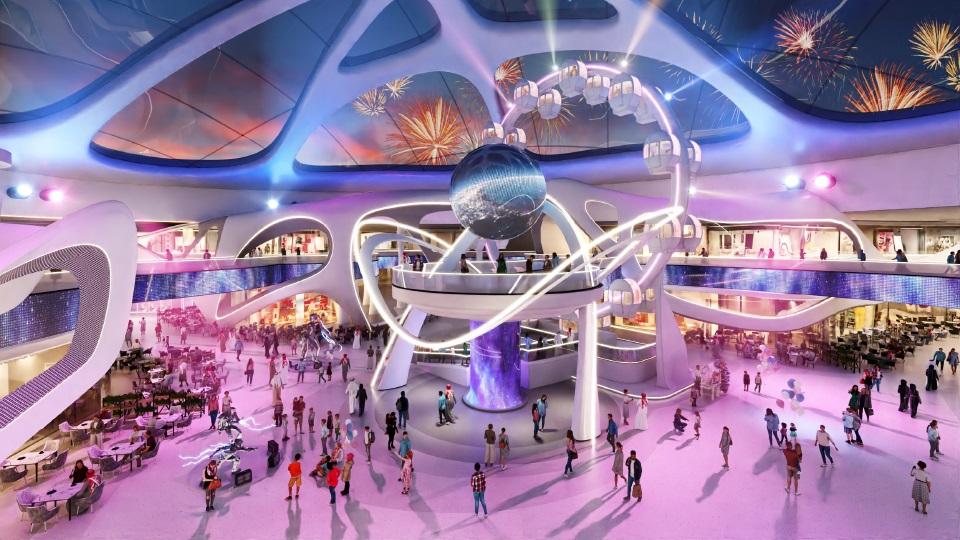
Attraction adjacency refers to how entertainment components are positioned relative to one another.
Effective adjacency planning improves:
- Visitor dwell time
- Cross-ticketing opportunities
- Group participation rates
- Food and beverage conversion
- Event flexibility
- Operational supervision efficiency
For example:
- Competitive gaming zones may be positioned beside sports bars
- Family attractions integrated near casual dining
- Immersive experiences connected to themed retail
- Event plazas adjacent to flexible hospitality spaces
These relationships directly influence guest behaviour and spending dynamics.
Infrastructure and Technical Planning
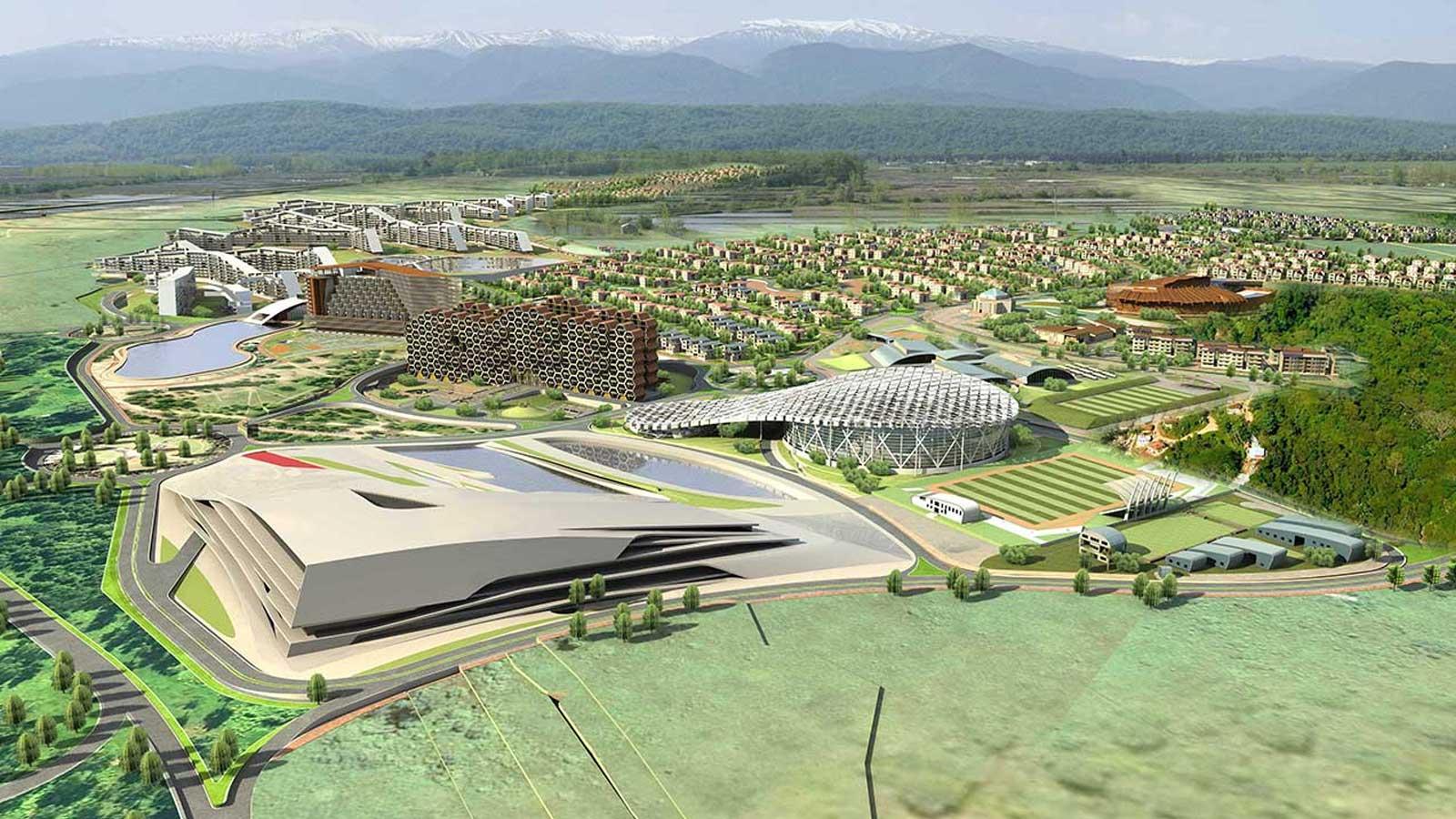
Master planning also incorporates technical infrastructure requirements long before construction begins.
Critical planning areas include:
- HVAC zoning and cooling loads
- Electrical distribution systems
- Acoustic treatment strategy
- Fire and life safety compliance
- Emergency evacuation routes
- Service corridors and operational back-of-house planning
- Structural load distribution
- Technology infrastructure pathways
Entertainment projects place significantly higher technical demands on buildings than traditional retail environments, making early infrastructure coordination essential.
Phase 3: Technical Design and Vendor Coordination
The technical design phase converts conceptual planning into buildable engineering documentation and operational systems.
This phase requires coordination between architects, engineers, technology consultants, attraction vendors, AV specialists, and operations teams.
Engineering Coordination
Detailed technical coordination includes:
- Mechanical, electrical, and plumbing integration
- Structural engineering validation
- Lighting and AV systems planning
- Acoustic isolation detailing
- Digital network infrastructure
- Attraction power load calculations
- Safety system integration
Entertainment venues often combine multiple high-energy environments within a single facility, making integrated engineering coordination essential for long-term operational stability.
Attraction Technology Integration
Modern experiential entertainment relies heavily on technology-driven engagement systems.
These may include:
- Interactive gaming software
- RFID tracking systems
- Projection mapping
- Immersive audio systems
- AR and VR infrastructure
- Automated scoring systems
- Digital ticketing platforms
- CRM and loyalty integration
Technology coordination must be finalized early to prevent costly retrofits during construction.
Vendor Evaluation and Procurement
Vendor selection directly impacts operational reliability, maintenance requirements, and long-term lifecycle sustainability.
Developers should evaluate vendors based on:
Evaluation Factor | Importance |
Equipment Reliability | Reduces downtime risk |
Technical Support Capability | Ensures operational continuity |
Lifecycle Maintenance Costs | Impacts long-term profitability |
Safety Certification | Regulatory compliance |
Scalability | Future expansion compatibility |
Spare Parts Availability | Minimizes operational disruption |
Choosing vendors based solely on initial cost rather than long-term operational performance often creates hidden lifecycle expenses.
Phase 4: Construction and Execution Oversight
Construction is the phase where project discipline is tested most aggressively. Without structured oversight, entertainment projects are highly vulnerable to budget escalation, timeline delays, and technical inconsistencies.
Quality Control and Milestone Management
Entertainment construction involves far more than standard interior fit-outs.
Execution oversight includes:
- Scenic fabrication quality audits
- Structural installation inspections
- AV systems integration testing
- Theming consistency reviews
- Attraction installation supervision
- Safety certification tracking
- Construction milestone monitoring
Integrated project management ensures all technical systems align properly before commissioning begins.
Integrated Systems Testing
Entertainment environments rely on multiple interconnected systems operating simultaneously.
Testing procedures typically include:
- Attraction functionality validation
- Emergency systems testing
- Lighting synchronization
- Audio balancing
- HVAC performance verification
- Ticketing and POS integration
- Digital network stress testing
Failure to conduct comprehensive testing prior to opening frequently results in operational disruptions during launch periods.
Managing Cost Overruns and Delays
Poor execution discipline remains one of the largest causes of financial instability within entertainment projects.
Common causes include:
- Late-stage design changes
- Incomplete engineering coordination
- Vendor delivery delays
- Inadequate project supervision
- Technology integration conflicts
- Unrealistic construction scheduling
Strong project governance and centralized oversight are essential to maintaining timeline and budget control.
Phase 5: Pre-Opening and Operational Readiness
Many entertainment projects underestimate the importance of the pre-opening phase. However, operational readiness determines whether the guest experience launches smoothly or begins with damaging inconsistencies.
Staff Recruitment and Training
Entertainment venues require multidisciplinary operational teams capable of handling:
- Guest experience management
- Technical operations
- Safety supervision
- Hospitality service
- Event coordination
- Food and beverage operations
- Digital systems support
Training programs must include both technical and customer-experience standards.
SOP Development and Operational Systems
Standard Operating Procedures establish consistency across all operational functions.
Core SOP categories include:
- Guest entry procedures
- Attraction operation protocols
- Emergency response systems
- Equipment maintenance workflows
- Food safety standards
- Cleaning and sanitation protocols
- Event management procedures
- Crowd management strategy
Well-documented SOPs improve operational efficiency while reducing staff dependency risks.
Soft Launch and Systems Calibration
Soft launch periods allow operators to identify operational issues before full-scale public opening.
Soft launch objectives include:
- Ticketing calibration
- Queue management testing
- Staffing adjustments
- Guest flow optimization
- Attraction timing validation
- Food and beverage workflow refinement
- Safety drill execution
These controlled operational simulations significantly reduce opening-day risk.
Marketing Activation Before Opening
Marketing should begin long before opening day rather than after launch.
The most successful projects activate marketing campaigns approximately 90 to 120 days prior to opening through:
- Social media teaser campaigns
- Influencer partnerships
- Construction progress storytelling
- Media previews
- Corporate partnership outreach
- Founding membership programs
- Community engagement events
Pre-opening marketing builds anticipation while establishing early customer acquisition pipelines.
Global Development Lifecycle Benchmarks
01 — Warner Bros. World
Abu Dhabi
Warner Bros. World demonstrates the importance of structured IP integration, phased development coordination, and immersive storytelling consistency across all project stages.
Its success highlights how disciplined master planning and controlled execution preserve thematic quality at large scale.
02 — Puttshack
UK and USA
Puttshack illustrates the importance of technology calibration and scalable operational systems within experiential entertainment.
Its proprietary scoring systems, hospitality integration, and standardized development model enable consistent replication across multiple markets.
03 — KidZania
Global
KidZania represents one of the strongest examples of operational SOP standardization enabling international franchise scalability.
Its highly structured operational systems, staff training models, and repeatable spatial planning strategies have supported successful expansion across global markets.
Why Lifecycle Discipline Determines Long-Term Sustainability
Entertainment development is not simply about creating visually impressive attractions. Sustainable success depends on aligning:
- Feasibility discipline
- Technical precision
- Operational planning
- Revenue architecture
- Guest experience design
- Long-term scalability
- Adaptive programming capability
Projects that prioritize only launch aesthetics without lifecycle discipline frequently encounter operational inefficiencies that erode profitability over time.
The strongest experiential destinations are engineered as long-term operational ecosystems rather than short-term novelty attractions.
Frequently Asked Questions
Why is feasibility analysis critical for entertainment projects?
Feasibility analysis validates market demand, financial viability, demographic alignment, and competitive positioning before major capital investment begins. It reduces investment risk and improves strategic clarity.
What is the role of master planning in entertainment development?
Master planning defines circulation flow, zoning strategy, infrastructure requirements, operational efficiency, and future expansion capability. It directly impacts visitor experience and commercial performance.
Why is technical coordination more complex in entertainment projects?
Entertainment venues combine attraction systems, AV integration, technology infrastructure, hospitality operations, and safety systems within a single environment, requiring highly coordinated engineering and operational planning.
What causes the most common construction delays in experiential projects?
Common delay factors include late-stage design revisions, vendor coordination issues, incomplete technical documentation, and insufficient project oversight during execution.
Why are soft launches important before opening day?
Soft launches allow operators to test systems, train staff, refine workflows, and resolve operational issues before full public operations begin, reducing opening-day disruption risks.
How early should entertainment marketing campaigns begin?
Pre-opening marketing should ideally begin 90 to 120 days before launch to build anticipation, establish awareness, and generate early customer engagement before opening day.
Work with Peach Prime Consultancy
Experiential entertainment projects require structured lifecycle management from concept strategy through operational launch. Successful destinations are built through disciplined planning, coordinated technical execution, and long-term operational sustainability.
Peach Prime Consultancy supports the complete development lifecycle of entertainment projects, including feasibility analysis, attraction mix strategy, master planning, technical coordination, vendor evaluation, operational readiness planning, and opening support.
Our structured advisory approach helps developers reduce execution risk, improve capital efficiency, and create entertainment destinations engineered for long-term commercial success.
Visit www.peachprime.in to arrange a strategic development consultation.