
A strategic investment and design guide for developers building RC and off-road racing arenas as high-adrenaline competitive leisure assets with strong community retention and scalable revenue architecture.
Introduction: RC Racing as a Competitive Leisure Investment
The RC and off-road racing arena occupies a genuinely differentiated position in the competitive leisure market. While most entertainment formats compete for visitors’ time and spending on the basis of novelty or passive entertainment value, RC racing venues compete on something far more durable: the competitive identity and community belonging that skill-based sport creates. A visitor who has taken their first lap at an RC racing arena and felt the physical satisfaction of a clean corner is not simply a customer who has purchased an experience. They are a potential member of a community that will return weekly, invest in better equipment, compete in tournaments, and advocate for the venue within the hobbyist and motorsport networks they participate in.
This community-driven commercial model is qualitatively different from the transactional model of most entertainment attractions, and it produces financial outcomes that reflect that difference: lower customer acquisition costs, higher visit frequency, stronger ancillary spending on retail and workshop services, and a revenue base that is substantially more resilient to competitive entry than facilities that depend on novelty for their appeal.
MARKET TREND | Growing search demand for RC car racing arena, off-road RC track design, indoor RC drift circuit, and hobby-grade racing park reflects an expanding audience of teens, young adults, and hobbyist communities seeking skill-based competitive recreation with genuine technical depth. |
Vehicle Categories and Their Commercial Significance
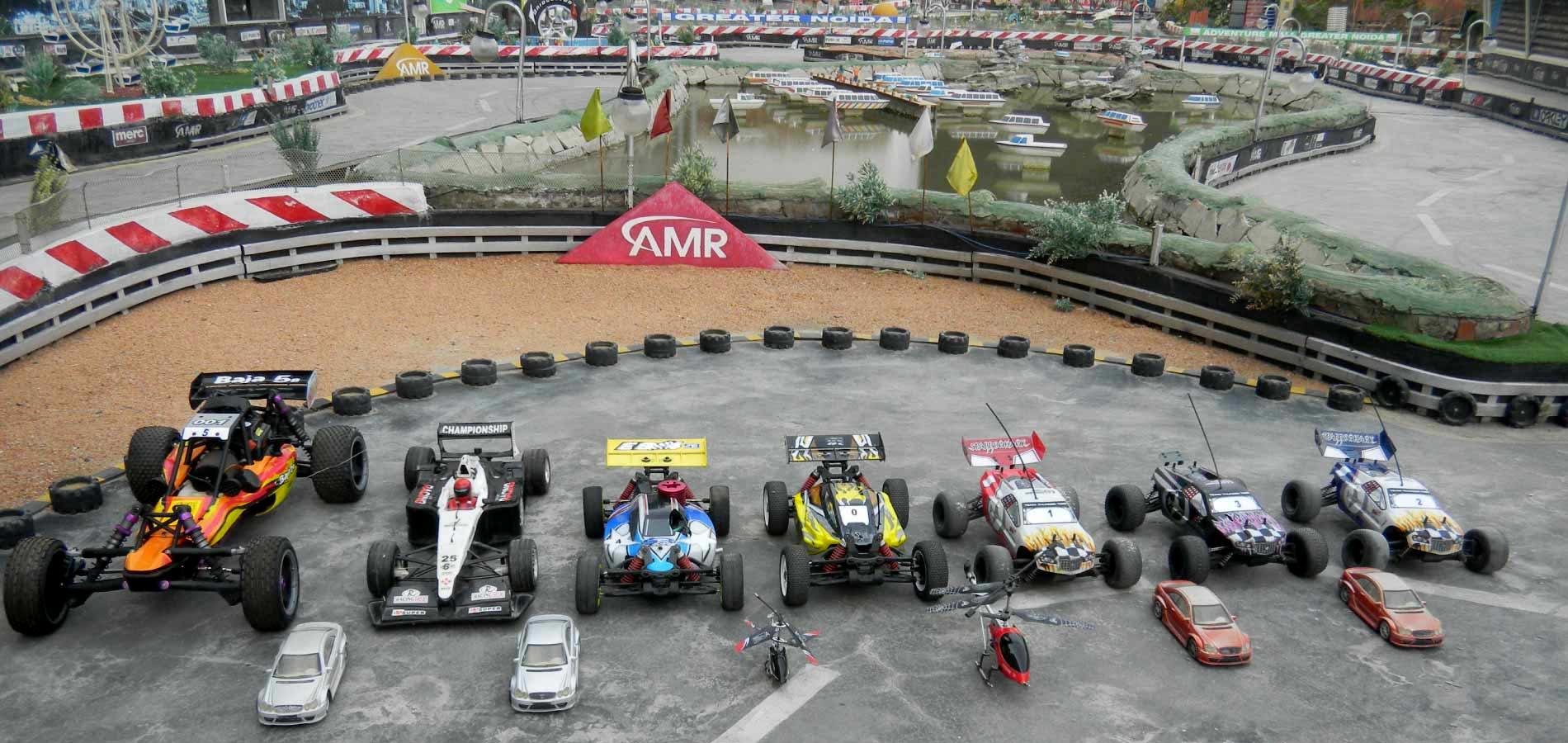
The vehicle category portfolio of an RC racing arena determines its audience composition, its community depth, and the breadth of its revenue opportunities. Each category serves a distinct participant segment with different motivations, technical knowledge levels, and spending behaviours.
- 1:10 scale electric touring cars: precision driving on smooth indoor surfaces, attracting the technical and performance-oriented hobbyist with the widest community base globally
- Nitro-powered RC buggies: combustion engine performance for experienced hobbyists seeking authentic motorsport experience and the sensory intensity of nitro power
- Off-road monster trucks: high-impact, visually spectacular format with the broadest age appeal, from young children to adult enthusiasts
- Drift RC cars: style-focused indoor circuit racing with strong social media content generation and young adult appeal
- Rock crawler rigs: slow-speed, high-precision technical obstacle navigation for the patience-and-technique segment of the hobbyist community
- Short course trucks: a versatile, accessible, and visually engaging format that works well as a beginner entry point for visitors who are new to RC racing
Track Design and Surface Materials
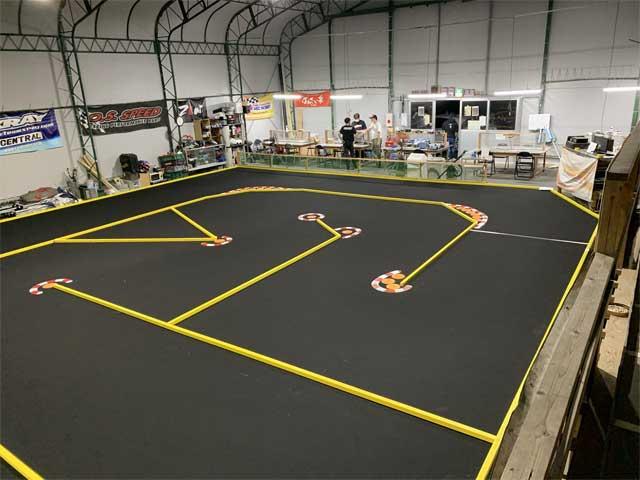
The physical track design of an RC racing arena is the primary determinant of its competitive credibility and the variety of racing formats it can support. A well-designed track must deliver the flow and challenge variety that makes racing interesting at all skill levels, the safety features that protect participants and spectators, and the surface quality that delivers consistent grip and handling characteristics across the full range of vehicles that use it.
Indoor surface options include purpose-laid carpet in specified pile depth and density for on-road and touring car classes, artificial turf for off-road and all-terrain classes, polished epoxy for drift-specific circuits, and modular interlocking tile systems that allow flexible course reconfiguration. Outdoor surface options span compacted natural dirt and clay for authentic off-road feel, artificial grass for weather-resistant all-terrain tracks, and concrete or asphalt sub-bases with modular obstacle systems for technical challenge courses. Foam perimeter barriers absorb vehicle impacts without creating secondary hazards and are the standard safety solution for both indoor and outdoor track boundaries.
Revenue Architecture
A fully developed revenue model for a premium RC racing arena captures value across multiple channels.
- Track rental per hour: walk-in and pre-booked sessions for casual and regular participants
- RC car rental packages: fleet rental for first-time visitors and groups without personal vehicles
- Membership leagues: monthly and annual club memberships with priority access and league competition inclusion
- Tournament and championship events: structured competitive events with entry fees, sponsorship, and spectator admission
- Hobby retail store integration: spare parts, accessories, upgrade components, and vehicle sales
- Corporate racing nights: exclusive event hire with facilitated team racing and catering
- Beginner training programmes: introductory sessions with coaching for new participants
Global Benchmarks
01 | RC Excitement USA RC Excitement demonstrates the commercial power of combining a high-quality indoor carpet track with a fully integrated hobby retail operation. The store-track integration creates a self-sustaining commercial ecosystem where the competitive community drives retail spending and the retail relationships strengthen community loyalty. The venue’s consistent community engagement over many years illustrates the durability of the hobbyist loyalty model when track quality and competitive programming are maintained consistently. |
02 | Silverstone RC Circuit UK The Silverstone RC Circuit benefits from association with one of the world’s most famous motorsport venues, which provides brand credibility and tourism appeal that a standalone RC facility could not generate independently. The venue’s positioning as a serious competitive destination, combined with the Silverstone brand’s global motorsport recognition, attracts both domestic hobbyists and international motorsport enthusiasts seeking an accessible RC racing experience within the Silverstone racing environment. For developers considering the commercial value of brand association in RC venue positioning, the Silverstone model provides a directly instructive example. |
03 | RC Drift Arena Tokyo Japan Tokyo’s RC drift arena sector represents the most sophisticated development of the drift-specific RC racing format globally, driven by the deep cultural resonance of drift motorsport in the Japanese market. The city’s RC drift venues have developed a premium aesthetic and social identity that aligns closely with the car culture and precision-craft values of the Japanese automotive community, generating strong demand from young adults who engage with the drift format as much for its visual and social dimensions as for its competitive ones. For developers targeting urban young adult demographics with a premium competitive leisure concept, the Tokyo RC drift model provides a compelling positioning template. |
Frequently Asked Questions
The following questions address the key investment and planning considerations for RC arena developers.
What differentiates a premium RC racing arena from a standard track facility? |
A premium RC racing arena distinguishes itself from a standard track facility through the combination of track quality, community infrastructure, and operational professionalism it delivers. At the track level, premium means purpose-designed layouts with appropriate surface specification for each vehicle class, professional safety barriers, and timing systems that provide the accuracy and display quality that serious competitors expect. At the community level, premium means structured league programming across multiple vehicle classes and skill levels, a clubhouse environment where the competitive community can socialise and prepare between races, and a venue team that manages the competitive culture with the professionalism of a genuine motorsport organisation. At the operational level, premium means consistent maintenance standards, reliable session management, and a booking and communication system that makes participation accessible and convenient for regular members and first-time visitors alike. |
How should an RC arena approach the drift racing segment specifically? |
Drift RC racing is a distinct sub-category with its own community culture, vehicle requirements, and facility design needs that differ significantly from conventional circuit racing formats. Drift circuits require smooth, low-friction surface materials, typically polished epoxy or purpose-coated concrete, that allow the controlled tyre slip angle that defines drift driving. The layout priorities are different from circuit racing: long sweeping corners and wide entry zones are more important than tight technical sections, and the aesthetic dimension of the drift experience is as important to participants as the competitive dimension. Venues targeting the drift audience should invest in strong visual design of the circuit environment, as the photographic and video content that drift participants generate is the primary marketing channel through which the format reaches new audiences. |
What sponsorship opportunities are available for an RC racing arena? |
Sponsorship opportunities for an RC racing arena span equipment brand partnerships, event title sponsorships, and venue naming rights at various scales. RC and hobby vehicle manufacturers, battery and electronics suppliers, and racing accessory brands are the most natural alignment partners, as their products are directly relevant to every participant at the venue. Broader consumer brands targeting the young adult male demographic, including energy drinks, gaming peripherals, and automotive accessories, are also viable sponsors for venues with demonstrable competitive programme depth and social media audience size. Tournament title sponsorship, where a brand’s name is associated with a specific championship event on the competitive calendar, is typically the most commercially accessible entry point for smaller sponsors who do not have budget for season-long venue partnerships. |
How does weather affect outdoor RC racing venue viability in the Indian market? |
Weather dependency is a meaningful commercial risk for outdoor RC racing venues in the Indian context, where monsoon seasons in most regions create extended periods of track unusability for dirt and clay surface formats. Mitigating this risk requires either the provision of covered or indoor supplementary racing infrastructure that allows programming continuity during weather events, or the selection of all-weather surface materials such as artificial turf with adequate sub-base drainage that can resume operation quickly after rainfall. Venues planning significant outdoor track investment should complete a detailed rainfall and temperature profile analysis for their specific location and plan their surface material selection and drainage engineering accordingly. |
What is the ideal approach to pricing for a new RC racing venue entering the market? |
Pricing strategy for a new RC racing venue should be calibrated to the specific market context: the existing price expectations of the local hobbyist community, the quality level of the facility relative to any existing alternatives, and the target revenue per session hour required by the financial model. A penetration pricing approach, where early membership rates and session fees are set modestly to accelerate community building and generate the competition participation levels that validate the competitive programme, followed by gradual price increases as the community depth and venue quality justify them, is typically more effective for new venues than premium pricing from day one. The retail element of the business should be priced competitively with online hobby retail to avoid the perception of price gouging that can damage the community relationship. |
How can an RC racing venue extend its appeal beyond the existing hobbyist community? |
Extending appeal beyond the existing hobbyist community requires deliberate investment in formats and programming that serve audiences with no prior RC experience. A dedicated beginner experience programme, where first-time visitors receive a structured introduction to vehicle operation through a rental fleet on an easy-to-navigate section of the track, is the most effective first step. Corporate event packages that present RC racing as a competitive team experience rather than a technical hobby are the most commercially productive channel for reaching employed adults outside the hobbyist community. Family visit formats, with age-appropriate vehicles and track sections for young children, expand the family entertainment dimension of the venue’s offering. And social media-friendly formats, particularly drift racing with strong visual content generation, attract the young adult consumer audience that is motivated by the social currency of distinctive experiences rather than by competitive or technical interest in the hobby. |
Work with Peach Prime Consultancy
Peach Prime Consultancy provides master planning, track engineering coordination, zoning strategy, and financial feasibility modelling for RC racing and off-road entertainment venues. We bring deep expertise in competitive leisure venue development and the structured planning methodology that ensures your RC arena is built for both competitive credibility and commercial scalability. Visit www.peachprime.in to arrange a consultation.
WHAT PEACH PRIME DELIVERS | Track and surface design coordination, vehicle category and community strategy, revenue architecture modelling, operational playbook development, and investor presentation support. |