
Why India Has Become a High-Priority Market for Experiential Entertainment Investment
India’s experiential entertainment sector is rapidly evolving into one of the most attractive growth opportunities within the global leisure and location-based entertainment industry. Rising disposable income, rapid urbanization, mall redevelopment activity, increasing digital engagement, and changing lifestyle preferences are driving unprecedented demand for immersive, socially engaging entertainment destinations across the country.
From Family Entertainment Centers and Social Entertainment Centers to immersive museums, sports simulation arenas, projection-based experiences, and hybrid food-plus-play concepts, India’s entertainment ecosystem is diversifying at a remarkable pace.
However, despite the scale of opportunity, entering the Indian market requires far more than replicating successful global entertainment formats. India is one of the world’s most operationally diverse consumer markets, where demographic behaviour, pricing sensitivity, city economics, and entertainment expectations vary significantly between regions.
Projects that succeed in India are those built around localized planning, disciplined feasibility analysis, adaptive pricing strategy, and operational scalability rather than imported assumptions.
This strategic playbook outlines the key frameworks investors, developers, and entertainment operators should follow when entering or expanding within India’s experiential entertainment market.
Understanding India’s Entertainment Transformation
India’s entertainment consumption behaviour has shifted dramatically over the last decade. Traditional leisure activities centered around cinemas and passive recreation are increasingly being replaced by interactive, technology-enabled, socially driven experiences.
Modern Indian consumers increasingly seek:
- Competitive social gaming
- Immersive digital experiences
- Group-based entertainment
- Hybrid dining and leisure environments
- Active entertainment formats
- Family-oriented edutainment
- Social-media-friendly destinations
- Experience-led retail ecosystems
This transformation is creating strong demand for scalable experiential infrastructure across organized retail developments, mixed-use destinations, and standalone entertainment hubs.
Step 1: Location Strategy and City Selection
Location strategy is the single most important decision in experiential entertainment development within India.
The country’s entertainment demand patterns differ dramatically between metro cities, emerging urban centers, and regional markets. Developers must therefore evaluate city selection through both macro and micro-market analysis before committing investment capital.
Tier-1 Cities: Premium Positioning with Higher Competition
Tier-1 markets including:
- Mumbai
- Delhi NCR
- Bengaluru
- Hyderabad
- Chennai
- Pune
- Ahmedabad
offer strong consumer spending capacity, developed retail infrastructure, and high experiential awareness.
These cities support premium entertainment positioning and are generally more receptive to large-format immersive concepts.
However, they also present challenges including:
- Higher lease costs
- Increased operational expenses
- Greater competitive density
- More complex real estate negotiations
- Higher customer acquisition costs
Projects entering Tier-1 cities must achieve strong differentiation and premium operational standards to remain competitive.
Tier-2 Cities: Emerging Growth with Untapped Potential
Tier-2 cities are rapidly emerging as major growth opportunities within India’s entertainment landscape.
Markets such as:
- Surat
- Indore
- Lucknow
- Chandigarh
- Jaipur
- Vadodara
- Coimbatore
- Kochi
- Nagpur
are witnessing rising income levels, expanding retail infrastructure, and increasing appetite for organized entertainment experiences.
These cities offer several advantages:
Tier-2 Advantage | Strategic Benefit |
Lower Lease Costs | Improved operational margins |
Limited Competition | Strong first-mover advantage |
Growing Urban Population | Expanding consumer base |
Increasing Mall Development | Better infrastructure availability |
Rising Lifestyle Spending | Growing entertainment demand |
However, Tier-2 markets also require stronger awareness-building and localized marketing efforts compared to mature metro markets.
Why Micro-Market Analysis Is Essential
Successful entertainment development depends not only on city selection but on understanding the specific micro-market surrounding the project location.
Critical micro-market factors include:
- Household income concentration
- School and university density
- Corporate office presence
- Tourism activity
- Mall positioning
- Existing entertainment competition
- Weekend footfall patterns
- Accessibility and parking infrastructure
Two projects within the same city can perform dramatically differently depending on local catchment behaviour.
Detailed feasibility analysis remains essential before finalizing site selection.
Step 2: Attraction Mix Optimization
Attraction mix planning directly determines commercial performance, dwell time, repeat visitation, and operational sustainability.
Indian consumers generally respond more positively to multi-layered entertainment environments that combine value, variety, and social interaction.
Why Hybrid Entertainment Formats Perform Better
Single-attraction venues often struggle to maintain long-term engagement because repeat visitation declines once novelty reduces.
Hybrid formats combining multiple experiences perform significantly better because they increase:
- Dwell time
- Group participation
- Cross-spending opportunities
- Repeat visitation
- Family appeal
- Social engagement
Successful Indian entertainment projects increasingly integrate:
- Gaming zones
- Sports simulators
- Immersive attractions
- Interactive experiences
- Food and beverage environments
- Event spaces
- Social gathering areas
This layered ecosystem approach aligns strongly with Indian social leisure behaviour.
Attraction Categories Driving Strong Demand
High-performing entertainment categories within India currently include:
Social Entertainment Centers (SEC)
Combining gaming, hospitality, nightlife, and social experiences.
Sports Simulation Arenas
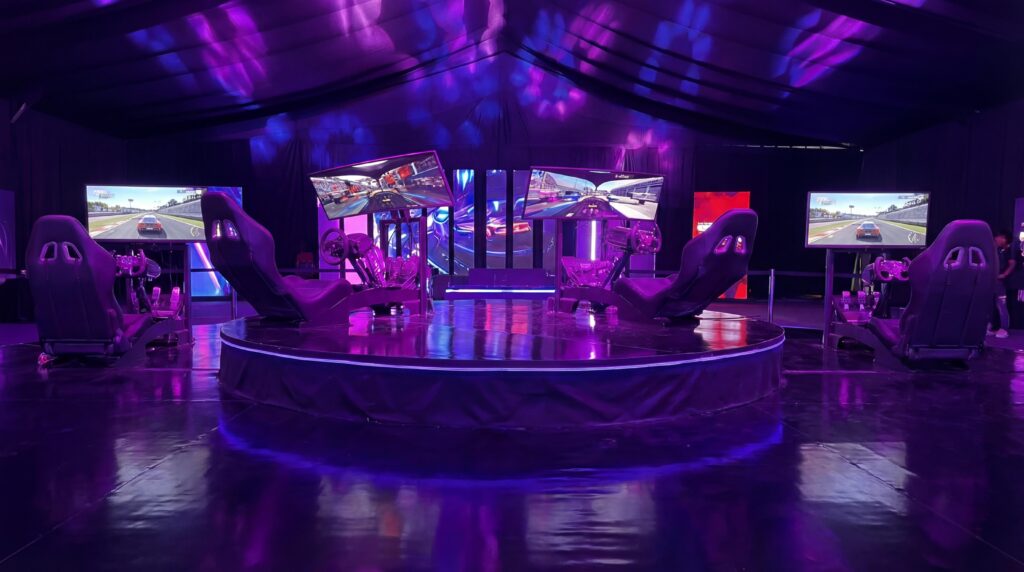
Cricket, golf, football, and racing simulators integrated with food and beverage.
Immersive Projection Experiences
Digital storytelling and visually interactive attractions.
Family Edutainment Centers
Interactive educational experiences for children and families.
Competitive Active Entertainment
Climbing, trampoline parks, ninja arenas, and indoor adventure formats.
Projects that combine multiple attraction categories typically achieve stronger revenue diversification.
Step 3: Pricing and Revenue Structuring
Pricing strategy is one of the most important operational variables within the Indian entertainment market.
Indian consumers are highly value-conscious, even within premium urban demographics. Successful operators therefore balance accessibility with profitability through dynamic pricing structures.
Dynamic Pricing Models
High-performing venues increasingly use pricing frameworks based on:
- Weekday vs weekend demand
- Peak-hour utilization
- Group bookings
- Family packages
- Corporate events
- Seasonal promotions
- Membership programs
Dynamic pricing improves operational utilization while maximizing revenue during high-demand periods.
The Importance of Bundled Experiences
Indian audiences respond strongly to bundled value offerings that combine multiple entertainment components within a single package.
Examples include:
- Gaming plus dining packages
- Family entertainment bundles
- Multi-attraction passes
- Birthday and celebration packages
- Corporate event experiences
- School partnership programs
These packages increase per-visit spending while improving perceived customer value.
Membership and Loyalty Programs
Membership ecosystems are becoming increasingly important for entertainment sustainability in India.
Benefits include:
- Recurring revenue streams
- Improved customer retention
- Better demand predictability
- Enhanced CRM data collection
- Stronger community engagement
Operators that successfully build loyalty ecosystems often achieve significantly higher repeat visitation rates.
Case Indicators for Indian Market Success
01 — Smaaash
India
Smaaash was one of the earliest Indian entertainment brands to successfully combine sports simulation technology, gaming, food and beverage, and social entertainment within a hybrid experiential format.
Its early market success demonstrated strong consumer demand for technology-enabled social entertainment in Indian urban markets.
The brand helped validate the commercial viability of sports-driven experiential entertainment within organized retail environments.
02 — Timezone
India and Asia Pacific
Timezone demonstrates the scalability of arcade-led entertainment ecosystems within mall environments across India and Asia Pacific markets.
Its operational consistency, family-focused positioning, and flexible attraction mix strategy have supported long-term scalability within organized retail ecosystems.
The brand highlights the continued relevance of adaptable entertainment formats capable of serving broad demographic segments.
03 — Snow World
India
Snow World illustrates India’s strong consumer appetite for unique experiential concepts even outside major metro markets.
Indoor snow-based experiences continue attracting visitors due to novelty value, climate contrast, and family appeal.
The concept demonstrates how differentiated experiential positioning can generate strong regional demand.
Risk Mitigation Framework for India
India’s entertainment market offers substantial opportunity, but operational and financial risks must be managed carefully through structured planning.
Key Risk Mitigation Priorities
Detailed Feasibility Study
Projects should validate market demand, pricing alignment, and catchment sustainability before investment commitment.
Phased Capex Deployment
Phased implementation reduces financial exposure while allowing operational calibration before expansion.
Vendor Due Diligence
Technology providers and attraction vendors should be evaluated for long-term support capability and operational reliability.
Localized Marketing Strategy
Regional consumer behaviour and cultural preferences require tailored marketing execution.
Strong Operations Training Model
Operational quality significantly influences repeat visitation and customer satisfaction within entertainment environments.
Structured risk mitigation improves both investor confidence and long-term project sustainability.
Why Localization Determines Success in India
India is not a single entertainment market. It is a collection of highly diverse regional markets with distinct pricing expectations, social behaviour patterns, and leisure preferences.
Projects that fail to localize often encounter:
- Pricing resistance
- Weak repeat visitation
- Operational inefficiencies
- Poor demographic alignment
- Inconsistent footfall
Localization should influence:
- Attraction selection
- Food and beverage offerings
- Marketing communication
- Event programming
- Pricing structure
- Operational staffing
- Customer engagement strategy
The strongest entertainment projects are those designed specifically for their target market rather than imported without adaptation.
The Role of Professional Advisory in Entertainment Development
Experiential entertainment projects involve complex coordination across feasibility analysis, attraction planning, spatial design, technical infrastructure, operations, and financial modeling.
Partnering with experienced advisors significantly reduces development risk by providing:
- Data-driven feasibility analysis
- Structured planning frameworks
- Operational benchmarking
- Technical coordination oversight
- Vendor evaluation support
- Scalable master planning
- Revenue optimization strategy
Professional advisory support enhances both execution discipline and investor confidence.
Future Outlook for India’s Experiential Entertainment Sector
India’s entertainment industry is expected to undergo substantial expansion over the next decade as retail infrastructure, urban leisure culture, and consumer spending continue evolving.
Several long-term trends are likely to shape future growth:
- Expansion of SEC formats across metros
- Entertainment-led mall redevelopment
- Growth of immersive digital attractions
- Greater food-plus-play integration
- Increasing investor participation
- International entertainment brand entry
- Technology-enabled attraction ecosystems
- Stronger Tier-2 city development activity
The market’s long-term growth trajectory remains exceptionally strong for developers capable of executing strategically localized entertainment ecosystems.
Frequently Asked Questions
Why is India attractive for experiential entertainment investment?
India benefits from a young population, rising urban spending, expanding retail infrastructure, and increasing demand for social and immersive entertainment experiences.
Are Tier-2 cities suitable for entertainment development?
Yes. Many Tier-2 cities offer strong long-term opportunity due to lower competition and growing consumer demand. However, careful feasibility analysis is essential before expansion.
Why do hybrid entertainment formats perform better in India?
Hybrid formats increase dwell time, improve cross-spending opportunities, and align better with Indian group-based and family-oriented leisure behaviour.
What pricing strategies work best in India?
Dynamic pricing models, bundled packages, membership programs, and family-oriented offers generally perform well due to India’s value-conscious consumer behaviour.
What are the biggest risks for investors entering this market?
Key risks include poor location selection, inadequate feasibility analysis, weak operational planning, pricing misalignment, and insufficient localization.
Why is operational quality important in experiential entertainment?
Operational consistency directly influences customer satisfaction, repeat visitation, online reputation, and long-term commercial sustainability.
Work with Peach Prime Consultancy
Entering India’s experiential entertainment market requires disciplined planning, localized strategy, operational expertise, and structured execution frameworks.
Peach Prime Consultancy provides strategic advisory, feasibility studies, concept development, attraction mix planning, spatial master planning, and financial modeling for experiential entertainment projects across India.
If you are evaluating entry or expansion within the Indian experiential entertainment market, our team helps ensure data-driven decision-making, reduced execution risk, and commercially sustainable development outcomes.
Visit www.peachprime.in to arrange a strategic consultation.