Blogs
How to Launch a Mixed Reality Battle Arena: Investor Strategy and ROI Framework
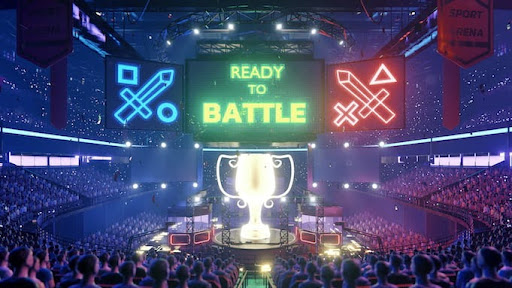
If you are evaluating investment in a Mixed Reality Battle Arena or AR-enhanced gaming facility, this guide outlines the commercial opportunity, technology integration strategy, and revenue model you need to build a high-margin immersive combat venue.
Why Mixed Reality Battle Arenas Are the Next Big Investment in Entertainment
The entertainment industry is going through a structural shift. Passive experiences are losing ground to active, social, and technology-driven ones. Mixed Reality (MR) battle arenas sit at the intersection of competitive gaming, physical activity, and social entertainment, making them one of the most compelling venue concepts for investors entering the experience economy today.
Search demand for terms like mixed reality arena business, AR battle game center, immersive multiplayer arena investment, and holographic gaming zone has grown sharply over the past two years. This is not a niche audience. These are competitive, experience-hungry consumers in the 18 to 40 age bracket, the same demographic that drives premium discretionary spending.
For investors and entrepreneurs, the question is no longer whether this market exists. The question is how to build and operate one profitably.
Understanding the Commercial Opportunity
Mixed Reality battle arenas generate revenue across multiple streams simultaneously. Unlike a cinema or a bowling alley that relies on one or two income channels, a well-designed MR arena operates more like a layered entertainment ecosystem.
Core revenue streams include:
Timed Match Sessions form the foundation of daily revenue. Players book slots, compete in AR or mixed reality combat scenarios, and pay per session. High throughput during weekends and evenings drives predictable cash flow.
Tournament Leagues unlock recurring, high-ticket revenue. Structured competitive formats with entry fees, prize pools, and sponsorship opportunities create an event calendar that keeps your community engaged and returning.
Membership Passes convert occasional visitors into loyal regulars. Tiered memberships offering priority booking, discounted rates, and exclusive access to advanced game modes stabilize your monthly revenue base.
Corporate Esports Events are among the fastest growing segments in the venue entertainment market. Companies are actively seeking unique team-building and entertainment formats. An MR battle arena offers something a conference room or dinner reservation simply cannot.
Branded Sponsorship Integration adds a layer of passive revenue. Arena naming rights, in-game brand placements, and co-branded tournament events allow you to monetize your audience and facility beyond direct ticketing.
When structured correctly, this multi-stream model produces margins that significantly outperform traditional entertainment formats.
Technology and Infrastructure Planning
The guest experience in an MR battle arena is entirely dependent on the quality and reliability of your technology stack. Cutting corners here is the fastest path to poor reviews and declining bookings.
The core infrastructure required includes:
Real-time tracking sensors that capture player movement accurately and without latency. Millimeter-level precision matters in competitive gameplay. Sensor placement, calibration, and redundancy planning must be part of your facility design from day one.
AR headsets or visors are the primary interface between the player and the game world. Durability, hygiene management, and ease of onboarding for first-time users are key operational considerations alongside raw display quality.
Projection mapping overlays can augment physical arena surfaces with dynamic digital environments, adding visual depth and immersion without requiring players to rely solely on headset visuals.
LED arena lighting systems synchronized with game events create the emotional atmosphere that separates a great session from a memorable one. Lighting design is often underestimated in early planning stages.
Digital scoring and leaderboard systems drive competitive engagement and social sharing. Visible real-time scoring creates organic marketing moments when players photograph or film their results.
Server backbone and network infrastructure underpin everything else. Low-latency, high-bandwidth local networking is non-negotiable. Redundancy planning ensures that a hardware failure does not result in a lost session and a refund request.
The technology decisions you make at the planning stage will define your operational cost structure, maintenance requirements, and upgrade roadmap for the next five years.
Three Global Models Worth Studying
Before finalizing your concept, it is worth examining what has already been proven at scale in other markets.
BattleKart (Europe) built its model around projection-based competitive gameplay, where players navigate physical arenas overlaid with immersive digital environments. Their format demonstrates that projection mapping can deliver compelling experiences at accessible price points.
SPREE Interactive (Germany) pioneered free-roam VR arenas that allow multiple players to move freely within a tracked physical space. Their operator model has been deployed globally and offers a strong template for venue licensing and technology procurement.
Sandbox VR (Global) has scaled competitive and narrative-driven mixed reality modes across multiple international markets, demonstrating that premium pricing is sustainable when the experience quality justifies it.
Each of these models offers different lessons around unit economics, technology choices, and audience positioning. Studying them before you build will save you significant time and capital.
Risk Mitigation Strategies
Every capital-intensive venue business carries operational risk. In the MR arena space, three factors have the greatest influence on long-term guest satisfaction and business health.
System redundancy is not optional. A single point of failure in your tracking or display systems can bring an entire session to a halt. Backup hardware, failover protocols, and trained on-site technical staff are operational necessities, not luxuries.
Latency optimization directly affects the quality of the player experience. Any perceptible lag between physical movement and digital response breaks immersion and undermines the competitive integrity of your sessions. Your network and processing infrastructure must be engineered to minimize this from the ground up.
Spectator integration is often overlooked at the planning stage but has a significant impact on long-term engagement. When friends, family, and corporate audiences can watch live gameplay on large displays with real-time scoring overlays, you turn every session into a shared social event. This drives word-of-mouth, repeat bookings, and event revenue.
How Peach Prime Consultancy Supports Your Investment
Launching a Mixed Reality Battle Arena involves navigating complex decisions across technology, real estate, vendor selection, and financial modeling. Getting any one of these wrong can significantly affect your returns.
Peach Prime works with investors and entrepreneurs at every stage of this process. From initial concept positioning and market validation through to vendor selection, arena layout planning, and full financial viability assessment, our team brings the domain expertise and operational knowledge needed to reduce risk and accelerate your path to profitability.
If you are serious about entering the immersive entertainment space, the right foundation makes all the difference.
Get in touch with Peach Prime today to begin your feasibility assessment.
Peach Prime is a specialist consultancy helping investors and operators build and scale immersive entertainment venues across emerging markets. Visit peachprime.in to learn more.