Blogs
How to Launch a Profitable Food and Play Hybrid Entertainment Business
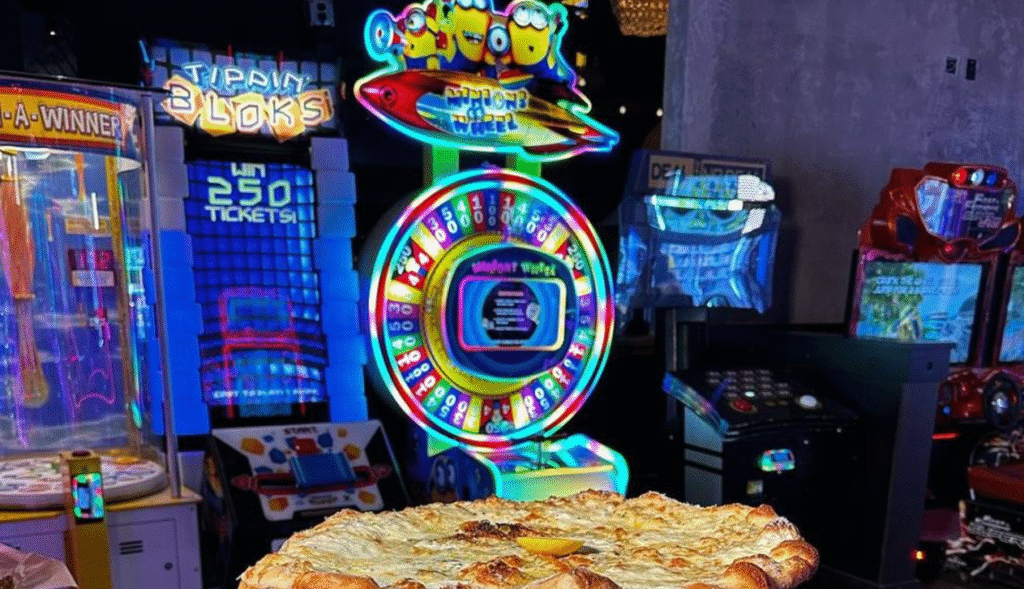
The restaurant industry has a customer retention problem. A guest who enjoys a meal leaves, goes home, and may or may not return next month. The entertainment industry has a spending ceiling problem. A guest who plays a game for an hour spends on the session and nothing else. The Food and Play Hybrid Entertainment model solves both problems simultaneously, and that is precisely why it has become one of the fastest-growing and most investor-attractive formats in the global experience economy.
If you are evaluating investment in a Food and Play Hybrid Entertainment Space, this guide gives you a structured framework covering capital planning, zoning strategy, concept selection, and the revenue layering required to build a profitable experiential dining destination that outperforms either format in isolation.
Why the Hybrid Model Outperforms Its Component Parts
The commercial logic of the Food and Play model is straightforward and well-evidenced in markets where it has been operating at scale for more than a decade.
Food and beverage revenue increases when guests are entertained. Guests who are actively engaged in a game, a competitive activity, or an immersive experience stay longer, order more rounds, and have a higher average spend per visit than guests whose only reason to remain is to finish their meal. The entertainment drives dwell time, and dwell time drives F&B revenue.
Entertainment revenue increases when food and beverage is integrated. A guest who can order a drink to their gaming booth, share a meal between rounds, and celebrate a tournament win with a catering package has a fundamentally more complete and social experience than one who has to choose between playing and eating. The F&B integration raises the perceived value of the entertainment session and supports premium activity pricing.
The combination creates a financial profile that neither a standalone restaurant nor a standalone entertainment venue achieves:
- Higher revenue per square metre than a restaurant operating the same footprint, because every square metre contributes to both F&B and entertainment income
- Longer average dwell time than a standalone entertainment venue, because food and beverage gives guests a natural reason to extend their visit
- Higher repeat visitation than a standalone restaurant, because the entertainment component creates variety and competitive motivation that a menu alone does not
- Broader audience reach across casual diners, competitive gaming groups, corporate event buyers, and occasion-based celebrators simultaneously
Concept Format Selection
The Food and Play hybrid category encompasses a wide range of specific formats, each with different capital requirements, target audiences, and operational profiles. Selecting the right format for your specific market, location, and investment budget is one of the most consequential early decisions in the development process.
Digital Darts Lounges have demonstrated exceptional commercial performance across the UK and US markets, combining a low-barrier, highly social activity with premium bar and food service in a format that requires relatively modest arena footprint per player group. Key commercial characteristics include:
- Low skill requirement makes the format inclusive across all age groups and experience levels
- Competitive scoring systems create natural repeat motivation as guests improve and climb leaderboards
- Booth-based layout creates defined revenue units with clear food and beverage service zones
- Strong corporate and group booking demand due to the structured but relaxed competitive format
Bowling and Dining Concepts have evolved significantly from the traditional bowling alley model into premium experiential destinations where the quality of the food, the design of the environment, and the social programming match or exceed the activity itself. Modern bowling and dining formats command substantially higher per-visit spend than traditional bowling operations by repositioning the activity as a premium social occasion rather than a casual pastime.
VR Cafés and Immersive Gaming Restaurants combine technology-driven entertainment with food and beverage in formats that range from compact café integrations to full immersive dining experiences. The VR component provides technological novelty and premium activity pricing, while the café or restaurant element extends dwell time and increases per-visit spend beyond the session fee alone.
Mini Golf and Bar Concepts have proven commercially robust in urban markets, combining a physically active, visually spectacular activity with premium bar programming in venues that attract strong social group and date night demand. Elaborately designed courses with themed environments and interactive elements justify premium activity pricing while creating high-quality social media content organically.
AR Gaming Restaurants represent the emerging frontier of the hybrid format, integrating augmented reality gameplay directly into the dining experience through tabletop or environmental AR systems that allow guests to play while they eat. This format has the highest technology investment requirements but delivers the most genuinely novel experience and the strongest differentiation from existing competitors in most markets.
Immersive Themed Cafés build the entertainment value into the environment and the narrative rather than in a specific activity format. Highly designed thematic environments, character-driven service concepts, and menu design that extends the creative world into the food and beverage offering create an experience where the venue itself is the entertainment. These formats generate exceptional social media content and strong occasion-based demand without the ongoing activity maintenance costs of equipment-based formats.
Capex and Layout Planning
The physical design of a Food and Play hybrid venue is the most complex layout challenge in the entertainment venue category because it must simultaneously optimise for food service efficiency, entertainment activity performance, social atmosphere, and operational separation between zones with fundamentally different operational requirements.
Acoustic Zoning is the most technically demanding design requirement in hybrid venues. Entertainment activity zones generate noise, competitive energy, and crowd sound. Dining zones require sufficient acoustic comfort for conversation. Achieving both within a single venue requires:
- Structural acoustic separation between high-energy activity zones and quieter dining areas through material specification, ceiling height management, and physical barriers that absorb or redirect sound
- Activity zone design that channels competitive noise internally rather than projecting it outward
- Music and ambient sound programming calibrated separately for activity and dining zones
- Flexible acoustic configurations that allow the venue to transition between quiet daytime dining service and energetic evening entertainment programming
Kitchen Integration must serve both the speed and volume demands of entertainment-driven dining and the quality standards that justify premium F&B pricing. Key kitchen planning considerations include:
- Service station positioning that minimises wait times for gaming booth and activity table service without routing staff through guest circulation paths
- Menu design that optimises for fast preparation and easy consumption during activity sessions, sharing formats, finger food, and portable items alongside full dining options
- Kitchen capacity modelling against your peak session scenario, not your average operating day
- Bar visibility and accessibility from both activity and dining zones to maximise impulse beverage ordering
Gaming Cluster Layout determines how efficiently your entertainment footprint generates revenue and how naturally it integrates with food and beverage service. Layout principles for activity zone design include:
- Defined booth or table unit structures that create private social spaces for groups while maintaining overall venue atmosphere
- Service access to every activity unit without disrupting guest gameplay or requiring guests to leave their station to order
- Circulation paths between activity zones, bar areas, and dining sections that feel natural rather than navigated
- Spectator sightlines from bar and lounge areas into activity zones that allow non-participating guests to watch and engage with the competitive atmosphere
Circulation Flow affects both guest experience and operational efficiency. A venue where guests naturally move between activity, bar, and dining zones without congestion or confusion drives higher secondary spend than one where different venue areas feel disconnected. Circulation planning considerations include:
- Entry sequencing that orients new guests immediately and directs them toward their booking destination efficiently
- Bar placement at the social crossroads of the venue where it serves both activity and dining zones and maximises impulse ordering
- Clear visual connections between zones that create atmosphere and encourage exploration
- Capacity management systems at peak times that prevent congestion at transition points between areas
Revenue Streams and Financial Modelling
The layered revenue architecture of a Food and Play hybrid is its primary commercial advantage. Each stream below operates on a different demand cycle and serves a different audience segment.
Food and Beverage Revenue is the primary income driver in most mature hybrid venues, often accounting for fifty to sixty percent of total revenue. F&B yield optimisation strategies include:
- Table turn management in dining zones that balances dwell time with revenue per seat
- Premium beverage programming, cocktail menus, craft selections, and curated wine lists, that raise average transaction value
- Shared and social menu formats, sharing boards, grazing menus, group packages, that increase total order value per group
- Pre-ordered group dining packages for birthday and corporate bookings that provide revenue certainty and simplify service delivery
Gaming and Activity Sessions provide the second major revenue stream and the primary driver of dwell time extension. Activity revenue optimisation considerations include:
- Tiered session pricing by group size and time slot demand
- Unlimited session packages for off-peak periods that fill capacity with committed revenue
- Tournament and league formats that create recurring competitive bookings
- Technology upgrade cycles that maintain activity novelty and justify continued premium pricing
Birthday and Group Bookings represent the highest-value individual transaction type in the hybrid venue category. A group of twelve to twenty guests booking a combined activity and dining package in a single transaction generates predictable revenue, fills significant capacity, and creates the high-energy social occasions that define venue atmosphere. Package design priorities include:
- Clear inclusions covering activity time, food and beverage allowance, and any add-on services
- Flexible customisation options that allow groups to personalise within a structured framework
- Staff support dedicated to group event coordination that reduces friction in the booking and delivery process
- Upsell pathways for premium add-ons including private zone access, upgraded F&B packages, and personalised entertainment programming
Corporate Events unlock a high-value repeat client base with structured entertainment budget access. The hybrid format is particularly well-suited to corporate bookings because:
- Competitive activity formats create team engagement that passive dining events cannot deliver
- The combination of dining and entertainment within a single venue simplifies corporate event logistics
- Private zone access options allow corporate groups to conduct business conversations within a social entertainment environment
- Branded customisation options, custom game scoring overlays, branded menu items, venue dressing, create premium event packages at premium prices
Brand Collaborations monetise the venue’s audience and visual environment for commercial partners. Collaboration formats that perform well in hybrid entertainment venues include:
- Product launch events that use the venue’s social atmosphere as a launch platform
- Co-branded seasonal menu or activity programming with relevant consumer brands
- Influencer and media event hosting that generates content for the collaborating brand while increasing venue awareness
- Sponsored tournament series with brand naming rights and in-venue promotional integration
Three Global Benchmarks
Dave and Buster’s (USA) is the original large-format proof of concept for the Food and Play hybrid model at scale. Operating across hundreds of locations, their model of combining an extensive arcade and gaming floor with full restaurant and bar service has sustained commercial performance across multiple economic cycles. The key lessons from Dave and Buster’s for new market investors are the importance of activity variety in driving repeat visitation, the commercial value of digital loyalty programming that creates habitual return behaviour, and the operational discipline required to manage a complex dual-service venue at consistent quality across high volume.
Sixes Social Cricket (UK) demonstrates how a niche sport format can be transformed into a mass-market social entertainment product when the activity is redesigned around accessibility, competition, and social occasion rather than skill level or sporting knowledge. Their format, combining automated cricket batting bays with premium food and cocktail service, has proven that sport-themed hybrid entertainment venues can generate strong demand from audiences with no prior interest in the underlying sport. For investors evaluating activity format selection, Sixes demonstrates the commercial power of taking an unexpected sport or activity and redesigning it for social entertainment.
Flight Club Social Darts (UK and USA) has built one of the most commercially successful and widely replicated hybrid entertainment formats of the past decade. Their oche darts format, combining technology-enhanced dart throwing with premium hospitality in a premium bar environment, created the template for the digital darts lounge category and demonstrated that an activity previously associated with a declining pub format could be repositioned as a premium urban social experience. Their expansion into the US market validates the international transferability of well-executed hybrid entertainment concepts and provides a clear benchmark for the revenue per square metre achievable in a premium compact format.
How Peach Prime Consultancy Supports Investors
Launching a profitable Food and Play Hybrid Entertainment business requires integrating food service planning, entertainment activity design, acoustic engineering, financial modelling, and operational structuring into a coherent investment strategy. Each element affects the others, and errors in any one area have compounding consequences for overall venue performance.
Peach Prime provides feasibility studies, F&B and gaming integration planning, financial modelling, and master planning for hybrid entertainment concepts. Our advisory covers market feasibility, concept format selection, spatial planning, financial projections, vendor evaluation, and operational structuring, designed for investors who want to build hybrid entertainment venues that perform commercially from opening day and continue to scale.