
A step-by-step planning and investment guide for operators and investors ready to build, launch, and scale premium escape room businesses that attract corporate clients, command high ticket prices, and grow profitably.
Introduction: Why Premium Escape Rooms Are a Strong Investment Opportunity
The escape room market has matured significantly since its earliest commercial iterations, and the segment that has emerged most strongly from this maturation is the premium end: story-driven, technically sophisticated experiences that deliver genuinely cinematic quality and command ticket prices that reflect it. For investors and operators with the capital and planning discipline to execute at this level, the premium escape room format offers a combination of commercial characteristics that are difficult to find in other indoor entertainment categories.
The revenue model is predictable: time-controlled sessions with fixed group sizes allow revenue per available hour to be modelled with unusual accuracy. The margin structure is strong: once the capital investment in scenic design and automation is made, the ongoing operating cost is dominated by staffing and maintenance rather than consumables or mechanical depreciation. The corporate market dimension creates a recurring B2B revenue stream with higher average spend per visitor and more reliable advance booking patterns than leisure visitors alone. And the content refresh model, where new narrative experiences and seasonal story upgrades extend the commercial life of the physical investment, makes the premium escape format more financially durable than single-experience attractions of comparable capital cost.
This guide walks through every critical dimension of building, launching, and scaling a premium escape room business: from market understanding and concept development to technology investment, operations design, marketing strategy, revenue diversification, safety compliance, and financial planning.
INVESTOR INSIGHT | Premium escape rooms differ from basic experiences in three commercially critical ways: narrative depth that justifies premium pricing, production quality that generates strong word-of-mouth and repeat visitation, and content repeatability that extends the commercial life of the physical investment across multiple content cycles. |
STEP 1 | Understand the Premium Escape Room Market |
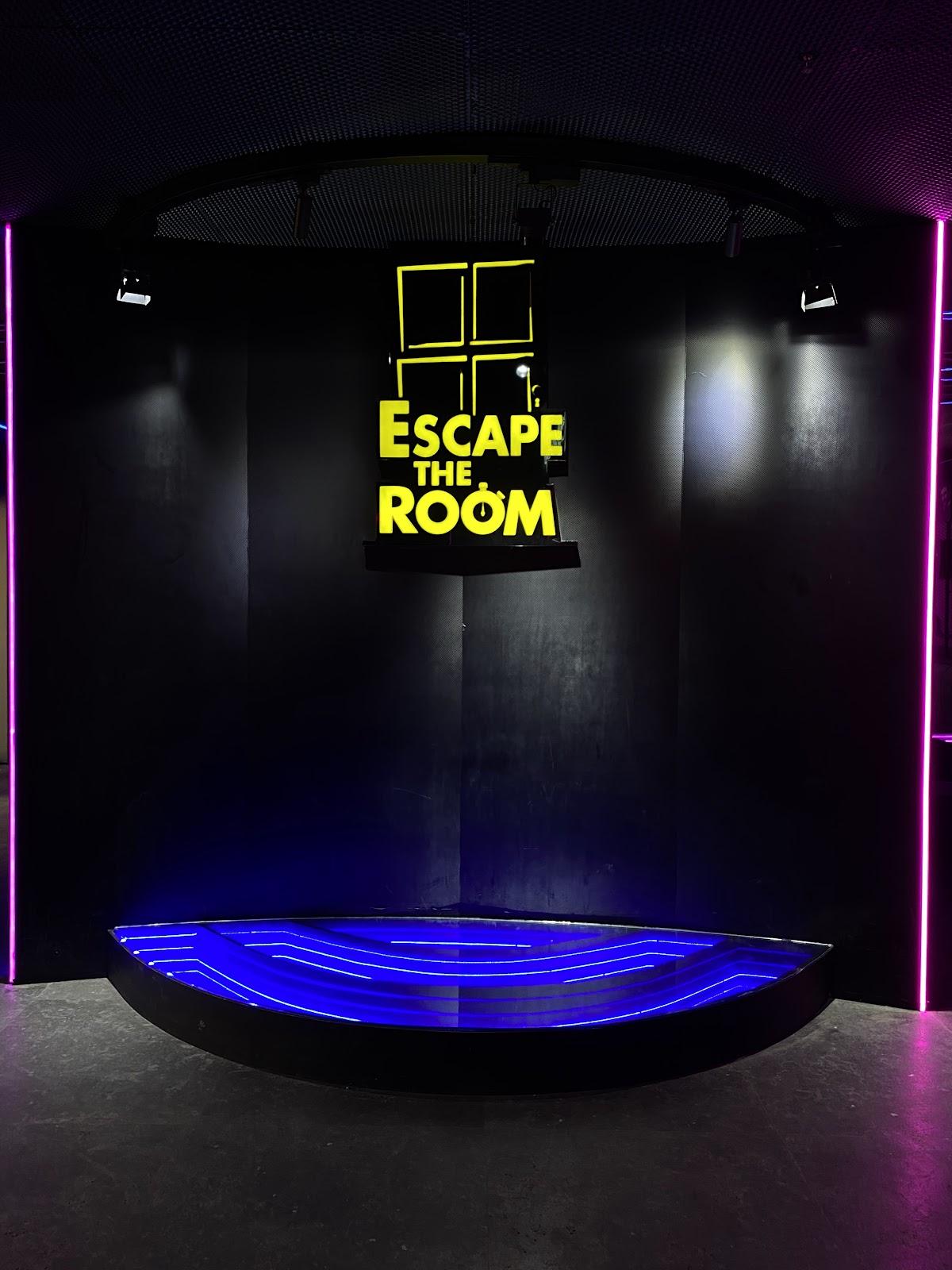
Premium escape rooms compete in a distinct market segment from budget and mid-market escape experiences, and understanding this distinction is the starting point for every investment and design decision that follows. The premium customer is not simply a standard escape room visitor who is willing to pay more for the same experience. They are a different type of buyer who expects a fundamentally different quality of experience and evaluates it against a different reference set.
The target segments for a premium escape experience are corporate team-building groups, tourist visitors seeking a distinctive and photogenic experience in a new city, experience-driven millennial and Gen Z consumers for whom the escape room is a social occasion rather than a novelty, and fans of immersive theatre and interactive storytelling who approach the format with the expectations of a discerning entertainment consumer rather than a casual leisure visitor. Each of these segments has specific expectations about experience quality, booking convenience, and value proposition that must be understood and addressed before a premium concept is developed.
STEP 2 | Concept and Story: Your Competitive Moat |
In a market where the baseline of escape room design has become widely accessible, the concept and story world of a premium experience is the primary defensible competitive advantage available to an operator. A strong concept is one that cannot be easily copied because it is specific, emotionally resonant, and consistently executed across every design decision in the room. It should have a clear dramatic premise that is immediately comprehensible, characters or forces with distinct and memorable identities, and an emotional arc that creates genuine tension and delivers a satisfying resolution.
Building for Repeatability from Day One
Premium room concepts should be designed for content repeatability from the earliest stage of development. This means designing the story universe with sufficient depth to support sequel rooms, seasonal story upgrades, and episodic content additions without requiring the physical rebuilding of the base room environment. A room that is designed as a self-contained puzzle experience with no narrative thread beyond its walls has a commercial life defined by the pool of first-time visitors in its market. A room designed as the first chapter in a larger story universe can refresh its content at a fraction of the cost of a new room build by introducing new narrative elements within the same physical environment.
Incorporating branching outcomes or variable puzzle sequences, where different play-throughs produce different story revelations or endings, is the design technique that most directly extends the repeat visit motivation of the competitive player segment: the cohort who will return specifically to discover the path not taken on their first visit. This design investment is modest relative to its repeat visitation impact and should be considered a standard feature of any premium room concept rather than an optional enhancement.
STEP 3 | Design and Technology: Invest in Systems That Scale |
The technology investment in a premium escape room is not merely a cost of quality. It is an investment in operational scalability: the automation systems that reduce reset times, minimise staffing requirements, and protect experience consistency are what make it possible to operate multiple rooms at high throughput with a lean but well-trained team. The specific technology investments that deliver the strongest combined creative and operational return are automated puzzle mechanisms, show control platforms, and game master monitoring dashboards.
Automated Puzzle Mechanisms
RFID-based puzzle systems, pressure-sensitive triggers, magnetic lock sequences, and servo-driven mechanical reveals are the automation technologies that most reliably reduce reset times and protect experience consistency. A puzzle that requires manual repositioning by a staff member between every session is a throughput constraint and a consistency risk. A puzzle that automatically resets to its starting state on a game master command delivered from the control room is an operational asset that pays for itself in reduced labour cost and improved experience quality within the first year of operation.
Scenic Fabrication and Material Durability
Scenic materials in a public attraction environment are subjected to physical contact and incidental damage that far exceeds any theatrical or film production context. All scenic elements must be specified with public durability as a primary criterion alongside aesthetic quality. Surfaces that will be touched must withstand repeated contact without degrading visibly. Props that will be handled by hundreds of groups must be robust enough to survive intensive use without breaking or requiring replacement within the first year. A preventive maintenance schedule that addresses scenic quality as systematically as mechanical system maintenance is essential for sustaining the experience standard that premium pricing requires.
STEP 4 | Operations and Throughput: Maximise Revenue Per Hour |
Throughput planning is the operational discipline that most directly determines the financial performance of a premium escape room venue. Revenue per available hour (RevPAH) is the metric that connects every operational decision to its financial consequence, and every minute saved in the session cycle through operational efficiency adds directly to the RevPAH performance that determines the venue’s long-term profitability.
Staggered timed entry windows, automated reset systems, structured game master protocols, and well-designed handover procedures between the exiting group and the incoming group are the operational elements that determine how many session cycles a room can deliver per operating day. A room that achieves five session cycles per day at premium pricing generates significantly more revenue than one that achieves four cycles at the same pricing, and the operational investment required to achieve the additional cycle is typically modest relative to its annual revenue impact.
Add-Ons That Increase Average Spend
VIP pre-show experiences that build narrative context and anticipation before the room session begins, professional photography packages that capture memorable moments during the experience, themed merchandise that extends the story world into the visitor’s home, and post-game debrief lounges where groups can discuss and celebrate their experience all represent spend opportunities that extend average revenue per group beyond the base ticket price with minimal incremental operational cost. These add-ons should be presented as premium enhancements at the point of booking and at the pre-session check-in, when visitor anticipation and willingness to invest in quality is at its peak.
STEP 5 | Marketing and Sales: Build Community and Partnerships |
Premium escape room marketing works most effectively through a combination of organic social content, strategic partnership development, and the systematic conversion of satisfied first-time visitors into repeat customers and active advocates. The social content generated by a well-designed premium escape experience, specifically the photographs, reaction videos, and enthusiastic group reviews that visitors share spontaneously after a genuinely exceptional session, is the most credible and cost-efficient marketing channel available.
Building the organic social media infrastructure that captures and amplifies this content requires deliberate design investment: photo moments built into the room environment at points where the most dramatic visual content can be created, a dedicated social media presence that responds to and reshares visitor content, and a review management process that ensures positive feedback is captured systematically and negative feedback is addressed promptly and visibly.
Corporate and Institutional Partnerships
Relationships with corporate event planners, hotel concierge desks, tourism boards, tour operators, and school trip coordinators are among the most commercially valuable partnerships available to a premium escape room operator and should be developed as a systematic sales discipline rather than an ad hoc outreach activity. A dedicated partnership account manager, a clear referral commission structure, and a corporate-specific product offer with flexible booking terms and facilitated event management are the commercial infrastructure investments that make institutional partnerships reliable revenue contributors rather than occasional windfalls.
STEP 6 | Revenue Diversification and Pricing Strategy |
A premium escape room business that relies primarily on standard session ticket revenue leaves significant commercial potential unrealised. The most financially resilient operators generate 40 to 60 per cent of their revenue from sources other than standard tickets: corporate packages, private buyouts, seasonal experiences, merchandise, and F&B all contribute to a revenue mix that is more stable across seasonal demand variation and less sensitive to competitive entry than single-stream ticketing.
Tiered pricing structures that offer clearly differentiated value propositions at each tier, standard, premium, and private buyout, allow the operator to capture the full range of spending willingness within their demographic without the price resistance that comes from a single high-price point that some potential visitors find difficult to justify. Dynamic pricing adjustments during peak seasons and weekends, implemented through the booking platform without requiring manual intervention, improve yield across the full demand cycle without the customer satisfaction risks associated with visibly inconsistent pricing.
STEP 7 | Safety, Compliance, and Accessibility |
Safety compliance in a premium escape room is both a legal obligation and a commercial necessity: a safety incident or a public regulatory notice is among the most severe reputational risks available to an entertainment venue, and the premium brand positioning that premium escape operators depend on is particularly vulnerable to the perception of inadequate guest care. Emergency exits must be clearly marked, unobstructed, and operable without staff intervention at all times. CCTV monitoring of all room areas must be continuous throughout every session. Trained game masters must be able to halt the experience and initiate an evacuation immediately and safely from the control room.
Accessibility considerations, while often treated as a compliance requirement rather than a commercial opportunity, represent a genuine demographic expansion opportunity for premium escape operators willing to invest in genuinely inclusive design. Wheelchair-accessible pathways, puzzle designs that accommodate a range of physical abilities, and alternative experience formats for visitors who cannot participate in the standard room due to physical or sensory considerations expand the addressable market and generate the positive advocacy that comes from being known as a genuinely welcoming venue.
STEP 8 | Financial Planning and KPIs to Monitor |
Rigorous financial planning before investment and disciplined performance monitoring after opening are the two financial disciplines that most reliably differentiate premium escape room ventures that reach stable profitability from those that struggle despite strong creative execution. The following KPI framework identifies the metrics that matter most for understanding and improving the financial performance of a premium escape operation.
KPI | What It Measures | Target Benchmark |
RevPAH | Revenue per available room hour | Maximise through pricing and occupancy |
Average Spend per Guest | Ticket plus all ancillary spending per visitor | 1.4 to 1.8x base ticket price |
Occupancy Rate | Proportion of available session slots filled | 65 to 80% across operating periods |
Customer Acquisition Cost (CAC) | Marketing spend divided by new customers acquired | Minimise through organic and referral channels |
Customer Lifetime Value (LTV) | Total revenue generated from a single customer over time | Target LTV to CAC ratio above 3:1 |
Break-Even Days | Days from opening to total revenue covering total capex | Typically 24 to 42 months for premium venues |
Successful Premium Escape Room Projects: What You Can Learn
01 | The Escape Game Nashville, USA and Multiple Locations The Escape Game’s national expansion is built on a foundation of exceptional operational consistency: every room in every location is built to the same cinematic production standard and staffed to the same service quality benchmark, which means the brand’s reputation in one city actively supports its expansion into new cities. The company’s focus on reliability and narrative detail has created a visitor satisfaction record that drives strong repeat and referral booking rates, which reduces customer acquisition cost significantly relative to operators who rely primarily on paid media for new visitor acquisition. For developers planning a premium escape concept with multi-location ambitions, The Escape Game demonstrates that operational excellence and creative ambition are not competing priorities but mutually reinforcing dimensions of the same brand investment. |
02 | Real Escape Game (SCRAP) Tokyo, Japan and Global SCRAP’s model demonstrates the commercial power of treating the escape room format as a content platform rather than a fixed product. By pioneering large-scale event-style escape experiences that accommodate hundreds of simultaneous participants, leveraging licensed IP collaborations with major entertainment brands, and releasing seasonal storyline updates on a planned calendar, SCRAP has built a business with multiple revenue streams, a global audience, and a content development infrastructure that operates independently of any single venue. For investors planning their first premium escape venue, SCRAP illustrates the long-term commercial trajectory available when creative ambition and business model innovation are applied to the format with equal conviction. |
03 | HintHunt London, UK HintHunt’s success in London’s highly competitive immersive entertainment market is built on the consistent quality of its puzzle design and the reliability of its guest experience management. As an early market entrant that has maintained its position against subsequent competition through quality consistency rather than novelty, HintHunt demonstrates the commercial durability of a premium escape brand that earns its reputation through repeated delivery of an excellent experience rather than periodic spectacle. The brand’s emphasis on well-crafted puzzles and reliable visitor flow has made it a trusted destination for corporate groups and returning leisure visitors who value consistency of quality over novelty of concept, which is a commercially resilient positioning in a market where new venues regularly compete on novelty. |
Getting from Pilot to Portfolio
The most common planning error among first-time premium escape room developers is attempting to launch a multi-room portfolio before validating the concept and operational model in a single flagship venue. The pilot venue serves a critical function beyond its direct commercial contribution: it generates the operational data, visitor feedback, reset time measurements, and maintenance learnings that are the foundation of a scalable playbook. Without this empirical foundation, multi-site expansion amplifies whatever errors exist in the concept rather than leveraging whatever is working.
A flagship pilot venue should be designed with multi-site expansion in mind from the outset: scenic fabrication specifications, technology system choices, and operational protocols should all be designed for replicability rather than bespoke uniqueness. The goal is to develop a room concept and operational system that can be reproduced in a new location by a team who were not involved in the original build, using a documented playbook rather than institutional knowledge. This discipline, applied consistently to the pilot, is the foundation of a scalable premium escape room portfolio.
Frequently Asked Questions
The following questions address the most important planning and investment considerations for first-time premium escape room developers.
How long does it take to design and build a premium escape room from concept to opening? |
A full development cycle for a single premium escape room, from concept finalisation through to public opening, typically spans 8 to 14 months. The concept and story development phase generally requires two to three months. Scenic design and puzzle mechanism specification typically adds two to three months. Physical construction and scenic fabrication requires three to five months. Technology installation, integration, and testing adds four to eight weeks. A mandatory pre-opening testing and staff training period of three to four weeks before public launch is essential for identifying and resolving operational issues before the venue operates at full capacity. |
What is the ideal group size for a premium escape room session? |
The commercially optimal group size for most premium escape room designs is four to six players, which provides sufficient collective problem-solving capacity to advance through the narrative at a satisfying pace while maintaining the intimacy that makes each player feel genuinely central to the story. Groups smaller than four can feel insufficient for the physical and cognitive demands of a multi-puzzle room, while groups larger than eight typically create the social dynamics of an audience watching some members solve puzzles rather than a team collaborating on a shared challenge. Premium rooms should be designed with a specific optimal group size in mind, and the puzzle design and spatial layout should be calibrated to deliver the best experience for that group size rather than attempting to accommodate the widest possible range. |
How important is the game master role to the premium escape room experience? |
The game master is one of the most important determinants of experience quality in a premium escape room and is consistently the element that most distinguishes venues with exceptional visitor satisfaction from those with merely adequate satisfaction. A skilled game master manages the delicate balance between allowing players to struggle productively with challenges, which creates the satisfaction of genuine discovery, and intervening with well-timed hints that prevent frustration from undermining the emotional engagement of the experience. Beyond hint delivery, the game master serves as the live author of the experience: their ability to adjust the pacing, introduce narrative atmosphere through voice communication, and manage the emotional arc of the group’s journey in real time is the human intelligence layer that no automation system can replicate. Investing in game master selection, training, and ongoing development is among the highest-return operational investments available to a premium escape room operator. |
What marketing channels generate the strongest return for a premium escape room? |
The highest-return marketing channels for a premium escape room are, in order of consistent performance, organic social media from visitor content, structured review management on Google and TripAdvisor, direct corporate outreach and partnership development, and SEO-optimised digital presence targeting the specific search terms that premium experience-seeking consumers use. Paid social advertising is effective for reaching new consumer audiences but consistently delivers lower return on investment than organic and word-of-mouth channels in a category where the authenticity of peer recommendation is the primary trust signal. The investment required to generate strong organic social content is creative, not financial: rooms must be designed with photographic and shareable moments built into the experience, and the social media management of the brand must be active enough to amplify the content visitors create spontaneously. |
How should a premium escape room handle negative reviews? |
Negative reviews are an inevitable feature of any public entertainment venue and their commercial impact is determined less by their existence than by the quality and speed of the operator’s response. A visible, empathetic, and solution-oriented response to a negative review on a public platform demonstrates to every prospective visitor who reads it that the operator takes experience quality seriously and handles dissatisfaction professionally. The most commercially damaging scenario is not a negative review but an unaddressed negative review, which signals indifference to visitor welfare. Establishing a review monitoring and response protocol that ensures every review receives a considered response within 24 to 48 hours of posting, and that every legitimate quality concern is logged as a maintenance or operational improvement trigger, is the minimum standard for premium brand management in this category. |
How does a premium escape room attract repeat visitors after the initial story is completed? |
Attracting repeat visitors after their first room completion requires a multi-layered strategy that begins at the point of exit rather than being reactive to declining bookings. At the exit, the game master should introduce the sequel room or upcoming story addition that connects narratively to what the group has just experienced, creating immediate awareness of the next visit occasion. Post-visit communication, through email or an app, should maintain the visitor’s narrative investment with story updates, character communications, and exclusive content that extends the story world between visits. Seasonal story upgrades, branching narrative paths that were not taken on the first visit, and a competitive leaderboard that rewards return visits with improved placement all create structured motivation to return that does not depend on the novelty of a completely new room. |
Why Partner with Peach Prime Consultancy
Peach Prime Consultancy specialises in designing premium, revenue-driven escape experiences from concept through to operational launch. Our services cover feasibility analysis, thematic concepting, automated puzzle system specification, operational playbook development, and financial modelling for investor and lender presentations. We bring deep expertise in the immersive entertainment sector and the structured planning discipline that ensures every escape room concept we support is built to the standards that premium positioning requires and the commercial frameworks that profitable scaling demands.
Visit www.peachprime.in to explore our services or contact our team to arrange a tailored development planning consultation.
WHAT PEACH PRIME DELIVERS | Feasibility analysis and market positioning, thematic concept development and story architecture, automated puzzle and technology specification, operational playbook design, revenue modelling and financial feasibility for investor presentations, and multi-site scaling strategy. |