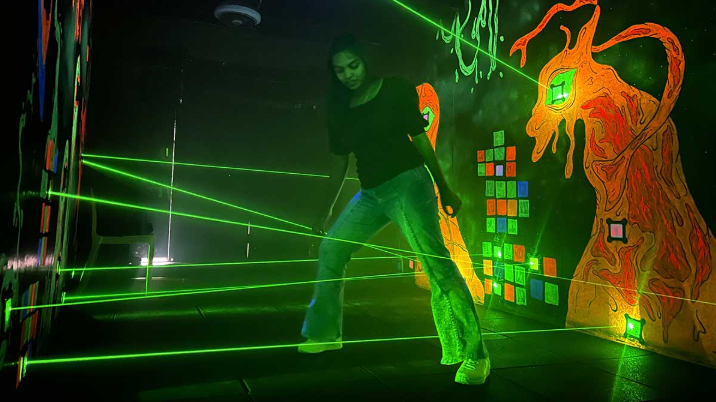
The laser tag industry has undergone a fundamental transformation. What was once a neon-lit novelty for children’s birthday parties has evolved into a technology-driven, competitive entertainment format that attracts teenagers, Gen Z adults, and corporate groups willing to pay premium prices for a genuinely immersive experience.
If you are evaluating investment in an AR Laser Combat Arena or next-generation laser tag business, this guide gives you a structured framework covering capital planning, technology integration, revenue modelling, and the scalability considerations that determine long-term ROI.
Why AR Laser Combat Is a Strong Investment Category Right Now
Search demand for terms like augmented reality laser tag business, AR combat arena startup cost, immersive laser game center, and location-based gaming investment reflects an audience that is actively researching this category with commercial intent. These are not casual browsers. They are consumers and investors who already understand the format and are looking for somewhere to experience it or a framework to build it.
The demand side of the equation is being shaped by a generational shift in entertainment preferences. Gen Z and older teen audiences have grown up with competitive gaming. They understand mechanics, value leaderboards, and are motivated by skill progression in ways that older entertainment formats do not accommodate. AR Laser Combat bridges the gap between the competitive gaming world they inhabit digitally and the physical, social experience they increasingly seek out of home.
Corporate group demand adds a second, high-value layer. Team-building event budgets are substantial, and companies are actively moving away from passive formats toward competitive, participatory experiences. An AR combat arena that can accommodate groups of twelve to thirty for a structured competitive event is a compelling proposition for corporate entertainment buyers.
The combination of a growing consumer segment and a high-value corporate segment, in a format that has meaningful barriers to home replication, creates a durable commercial opportunity for well-planned operators.
Capital Planning and Technology Infrastructure
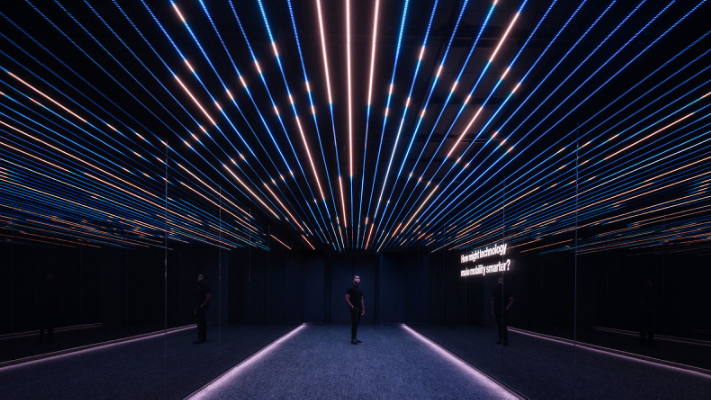
AR Laser Combat Arenas sit at the intersection of physical venue construction and technology deployment. Getting the capital plan right requires understanding both cost categories and the relationship between them.
AR Headsets or Projection Overlays define the nature of the augmented experience you are delivering. Headset-based AR systems create individually immersive environments where each player sees a uniquely rendered battlefield. Projection overlay systems use arena surfaces to project shared digital elements visible to all players simultaneously. Each approach has different cost structures, maintenance requirements, and guest experience profiles. The right choice depends on your target session format, group size, and price positioning.
Sensor-Based Tracking Systems are the technological foundation that makes augmented combat viable. Player position tracking, hit detection, weapon state management, and environmental interaction all depend on sensor accuracy and network latency. Evaluate vendors on precision under dynamic multi-player conditions, not just in controlled demonstrations. An impressive product demonstration in a vendor showroom and reliable performance across forty simultaneous players in a commercial session are two different things. Demand operational references from comparable venues before committing.
Programmable LED Arena Lighting serves both an experiential and an operational function. Dynamically controlled lighting that responds to game events, round countdowns, and player eliminations creates atmosphere that amplifies the competitive tension of each session. From an operational perspective, lighting design also affects how your arena photographs and films, which directly influences the organic social media content your guests generate and share.
Digital Scoring Dashboards are a guest satisfaction and retention tool as much as they are an operational system. Real-time visible scoring creates competitive intensity during sessions and gives players something to photograph and share after them. Persistent leaderboards that track performance across visits motivate return bookings from competitive guests who want to improve their ranking.
Sound Design Integration is consistently underinvested in by first-time operators and consistently cited by guests as a major contributor to immersion quality. An arena with precisely engineered spatial audio, directional sound effects, and a dynamic soundtrack that responds to game state creates a sensory experience that reinforces the AR visuals. Sound design investment has a high return relative to its cost in the overall capital budget.
Central Server Backbone underpins every other system in the venue. Session management, player data, scoring, equipment status monitoring, and booking integration all flow through your server infrastructure. Redundancy planning is not optional. A server failure that interrupts a paid session generates a refund obligation, a negative experience, and potential reputational damage from a guest who shares the experience publicly. Build redundancy into your infrastructure budget from the beginning.
Revenue Streams and Monetisation Strategy
A high-margin AR Laser Combat Arena is one that monetises its capacity, its community, and its environment simultaneously. Each revenue stream below contributes differently to the overall financial picture.
Per-Match Ticketing is your baseline revenue generator. Pricing should be calibrated to your operating cost per session, including technology depreciation, staff time, content licensing, and facility overhead, with a margin that reflects the premium nature of the experience. Resist the temptation to undercut on launch pricing. Anchoring your price positioning low creates a recovery problem later and devalues the experience in the perception of your early guests.
Group and Birthday Bookings represent operationally efficient revenue because they fill capacity in a single transaction. A group of ten to sixteen guests booking a ninety-minute session that includes private arena access, dedicated staff support, and a structured competitive format is one of the highest-yielding booking types in your calendar. Dedicated group packages with clear inclusions and predictable pricing make the booking process easy for event organisers, which drives conversion.
Corporate Team-Building Events command the highest per-head revenue of any booking category. The corporate market values private access, structured competitive formats, and post-event reporting on team performance. Developing a corporate-specific package with custom game scenarios, branded team allocations, and a debrief experience that frames the session as a genuine team-building activity unlocks a client base that books repeatedly and refers peer companies.
League Tournaments build community and create a recurring revenue calendar. Weekly or monthly competitive leagues with entry fees, prize structures, and persistent leaderboard tracking convert occasional guests into regulars. Tournament formats also create spectator demand, and a venue that has invested in spectator viewing infrastructure can generate additional revenue through audience ticketing and event sponsorship.
Membership Passes stabilise your monthly revenue by converting high-frequency visitors into recurring subscribers. Tiered membership structures offering session credits, priority booking, league entry discounts, and early access to new game content create perceived value that justifies the commitment and reduces churn.
Merchandise and Food and Beverage Integration extend revenue per visit without requiring additional session capacity. Team-branded apparel, tournament merchandise, and competitive gaming accessories sell consistently in venues with an engaged competitive community. Food and beverage options positioned in your post-session debrief zone extend dwell time and average spend per visit meaningfully.
Three Global Benchmarks
Three operating models across different market contexts offer concrete lessons for investors entering the AR combat arena space.
Battle Company (USA) elevated the laser tag format into a premium competitive entertainment product by investing in arena design quality, game narrative, and customer experience consistency. Their model demonstrates that the traditional laser tag audience ceiling is not fixed. With the right positioning and experience quality, operators can attract adult competitive gaming audiences who would never consider visiting a conventional laser tag venue. Premium design justifies premium pricing, and premium pricing supports the operational investment required to maintain experience quality.
Hado Arena (Japan) built a globally recognised AR combat concept around a physically active, team-based format that requires no prior gaming knowledge to enjoy. Their success across diverse international markets demonstrates that accessible, physically engaging AR combat formats outperform complex or heavily narrative-driven ones when broad market penetration is the objective. Hado also pioneered a franchise model that has allowed operators in multiple countries to deploy the concept with established brand equity and operational support.
Laser Quest Next-Gen Formats (UK and Global) represent the evolution of a legacy entertainment brand adapting to technological change. Their investment in AR overlays, digital scoring, and competitive programming within existing venue infrastructure demonstrates that the transition from traditional laser tag to AR-enhanced formats can be achieved without a complete rebuild. For investors acquiring or repurposing existing laser tag venues, this evolution pathway offers a lower-capital route to next-generation positioning.
Risk Management and Scalability Planning

Understanding the specific risks in this venue category and planning for them in advance is what separates operators who sustain profitability from those who see it erode after the initial launch period.
Session Throughput is the primary operational lever for revenue yield. The number of sessions you can run per day is a function of session duration, turnaround time between groups, and staff capacity. Each of these can be optimised through process design and technology. A venue that reduces average turnaround time between sessions by five minutes runs materially more sessions per operating day. Throughput modelling before you finalise your operational design is time well spent.
Arena Durability affects both guest experience and maintenance costs over time. AR Laser Combat involves physical movement, competitive intensity, and repeated contact with arena surfaces and equipment. Materials, surfaces, and hardware that are specified for commercial durability rather than residential or demonstration quality reduce replacement frequency and maintenance downtime. This is a specification decision that pays for itself over a three to five year operating horizon.
Content Refresh is the long-term engagement driver that most operators underplan. Guests who return monthly need a reason to keep returning. New game scenarios, seasonal competitive formats, updated visual overlays, and evolving tournament structures are all content investments that sustain repeat visitation. Modular arena design supports this directly. A physical arena built with reconfigurable elements, movable structures, interchangeable surface panels, and adaptable lighting zones can be updated thematically or structurally without major reinvestment, keeping the experience feeling fresh without the capital cost of a full redesign.
Staff Training closes the gap between technology investment and guest satisfaction. Equipment that performs well in the hands of trained staff creates a reliably positive experience. The same equipment in the hands of under-trained staff creates inconsistent sessions, higher equipment failure rates, and guest complaints. A structured training programme covering equipment handling, session facilitation, safety protocols, and guest communication is one of the lowest-cost, highest-return investments in your operational model.
How Peach Prime Consultancy Supports Investors
Building a profitable AR Laser Combat Arena requires integrating decisions across real estate, technology, experience design, financial modelling, and operations into a coherent plan. The cost of poor decisions in any one of these areas compounds across the lifetime of the venue.
Peach Prime provides comprehensive advisory support for investors entering the AR combat and immersive entertainment space. Our services cover feasibility studies, arena layout planning, technology vendor evaluation, financial modelling, and operational structuring, designed to give you the analytical foundation and practical guidance needed to build a venue that performs commercially from day one and scales beyond it.
We work with investors at every stage, from initial concept validation through to launch and operational optimisation, ensuring that the business you build is grounded in rigour, not assumptions.
Contact Peach Prime today to begin your AR Laser Combat Arena feasibility assessment.
Peach Prime is a specialist consultancy helping investors and operators build and scale immersive entertainment venues across emerging markets. Visit peachprime.in to learn more.