
A comprehensive investment and planning guide for developers building sci-fi and futuristic experience zones that combine cutting-edge technology, compelling storytelling, and commercial planning to create high-performance immersive entertainment destinations.
Introduction: The Commercial Rise of Futuristic Immersive Entertainment
The futuristic experience zone represents one of the most commercially compelling formats to emerge from the rapid evolution of the immersive entertainment sector over the past decade. Where earlier generations of theme attractions built their appeal on physical spectacle, mechanical rides, and costumed characters, the sci-fi and futuristic experience zone builds its appeal on something far more resonant with the contemporary entertainment consumer: the feeling of inhabiting a world that does not yet exist.
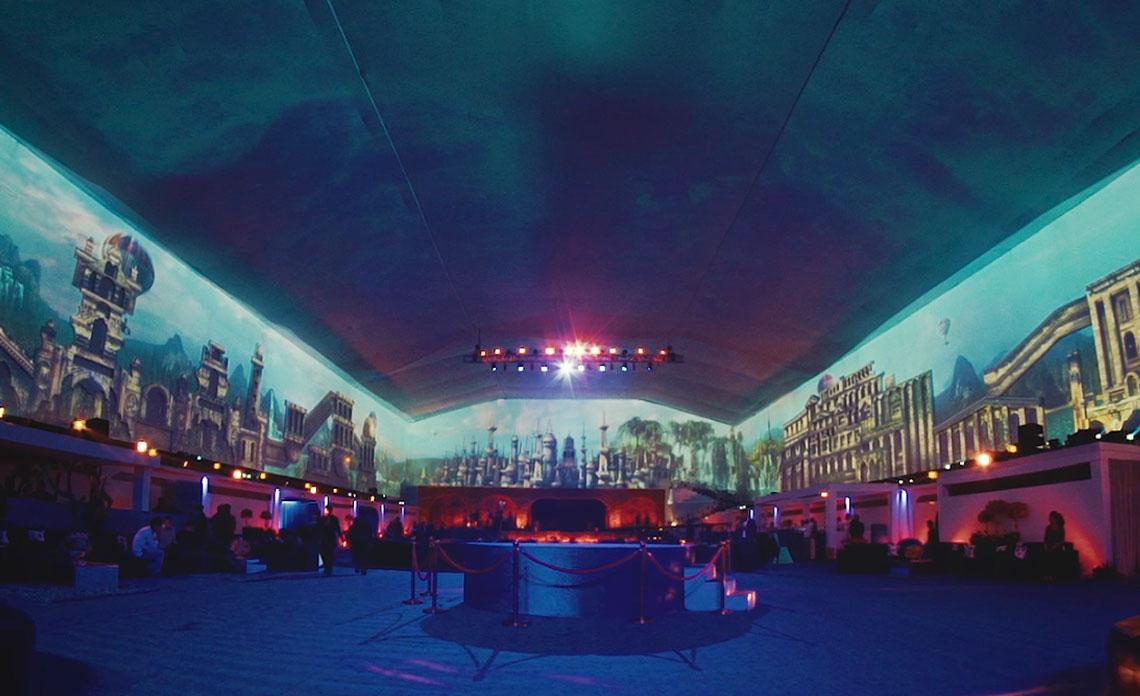
The technology systems that make this feeling possible have reached a stage of commercial accessibility and creative maturity that makes genuinely transportive futuristic experiences achievable at investment levels viable for independent developers, not only for the global entertainment conglomerates that first deployed them at scale. Projection mapping systems that transform the geometry of physical architecture into dynamic narrative environments, holographic display technologies that place three-dimensional digital objects in real physical space, AI-driven interactive systems that respond to individual visitor behaviour in real time, and multiplayer mission platforms that create shared competitive experiences within a technology-rich environment are all now available through established commercial suppliers with track records of successful public attraction installations.
This guide provides the complete business planning framework for a sci-fi and futuristic experience zone investment: from concept positioning and technology infrastructure through to visitor flow architecture, content refresh strategy, revenue optimisation, and the common planning failures that consistently undermine projects that start with strong creative ambitions but inadequate operational discipline.
MARKET SIGNAL | Growing demand for space-themed attractions, futuristic interactive museums, digital immersive walkthroughs, and technology-driven entertainment centres is being driven by Gen Z and millennial consumers who are active technology users seeking physical experiences that match the visual sophistication of the digital content they consume daily. This demographic’s expectation for interactive, shareable, and technologically advanced entertainment makes the futuristic experience zone one of the most naturally aligned formats with current consumer demand. |
Why Sci-Fi Attractions Are Commercially Powerful
The commercial strength of a well-designed sci-fi and futuristic experience zone rests on a set of structural advantages that are specific to this format and that distinguish it from most other indoor entertainment categories. The most significant of these is the social media amplification dynamic that visually spectacular, technology-rich environments create naturally and at scale.
A visitor standing in an LED tunnel that transforms around them through a sequence of cosmic visualisations, or interacting with a holographic display that responds to their movements, or completing a multiplayer mission scenario in a set that convincingly resembles the bridge of a spacecraft, is experiencing a moment that is simultaneously extraordinary to live through and visually spectacular to document. This documentation impulse, which is among the most powerful organic marketing forces available to any entertainment venue, is particularly intense in futuristic experience environments because the visual language of the content is already familiar and desirable from science fiction media while its physical realisation in a walkable environment is genuinely novel.
The Technology Integration Advantage
Unlike theme park attractions that depend on physical infrastructure that is expensive, slow, and complex to change, a sci-fi experience zone built on projection mapping, programmable LED systems, and content-driven interactive platforms can evolve its experience continuously through software and content updates that require no physical reconstruction. This content agility is a commercial advantage of extraordinary value: it allows operators to refresh the experience on a schedule that sustains repeat visitation without the capital cost cycles that constrain physical attraction development. A new narrative storyline introduced through a content update creates a new visit occasion with the marketing impact of a major experience launch at a fraction of the cost of new physical construction.
Multi-Demographic Reach
The futuristic experience zone is among the most genuinely multi-demographic formats in the entertainment sector. Families with children are drawn by the visual wonder and the accessible interactive elements. Teenagers and young adults are drawn by the social media content potential and the competitive mission gameplay. Tech professionals and corporate audiences find the technology showcase dimension genuinely engaging as both entertainment and intellectual experience. And older adults who are curious about emerging technologies find a futuristic experience zone a more accessible and entertaining introduction to AI, virtual reality, and holographic display than any conventional technology exhibition format.
Concept Positioning: Your Narrative Foundation
The concept positioning of a sci-fi experience zone is the most consequential creative decision in its development, because every subsequent design, technology, and operational decision is made in service of the concept. A weak or poorly defined concept creates the incoherence that is the most common and most visible failure mode of immersive attraction development: a collection of impressive technology demonstrations that fail to add up to a unified experience because they have no shared narrative logic connecting them.
High-Impact Concept Territories
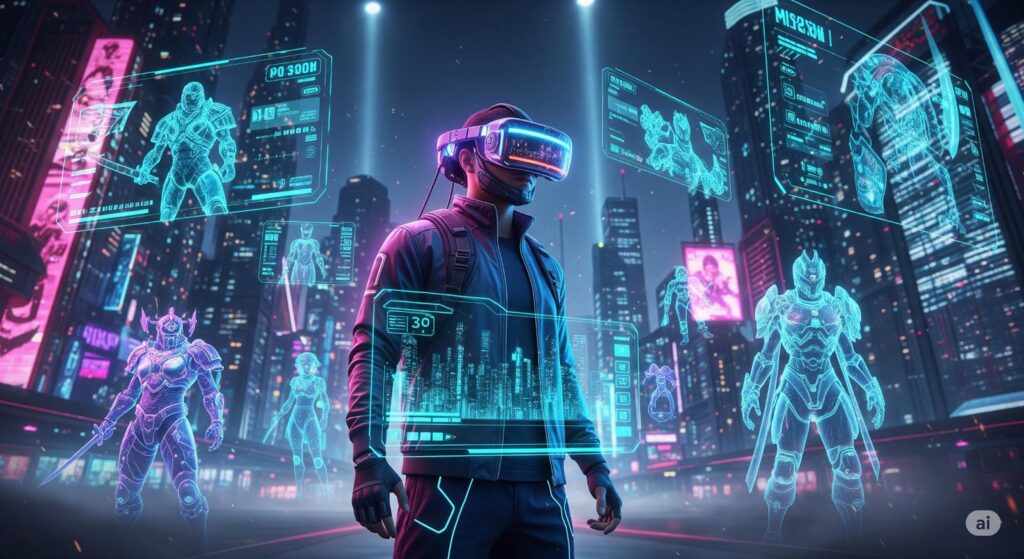
The concept territories with the strongest demonstrated commercial appeal in the futuristic experience format include space exploration narratives, where visitors inhabit the role of astronauts, cosmonauts, or interstellar explorers navigating missions within a realistically designed spacecraft or space station environment; cyberpunk city environments, where a near-future urban world of neon, neural technology, and social complexity creates the visual richness and moral tension that makes cyberpunk one of the most enduringly popular science fiction aesthetics; AI laboratory formats, where the boundary between human intelligence and artificial intelligence becomes the experiential subject of the attraction through interactive AI systems, simulated sentient entity encounters, and the philosophical weight of technology that thinks; and intergalactic mission scenarios, where visitors are active participants in a structured competitive narrative with missions, objectives, and outcomes that vary between playthroughs and create genuine replay motivation.
The most commercially durable concepts are those that are specific enough to create genuine world identity, broad enough to support multiple distinct zones and activity types within a single venue, and emotionally resonant enough that visitors feel something during their experience rather than simply observing technology demonstrations. Specificity, breadth, and emotional resonance are the three criteria against which every concept candidate should be evaluated before committing to a development direction.
CONCEPT PRINCIPLE | A sci-fi experience zone concept should answer three questions before design begins: what world are we in, what is the visitor’s role within that world, and what changes as a result of their presence? Concepts that cannot answer all three clearly will struggle to create the coherent experiential identity that repeat visitation and social media advocacy require. |
The Seven Key Business Components
A commercially viable sci-fi experience zone requires structured planning across seven interconnected business dimensions. Weakness in any single dimension creates compounding problems in the others, which is why integrated planning methodology is essential from the earliest stage of development.
STEP 1 | Concept Positioning and World-Building |
The concept is the narrative and visual framework within which every technology, spatial, and operational decision is made. It must be defined with sufficient specificity to guide consistent design decisions across all zones while remaining broad enough to support the range of experiences the venue needs to offer. World-building documentation, including visual style guides, narrative character definitions, story background, and zone-by-zone experience briefs, should be completed before any technology or construction procurement begins.
STEP 2 | Footprint Planning and Visitor Circulation |
The spatial organisation of the venue determines visitor flow efficiency, zone capacity balance, and the experiential pacing that creates emotional rhythm across the full visit. Each zone must be sized appropriately for its expected dwell time and group capacity, and the circulation pathways between zones must create the sense of narrative progression, moving from one chapter of the story to the next, rather than simply connecting rooms. Bottleneck analysis, identifying the zones with the highest dwell time and the narrowest entry pathways, must be completed during the planning stage and resolved in the spatial design before construction begins.
Visitor throughput planning must address both the average visit duration across all zones and the peak-demand scenario, when multiple fully-occupied groups are moving through the venue simultaneously. The circulation design must accommodate the peak scenario without degrading the experience quality of any individual group, which typically requires both adequate pathway widths between zones and temporal staggering of group entry intervals through the booking system.
STEP 3 | AV and Projection Infrastructure |
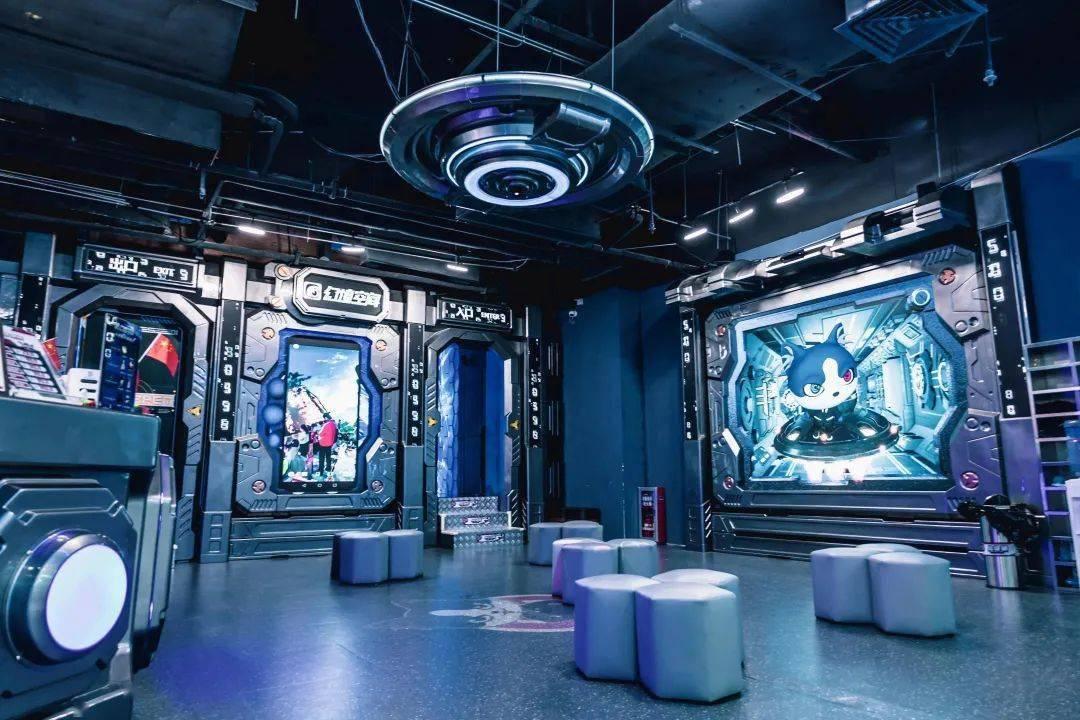
The audiovisual and projection infrastructure is the technological nervous system of a sci-fi experience zone and the dimension where the gap between adequate and excellent is most commercially consequential. Projection mapping systems must be specified for the specific geometry, surface characteristics, and ambient light conditions of each zone they serve, rather than selected from a generic specification and installed without zone-specific calibration. LED display systems must be selected for the pixel pitch and brightness specifications appropriate to the viewing distances and ambient conditions of each installation location. Holographic display systems must be positioned to create the maximum visual impact for the specific sightlines available in each zone.
Acoustic design is the dimension most frequently underestimated in futuristic experience development and the one most consistently responsible for the experience degradation that disappoints visitors who were visually impressed but aurally underwhelmed. The sound design of a sci-fi experience zone is as important as its visual design: spatial audio that places sounds in specific directional positions, ambient soundscapes that create the acoustic reality of the fictional world, and interaction-triggered audio events that respond to visitor actions in real time are all critical to the immersive quality of the experience. Acoustic treatment that prevents sound bleed between adjacent zones must be addressed in the architectural design of zone boundaries, not added retrospectively through surface treatment after the experience reveals the problem.
STEP 4 | Content Refresh Strategy |
A content refresh strategy is not a future consideration to be addressed after opening. It is a commercial planning requirement that must be designed into the venue’s technology infrastructure, operational model, and financial projections from the earliest stage of development. A sci-fi experience zone whose content cannot be updated without physical reconstruction has a commercial life defined by first-time visitors only, because there is no reason for a visitor who has experienced the full venue once to return when nothing has changed. The technology investment in a content-agile platform, specifically projection and display systems that are driven by software content rather than fixed physical media, and interactive systems that can be updated with new missions and narrative content without hardware replacement, is the investment that transforms the venue from a single-visit novelty into a repeat-visitation destination.
Content refresh planning should include a structured annual calendar of new narrative additions, a biennial major experience evolution that significantly refreshes the venue’s primary narrative or introduces a major new zone, and a seasonal overlay programme that introduces limited-time content aligned with cultural moments and holidays that generate the media announcements and time-limited motivation to return that sustain awareness among lapsed visitors.
STEP 5 | Ticket Pricing and Premium Upsells |
Pricing architecture for a sci-fi experience zone must balance two competing objectives simultaneously: accessible base pricing that maximises the addressable audience and generates the volume of visitors needed to sustain operating costs and community word-of-mouth, and premium upsell structures that capture the spending willingness of visitors who want more than the standard admission experience delivers. A tiered pricing model with a standard admission tier, a premium tier that includes one or two signature interactive experiences not included in base admission, and a VIP tier with exclusive access to the most technology-intensive zones and a private guide, addresses both objectives simultaneously.
Dynamic pricing, adjusting base and premium tier pricing based on predicted demand across time slots and days, improves yield across the full demand cycle without the customer satisfaction risks of visibly inconsistent list pricing. The booking platform should handle dynamic pricing adjustments automatically within pre-defined parameters rather than requiring manual rate management, which creates pricing inconsistency and administrative overhead.
STEP 6 | Safety and Compliance Systems |
A sci-fi experience zone presents a specific safety planning context that differs from conventional entertainment venues in ways that must be understood and addressed in the design and operational planning. Projection mapping and LED environments that create total visual immersion reduce visitors’ awareness of the physical boundaries of the space, increasing the risk of unintended contact with walls, props, and other visitors. All immersive environments must maintain adequate ambient light levels for safe physical navigation, and physical hazard zones must be defined through floor markings or tactile barriers that are detectable even within fully immersive visual environments.
Interactive technology systems that involve physical engagement, including haptic feedback platforms, motion-tracked interaction systems, and any equipment that moves in response to visitor input, require safety envelope planning that prevents injury from unexpected system behaviour. Emergency stop protocols for all interactive systems must be accessible to staff from the game master station and must halt all system motion immediately and safely from any operating state. Regular technical safety audits of all interactive systems, conducted by qualified technology safety specialists rather than general maintenance staff, are a mandatory operational standard.
STEP 7 | Merchandise and Themed Retail Integration |
Merchandise and themed retail in a sci-fi experience zone serves both a commercial function and an experiential one. Physically, it generates ancillary revenue from visitors whose experience has created emotional investment in the world they have just inhabited. Experientially, it extends the story world beyond the venue walls and into the visitor’s home, keeping the emotional connection to the brand alive between visits and creating the collection motivation that drives return visits among enthusiasts. Merchandise range development should be driven by the specific characters, visual motifs, and narrative moments of the venue’s world-building rather than by generic sci-fi aesthetics, which have limited brand specificity and fail to create the connection to the specific experience the visitor had.
Revenue Architecture
The revenue model of a sci-fi and futuristic experience zone is among the broadest available in indoor entertainment, with nine distinct streams that collectively produce a commercially resilient and financially diversified operation.
Revenue Stream | Format | Commercial Profile |
Ticketed General Admission | Timed-entry session or open-flow admission pricing | Primary revenue stream |
Premium Mission Gameplay | Paid add-on interactive missions with competitive scoring | High-margin upsell |
VIP Interactive Experiences | Private guided sessions with enhanced technology access | Premium, advance-booked |
Corporate Tech Events | Exclusive venue hire for product launches, team events, and brand activations | High-yield B2B |
Brand Sponsorship Partnerships | Technology and consumer brand integration within zones | Recurring, long-term |
School and Institution Groups | Curriculum-linked STEM visit packages at group rates | Institutional, weekday revenue |
Futuristic F&B Concepts | Themed food and beverage with interactive ordering and presentation | Ancillary, dwell-extending |
Merchandise and Retail | Sci-fi themed collectibles, apparel, and branded technology accessories | Ancillary, brand-extending |
Corporate Tech Events as a High-Yield Revenue Engine
Corporate technology events represent one of the most commercially productive revenue streams for a sci-fi experience zone and one that most developers underestimate in their initial revenue modelling. Technology companies, financial services firms, automotive brands, and telecommunications companies all have active programmes of client entertainment and team engagement events that seek venues with a technology identity aligned with their own brand positioning. A futuristic experience zone offers these brands something no conventional event venue can: an environment that is visually and conceptually aligned with the technology and innovation narratives that define their brand communication. Exclusive venue hire for a product launch, a client entertainment evening, or a team strategy offsite in a futuristic environment creates a brand association for the sponsoring company that multiplies the commercial value of the event beyond the hire fee alone, which supports premium pricing for full-venue corporate event packages.
Common Mistakes to Avoid
The following table maps the planning and execution mistakes that most consistently undermine the commercial performance of sci-fi experience zones, and the specific commercial consequences each produces.
Common Mistake | Why It Damages Commercial Performance |
Underestimating technical coordination | AV, projection, and interactive systems require specialist integration planning that general contractors cannot deliver; poor coordination creates costly rework and delayed openings |
Over-investing in visuals without operations planning | Spectacular displays without efficient visitor flow, reset protocols, and staff training create bottlenecks that undermine the quality the visuals promise |
Poor acoustic design | Immersive audio is as important as visuals; inadequate acoustic treatment creates the sound bleed between zones that shatters the immersion of every zone simultaneously |
Weak storytelling structure | Technology without narrative creates novelty without emotional engagement; visitors who are not emotionally invested in the experience do not return or advocate |
No content refresh strategy | A fixed experience with no planned content evolution has a commercial life defined by first-time visitors only; without refresh, repeat visitation collapses within 12 to 18 months |
Ignoring maintenance protocols | Interactive technology in a public venue requires intensive preventive maintenance; unplanned equipment failures during sessions damage reputation faster than almost any other operational failure |
The Technology-First Planning Trap
The most common and most commercially damaging planning failure in futuristic experience zone development is beginning with technology selection rather than concept and story development. Developers who start by specifying the projection systems, LED walls, and interactive platforms they want to install, and then attempt to create a narrative framework around the technology they have committed to, consistently produce experiences that feel like technology showrooms rather than story worlds. Visitors are impressed momentarily by individual technology demonstrations but leave without the emotional investment in a coherent experience that drives advocacy and repeat visitation. The commercially successful approach begins with story, character, and world-building, and then selects the technology systems that best serve the narrative rather than the narrative that best justifies the technology systems already chosen.
Global Benchmark Sci-Fi Experience Zones
The following three venues represent distinct approaches to the futuristic experience format and provide the evidence base for investment and planning decisions.
01 | Meow Wolf Santa Fe, USA and Multiple Locations Meow Wolf is the most commercially successful and critically acclaimed independent immersive art and experience enterprise in the United States and one of the most instructive models available for developers planning futuristic experience zones. Its debut venue, the House of Eternal Return in Santa Fe, New Mexico, transformed a conventional commercial building into a multi-dimensional narrative environment of extraordinary creative ambition, combining surrealist visual design, science fiction narrative, hidden passages, interactive technology, and original music into a coherent experience world that has attracted millions of visitors and generated extraordinary word-of-mouth advocacy since its 2016 opening. What makes Meow Wolf instructive beyond its creative ambition is its commercial model: the organisation has expanded to multiple additional locations across the United States using a hybrid artist-collective and venture-backed commercial structure that has proven the financial viability of genuinely ambitious immersive experience investment at significant scale. For developers who question whether the commercial returns of high-investment immersive experience development justify the creative risk, Meow Wolf provides the most compelling evidence available that they do, when the concept is strong enough and the execution is disciplined enough to match the creative ambition. |
02 | teamLab Planets Tokyo, Japan teamLab Planets in Tokyo is arguably the most visited and most photographed immersive art and experience venue in the world and represents the highest expression of the projection mapping and interactive visual environment format that is the technology foundation of most contemporary futuristic experience zones. The venue creates a sequence of rooms in which the physical boundaries of the space are dissolved by projection environments that respond to visitor movement, creating the sensation of inhabiting an endlessly transforming living world rather than walking through a decorated building. The commercial performance of teamLab Planets, which consistently operates at full capacity across extended daily operating hours, reflects the extraordinary social media reach generated by its visual content: the photographs and videos that visitors create within its spaces have been shared hundreds of millions of times across social platforms, creating a global awareness and demand that extends far beyond the reach of any paid marketing campaign the venue could have executed. For developers planning the visual design and social media strategy of a futuristic experience zone, the teamLab model demonstrates the compounding commercial value of designing experiences that are as compelling to document as they are to inhabit. |
03 | Space Centre Houston Texas, USA Space Centre Houston demonstrates the commercial and educational credibility that a scientifically grounded space exploration narrative provides to a futuristic experience venue in ways that purely fictional concepts cannot replicate. As the official visitor centre of NASA’s Johnson Space Centre, the attraction combines genuine space artefacts and authentic mission history with interactive technology experiences and forward-looking content about future exploration programmes, creating a narrative that is simultaneously grounded in verifiable reality and oriented toward an exciting future. The venue’s success in attracting both family audiences seeking entertainment and educational visitors seeking genuine knowledge reflects the commercial power of intellectual credibility when it is combined with experiential quality. For developers planning space exploration concept positioning, Space Centre Houston illustrates how the authority of authentic connection to real scientific achievement amplifies the commercial appeal of the futuristic narrative beyond what fictional world-building alone can achieve. |
Frequently Asked Questions
The following questions address the most important planning and investment considerations for developers entering the sci-fi and futuristic experience market.
What is the typical capital investment required to develop a sci-fi experience zone? |
Capital investment for a sci-fi experience zone varies significantly based on scale, technology specification, and the complexity of the scenic and narrative design. A compact urban venue of 5,000 to 8,000 square feet with three to five distinct immersive zones using projection mapping, LED environments, and basic interactive systems typically requires INR 3 to 8 crore. A mid-scale venue of 10,000 to 20,000 square feet with six to ten zones and a full suite of interactive technology including holographic displays, AI-driven interaction, and multiplayer mission platforms typically requires INR 10 to 25 crore. Full-scale flagship venues of 25,000 square feet or more with broadcast-quality AV infrastructure, custom scenic fabrication, and proprietary interactive technology require INR 30 crore and above. Developers should plan for a contingency of 15 to 20 per cent above itemised estimates, as the integration of complex technology systems in custom environments consistently surfaces unforeseen coordination requirements. |
How long does content remain fresh enough to drive repeat visitation? |
Without any content refresh investment, the repeat visitation motivation of most visitors is exhausted within one to two visits, which typically means a commercial freshness window of six to twelve months before the rate of new visitor acquisition required to sustain attendance becomes unsustainably high. With a structured content refresh programme, including seasonal overlays every three to four months and a major new zone or narrative addition annually, a well-operated sci-fi experience zone can sustain strong repeat visitation motivation for its core audience over a three to five year cycle before a more fundamental experience evolution is required. The most commercially successful operators treat content development as an ongoing production function with a dedicated creative team and a confirmed annual content budget rather than a reactive response to attendance trends. |
What interactive technology delivers the strongest visitor engagement in a futuristic experience zone? |
The interactive technologies that consistently deliver the strongest combination of visitor engagement quality and operational reliability are multiplayer mission platforms, where groups of visitors collaborate or compete within a shared narrative scenario using hand-held controllers or motion-tracking systems; projection-reactive floor and wall environments, where visitor movement creates real-time visual responses that make the environment feel alive and responsive; AI-driven conversational entities, where visitors interact with simulated intelligent characters through natural language and receive contextually intelligent responses; and physical prop interaction systems, where visitors manipulate physical objects with embedded sensors to trigger story events or reveal narrative information. Technologies that are visually impressive but offer no interaction, such as static holographic displays or pre-recorded projection shows, deliver strong first impression but low engagement depth, which limits their contribution to the dwell time and emotional investment that drive strong commercial performance. |
How should a sci-fi experience zone approach school and educational group programming? |
Educational group programming for a sci-fi experience zone is most commercially effective when it is designed as a genuine curriculum-aligned product rather than a standard group ticket with a teacher discount. The specific curriculum connections most relevant to a futuristic experience zone are STEM subjects: physics, engineering, computer science, mathematics, and the interdisciplinary sciences that underpin the technologies represented in the experience. Developing structured learning activities within the experience environment that connect specific interactive zones to curriculum topics, supported by pre-visit and post-visit teacher resources, creates an educational product that is both pedagogically credible and commercially differentiated from simple group admission offers. Relationships with state education boards, the inclusion of the venue in official school trip recommendation lists, and partnerships with STEM enrichment organisations are the institutional development investments that convert episodic school group visits into consistent, advance-booked weekday revenue. |
What is the most effective marketing strategy for a sci-fi experience zone? |
The most effective marketing strategy combines organic social media amplification, targeted digital advertising, influencer partnership, and institutional relationship development in a coordinated programme rather than relying on any single channel. Organic social media amplification, driven by visitor-generated content from visually spectacular experience moments, is the most credible and cost-efficient channel for reaching the Gen Z and millennial audiences that are the primary consumer demographic for futuristic experience zones. Targeted digital advertising on Instagram, YouTube, and gaming-adjacent platforms reaches these demographics in the content environments where they are already discovering entertainment experiences. Influencer partnerships with technology, gaming, and lifestyle content creators whose audiences match the venue’s target demographic generate authentic advocacy reach that paid advertising cannot replicate. And institutional relationships with corporate event planners, hotel concierge networks, and tourism boards generate B2B and tourist visitor revenue that complements the direct consumer acquisition channels. |
What payback period should investors plan for a sci-fi experience zone? |
Well-designed and well-operated sci-fi experience zones in strong urban markets with active corporate event programming and consistent content refresh investment typically achieve payback within 36 to 54 months for mid-scale venues. The key variables are the quality and originality of the concept, which determines the organic social media reach and word-of-mouth advocacy that reduce customer acquisition cost, and the development of the corporate event revenue stream, which carries significantly higher yield per visitor than general admission and generates the advance booking revenue that improves cash flow predictability during the early trading period. Venues in tourism-dense urban markets benefit from additional international visitor demand that extends the effective catchment area beyond local repeat visitors and reduces the content refresh investment required to sustain attendance. |
Why Partner with Peach Prime Consultancy
Building a commercially successful sci-fi and futuristic experience zone requires the integration of storytelling expertise, technology specification knowledge, spatial planning discipline, operational systems design, and financial modelling capability across a development process that spans concept through to opening and beyond. Weakness in any single dimension creates compounding problems in the others, which is why specialist immersive entertainment development advisory is not a discretionary investment for ambitious projects but a commercial necessity.
Peach Prime Consultancy specialises in immersive entertainment planning, combining storytelling, engineering, technology integration, and financial feasibility modelling into a structured development advisory service that guides projects from initial concept to operational launch. Our team has the cross-disciplinary expertise to navigate the full complexity of futuristic experience zone development and the financial modelling capability to present your investment case with the rigour that investors and lenders require.
Visit www.peachprime.in to explore our services or contact our team to arrange a strategic planning consultation for your futuristic experience zone project.
WHAT PEACH PRIME DELIVERS | Concept positioning and world-building documentation, spatial master planning and visitor flow analysis, AV and technology system specification briefing, content refresh strategy and programming roadmap, revenue architecture and financial modelling, safety and compliance planning coordination, and full investor presentation support. |