Blogs
How to Start a Time Travel Immersive Attraction: Investment and Development Guide
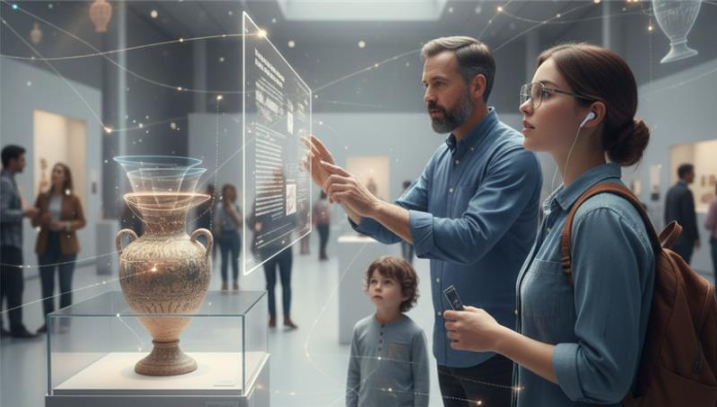
Every entertainment format competes for attention. A Time Travel Immersive Attraction competes for something more valuable: belief.
When guests step through a portal into ancient Rome, wartime London, or a vision of the distant future and believe, even for a moment, that they are genuinely somewhere else in time, you have achieved something that no screen, no podcast, and no conventional museum exhibit can replicate. That quality of experience commands premium pricing, generates extraordinary word-of-mouth, and builds the kind of community loyalty that sustains a venue for decades rather than seasons.
If you are planning to develop a Time Travel Immersive Attraction, this guide gives you a structured framework for narrative design, technology planning, revenue modelling, and the scalability strategy that turns a compelling concept into a commercially durable business.
The Market Opportunity: Why Narrative-Driven Experiences Are Growing
The demand for immersive storytelling experiences is growing across every demographic that entertainment investors care about. Search interest in terms like time travel immersive attraction, historical simulation experience business, immersive storytelling center investment, and experiential museum startup cost reflects a market that is actively looking for this category of venue and finding very few operators who have executed it at a high standard.
The commercial case rests on several converging demand drivers:
Consumer audiences increasingly prioritise experience over possession, and narrative-driven immersive experiences sit at the premium end of the experience economy. Guests who feel they have lived a story rather than merely witnessed one become advocates who drive organic referral and repeat visitation.
Educational institutions represent a significant and structurally reliable demand channel. History, social studies, and cultural education curricula create natural alignment with well-designed historical simulation experiences. School partnership programmes generate advance-booked group revenue that fills off-peak capacity predictably.
Corporate event buyers are seeking environments that offer more than a room and a catering package. A time travel experience venue that can host a corporate storytelling event, a product launch framed around historical narrative, or a leadership programme built around historical decision-making scenarios, offers something genuinely distinctive in a crowded corporate events market.
Tourism-driven audiences in heritage cities and cultural destinations actively seek immersive historical experiences that go beyond static museum displays. A time travel attraction in or near a historically significant location captures incremental spending from visitors who are already primed for historical engagement.
The gap between demand and supply in this category is significant. Well-executed narrative immersive attractions are rare, which means investors who build them well face limited direct competition for a genuinely underserved audience.
Narrative Architecture: The Foundation Everything Else Is Built On
Unlike gaming arenas or technology showcases, a time travel immersive attraction lives or dies on the quality of its story. Technology without narrative creates spectacle. Technology in service of narrative creates belief. The investment in story development is not a creative luxury. It is the commercial foundation of the entire product.
A narrative architecture for a time travel attraction should address the following structural questions before a single technology decision is made:
Which eras does the journey traverse? The selection of historical or future periods should be driven by both narrative resonance and audience relevance. Eras that carry strong emotional associations, dramatic conflicts, visual distinctiveness, and broad cultural familiarity create more compelling journey waypoints than obscure or visually undifferentiated periods.
What is the guest’s role in the story? Passive observation creates a museum experience. Active participation, where guests make decisions, interact with characters, influence outcomes, or carry a personal narrative thread through the journey, creates an immersive experience. Defining the guest’s agency within the story is the creative decision that most directly determines the quality of emotional engagement.
How does the journey begin and end? The framing device that contextualises the time travel, a discovered artefact, a scientific experiment, a mysterious invitation, establishes the guest’s emotional contract with the experience. The resolution of that frame at the journey’s end determines whether guests leave feeling satisfied and complete or simply finished.
How does the episodic structure support repeat visitation? A single linear narrative has a natural completion point after which returning guests know what happens. Episodic storyline development, where new chapters, new eras, or new narrative branches are introduced on a seasonal or annual cycle, gives returning guests a continuous reason to revisit without requiring the physical infrastructure to be rebuilt.
Technology and Design Planning
The technology of a time travel immersive attraction is in service of one objective: making guests believe they have moved through time. Every technology decision should be evaluated against that objective before it is made.
Projection Mapping creates the environmental transformations that signal transitions between eras. A room that shifts from Victorian England to ancient Egypt through a seamlessly projected environmental change, with every surface contributing to the new world, creates the fundamental sensory experience of temporal displacement. Key investment considerations include:
Projector lumen output sufficient to overcome the ambient light conditions of your specific venue
Content production pipeline capable of delivering era-specific visual environments at the resolution and scale your projection system requires
Transition programming that creates the sensation of movement through time rather than simply switching between static environments
Integration with audio and lighting systems so that the full sensory environment transforms simultaneously
Animatronics and Theatrical Scenography create the physical world that projection mapping alone cannot deliver. Period-accurate furniture, architectural details, costume and prop design, and animatronic characters that populate each era with convincing physical presence ground the projected environment in tangible reality. Investment priorities include:
Scenic fabrication quality sufficient to withstand close examination by curious guests
Animatronic character design that serves the narrative rather than simply demonstrating technical capability
Era-accurate prop and material sourcing that contributes to historical credibility
Durability specifications appropriate for high-traffic commercial use in each physical element
VR Time Portals offer the most intense individual immersion available within the time travel format. Dedicated portal zones where guests put on headsets for a short, high-quality VR experience of a specific historical or future moment, a few minutes in a Roman colosseum or at the moment of a famous historical event, create peak experience memories that guests describe most vividly when recommending the attraction to others. Key operational considerations include:
Session duration calibrated to maximise throughput without sacrificing experience quality
Hygiene and maintenance protocols for shared headsets in a high-volume commercial environment
Content quality standards that meet or exceed the visual bar set by the surrounding physical environments
Queue management design that maintains guest engagement during wait periods
AR Overlays extend the interactive layer of the experience by enabling guests to see historical layers of physical spaces through a device or headset, revealing how a location looked in different eras or surfacing hidden narrative information within the environment. AR overlays work particularly well in transition zones and narrative discovery moments where guests are rewarded for curiosity and exploration.
Interactive Exhibits distribute participatory moments throughout the journey rather than concentrating agency in a single zone. Interactive elements that serve the narrative, period-appropriate puzzles, historical decision scenarios, archival documents that guests decode, and character encounters that respond to guest choices, maintain engagement between the high-intensity peak moments and create the sense of a living world rather than a staged sequence.
Revenue Streams and Financial Modelling
A Time Travel Immersive Attraction that is structured for commercial performance generates revenue across channels with different yield profiles, demand timing, and audience characteristics.
Ticketed Immersive Journeys are the primary revenue foundation. Pricing considerations for this format include:
Premium positioning relative to standard museum or entertainment ticketing, justified by the depth and quality of the experience
Timed entry management that controls guest density and protects experience quality for every group
Group booking packages at a per-head rate that fills capacity efficiently
Family pricing tiers that open the venue to the high-frequency family segment without compromising overall yield
Advance booking incentives that improve revenue predictability and reduce walk-up dependency
School and Educational Partnerships create a reliable, recurring revenue channel with strong institutional characteristics:
Curriculum-aligned programme development that positions sessions as timetabled educational activities rather than discretionary excursions
Advance-booked group invoicing that fills off-peak weekday capacity with committed revenue
Teacher resource packages and pre-visit materials that reduce the booking friction for education coordinators
Eligibility for educational grants, museum development funding, and heritage tourism support programmes in many markets
Community relationships that convert school visit participants into family return visitors
Corporate Storytelling Events leverage the venue’s narrative infrastructure for high-value private bookings:
Leadership development programmes built around historical decision-making scenarios
Product launches framed within period-specific narrative environments
Corporate away-days that use the time travel format as a team experience framework
Private dining or hospitality events within themed historical environments
Brand partnership activations that use the venue’s historical or futuristic settings as a creative backdrop
Themed Merchandise converts the emotional resonance of the time travel experience into durable revenue. Merchandise that connects directly to the specific narrative, characters, and eras of the attraction, rather than generic branded apparel, carries significantly higher perceived value. Merchandise categories that perform well in narrative immersive venues include:
Era-specific artefact replicas and historically themed objects
Narrative collectibles tied to the episodic storyline structure
Premium photography packages capturing guest moments within the historical environments
Digital memory packages that give guests access to personalised highlights from their journey
Three Global Benchmarks
Puy du Fou (France) is the most celebrated example of narrative-driven immersive historical entertainment in the world. Their theatrical spectacles, which use thousands of actors, animals, and pyrotechnic effects to bring French history to life at extraordinary scale, have created a destination attraction that draws millions of visitors annually and has been recognised internationally as the world’s best theme park on multiple occasions. For investors, the most transferable lesson from Puy du Fou is the commercial power of narrative ambition. They did not build a theme park with historical themes. They built a living history experience of genuine artistic and cultural significance. That ambition justified destination-level pricing and generated the kind of international reputation that no marketing budget alone can create.
Colonial Williamsburg (USA) operates the world’s largest living history museum, where a reconstructed eighteenth-century American city is populated with costumed interpreters who engage visitors as inhabitants of the period rather than guides explaining it. Their model demonstrates that immersive historical simulation at institutional scale sustains commercial performance across decades when the authenticity and depth of the experience justifies the investment. For investors considering the integration of actor-based live interpretation with physical and technological immersive elements, Colonial Williamsburg’s operational history provides a rich evidence base for what works at scale over long periods.
The Time Travel Experience (UK) represents the emerging generation of technology-enhanced narrative immersive attractions that combine theatrical design with digital technology to create experiences that neither heritage institutions nor technology venues alone can deliver. Their concept format demonstrates the market appetite for time travel as an experiential framework and the commercial opportunity that exists for operators willing to invest in the narrative and technical quality required to execute it credibly.
Scalability Strategy: Episodic Storytelling as the Repeat Visitation Engine
The most structurally important scalability decision in a time travel immersive attraction is the adoption of an episodic narrative model from the very beginning.
A single linear journey has a natural endpoint. Guests who complete the experience have, in a meaningful sense, finished it. The emotional satisfaction of completion is real and valuable, but it does not in itself generate a reason to return. An episodic model resolves this by treating the initial journey as the opening chapter of an ongoing story rather than a self-contained experience.
Practical implications of episodic narrative structuring include:
Each episode introduces new eras, new characters, and new narrative stakes that connect to but extend beyond the previous chapter
Season-based or annual episode releases create a content calendar with genuine news value for marketing communications
Collected story threads across episodes reward returning guests who have experienced earlier chapters with deeper narrative context than first-time visitors receive
Limited-time episode availability creates urgency that drives advance booking and reduces the indefinite deferral that affects venues without time-sensitive content
Merchandise and collectible programmes tied to episodic narrative arcs generate ongoing purchase motivation beyond the initial visit
The content production investment required to sustain episodic development is meaningful, and it should be budgeted as a recurring operational line from the beginning rather than funded reactively. Venues that plan for episodic content production before opening are able to maintain their release cadence consistently. Venues that attempt to fund content production from operating cash flow after opening consistently find that other operational priorities compete for the same resources.
How Peach Prime Consultancy Supports Investors
Developing a Time Travel Immersive Attraction that is both narratively extraordinary and commercially sustainable requires integrating creative vision with financial rigour across every stage of the development process. The narrative needs to be genuinely compelling. The technology needs to serve the story reliably. The revenue model needs to sustain returns across a long operating horizon.
Peach Prime designs immersive narrative attractions with strong financial and operational frameworks, supporting investors from initial concept development through to venue launch and ongoing operational optimisation. Our advisory covers narrative architecture, technology planning, vendor coordination, experience flow design, financial feasibility modelling, and scalability structuring.
Contact Peach Prime today to begin developing your Time Travel Immersive Attraction concept and investment framework.
Peach Prime is a specialist consultancy helping investors and operators build and scale immersive entertainment venues across emerging markets. Visit peachprime.in to learn more.