
A strategic investment guide for developers and institutional investors understanding the commercial model, infrastructure requirements, and long-term value drivers of role-play miniature city attractions.
Introduction: The Commercial Logic of the Role-Play Mini City
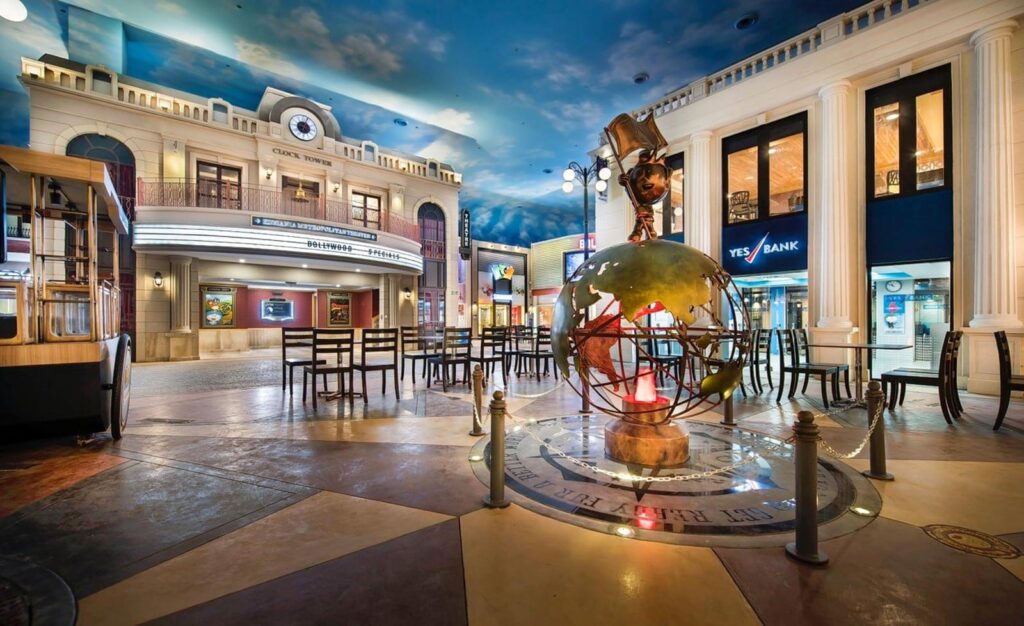
Role-play miniature city experiences represent one of the most intellectually compelling and commercially sophisticated formats in the global family entertainment industry. The concept is, in its essence, elegantly simple: a child-sized version of a real city, complete with functional establishments representing the full range of adult professional life, within which children become active participants in a miniature economy, assuming roles as doctors, pilots, journalists, engineers, chefs, firefighters, and entrepreneurs within a structured experiential environment that is simultaneously entertaining, educational, and genuinely immersive.
But the simplicity of the concept belies the commercial sophistication of the model that the best implementations of it have developed. The role-play city is not simply a themed play venue. It is a media platform, a brand partnership ecosystem, a school curriculum partner, an annual membership community, and a premium family entertainment destination simultaneously. Each of these dimensions generates distinct revenue streams, and their interaction creates compounding commercial value that makes the role-play city one of the most financially diversified and commercially resilient entertainment assets available to a developer willing to invest in the complexity required to execute all dimensions well.
This guide examines the commercial model of the role-play mini city in depth: the infrastructure requirements that determine its quality ceiling, the revenue architecture that generates its financial returns, and the global benchmark models that provide the evidence base for investment decisions.
INVESTMENT APPEAL | Role-play cities combine the predictable revenue of a ticketed family attraction with the community loyalty of an annual membership model, the institutional revenue of school partnership programmes, the brand reach of a corporate sponsorship platform, and the content refresh cycle that sustains engagement and repeat visitation over a multi-year operating horizon. |
Why Role-Play Cities Deliver Strong Commercial Sustainability
The commercial sustainability of a role-play miniature city is grounded in a structural characteristic that most entertainment formats cannot match: the experience creates intrinsic motivation to return that is independent of novelty. A visitor who returns to a cinema after their first visit is motivated by the novelty of a different film. A visitor who returns to a role-play city is motivated by the accumulated narrative of their own character’s development: the currency they have earned, the skills they have practised, the establishments they have not yet visited, and the competitive desire to improve their performance relative to their previous visit. This intrinsic repeat motivation is qualitatively different from novelty-driven visitation, and it produces the high visit frequency and long customer lifetime value that define the most commercially sustainable family entertainment assets.
Structured Participation Cycles and Extended Dwell Time
Unlike passive play zones where children move freely between activities with no structured progression, role-play cities create structured participation cycles that generate predictable dwell times of two to three hours or more. The combination of currency earning through job activities, currency management through spending decisions, and the social dynamics of children operating within a shared economy creates a participatory engagement that sustains attention across multiple activity cycles within a single visit. This extended dwell time is commercially significant not only because it reflects strong engagement quality but because it creates the opportunity for sustained food and beverage spending, retail purchasing, and the premium upgrade experiences that increase average revenue per visit beyond the base admission price.
Infrastructure and Planning Essentials
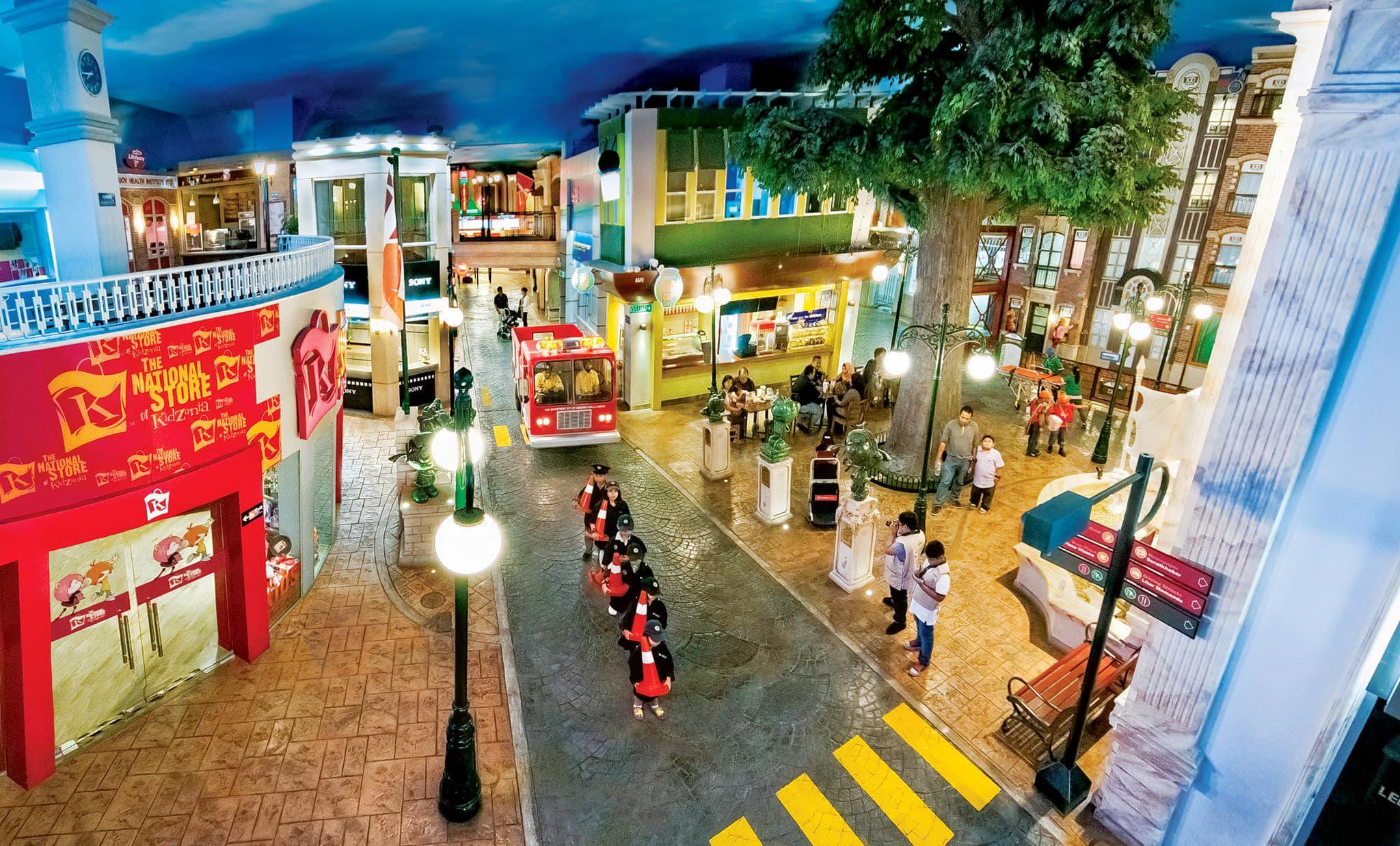
The physical infrastructure of a role-play city must accommodate the scaled architectural character of a genuine urban environment, the technology systems that power the digital economy and safety monitoring, the programming spaces for structured educational content, and the hospitality environment for parent visitors. Each of these infrastructure dimensions has specific requirements that must be addressed in the spatial design.
- Scaled architectural city layout with streets, wayfinding, and genuine urban spatial character that creates the sense of inhabiting a real city rather than walking between themed rooms
- Themed establishments covering the full professional spectrum, with specific activity design for each establishment that is age-appropriate, physically engaging, and educationally relevant
- RFID-based tracking and digital currency systems that create the economic infrastructure of the city and provide the safety monitoring capability that reassures parents and satisfies regulatory requirements
- Orientation theatre and safety briefing zones that prepare children for independent navigation of the city environment and communicate the rules and expectations of the role-play world
- Parent viewing lounges and café integration that create a genuine hospitality environment for accompanying adults rather than a passive waiting area
- Workshop classrooms for structured educational programmes that serve school group visits and after-school enrichment formats
The operational choreography that manages children’s movement through this infrastructure, ensuring that establishment queues are manageable, supervision visibility is maintained, and the energy of the environment remains positive and controlled, is as important to the success of the venue as the quality of the physical design.
Revenue Architecture
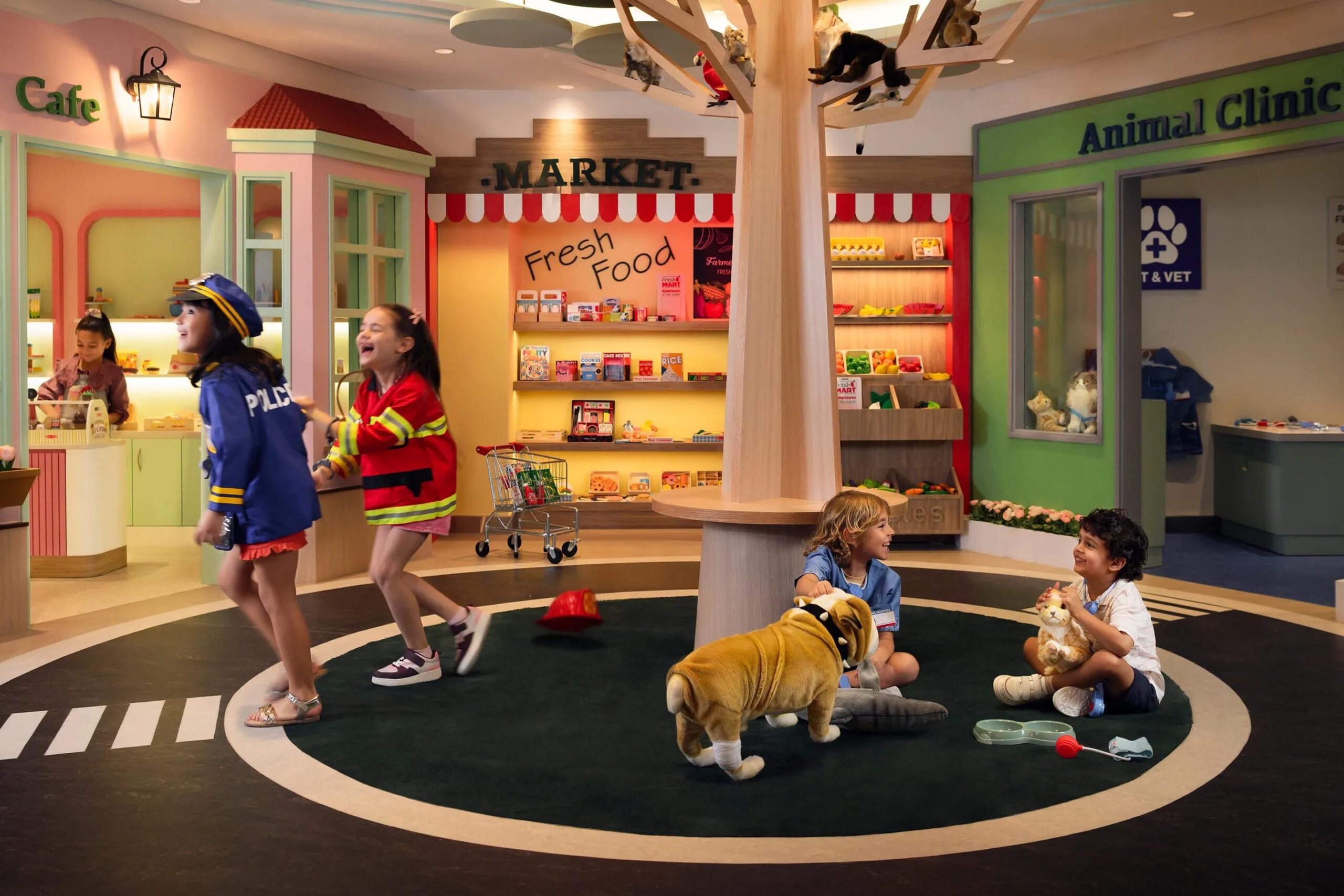
The revenue architecture of a well-developed role-play mini city is one of the broadest and most diversified in the family entertainment sector, with multiple streams each generating meaningful contribution.
- General admission tickets: the primary revenue stream, with pricing reflecting the premium positioning of the educational and immersive experience
- Annual and family memberships: recurring revenue from the most engaged visitor segment, providing financial stability and rewarding loyalty with priority access and enhanced in-city benefits
- School programme packages: group admission with curriculum-aligned facilitated sessions at premium per-head rates, filling weekday daytime capacity with institutional bookings
- Corporate establishment sponsorships: multi-year brand partnership agreements with companies whose brand category aligns with specific city establishments
- Birthday party and private group packages: premium event hire with dedicated facilitation and F&B inclusion
- Themed seasonal events: holiday and cultural festival overlays that drive demand surges and media coverage
- Branded merchandise: city-world character goods and professional role-play apparel that extends the brand identity into the visitor’s home
- Café and F&B revenue: hospitality-grade parent lounge food and beverage generating consistent ancillary revenue throughout operating hours
Global Benchmark Role-Play Cities
01 | KidZania Multiple Global Locations KidZania is the world’s most successful and widely replicated role-play city franchise and provides the most comprehensive evidence available for the commercial viability of the format at international scale. Operating across more than twenty-five cities on six continents, KidZania has built a franchise model that consistently generates strong commercial performance across a remarkable range of market contexts, from major global cities to rapidly developing family entertainment markets. Its commercial success is built on four foundational strengths: the quality and consistency of its city experience design, the depth and breadth of its corporate brand partnership ecosystem, the rigour of its educational programming alignment with national curricula, and the sophistication of its membership and loyalty programme that builds the recurring visitor base that underpins long-term revenue stability. For developers planning a role-play city investment, KidZania provides the most directly applicable evidence base for the scale of investment required, the revenue streams that can be developed over time, and the operational standards that consistently excellent execution demands. |
02 | KidZmondo Middle East and Europe KidZmondo represents the regional franchise adaptation of the role-play city model in Middle Eastern and European markets, demonstrating how the core format can be localised to reflect specific cultural contexts, educational priorities, and consumer preferences while maintaining the commercial fundamentals of the international model. Operating in Jordan and with presence in European markets, KidZmondo’s approach to localised brand collaboration, where city establishments feature regionally relevant companies and professional roles that resonate with the specific cultural context of each market, illustrates a commercially important adaptation strategy for developers planning role-play cities in markets where a purely global brand roster would feel disconnected from the local visitor’s experience. The scalable franchise model that KidZmondo has developed, with standardised city design templates and operational systems that allow new franchise locations to be developed efficiently, provides a template for developers planning multi-location expansion. |
03 | Mattel Play! Town Asia Mattel Play! Town represents the character-driven IP model of role-play city development, where the entire city environment is built around the visual identity and character universes of Mattel’s globally recognised toy brands. The integration of Barbie, Hot Wheels, Fisher-Price, and other Mattel brand identities within the city’s professional establishments creates an immediate emotional connection for children who are familiar with these brands from their home play environment, reducing the orientation period required before children feel comfortable navigating the city independently. The IP-driven model also creates stronger merchandise integration between the city experience and the retail environment, as children who have role-played within brand-specific establishments are more motivated to purchase the associated products than those who have simply encountered brand signage. For developers considering the commercial and experiential benefits of exclusive IP licensing for a role-play city concept, the Mattel Play! Town model provides the most directly applicable precedent in the Asian market. |
Why Develop with Peach Prime Consultancy
Peach Prime Consultancy provides feasibility studies, thematic planning, spatial zoning, technology coordination, and revenue modelling for role-play mini city projects. Our structured planning methodology ensures that every dimension of the venue is designed for educational impact and commercial performance simultaneously, from the city master plan and RFID economy design through to the school programme structure and corporate sponsorship strategy.
If you are planning an edutainment city investment, Peach Prime Consultancy ensures it is built with the creative quality, operational discipline, and commercial architecture that high-value family assets require. Visit www.peachprime.in to arrange a strategic planning consultation.
Frequently Asked Questions
The following questions address the most important investment and planning considerations for role-play mini city developers and institutional investors.
How does a role-play mini city differ from a conventional family entertainment centre? |
The fundamental difference is the structured participation model. A conventional family entertainment centre provides a collection of activities that visitors engage with independently, with no structural connection between activities and no progression narrative that accumulates across the visit. A role-play mini city creates a coherent participation cycle where every activity connects to a shared economy, a developing character narrative, and a competitive motivation to explore more of the city’s establishments. This structural coherence creates the extended dwell time, the repeat visit motivation, and the community belonging that define the role-play city’s commercial advantages over conventional FEC formats. It also creates the institutional credibility that makes it genuinely useful as an educational resource rather than simply a themed entertainment environment. |
What age range does a role-play mini city serve most effectively? |
Role-play mini cities serve children most effectively between the ages of four and fourteen, with the sweet spot of engagement intensity typically occurring between six and twelve. Children below four often lack the cognitive development required to engage meaningfully with the professional role-play concept and the city economy. Children above fourteen increasingly find the format oriented toward younger participants and may disengage. Within the core age range, different establishment types and activity designs serve different developmental stages: sensory and creative activities for the four to six age group, structured role-play with currency earning for the seven to ten group, and more complex multi-step professional activities with competitive and achievement elements for the ten to fourteen group. A well-designed city provides genuinely age-appropriate engagement for children across this full range simultaneously. |
How should a role-play city approach its school partnership programme? |
A successful school partnership programme requires treating the school visit as a distinct product with its own design, delivery standards, and pricing rather than simply offering group discounts on general admission. The educational programme should be built around specific curriculum learning objectives relevant to the year groups targeted, delivered through facilitated sessions that connect specific city establishments to the concepts being studied, and supported by pre-visit and post-visit teacher resources that integrate the museum visit into the wider lesson sequence. Partnership agreements with school districts or education departments that create recurring annual booking commitments, at negotiated per-head rates that reflect the volume and predictability of the commitment, provide the institutional revenue stability that makes the school programme genuinely transformative for the venue’s financial model rather than simply a secondary revenue channel. |
What are the key metrics for evaluating the commercial performance of a role-play city? |
The most important commercial performance metrics for a role-play city are annual visit frequency per member household, which measures the repeat visit engagement that distinguishes top-performing venues, average spend per visit including all ancillary revenue, which reflects the breadth of the revenue architecture’s commercial capture, school programme revenue as a percentage of total revenue, which indicates institutional commercial development, corporate sponsorship revenue per establishment, which measures the media platform’s commercial maturity, and net promoter score among both child and parent visitors, which predicts the organic advocacy that drives new visitor acquisition. Venues that perform strongly across all five of these metrics simultaneously have built the balanced commercial model that delivers both short-term revenue performance and long-term community sustainability. |
What is the most important success factor for a role-play city in the Indian market? |
The most important success factor for a role-play city in the Indian market is the quality and credibility of its educational dimension, specifically its alignment with the aspirations that Indian families hold for their children’s development. Indian parents in the urban affluent demographic that represents the primary target market for premium role-play city investments are intensely motivated by their children’s developmental progress and are significantly more willing to pay premium prices for experiences they perceive as genuinely educational than for those they perceive as primarily recreational. A role-play city that communicates its educational framework clearly, partners with credible educational institutions, and delivers measurable skill development outcomes alongside its entertainment value will command a pricing premium and a parent advocacy intensity that a purely entertainment-positioned competitor cannot match. |
How should a role-play city plan its long-term content development roadmap? |
A long-term content development roadmap for a role-play city should be structured around three compounding investment cycles: annual establishment refreshes that update the physical environment and activity content of existing establishments to reflect current professional practices and visitor feedback, biennial new establishment additions that introduce career modules not previously represented in the city and expand the addressable age range or interest profile of the venue, and periodic major theme evolutions that significantly refresh the city’s visual identity, technology systems, or narrative framework to maintain relevance as the competitive landscape evolves. This roadmap should be developed before the venue opens, with budget allocations confirmed for the first three years, and reviewed annually against commercial performance data that informs the prioritisation of specific refresh investments. |