Blogs
Investor Guide to Designing a Scalable Time Travel Experience Center
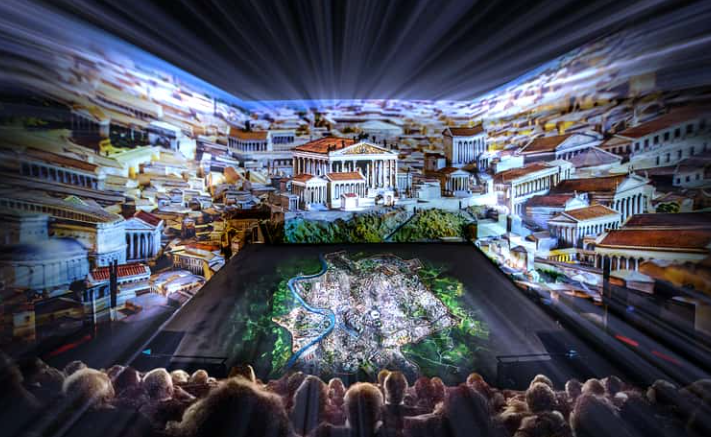
A Time Travel Experience Center is one of the few entertainment investments that grows more valuable over time rather than depreciating against it. Each new era added to the journey, each new episode released, each new educational partnership established, and each new sponsorship relationship developed adds commercial depth to an asset that was already generating returns. The question for investors is not whether the format works. The global evidence is clear that it does. The question is how to engineer the experience, the operations, and the financial structure to ensure that your specific venue realises its full potential.
This blueprint gives investors a practical framework for designing a scalable Time Travel Experience Center that performs commercially from opening day and continues to grow beyond it.
Why Scalable Design Must Precede Every Other Decision
The most common mistake in immersive attraction development is building a great first experience with no structural pathway to a second, third, or fourth one. An attraction that is designed around a fixed narrative, a fixed set of historical eras, and a fixed technology configuration will eventually face a choice between expensive reinvention and declining relevance.
Scalable design solves this problem before it arises. It means building the physical infrastructure, the narrative architecture, and the technology systems with expansion, refresh, and evolution as explicit design requirements rather than afterthoughts. Every decision made at the planning stage should be evaluated not only against how it performs at opening but against how easily it adapts when the time comes to grow.
For investors, this design discipline is directly reflected in long-term asset value. A time travel center with a clear expansion roadmap, a modular physical infrastructure, and an episodic content strategy is a fundamentally different investment from one that opens fully formed with no structural capacity for evolution.
Experience Flow Engineering
The guest journey through a Time Travel Experience Center should follow a narrative logic that builds from orientation through immersion to active participation and finally to reflection. Each zone serves both an experiential and a commercial function, and both should be designed intentionally.
Era Introduction Zone establishes the temporal and narrative context before any transition occurs. Effective era introduction design elements include:
- Environmental storytelling through period-accurate visual design, archival imagery, and contextual audio that orient guests in the specific historical moment they are about to enter
- Character introductions, either through live actor encounters or high-quality recorded or animatronic presentations, that establish the narrative stakes and the guest’s role within the story
- Interactive discovery elements that reward curiosity and prime guests for the participatory moments ahead
- Physical design that creates anticipation for the transition portal rather than simply filling space before it
The introduction zone is also the most important moment for first-time guests who may be unfamiliar with immersive experience formats. A well-designed introduction reduces in-experience confusion, increases engagement quality, and sets expectations that the attraction is about to exceed.
Immersive Transition Portal is the centrepiece theatrical moment of the guest journey. The portal experience, whether projection-based, VR-enhanced, or physically theatrical, must deliver genuine conviction that time has moved. Design priorities for the transition portal include:
- Multi-sensory engagement combining visual transformation, spatial audio shift, atmospheric effects including temperature, scent, or air movement, and physical staging that creates the sensation of movement
- Duration calibrated to build anticipation without creating impatience
- Production quality that establishes the experiential register for everything that follows
- Technical reliability across every daily session, since a portal that fails or underdelivers is the memory guests carry from the entire experience
Interactive Historical Scenes are where the majority of guest dwell time occurs and where the most commercially significant experiences are delivered. Scene design principles that sustain engagement and justify premium pricing include:
- Actor-led or animatronic-supported encounters that respond to guest choices and actions rather than delivering fixed performances
- Physical interaction opportunities with period-accurate props, environments, and challenges
- Narrative decision points where guest choices influence outcomes, creating personalised story experiences that differ between visits
- Progressive revelation of story information that rewards thorough exploration over passive transit
- Clear pathways for different group types, families, competitive groups, educational groups, with experience elements calibrated for each
Concluding Reflective Zone closes the narrative loop and converts the emotional residue of the experience into commercial opportunity. Functions this zone should serve include:
- Narrative resolution that gives guests a satisfying sense of completion while establishing threads for future episodes
- Memory capture through photo stations, personalised journey highlights, and digital souvenir packages
- Merchandise integration presenting items that connect directly to the specific eras and characters of the journey just completed
- Membership and return visit facilitation with next episode previews, booking incentives, and loyalty programme enrolment
- Social sharing prompts and infrastructure that convert guest enthusiasm into organic marketing content before they leave the building
Revenue Optimisation Framework
A scalable Time Travel Experience Center generates revenue across channels that serve different audience segments and operate on different commercial timescales.
School Curriculum Tie-ins are the structural revenue channel that most distinguishes a well-designed time travel attraction from a pure entertainment venue. Curriculum alignment creates demand that is reliable, recurring, advance-booked, and institutionally supported. Key elements of an effective school curriculum programme include:
- Experience content mapped explicitly to history, social studies, and cultural education curriculum standards in your target market
- Pre-visit teacher resource packages that reduce booking friction and increase educational justification for school decision-makers
- Post-visit classroom materials that extend the learning value of the visit and increase the likelihood of repeat bookings in subsequent academic years
- Group pricing structures that accommodate school budget constraints while maintaining viable per-head revenue
- Eligibility assessment for heritage education grants, museum development funding, and cultural tourism support programmes that may partially offset programme delivery costs
Rotational Era Themes sustain the repeat visitation revenue that separates commercially durable attractions from novelty venues with strong openings and declining booking curves. Rotational theme programming considerations include:
- Annual or semi-annual era rotation schedule that introduces new historical periods while retaining the highest-performing existing scenes
- Seasonal overlay programming for major calendar moments, festival periods, and anniversary events that provide marketing news without requiring full content replacement
- Limited-edition era activations that create booking urgency through defined availability windows
- Collector and enthusiast programmes tied to specific eras that build community identity among high-frequency visitors
VIP Night Journeys unlock premium revenue from the high-willingness-to-pay segment of your audience. Small group or private VIP experiences outside standard operating hours, with enhanced actor performance, extended scene interactions, exclusive access to content not available during standard sessions, and premium hospitality elements, justify pricing that is two to four times the standard ticket rate. VIP programme design considerations include:
- Exclusive content that cannot be experienced during a standard visit, preserving the premium of the VIP product
- Intimate group sizing that creates the sense of personal attention and privileged access
- Hospitality integration, period-themed food and beverage, costumed service, historical dining formats, that extends the narrative world into the social experience
- Gift and keepsake elements that provide lasting physical commemorations of the premium experience
Sponsored Cultural Events create a revenue channel that grows in value as the venue’s cultural profile develops. Sponsorship opportunities within a time travel center include:
- Named era sponsorships tied to corporate partners with relevant thematic connections, a financial institution sponsoring a Victorian commerce scene, a technology company sponsoring a future-focused zone
- Co-branded educational programme series developed in partnership with cultural institutions, heritage organisations, or media companies
- Historical anniversary event programming sponsored by institutions with interest in the specific periods being commemorated
- Cultural festival integrations that bring external audiences into the venue for themed events tied to heritage calendar moments
Three Global Case Studies
Puy du Fou Spain Expansion demonstrates the international scalability of the narrative immersive historical format at its most ambitious. Having established the world benchmark for historical theatrical entertainment in France, Puy du Fou’s expansion into Spain with a new park built around Spanish history proved that the format travels across cultural contexts when the narrative is genuinely localised rather than translated. Their Toledo park created an entirely new body of historical storytelling rooted in Spanish cultural identity, establishing a second world-class destination that serves both domestic and international audiences. For investors, the Spain expansion demonstrates that the time travel and historical simulation format is a globally scalable investment thesis, not a culturally specific one, provided the narrative development is done with genuine cultural intelligence rather than template replication.
The Smithsonian Interactive Zones (USA) represent the institutional evolution of the world’s largest museum complex toward immersive, participatory experience formats. The Smithsonian’s investment in interactive and simulation-based exhibits demonstrates that the highest-credibility cultural institutions in the world have validated immersive historical experience as a legitimate and commercially necessary format. For investors, the Smithsonian’s trajectory offers two specific lessons. First, the hybrid education and entertainment positioning is not a compromise between two audience types but a genuine commercial advantage that opens funding streams, partnership opportunities, and audience channels unavailable to pure entertainment venues. Second, institutional credibility, achieved through content accuracy, educational rigour, and curatorial authority, creates a competitive moat that technology investment alone cannot replicate.
Europa-Park Themed Historical Zones (Germany) demonstrate how immersive historical storytelling integrates successfully within a larger multi-format entertainment destination. Europa-Park’s nationally themed areas, each presenting a distinct European cultural and historical identity through architecture, landscape, food, entertainment, and themed attraction design, create a model where historical immersion is distributed across a destination rather than concentrated in a single attraction. For investors considering time travel or historical simulation formats within mixed-use entertainment destinations, Europa-Park demonstrates that historical theming at high quality creates durable guest affinity and repeat visitation that more generic entertainment formats cannot sustain across decades of operation.
Financial Structuring: Blending Education and Entertainment for Broader Returns
The financial insight that most distinguishes a well-structured Time Travel Experience Center from a standard entertainment venue is the commercial value of the education and entertainment hybrid positioning.
A pure entertainment venue accesses one funding and revenue stream: consumer ticket sales, supplemented by food, beverage, and merchandise. A hybrid edutainment venue accesses a significantly broader set of financial resources:
- Consumer ticket revenue from entertainment audiences seeking premium immersive experiences
- Institutional booking revenue from schools, universities, and educational programme operators on advance-booked group schedules
- Grant and funding eligibility from heritage, cultural, and educational bodies that support venues delivering demonstrable educational value
- Sponsorship revenue from corporate partners and cultural institutions seeking association with credible, high-quality historical content
- Government and tourism body support in markets where immersive cultural attractions are recognised as heritage tourism assets
The cumulative effect of accessing multiple funding streams simultaneously is a financial structure that is more resilient to individual channel disruption, more capable of funding content refresh cycles without relying solely on operating cash flow, and more attractive to institutional investors and lenders who value revenue diversification.
For investors modelling the financial performance of a Time Travel Experience Center, the hybrid positioning should be reflected in the revenue projections from the earliest planning stage, not added as a later optimisation. The educational and sponsorship channels require relationship development and programme design investment that takes time to build. Starting that investment before opening rather than after it ensures the revenue contribution materialises within the first operating year rather than the second or third.
Partner with Peach Prime Consultancy
Designing a scalable Time Travel Experience Center requires integrating narrative vision, technology planning, educational programme development, and financial structuring into a coherent investment strategy. Each decision affects the others, and errors in any one area have consequences that compound across the life of the venue.
Peach Prime provides structured advisory support that ensures narrative immersion is aligned with long-term asset performance across every stage of the development process. Our work covers concept development, experience flow design, technology vendor evaluation, educational programme structuring, sponsorship strategy, financial feasibility modelling, and operational planning.