

A comprehensive planning and investment guide for developers building time-travel immersive attraction concepts that combine experiential storytelling, educational credibility, and multi-stream revenue across families, schools, tourists, and cultural audiences.
Introduction: The Time-Travel Attraction as an Edutainment Investment
The time-travel immersive attraction occupies a unique and commercially compelling position in the global edutainment landscape. It is the only entertainment format whose narrative premise is intrinsically educational, because the subject matter of a time-travel experience is history itself: the civilisations, conflicts, scientific discoveries, cultural movements, and individual stories that constitute the human past and, in forward-looking implementations, the speculative human future. This educational dimension is not a commercial limitation but a commercial asset of the first order, because it unlocks the institutional relationships, government funding partnerships, school programme revenue, and tourism credibility that elevate a time-travel attraction from a commercial entertainment venue to a cultural landmark within its community.
The commercial strength of a well-designed time-travel attraction rests on its cross-generational appeal. Young children are captivated by the visual spectacle of historical environments recreated at immersive scale. School-age children and teenagers find the combination of adventure narrative and historical content intellectually engaging in ways that passive museum exhibitions rarely achieve. Adults are drawn by the nostalgia dimensions of periods within living memory and by the intellectual pleasure of historical discovery within an experiential rather than academic framework. And older visitors find the immersive recreation of historical environments from their own lifetime personally resonant in ways that create genuine emotional investment.
This guide provides the complete planning framework for a time-travel immersive attraction investment: from chronological storytelling architecture and scenic fabrication through to revenue model design, phased development strategy, and the content evolution approach that sustains commercial performance over a multi-decade operating horizon.
MARKET SIGNAL | Growing search interest in interactive history museums, immersive cultural walkthroughs, themed experiential attractions, and edutainment storyworld environments reflects a consumer market that is actively seeking educational content delivered through experiential formats that are engaging for the full family demographic rather than structured for a single age group or academic audience. |
Why Time-Travel Concepts Perform Well Commercially
The commercial performance advantages of the time-travel immersive format derive from a specific set of characteristics that are difficult to find together in any other entertainment category. The first is narrative universality: every human civilisation has a history, and the time-travel format can be localised to the specific historical identity of any geographic market while maintaining the universal dramatic appeal of the journey through time. A time-travel attraction in Rajasthan can take visitors through the Mughal courts, Rajput kingdoms, and the independence movement. One in Guwahati can journey through Kamrup’s ancient past, the Ahom dynasty, and the colonial era. This localisation creates the cultural pride and community identification that generates the institutional support and municipal marketing investment that transforms a commercial attraction into a civic destination.
The second commercial advantage is the content depth of the subject matter. History is genuinely inexhaustible as a narrative resource: no matter how comprehensively a time-travel attraction covers its chosen historical territory at opening, there will always be more stories to tell, more periods to explore, and more perspectives to introduce. This content depth supports a phased development model in which the attraction opens with a commercially viable initial scope and expands into new historical chapters or future timeline extensions as revenue and community development justify the investment, creating a long-term attraction growth model that is self-funding from operational revenue rather than requiring additional equity injections for each expansion.
Critical Planning Factors
Chronological Storytelling Architecture
The most fundamental design decision in a time-travel attraction is the chronological architecture of the visitor journey: the sequence in which historical periods are presented, the narrative transitions that connect them, and the pacing that creates emotional rhythm across the full experience. A forward-chronological journey, beginning in ancient history and moving progressively toward the present or future, creates the cumulative narrative logic of a history lesson delivered at experiential scale. A reverse-chronological approach, beginning in the visitor’s living memory and moving progressively deeper into the past, creates the progressive discovery of unfamiliarity that generates growing wonder. A thematic architecture, organising the journey around universal human themes, war and peace, discovery and invention, faith and philosophy, that recur across different historical periods, creates intellectual connections that deepen the educational value beyond the surface narrative of individual events.
Immersive Scenic Fabrication
The physical environment of a time-travel attraction is its most capital-intensive component and the primary determinant of its credibility and emotional impact. Scenic fabrication must create historical environments that are convincing enough to suspend the visitor’s awareness of the commercial entertainment context and create the genuine sense of inhabiting another time and place. This level of conviction requires research-based design: historical accuracy in architectural forms, material finishes, lighting conditions, and environmental details that distinguishes a credible historical recreation from a theatrical approximation. Research partnerships with historians, archaeologists, and cultural institutions are both a quality asset and a marketing one: the credibility they provide justifies the educational positioning and supports the institutional relationships that drive school group and cultural tourism revenue.
Animatronics, Interactive Displays, and Projection Mapping
The technology systems that animate the historical environments of a time-travel attraction must serve the narrative rather than demonstrating their own technical capability. Animatronic figures that recreate historical characters with appropriate period dress and contextually relevant behaviours create the sense of inhabiting a living historical world rather than a static museum diorama. Interactive displays that allow visitors to engage with historical artefacts, documents, and decisions create the agency that transforms passive observation into genuine experiential learning. Projection mapping applied to architectural surfaces recreates the visual drama of historical events, from the construction of ancient monuments to the spectacle of medieval battles, at the scale that emotional impact requires without the physical construction cost of full scenic realisation.
Business Model and Revenue Streams
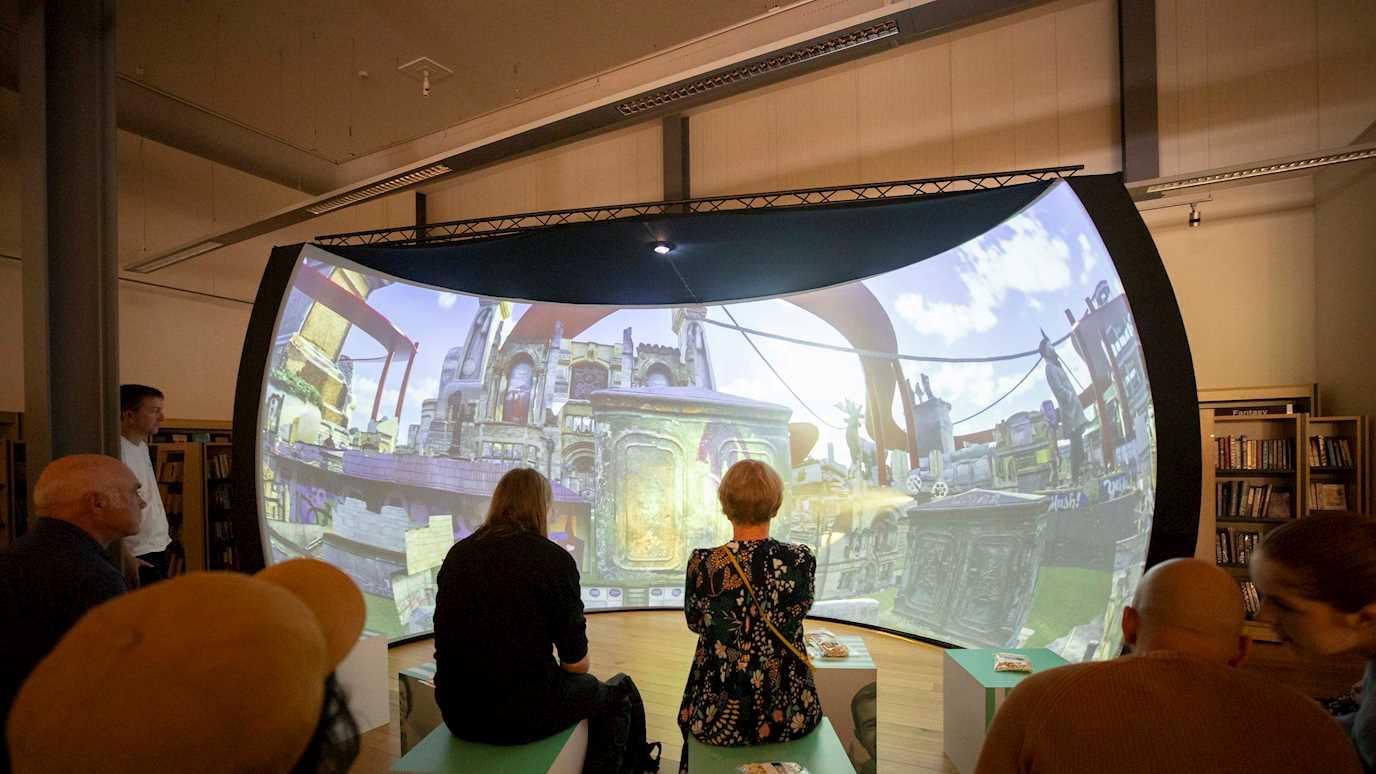
A fully developed time-travel immersive attraction generates revenue across a broader range of channels than most comparable entertainment formats, because its educational dimension creates institutional revenue opportunities that purely entertainment venues cannot access.
- General admission tickets with tiered pricing for standard, premium guided, and VIP private tour formats
- School and educational group bookings with curriculum-aligned facilitated sessions at group rates that fill weekday daytime capacity
- Tourism packages with hotel partnerships and travel agency integration that position the attraction within regional heritage tourism itineraries
- Premium guided tour experiences with specialist historical narrator guides that command significant price premiums over general admission
- Experiential workshops where visitors engage in period-authentic craft activities, cooking demonstrations, or historical role-play scenarios
- Immersive dining integrations where historically themed meal experiences are staged within the attraction environment
- Themed merchandise built around the specific historical characters and artefacts of the attraction narrative rather than generic historical novelties
- Cultural event hosting for heritage festivals, academic conferences, and civic commemorations that position the attraction as a cultural venue as well as an entertainment one
Positioning for Long-Term Success: Phased Development Strategy
The phased development approach is the planning discipline that most clearly distinguishes long-term successful time-travel attraction investments from those that exhaust their capital in an over-ambitious first phase and lack the resources to evolve the experience as the market requires. A first phase that delivers a commercially complete and emotionally compelling experience covering three to five historical periods or eras provides the foundation for assessing market response, refining the visitor journey, and identifying the expansion directions that the audience most wants to see. Subsequent phases, funded from operational revenue and the investor confidence that strong first-phase performance generates, extend the timeline in either direction, add new interactive and technology elements, and introduce the specialised programming formats that deepen the institutional and tourism relationships.
01 | Jorvik Viking Centre York, UK The Jorvik Viking Centre in York is one of the most commercially successful and critically respected historical immersive attractions in the world and provides the most directly applicable precedent for time-travel attraction development. Built above an actual Viking Age archaeological site, the attraction uses ride-through diorama technology to take visitors through a recreation of a tenth-century Viking settlement that is built on genuine archaeological evidence rather than popular mythology. The combination of authentic historical content, physically immersive presentation, and genuine archaeological context has made Jorvik one of the most visited paid attractions in the north of England for over three decades, demonstrating the commercial durability of historically accurate immersive experience when it is executed with creative and scholarly discipline simultaneously. For developers planning a time-travel attraction with archaeological or cultural heritage site context, Jorvik provides the most directly instructive evidence of how physical archaeological authenticity can transform a commercial attraction into a cultural landmark. |
02 | Puy du Fou Vendée, France Puy du Fou is the most ambitious and commercially successful historical experience park in Europe and arguably the world, having built a multi-hundred-hectare destination attraction in rural western France that draws millions of visitors annually through a combination of large-scale historical spectacle shows, atmospheric historical village environments, and an overnight hotel experience that immerses guests in specific historical periods. What makes Puy du Fou particularly instructive for developers planning time-travel attraction investments is its demonstration that historical content can generate the same scale of commercial attraction as fantasy or technology-based theme parks when it is executed with the same level of creative ambition and production quality. The park’s shows, which recreate historical episodes from the Roman arena to the World War II resistance movement with casts of hundreds of performers, specialist effects, and full architectural staging, demonstrate the compelling power of historical narrative at immersive scale. For developers with ambitions to create a flagship time-travel destination rather than a single-venue attraction, Puy du Fou provides the most comprehensive and commercially validated model available. |
03 | Museum of the Future Dubai, UAE The Museum of the Future in Dubai represents the forward-looking end of the time-travel concept spectrum, demonstrating that the most commercially successful implementations of the format are not limited to historical reconstruction but extend equally powerfully into speculative future scenarios. The museum’s immersive installations, which place visitors inside scenarios of what daily life, technology, and the natural world might look like in 2071, generate the same emotional engagement and social media amplification as historically grounded time-travel experiences while accessing the technological excitement and forward-looking aspiration that is particularly resonant with urban professional and millennial audiences. For developers evaluating whether a future-facing timeline extension would enhance the commercial appeal of their time-travel concept, the Museum of the Future’s extraordinary commercial success in its opening years provides compelling evidence that the answer is affirmative. |
Frequently Asked Questions
How should a time-travel attraction balance entertainment value with educational credibility? |
The relationship between entertainment value and educational credibility in a time-travel attraction is not a trade-off but a compounding reinforcement when it is managed correctly. Educational credibility, meaning the accuracy of historical content and the partnership relationships with institutions and scholars that validate it, creates the trust that allows visitors to engage emotionally with the experience rather than maintaining the critical distance they bring to obviously fictional entertainment. And entertainment value, meaning the quality of the scenic environment, the drama of the narrative, and the emotional engagement of the interactive elements, is the vehicle through which educational content is delivered memorably rather than academically. The combination of the two, delivered through experiences that are genuinely moving or awe-inspiring as well as historically informative, is what creates the visitor advocacy and return motivation that sustain long-term commercial performance. |
What historical periods generate the strongest visitor engagement? |
The historical periods that consistently generate the strongest visitor engagement in immersive attraction contexts are those that combine dramatic narrative potential with visual richness: ancient civilisations with elaborate architectural and material cultures, medieval and early modern periods with vivid court life and military drama, the industrial and colonial periods with their social tensions and transformative technologies, and the twentieth century from both its catastrophic conflicts and its remarkable scientific achievements. For Indian market development, the periods of greatest local resonance include ancient Hindu and Buddhist civilisations with their extraordinary architectural heritage, the Mughal era with its cultural richness and dramatic court narrative, the independence movement with its powerful moral drama and living historical memory, and the post-independence development story with its rapid social and technological transformation. Local historical specificity combined with universal dramatic appeal is the combination that creates the deepest community engagement and the strongest institutional support. |
What is the role of local cultural partnerships in a time-travel attraction? |
Local cultural partnerships are among the most commercially and reputationally significant investments available to a time-travel attraction developer, and their development should begin before the venue design is finalised rather than after opening. Partnerships with state history and culture departments provide the archival access and scholarly validation that distinguish a credible historical attraction from a commercial approximation. Relationships with local universities and archaeological institutions provide the research partnerships that continuously deepen the attraction’s historical content and generate the academic publications and media coverage that build institutional credibility. Collaborations with local artists, craftspeople, and cultural practitioners in the attraction’s programming create the living cultural connection that makes historical content feel alive rather than preserved, and generate the community ownership of the attraction that drives the civic support and local advocacy most essential to long-term sustainability. |
How should the attraction’s content evolve over its operating lifecycle? |
Content evolution should be planned as a structured programme rather than a reactive response to commercial performance. An annual update cycle, introducing new interactive elements, refreshing scenic quality where wear has degraded the experience standard, and adding new historical detail to existing zones based on visitor feedback and scholarly development, maintains the quality standard that premium pricing requires without major capital investment. A biennial phase expansion, introducing a new historical era or period zone, creates the major visit occasion and media announcement that drives new visitor acquisition and gives the existing audience new content to discover. A five-year strategic review, assessing the overall experience quality, technology currency, and market positioning of the full attraction against the competitive landscape, identifies the major evolution investments that maintain the attraction’s long-term commercial relevance. |
What is the optimal approach to pricing for educational group visits? |
Educational group pricing for a time-travel attraction should be structured to incentivise advance booking and curriculum alignment rather than simply offering a volume discount on standard admission. A tiered group pricing structure with a base group rate, an enhanced curriculum-aligned programme rate that includes facilitated sessions delivered by attraction education staff, and a premium residential or full-day experience rate creates the range of investment levels that allows schools with different budgets and different educational priorities to access the attraction. Pre-visit and post-visit teacher resource packages, provided free of charge with any curriculum-aligned booking, increase the educational value of the visit from the school’s perspective and justify the higher curriculum-aligned rate. Relationships with state education departments and their curriculum advisors, who can recommend the attraction as a recognised curriculum resource, are the institutional development investment that transforms individual school bookings into systematic inclusion in schools’ annual visit planning. |
What is the expected payback period for a time-travel immersive attraction? |
Payback periods for time-travel immersive attractions vary significantly based on scale, market context, and the quality of institutional and tourism revenue development. A mid-scale venue of 10,000 to 20,000 square feet with strong regional historical identity, active school programme development, and integration within a broader tourism itinerary typically achieves payback within 42 to 60 months. Attractions in established heritage tourism markets with strong institutional support and government co-investment can achieve payback at the faster end of this range through the combined contribution of tourism visitor revenue, school programme income, and the capital cost reduction that government grants and heritage funding provide. Attractions that invest in the premium guided tour and experiential dining formats from the outset typically achieve higher per-capita yields that significantly improve the financial return of the first three to five operating years. |
Work with the Right Planning Partner
Peach Prime Consultancy provides end-to-end planning for immersive attractions, including feasibility studies, master planning, technology coordination, and operational structuring. If you are considering launching a time-travel immersive destination, our team delivers the integrated expertise that reduces execution risk and maximises long-term returns. Visit www.peachprime.in to arrange a strategic planning consultation.
WHAT PEACH PRIME DELIVERS | Historical concept and storyline architecture, scenic fabrication specification, technology coordination for animatronics and projection, educational programme development, tourism partnership strategy, revenue modelling, and investor presentation support. |