
Why the Global Mall Industry Is Undergoing Structural Transformation
The global retail real estate industry is experiencing one of the most significant structural shifts in its history. Traditional mall models that once depended heavily on department stores, fashion retail chains, and transactional shopping behavior are rapidly losing dominance as consumer expectations evolve and e-commerce penetration continues expanding across every major market.
Consumers no longer visit malls solely to purchase products. They increasingly seek social interaction, immersive entertainment, dining experiences, cultural engagement, and lifestyle-driven destinations that combine multiple leisure activities within a single environment.
As a result, mall developers and real estate owners are fundamentally rethinking how retail assets are positioned, monetized, and programmed for long-term sustainability.
In 2026, the most successful mall repositioning strategies are no longer centered around retail expansion. Instead, they are focused on building entertainment-driven experiential ecosystems anchored by immersive attractions, Social Entertainment Centers (SEC), active leisure environments, projection-based experiences, and hybrid food-plus-play destinations.
The central question for developers is no longer whether experiential entertainment increases footfall. That reality has already been validated globally. The focus has now shifted toward identifying which experiential formats generate:
- The highest revenue per square foot
- The longest dwell time
- The strongest cross-retail spending
- The greatest repeat visitation
- The most sustainable long-term asset value
This transformation is redefining the future of retail real estate worldwide.
Why Traditional Retail Anchors Are Losing Dominance
For decades, department stores and large-format retail tenants functioned as the primary anchors driving mall traffic. These tenants generated predictable consumer visitation patterns that supported smaller inline retailers and stabilized occupancy performance.
However, several structural shifts have weakened this model dramatically.
The Impact of E-Commerce and Omnichannel Retail
Consumers increasingly purchase routine retail products online through:
- E-commerce platforms
- Mobile shopping applications
- Direct-to-consumer brands
- Quick-commerce services
- Omnichannel fulfillment systems
This evolution has reduced the necessity of visiting physical malls for transactional shopping.
As a result, traditional retail anchors no longer generate the same level of destination-driven footfall they once provided.
Consumers Now Prioritize Experiences Over Transactions
Modern mall visitors increasingly seek experiences that cannot be replicated digitally.
These include:
- Competitive social gaming
- Immersive attractions
- Interactive leisure
- Social dining
- Family entertainment
- Live events
- Active recreation
- Community engagement experiences
Experiential entertainment creates emotional engagement and social interaction that online retail cannot reproduce.
This emotional dimension is becoming one of the most important drivers of modern mall visitation behavior.
The Rise of Entertainment-Led Mall Ecosystems
Mall owners globally are repositioning retail assets around entertainment ecosystems designed to increase:
- Visitor dwell time
- Evening and weekend traffic
- Food and beverage spending
- Social media engagement
- Tourism appeal
- Repeat visitation
- Destination differentiation
Experiential anchors are now being treated as core infrastructure components rather than secondary tenant categories.
The strongest-performing malls increasingly integrate entertainment, hospitality, culture, and social engagement into unified lifestyle destinations.
High-Impact Experiential Anchors Defining Mall Strategy in 2026
Several experiential formats are emerging as dominant anchor categories due to their strong operational performance and multi-demographic appeal.
01 — Hybrid Social Entertainment Centers
Social Entertainment Centers combining bowling, digital sports simulation, augmented reality gaming, esports, dining, nightlife, and social gathering environments are becoming one of the most commercially attractive anchor formats globally.
These venues perform particularly well because they generate layered monetization through:
- Ticketing
- Food and beverage
- Memberships
- Corporate events
- Sponsorships
- VIP bookings
- Merchandise sales
Their ability to attract both daytime and evening audiences significantly improves mall activation throughout the operating cycle.
02 — Immersive Projection and Infinity Experience Galleries
Projection-based immersive environments and infinity room attractions are rapidly expanding due to their strong visual appeal and social media visibility.
These attractions benefit from:
- High visitor engagement
- Flexible content programming
- Strong repeat visitation potential
- Lower staffing intensity
- Strong social sharing behavior
Their experiential nature aligns strongly with younger digital-first audiences.
03 — Children’s Discovery and Role-Play Cities
Family-focused edutainment attractions remain highly effective mall anchors because they encourage extended family visitation and repeat engagement.
Role-play cities, interactive learning environments, and discovery museums generate:
- Multi-hour dwell times
- Weekend traffic consistency
- School partnership opportunities
- Strong food and beverage conversion
These concepts continue performing strongly across both developed and emerging retail markets.
04 — Premium Escape Rooms and Themed Walkthrough Attractions
Escape rooms and immersive walkthrough environments appeal strongly to group-based social entertainment behavior.
Modern premium concepts increasingly integrate:
- Interactive storytelling
- Live performers
- Digital effects
- Projection mapping
- Competitive gameplay
These attractions create highly memorable visitor experiences while requiring relatively efficient spatial footprints.
05 — Competitive Active Entertainment Arenas
Climbing centers, ninja arenas, indoor karting, trampoline parks, and active recreation venues are becoming increasingly important components of mall repositioning strategies.
These concepts align strongly with:
- Wellness-focused lifestyles
- Youth-driven recreation trends
- Corporate team-building demand
- Family participation experiences
Active entertainment also extends visitation beyond passive consumption into participatory recreation.
Why Experiential Anchors Deliver Higher Revenue Per Square Foot
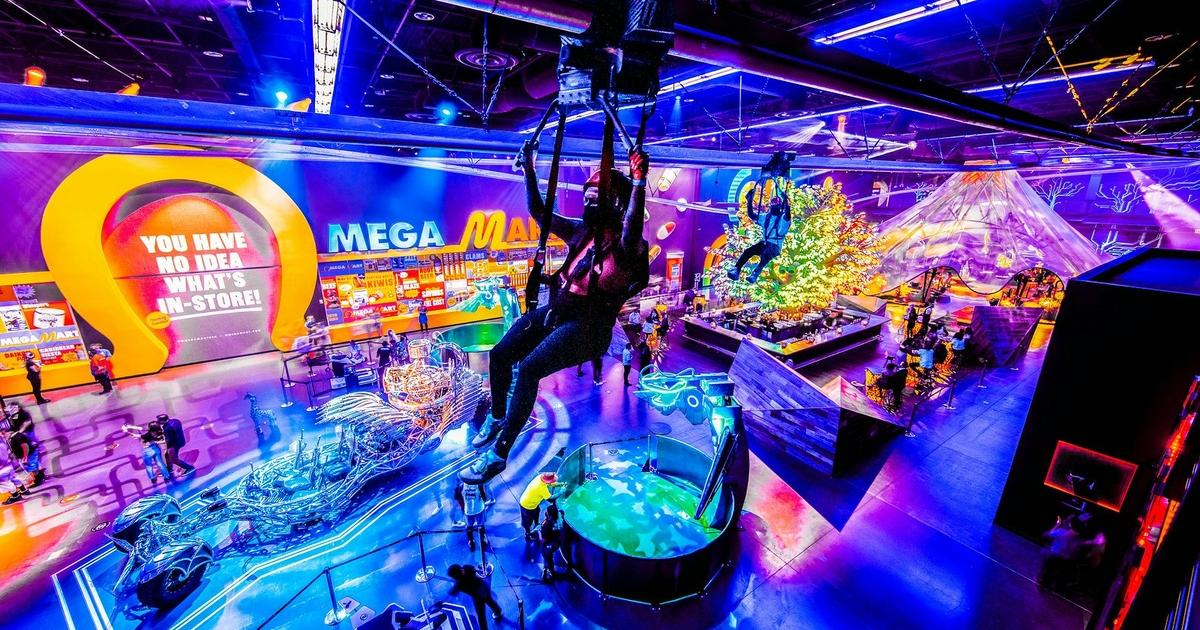
Entertainment anchors consistently outperform traditional retail formats because they generate multiple revenue streams simultaneously from the same visitor.
Layered Revenue Architecture
| Revenue Channel | Commercial Contribution |
| Ticketing | Primary attraction revenue |
| Food and Beverage | High-margin ancillary spending |
| Membership Programs | Recurring customer retention |
| Corporate Events | Premium group bookings |
| Sponsorship Activations | Advertising and branding revenue |
| Merchandise | Extended brand monetization |
| Seasonal Programming | Demand acceleration opportunities |
This layered monetization model significantly improves revenue density compared to traditional retail tenants.
How Experiential Anchors Increase Mall Dwell Time
Dwell time has become one of the most important performance metrics in modern retail real estate.
Traditional retail visits are often short and transaction-focused. Experiential destinations, by contrast, encourage visitors to remain within the property for several hours through multi-layered activity engagement.
A visitor attending:
- A bowling session
- Followed by dining
- Followed by gaming
- Followed by social events
creates substantially higher total spend compared to a purely retail-driven customer journey.
Longer dwell times directly improve adjacent retail and hospitality performance throughout the mall ecosystem.
Global Benchmarks in Mall Repositioning
01 — American Dream Mall
New Jersey, USA
American Dream demonstrates how entertainment clustering can redefine retail positioning entirely.
The integration of:
- Indoor ski slopes
- Theme parks
- Water attractions
- Experiential retail
- Dining districts
transformed the development into a destination tourism and entertainment ecosystem rather than a conventional shopping mall.
The project illustrates how experiential anchors can create international destination appeal.
02 — Westfield London
United Kingdom
Westfield London successfully blended experiential dining, event programming, entertainment integration, and social activation within a premium retail environment.
Its strategy focuses heavily on:
- Experience-driven visitor engagement
- Lifestyle programming
- Flexible event activation
- Hospitality-led social environments
This approach has strengthened the mall’s long-term competitive positioning within a highly mature retail market.
03 — Mall of the Emirates
Dubai, UAE
Mall of the Emirates transformed itself into a globally recognized tourism destination through the integration of Ski Dubai and immersive experiential attractions.
The development demonstrates how a single iconic entertainment attraction can reposition an entire retail asset internationally.
Its success also highlights the growing importance of climate-controlled indoor entertainment within tourism-driven retail environments.
Strategic Planning Framework for Mall Owners
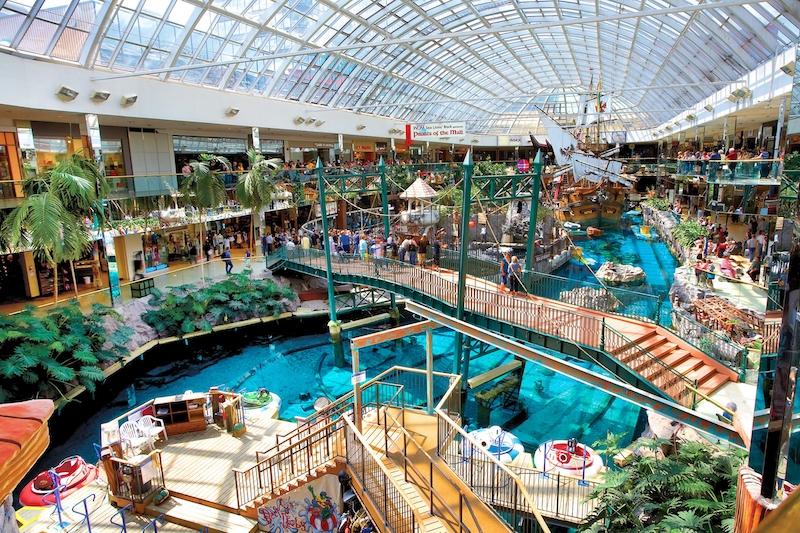
Successful mall repositioning requires far more than introducing isolated attractions into vacant retail space.
Long-term success depends on structured strategic planning across multiple disciplines.
Core Planning Priorities
Feasibility Studies
Detailed market validation and demographic analysis determine which entertainment formats align with local demand.
Attraction Mix Optimization
Entertainment ecosystems must balance family, social, active, and immersive attractions strategically.
Zoning Recalibration
Entertainment clusters should maximize cross-traffic and circulation efficiency.
Infrastructure Upgrades
Entertainment environments require enhanced HVAC, acoustic treatment, electrical capacity, and digital infrastructure.
Lease Restructuring
New entertainment-driven leasing models often require revenue-sharing frameworks rather than traditional retail structures.
Structured planning ensures entertainment integration strengthens overall asset performance rather than functioning as isolated activation.
Why Entertainment Clustering Improves Mall Performance
The placement strategy of entertainment anchors significantly influences mall-wide performance.
Successful repositioning strategies cluster attractions near:
- Food and beverage districts
- Social gathering areas
- Event spaces
- Lifestyle retail zones
This creates interconnected activity ecosystems that encourage exploration and cross-spending.
Poorly positioned entertainment attractions may generate isolated traffic without benefiting the wider mall environment.
The Future of Retail Real Estate Is Experience-Led
The global retail industry is increasingly shifting toward:
- Destination-driven environments
- Mixed-use experiential ecosystems
- Hospitality-integrated retail
- Entertainment-led social spaces
- Event-driven programming
- Community-centered activation
Malls that fail to evolve beyond traditional retail dependency risk declining relevance and long-term asset underperformance.
Experiential entertainment is no longer an optional enhancement. It is becoming the core operational engine of modern retail real estate.
Frequently Asked Questions
Why are malls replacing traditional retail anchors with entertainment concepts?
Traditional retail anchors are losing traffic due to e-commerce growth and changing consumer behavior. Entertainment concepts create stronger emotional engagement, longer dwell times, and higher repeat visitation.
Which experiential formats are performing best in malls?
Hybrid Social Entertainment Centers, immersive attractions, active recreation venues, projection galleries, and family edutainment concepts are among the strongest-performing categories.
How do experiential anchors improve mall revenue?
They generate layered monetization through ticketing, food and beverage, memberships, events, sponsorships, and merchandise while also increasing adjacent retail spending.
Why is dwell time important for mall performance?
Longer dwell times increase food and beverage spending, improve retail conversion, and strengthen overall asset productivity across the mall ecosystem.
What infrastructure upgrades are required for mall repositioning?
Entertainment-led repositioning often requires upgraded HVAC systems, acoustic treatment, digital infrastructure, structural reinforcement, and enhanced operational planning.
Why is strategic planning critical for mall repositioning?
Successful repositioning depends on feasibility analysis, attraction mix optimization, zoning strategy, infrastructure coordination, and long-term operational integration.
Partner with Peach Prime Consultancy
Entertainment-led mall repositioning requires structured planning, operational expertise, and strategic entertainment integration to create sustainable long-term asset value.
Peach Prime Consultancy supports mall repositioning projects through feasibility studies, attraction mix planning, concept development, zoning strategy, financial modeling, and experiential ecosystem master planning.
If you are transforming a retail asset into an entertainment-driven destination, our team provides the strategic clarity, technical coordination, and commercial planning required to maximize long-term performance and competitive differentiation.
Visit www.peachprime.in to arrange a strategic consultation.