
A strategic development guide for investors building premium indoor glow golf arenas, LED-lit adventure golf courses, and outdoor themed miniature golf parks as high-yield experiential destination assets with strong F&B and nightlife integration.
Introduction: The Destination Attraction Repositioning of Mini Golf
Mini golf has completed one of the most commercially significant format repositioning journeys of any leisure activity over the past fifteen years. A game that was once considered a simple family amusement requiring minimal investment and generating modest returns has, through the application of premium concept design, technology-driven game mechanics, quality food and beverage integration, and brand development discipline, become one of the most commercially productive formats in the competitive social leisure market. The operators who have led this repositioning have demonstrated that the game itself is not the limitation: the quality and originality of its setting, the social occasion it creates, and the hospitality standard it delivers are the variables that determine whether mini golf generates modest ancillary revenue from captive family audiences or premium destination revenue from discerning adult consumers who choose it over every other entertainment option available to them.
This guide approaches the themed mini golf investment from the destination attraction perspective: not as an ancillary component of a larger entertainment development but as a standalone premium attraction with its own brand identity, its own consumer reputation, and its own multi-layered commercial model that generates strong return on investment independently of any host development it occupies.
INVESTMENT THESIS | A premium themed mini golf destination combines the low participation barrier and broad demographic appeal of the game format with the revenue per square foot potential of a quality F&B destination and the social media marketing power of a visually spectacular immersive environment. This combination creates a financially resilient model that outperforms single-category entertainment assets of comparable capital cost. |
Why Themed Mini Golf Works in Modern Entertainment Ecosystems
The strategic fit of themed mini golf within the modern urban entertainment ecosystem is grounded in its alignment with three behavioural patterns that define how contemporary consumers structure their discretionary time and spending. The first is the experience economy shift: consumers, particularly within the 18 to 45 demographic that drives premium leisure spending, increasingly prefer spending on experiences over material goods and specifically seek experiences that can be shared on social media. Themed mini golf, with its visual spectacle and group competitive format, is one of the most naturally shareable experiences in the entertainment sector. The second is competitive socialising: the desire to engage in activities that are social and competitive simultaneously rather than passive entertainment has driven the growth of every format from escape rooms to axe throwing. Mini golf provides competitive engagement at a level of intensity that is fun without being exclusionary, making it accessible for mixed-skill groups. The third is the occasion substitution dynamic: a themed mini golf venue with quality food and beverage can substitute for a restaurant dinner or a drinks occasion in addition to attracting leisure-specific visits, giving it a broader addressable occasion base than attractions that only compete for entertainment spending.
Indoor versus Outdoor Development Models
Indoor Glow Golf Arenas
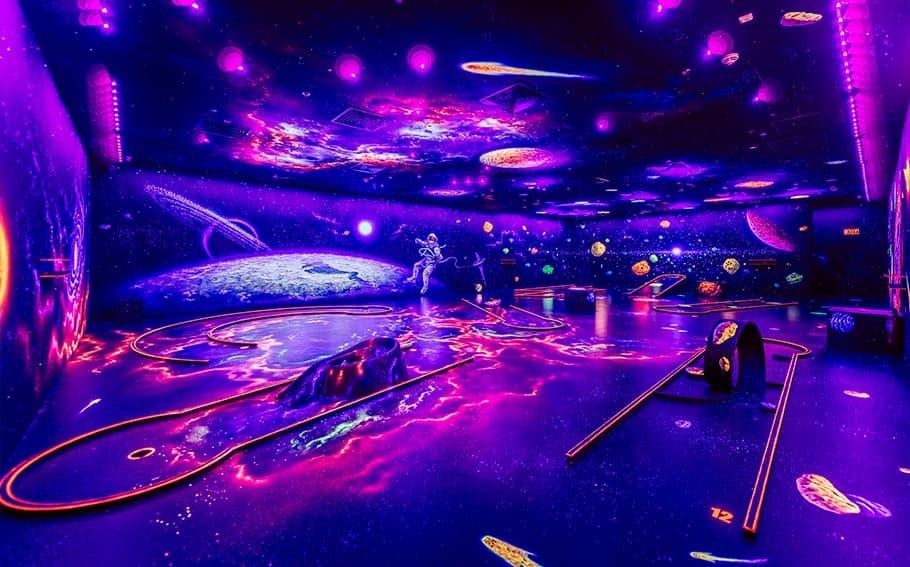
Indoor glow golf arenas, built on UV blacklight and programmable LED technology with fantasy or narrative themed scenic environments, are the format that has generated the most dramatic commercial innovation in the mini golf category. The indoor environment enables the total control of the visual atmosphere that makes the most spectacular lighting designs possible, and the climate-controlled operation ensures year-round performance consistency that outdoor formats cannot match. Premium indoor venues typically integrate bar lounges within the course environment, allowing visitors to consume food and beverage while playing rather than interrupting their session to visit a separate F&B area, which increases both per-capita spending and session duration simultaneously. Projection mapping applied to course obstacles and wall surfaces can introduce dynamic narrative content that changes the visual character of holes on a timed cycle, creating a different visual experience on successive visits without any physical modification to the course.
Outdoor Themed Miniature Golf Parks
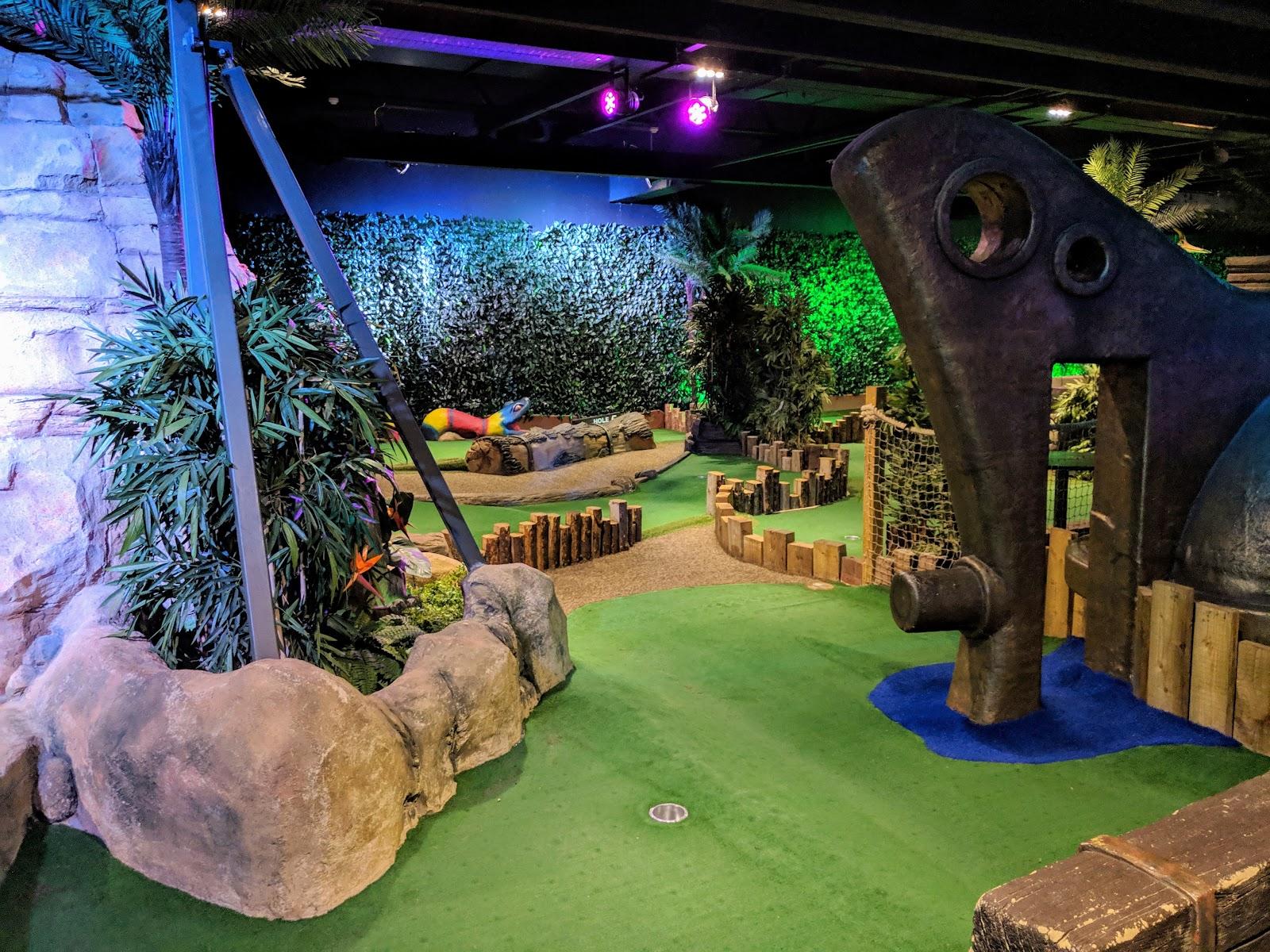
Outdoor themed miniature golf parks occupy a different commercial position from indoor venues, competing as destination attractions rather than convenience leisure options and generating their strongest demand from tourism markets, resort catchments, and the family day-trip occasion rather than the urban impulse visit. The outdoor setting allows the scale of scenic investment that indoor venues cannot achieve: large architectural structures, water features and ponds, mature landscape planting, and sculpted terrain that creates the immersive outdoor world from which the destination visit motivation derives. Night lighting programmes that transform the outdoor park into a dramatically different visual environment after dark create a second daily commercial period that doubles the revenue potential of the outdoor format without requiring additional capital investment.
Revenue Architecture and Monetisation Strategy
A fully developed premium themed mini golf revenue model captures value across multiple commercial channels within a single visitor relationship.
- Timed course tickets with pricing tiers for standard, premium, and VIP session formats that reflect the quality differential available through exclusive access, enhanced scenery zones, or priority throughput
- Group bookings and package tickets for families, friends’ group occasions, and hen and stag party formats that benefit from the competitive social game mechanics of mini golf
- Corporate event packages with exclusive session hire, facilitated competitive scoring, prize formats, and post-game dining or drinks service that command premium pricing and generate B2B referral networks
- Birthday party packages with dedicated course sections, party hosting, catering, and bespoke theming elements that justify premium pricing for a complete event management service
- League membership programmes with season-long competitive access, priority booking, and loyalty benefits that create recurring revenue and community depth
- F&B sales across the full session duration, with bar lounge integration capturing cocktail, beer, wine, and soft drink revenue alongside food service during play
- Glow golf evening and DJ-led event formats that create premium nightlife occasions generating significantly higher per-capita F&B spending than standard session visits
- Merchandise range built around the venue’s specific narrative world and visual identity rather than generic mini golf or brand-agnostic retail products
Global Benchmark Mini Golf Concepts
01 | Puttshack USA and UK Puttshack’s approach to themed mini golf represents the most commercially successful integration of proprietary technology, premium hospitality, and strong brand identity in the global mini golf sector. Its ball-tracking technology, which enables automatic scoring and introduces gamified hole challenges without player-managed scorecards, removes the primary friction point in the traditional mini golf group experience and allows groups to concentrate entirely on the competitive and social dynamics of the game. The brand’s positioning as a premium evening social destination, rather than a family leisure amenity, has unlocked per-capita spending rates and ticket pricing levels that are demonstrably above category norms and has established it as a major anchor tenant in high-footfall urban leisure developments on both sides of the Atlantic. For developers planning a premium themed mini golf investment with significant F&B integration ambitions, Puttshack provides the most commercially complete benchmark available. |
02 | Urban Putt San Francisco, USA Urban Putt’s eighteen-hole indoor course in San Francisco’s Mission District is one of the most critically acclaimed themed mini golf venues in the United States and demonstrates the commercial power of genuinely exceptional scenic design when it is combined with quality hospitality programming. Each of the venue’s eighteen holes was designed by a different artist, creating a course that is a genuine gallery of creative work as much as a competitive game environment, and this artistic ambition has generated extraordinary media coverage and word-of-mouth reputation that sustains strong demand without the paid marketing investment that newer venues typically require. The venue’s full restaurant and bar operation, which has earned its own reputation as a quality dining destination independently of the mini golf attraction, illustrates the compounding commercial value of hospitality investment that reaches the quality threshold at which it becomes a destination in its own right. |
03 | Holey Moley Australia and Global Holey Moley is the most commercially successful themed mini golf brand in the Australian market and one of the most instructive global examples of the pop-culture themed, nightlife-integrated mini golf format. Its courses, each of which uses a different pop-culture reference as its thematic foundation, create the immediate recognition and emotional connection that motivates both visits and social media content creation from visitors who feel the course themes reflect their own cultural identity. The vibrant bar environment and DJ programming on peak evenings positions Holey Moley as a nightlife destination with competitive entertainment rather than an entertainment venue with a bar, which is a positioning distinction that fundamentally changes the per-capita spending profile and the occasion frequency of its audience. The brand’s global expansion demonstrates the scalability of a premium themed mini golf concept with strong brand identity and consistent execution standards. |
Operational Planning and Risk Management
The operational challenges specific to a premium themed mini golf venue centre on throughput management, course maintenance, and the F&B coordination that defines the quality of the hospitality dimension. Throughput management requires structured timed entry with group batching intervals calibrated to the expected play duration per hole, combined with active floor management by trained staff who can identify bottlenecks and implement catch-up protocols before queue lengths create visitor frustration. Course maintenance requires a preventive schedule that addresses lighting system performance, surface conditions, obstacle mechanical reliability, and scenic quality simultaneously on a daily basis, because the cumulative effect of minor quality degradations across multiple holes creates an overall experience impression that is substantially worse than any individual element’s condition would suggest.
F&B coordination is the operational discipline that most directly determines whether the hospitality dimension achieves the quality standard that premium positioning requires. Kitchen systems must be capable of delivering quality food at consistent standards during peak periods when order volumes are highest, which requires kitchen equipment capacity, staffing depth, and menu design discipline that prevents quality degradation under pressure. Bar service during play requires floor staff trained to service table orders across a moving course environment without interrupting play flow, which is a specific service discipline that general bar staff do not possess without training designed for the mini golf venue context.
Frequently Asked Questions
How is premium themed mini golf positioned differently from standard mini golf venues? |
Premium themed mini golf is differentiated from standard mini golf venues across four dimensions simultaneously. The design quality of the themed environment, which in a premium venue is the result of professional concept development, specialist scenic fabrication, and quality lighting design rather than off-the-shelf props and generic colour schemes, creates an immediate quality signal that justifies higher pricing. The hospitality standard, where a premium venue offers a quality dining or cocktail bar experience rather than a vending machine or basic café, creates a multi-occasion identity that attracts visitors for the F&B quality independently of the golf. The storytelling coherence, where a premium venue has a specific and detailed narrative world that connects all eighteen holes within a unified creative vision, creates the emotional investment that motivates return visits and social advocacy. And the brand investment, where a premium venue has a distinctive visual identity and communication voice that makes it recognisable and desirable in its market, creates the pre-visit motivation that drives booking rather than waiting for walk-in demand. |
What should the F&B concept integration look like in a premium mini golf venue? |
F&B integration in a premium mini golf venue should be designed as a quality hospitality destination rather than an entertainment venue food service. This means a kitchen programme that could stand on its own commercial merit as a restaurant or bar, with a menu developed by a quality food and beverage consultant and executed by a kitchen team with genuine culinary skill rather than a venue catering background. The menu should be designed specifically for the mini golf experience context: items that can be consumed while playing should be engineered for portability and minimal mess, while the sit-down dining elements for groups before or after their round should meet quality casual dining standards. The bar programme should include original cocktails that are named and themed within the venue’s narrative world, creating a menu that is a natural social media content subject for visitors who want to share their complete experience. |
How can a themed mini golf venue develop a loyalty programme? |
A loyalty programme for a themed mini golf venue should be designed around the specific visit patterns and motivations of the core repeat audience rather than a generic points-accumulation model. The most effective structures for mini golf loyalty are season pass memberships that provide unlimited or discounted play throughout an operating season, creating the weekly or biweekly visit frequency that builds genuine community among the most engaged participants; achievement programmes that award digital badges, course records, or physical prizes for milestones including fastest overall rounds, lowest scores, and full seasonal theme collections; and exclusive member events, including tournament nights, new theme preview evenings, and behind-the-scenes experiences, that reward member loyalty with access that general admission visitors cannot purchase. The membership data generated by a well-structured loyalty programme is also a significant commercial asset, providing the customer behaviour intelligence that informs pricing, programming, and marketing decisions across the full venue operation. |
What are the most important safety considerations specific to a mini golf venue? |
The primary safety considerations specific to a commercial themed mini golf venue are putter and ball management to prevent unintended contact between players in adjacent groups, surface slip resistance in the high-traffic entry and exit zones and any water feature adjacencies, adequate ambient lighting within immersive low-light UV environments to allow safe physical navigation, obstacle design that eliminates protruding edges and climbing hazards that could injure visitors, and crowd management during peak periods to prevent the congestion at popular holes that creates both safety risk and experience degradation. All scenic elements that visitors might attempt to climb or lean against should be engineered for the incidental structural loads that public venue use creates, regardless of the designer’s intention for how the element should be used. |
How does projection mapping enhance a themed mini golf experience? |
Projection mapping applied to mini golf course surfaces and obstacles creates dynamic visual environments that change the character of the experience in ways that static scenic and lighting elements cannot achieve. At the most basic level, projection mapping can introduce animated story elements to hole obstacles, such as characters from the venue’s narrative world that appear to interact with the ball as it passes through the hole mechanic. At a more sophisticated level, full-course projection mapping can create the illusion of environmental changes across the course, such as a daylight to sunset to night progression that transforms the visual mood of the experience over the course of a playing session. For content refresh strategy, projection mapping provides the most capital-efficient update mechanism available: a new seasonal or narrative overlay can be introduced entirely through new projection content without any physical modification to the course, reducing the cost of content refresh to the creative production expense of new content design rather than the construction cost of physical changes. |
What is the appropriate capital investment for a premium themed mini golf venue? |
A premium indoor themed mini golf venue of 6,000 to 10,000 square feet with eighteen holes, quality UV and LED lighting systems, professional scenic fabrication, integrated bar lounge, and a commercial kitchen operation typically requires a total development investment of INR 4 to 9 crore depending on the quality specification of materials, the complexity of the scenic design, and the extent of the kitchen and bar infrastructure. Developers who attempt to reduce capital cost by compromising on scenic fabrication quality, lighting system specification, or kitchen and bar infrastructure typically find that the per-capita spending performance of the resulting venue fails to meet the revenue model projections, because the quality signal of the venue environment is the primary determinant of both the ticket price the market will accept and the F&B spending that visitors choose to make within it. |
Why Develop with Peach Prime Consultancy
Peach Prime Consultancy supports theme-based mini golf projects through master planning, scenic concept development, technical detailing, vendor coordination, and financial feasibility modelling. Whether you are planning an indoor or outdoor mini golf destination, our team ensures immersive design with strong ROI. Visit www.peachprime.in to arrange a planning consultation.
WHAT PEACH PRIME DELIVERS | Concept and theme development, scenic design briefing and vendor coordination, lighting and technology specification, spatial master planning, F&B concept integration, revenue architecture and financial feasibility modelling, and investor presentation support. |