
A strategic planning guide for developers building competitive social gaming venues that combine participatory gaming, premium hospitality, and layered revenue architecture into high-performance urban entertainment destinations.
Introduction: Competitive Socialising as a Dominant Urban Entertainment Behaviour
Competitive socialising has emerged from the convergence of three powerful consumer trends to become the defining entertainment behaviour of the urban 18 to 45 demographic in the current decade. The first trend is the experience economy shift: consumers who have grown up with immediate access to an unlimited supply of digital content at home are placing increasing value on physical experiences that are distinctive, shareable, and genuinely interactive rather than passive. The second is the social gaming movement: the desire to compete against friends and colleagues in activities that are fun for all skill levels simultaneously, without the exclusionary barriers of high-skill or high-intensity sports. And the third is the elevated hospitality expectation: the same consumers who seek competitive social experiences also expect quality food and beverage programming that matches the quality of the entertainment rather than catering in the narrow sense.
Competitive social gaming venues, which integrate participatory gaming formats from interactive bowling and smart darts to digital sports simulators and AR battle zones with quality hospitality programming, are the physical infrastructure that serves all three trends simultaneously. Their commercial performance reflects the strength of that alignment: the layered revenue model, capturing gaming, food and beverage, events, and membership spending from the same visitors within the same visit, generates the revenue per square foot that makes competitive social gaming venues among the most financially productive entertainment formats in the urban leisure market.
MARKET TREND | Consumers increasingly prefer participatory gaming combined with strong hospitality over passive entertainment. This preference is creating strong demand for competitive social gaming venues that provide the combination of competitive engagement, social energy, and hospitality quality that neither a gaming arcade nor a restaurant alone can deliver. |
Design Principles for High-Performance Social Gaming Venues
Zoning Between High-Energy and Lounge Spaces
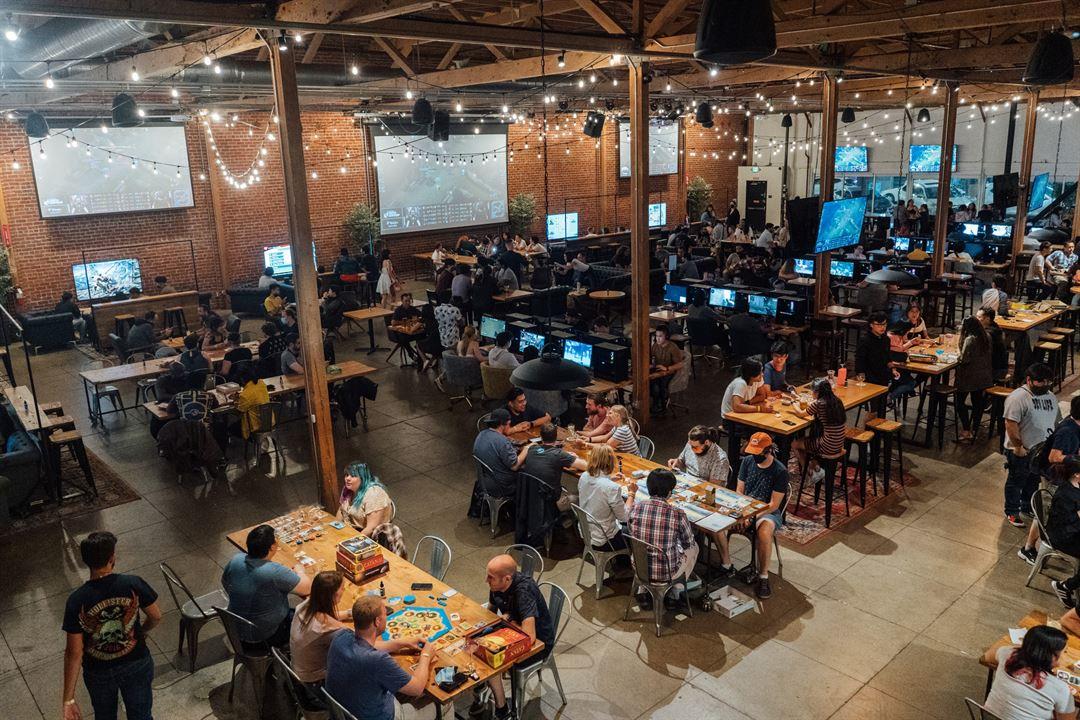
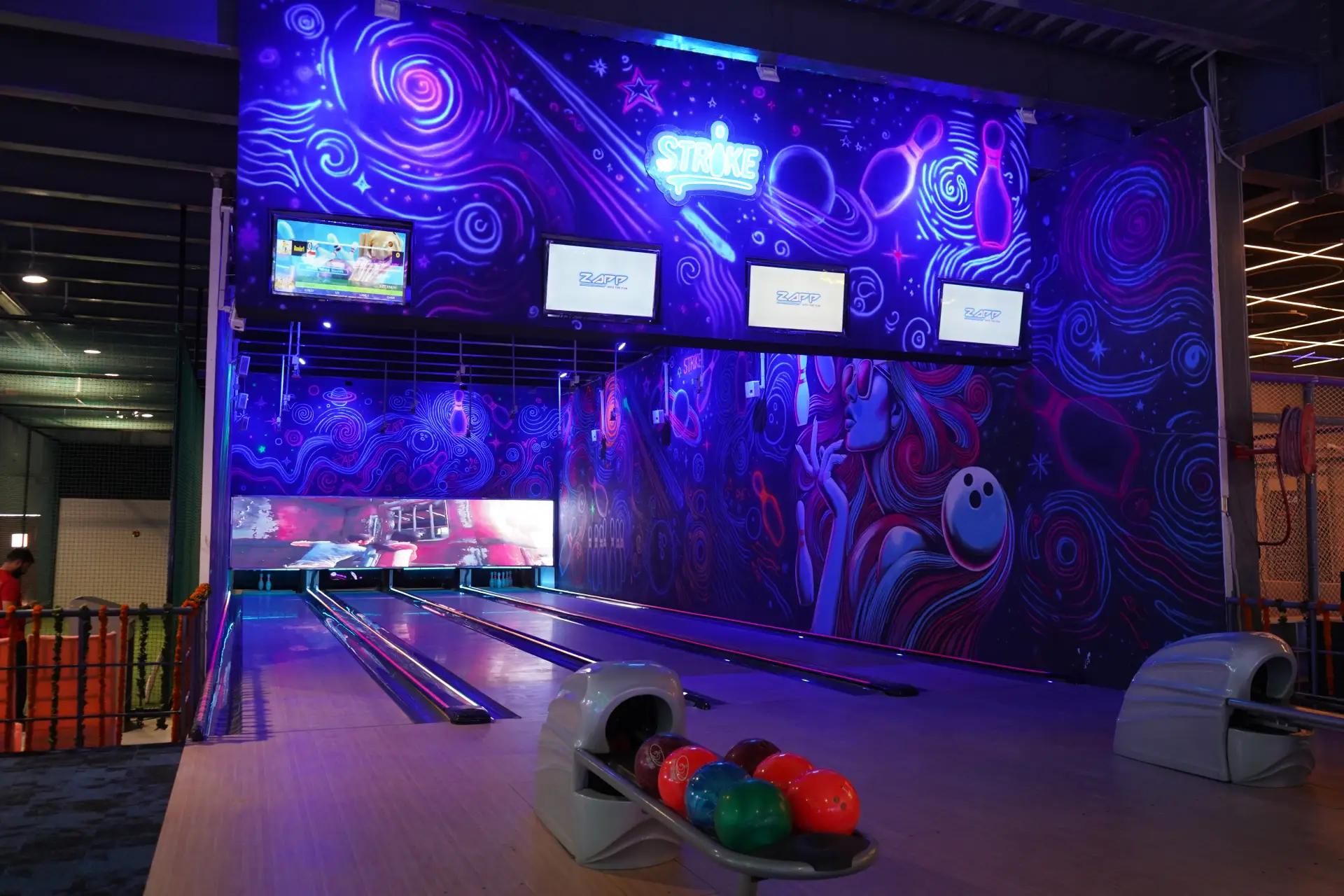
The spatial organisation of a competitive social gaming venue must resolve the tension between the high-energy, loud environments of competitive gaming formats and the quieter, more conversational atmosphere that quality hospitality requires. Active gaming zones, including bowling lanes, darts bays, golf simulator stalls, and AR battle arenas, generate noise, movement energy, and social excitement that creates a compelling entertainment atmosphere in their own right but that makes sustained dining conversation difficult if the dining areas are adjacent without separation. Separating these zones through spatial distance, changes in floor level, or acoustic screening elements allows each zone to operate at its optimal energy level without compromise. The circulation design between zones should create natural visitor drift from competitive gaming toward food and beverage consumption at the natural stopping points of gameplay sessions rather than requiring visitors to consciously leave the gaming environment to access hospitality.
Acoustic Insulation and Lighting Control
Zone-specific acoustic insulation, designed by a specialist acoustic consultant rather than managed through general construction sound reduction, is the technical investment that enables multiple attraction types at different sound intensity levels to operate simultaneously within the same venue without mutual degradation. Lighting control systems with zone-specific programming allow the venue’s atmosphere to be managed independently across gaming and hospitality areas, creating the right visual energy for competitive excitement in gaming zones while maintaining the ambient warmth that quality dining and cocktail service require. Both acoustic and lighting systems should be designed with the flexibility to support the venue’s transition from its family daytime operation to its adult evening competitive social format without physical reconfiguration.
Technology Backbone and F&B Service Circulation
The technology backbone of a competitive social gaming venue, specifically the gaming platform systems, scoring infrastructure, booking management platform, and point-of-sale integration, must be designed with redundancy and failover capability that prevents a single system failure from disabling multiple revenue streams simultaneously. F&B service circulation, the pathways and service station design that allow floor staff to reach every table and gaming position efficiently during peak hours, is the operational design dimension most frequently underestimated in competitive social venue development and the one that most directly determines whether the hospitality dimension achieves the quality standard its positioning promises.
Revenue Architecture Framework
- Hourly gameplay revenue across all competitive gaming formats, with dynamic pricing that maximises yield during peak demand periods and stimulates demand during off-peak hours
- League and tournament programming with membership entry fees, competitive league registrations, and structured championship events that create recurring community revenue
- Corporate team-building packages with exclusive gaming zone hire, facilitated competitive programming, and catering that serve the B2B market at premium pricing
- Premium food and beverage across quality casual dining, cocktail bar, and gaming-side table service that captures the full per-visit hospitality spending potential of the adult competitive social audience
- Membership programmes with monthly subscriptions providing priority booking, discounted gameplay, and exclusive member events that create recurring revenue and community loyalty
- Merchandise and branded activations including venue-branded apparel, gaming accessories, and league winner recognition products
- Sponsorship activations with brands whose target demographic aligns with the venue’s competitive social audience, including technology, beverage, gaming peripheral, and automotive brands
International Benchmarks in Competitive Socialising
01 | Dave and Buster’s USA Dave and Buster’s is the most scaled competitive social gaming brand in North America and provides the most comprehensive evidence base for the commercial viability of the integrated arcade, sports viewing, and dining model at significant scale. Its loyalty programme, which has accumulated millions of active members, demonstrates the recurring revenue and visit frequency benefits that a well-designed competitive social gaming community generates when it is supported by the right membership infrastructure and rewards structure. The brand’s continued expansion through new location development and format evolution reflects the commercial resilience of the integrated competitive social entertainment model across diverse market environments. For developers planning a flagship competitive social gaming venue, Dave and Buster’s operational scale and data maturity provide the most directly applicable evidence for financial modelling assumptions. |
02 | Holey Moley Australia and Global Holey Moley’s pop-culture themed mini golf blended with vibrant bar environments and nightlife energy demonstrates the commercial power of combining competitive social activity with a hospitality and nightlife identity that positions the venue as an evening social destination rather than simply a leisure attraction. The brand’s consistent expansion across Australian markets and internationally reflects the scalability of its model and the strength of consumer demand for this specific positioning: competitive leisure with genuine nightlife energy rather than either pure competitive gaming or pure bar hospitality. For developers in Asian markets including India, where the competitive social leisure format is less established than in Australian and American markets, Holey Moley’s trajectory from a single venue to a multi-market brand provides an instructive model of how a well-positioned competitive social concept builds market adoption. |
03 | Five Iron Golf USA Five Iron Golf is the most commercially sophisticated membership-driven urban golf simulator club model in the United States and provides the clearest available evidence for the recurring revenue potential of the membership model in competitive social gaming venues. Its multi-bay simulator clubs in urban core locations serve a membership base of golf enthusiasts and social golfers who pay monthly fees for regular practice access, combined with event programming that attracts both members and non-members for corporate events, league competitions, and social occasions. The membership revenue stability that Five Iron has achieved, creating a predictable monthly revenue base that covers fixed costs and allows additional event and general admission revenue to contribute fully to margin, illustrates the financial resilience advantage of community-building through membership over a purely transactional walk-in revenue model. |
Operational Excellence and Scalability
The operational excellence of a competitive social gaming venue is defined by the consistency with which it delivers the combination of competitive engagement quality and hospitality standard that its concept promises simultaneously across every zone, every shift, and every day of the week. Achieving this consistency requires standardised operational procedures for every function from gaming zone maintenance to cocktail preparation, data analytics that identify performance gaps in real time rather than retrospectively, and a training programme that develops cross-functional competence across entertainment and hospitality operations in the same team members rather than siloing these disciplines.
Scalability for a competitive social gaming venue with multi-location ambitions requires the development of a documented operational playbook that captures every design, technology, staffing, and commercial decision made in the first venue in a format replicable by a team without first-venue experience. The phased expansion strategy should use the financial performance and operational data of each operating venue to calibrate the investment specification and programming model of subsequent venues, improving the capital efficiency and launch performance of each successive location through the learning captured from all previous ones.
Frequently Asked Questions
What gaming formats generate the highest revenue per square foot in a competitive social venue? |
The competitive gaming formats that consistently generate the highest revenue per square foot in competitive social venues are those that combine rapid session cycles with high competitive energy and natural hospitality integration: interactive darts, which delivers a session duration of 45 to 90 minutes with natural breaks for drinking and social interaction between turns and requires only 80 to 120 square feet per bay; technology-enhanced bowling, which provides the competitive drama and physical engagement that makes it the most universally appealing gaming format across all demographic segments; and golf simulation bays, which command the highest per-hour pricing of any competitive social gaming format and attract the corporate and premium consumer audiences that generate the highest per-capita spending. AR battle zone formats, while generating strong excitement and advocacy, require more floor area per player and longer session durations that reduce revenue per square foot relative to the formats above. |
How should a competitive social venue approach loyalty programme design? |
Loyalty programme design for a competitive social gaming venue should be built around the specific engagement motivations of the target audience rather than a generic points-accumulation model. The most effective structures are competitive ranking systems that track each member’s performance across specific gaming formats with visible leaderboard standings, creating the competitive identity investment that motivates weekly return to improve ranking; exclusive member events that provide access to experiences unavailable through general admission, including priority booking for new game format launches, invitational tournament events with premium prize formats, and behind-the-scenes venue experiences; and monthly subscription tiers that provide increasing levels of access and recognition as the subscription level rises, creating a clear progression pathway that rewards increasing commitment. The loyalty programme data generated by a well-designed system is also a significant commercial asset, providing the customer behaviour intelligence that informs every programming, pricing, and marketing decision the venue makes. |
What is the optimal staff-to-floor-area ratio for a competitive social gaming venue? |
The optimal staffing model for a competitive social gaming venue differs from both pure entertainment venues and pure hospitality venues because it requires staff competent in both domains simultaneously. During peak trading periods, a mid-scale venue of 10,000 to 15,000 square feet typically requires a combined team of 20 to 30 staff covering gaming zone management, table service, bar operations, kitchen, and reception functions. The critical staffing investment is the training programme that develops genuine dual competence: staff who can explain and facilitate gaming formats with the enthusiasm of an entertainment professional while delivering food and beverage service to the quality standard of a hospitality professional. Venues that staff with hospitality professionals trained lightly in gaming operations, or gaming operators trained lightly in hospitality service, consistently underperform on whichever dimension was deprioritised. |
How does competitive socialising venue design differ from a traditional sports bar? |
A competitive social gaming venue differs from a traditional sports bar across three commercially significant dimensions. Participation rather than observation: competitive social gaming venues provide experiences where visitors are the athletes rather than spectators of others’ athletic performance, creating a fundamentally different and more personally engaging relationship with the competitive content. Proprietary gaming infrastructure: the bespoke competitive gaming formats of a social gaming venue, from smart darts to technology-enhanced bowling to golf simulators, cannot be replicated at home and are the primary reason for venue visits rather than simply one element of an entertainment package. Revenue diversification: the layered revenue model of a competitive social venue, capturing gaming session revenue, food and beverage, events, and membership income from the same visitors, generates financial resilience that a sports bar model dependent primarily on beverage revenue and broadcast rights cannot achieve. |
What is the most effective marketing strategy for a new competitive social gaming venue? |
The most effective marketing strategy for a new competitive social gaming venue combines organic social media amplification from visitor-generated content, targeted digital advertising in the social and gaming content environments where the target audience is most active, influencer partnership with lifestyle and gaming content creators whose audiences match the venue’s demographic profile, and corporate partnership development with event management agencies and HR departments in the local business community. The organic social media amplification dynamic of competitive social gaming venues is particularly strong because the experiences they provide generate naturally compelling content: the drama of a competitive finish, the celebratory reaction to an exceptional score, and the visual energy of the gaming environment are all content subjects that visitors spontaneously document and share. Venues that design their gaming zone lighting and aesthetic specifically for photography and video quality, rather than treating visual design as a secondary consideration, consistently generate higher volumes of visitor-created content and the marketing reach it produces. |
What is the expected payback timeline for a mid-scale competitive social gaming venue? |
A mid-scale competitive social gaming venue of 10,000 to 20,000 square feet with a quality gaming format mix, full food and beverage operation, and active corporate event development typically requires a total development investment of INR 8 to 20 crore and achieves payback within 36 to 54 months in a strong urban market. The key variables are the per-capita spending rate, which is driven by the quality and integration of the food and beverage programme; the corporate event revenue contribution, which provides the highest per-head yield and the most reliable advance booking revenue; and the membership programme development, which creates the recurring monthly revenue that reduces the financial variability of the business across seasonal demand fluctuations. Venues that develop all three of these revenue dimensions actively from the first month of operation, rather than sequentially as the business matures, consistently achieve payback at the faster end of the range. |
Work with Peach Prime Consultancy
Peach Prime Consultancy provides end-to-end advisory for competitive social entertainment venues from feasibility through to operational structuring. Partnering with experienced consultants ensures high performance and long-term asset value. Visit www.peachprime.in to arrange a planning consultation.
WHAT PEACH PRIME DELIVERS | Concept and attraction mix strategy, spatial master planning and zone design, technology backbone specification, F&B concept integration, revenue architecture modelling, operational playbook development, and investor presentation support. |