
A practical investment and planning guide for developers building indoor glow golf courses and outdoor adventure golf parks that deliver immersive design, competitive social engagement, and strong multi-stream revenue.
Introduction: Why Mini Golf Has Become an Investment Priority
The themed mini golf attraction has undergone one of the most commercially significant transformations in the family and competitive social leisure sector over the past decade. The format that many investors once regarded as a modest ancillary amenity for resorts and family entertainment centres has emerged, in its most ambitious implementations, as a genuine anchor attraction commanding premium ticket prices, generating exceptional per-square-foot revenue, and creating the kind of multi-demographic social experience that is among the most powerful consumer entertainment trends of the current decade.
The transformation is driven by the convergence of three forces that the best contemporary mini golf operators have deployed simultaneously. The first is storytelling: themed mini golf courses that take visitors through coherent narrative worlds rather than a sequence of unrelated obstacles deliver a fundamentally different and more emotionally engaging experience that justifies premium pricing and motivates repeat visitation. The second is visual spectacle: UV blacklight systems, programmable LED lighting, projection-mapped surfaces, and high-quality scenic fabrication create the Instagrammable visual environment that drives the social media amplification which is the most effective and cost-efficient marketing channel available to an entertainment venue. The third is social integration: food and beverage options that allow groups to eat, drink, and play simultaneously transform mini golf from a standalone leisure activity into a multi-hour social occasion with substantially higher per-capita spending.
This guide provides the complete business planning framework for a themed mini golf investment, from the concept and format selection decisions through to investment component planning, revenue architecture, scaling strategy, and the operational standards that sustain long-term performance.
MARKET SIGNAL | Rising search demand for indoor mini golf, neon glow golf, family entertainment golf attractions, and competitive social mini golf venues reflects a consumer market that is actively seeking this format across all age groups: children for the visual wonder and accessible competition, teenagers and young adults for the social media content potential, adults for the competitive social leisure occasion, and corporate groups for the team engagement experience. |
Why Themed Mini Golf Is Commercially Powerful
The commercial strength of themed mini golf rests on a combination of characteristics that are rare to find together in any indoor entertainment format. The capital cost of a themed mini golf venue is moderate relative to the revenue per square foot it can generate at premium positioning, creating an investment efficiency that outperforms most comparable entertainment formats. The participation barrier is exceptionally low: no prior skill, physical fitness, or age-specific ability is required, which allows themed mini golf to serve children as young as four and adults of any age simultaneously, giving it one of the broadest demographic ranges of any competitive activity format. And the competitive engagement of the game format, where scores are tracked across eighteen holes and groups can compare their performance, creates the intrinsic motivation to return and improve that drives repeat visitation independently of novelty.
When these commercial foundations are combined with high-quality storytelling, dynamic lighting design, and integrated food and beverage, themed mini golf becomes a premium social experience rather than a simple leisure activity, which unlocks the premium pricing and per-visit spending levels that define the highest-performing operators in this category.
Indoor versus Outdoor: Choosing the Right Model
Indoor Themed Mini Golf
Indoor themed mini golf arenas are the format that has driven the most dramatic commercial innovation in the category over the past decade and are the primary vehicle for the premium competitive social leisure positioning that commands the highest ticket prices and per-capita spending rates. The climate-controlled indoor environment eliminates weather dependency, ensures year-round operating consistency, and creates the controlled lighting environment that makes UV blacklight and programmable LED design most impactful. Mall and mixed-use development integration provides access to the footfall infrastructure that reduces customer acquisition cost and supports the impulse visit patterns that are an important component of the revenue model alongside planned group visits.
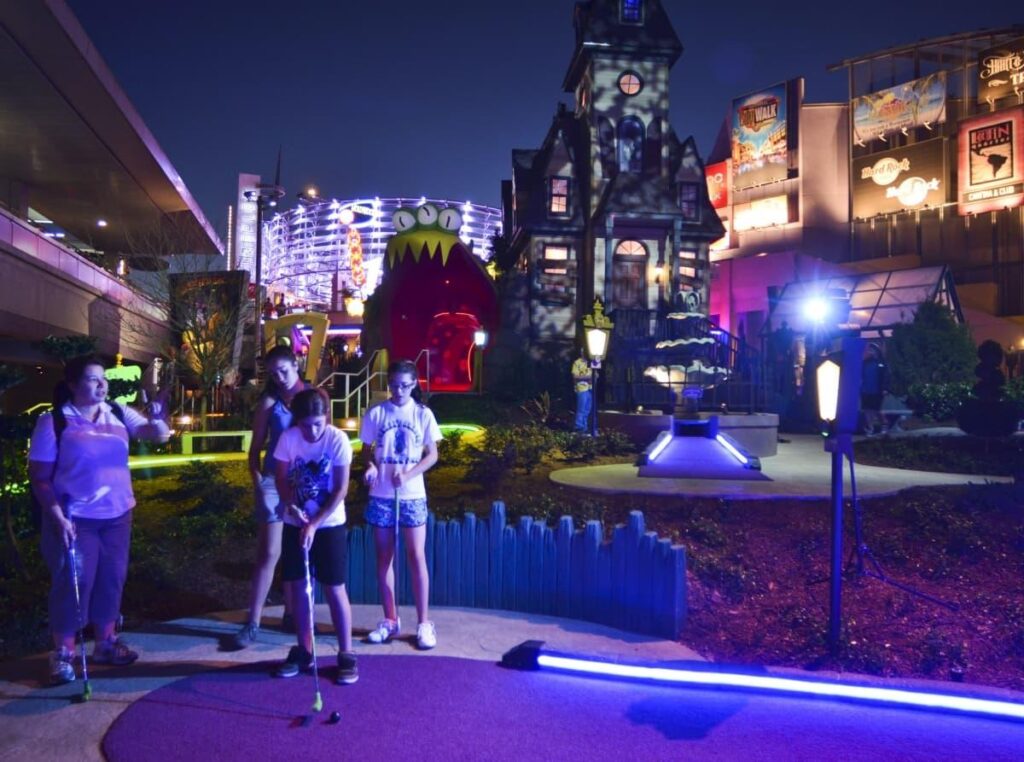
The most commercially powerful indoor design elements include UV blacklight and glow systems that transform a standard themed environment into an otherworldly visual spectacle, fantasy narrative themes with coherent world-building that creates the emotional investment motivating return visits to complete the story, LED-enhanced interactive holes where the game mechanic itself responds to the player’s shot with light and sound effects, and bar lounge integration that allows groups to continue playing and socialising simultaneously with food and beverage consumption.
Outdoor Adventure Golf Parks
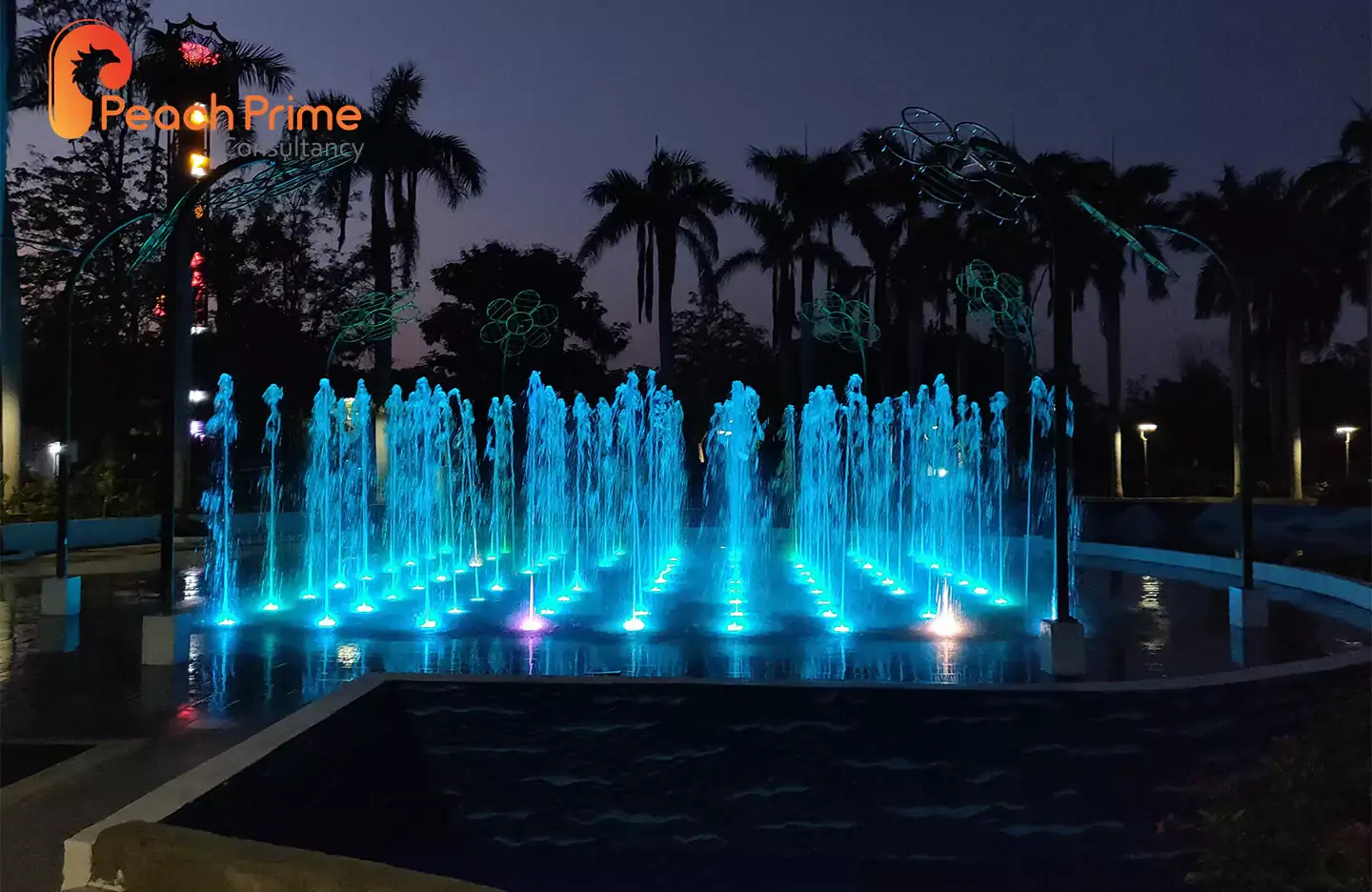
Outdoor adventure golf parks offer a different and complementary set of commercial advantages. The larger physical footprint available in outdoor settings allows the scale of scenic construction and landscape integration that creates genuine destination appeal independent of a host retail or mixed-use environment. Landscaped water features, large-scale sculptural elements, themed architectural structures, and night-lit LED pathway systems create the visual impact that drives the destination visit and generates the photography content that outdoor adventure golf parks consistently use as their primary organic marketing asset. Resorts, tourism precincts, and family leisure destinations benefit most from outdoor adventure golf investment, as the format aligns strongly with the slow-paced, all-day leisure visit patterns of these environments.
Investment Components to Plan Carefully
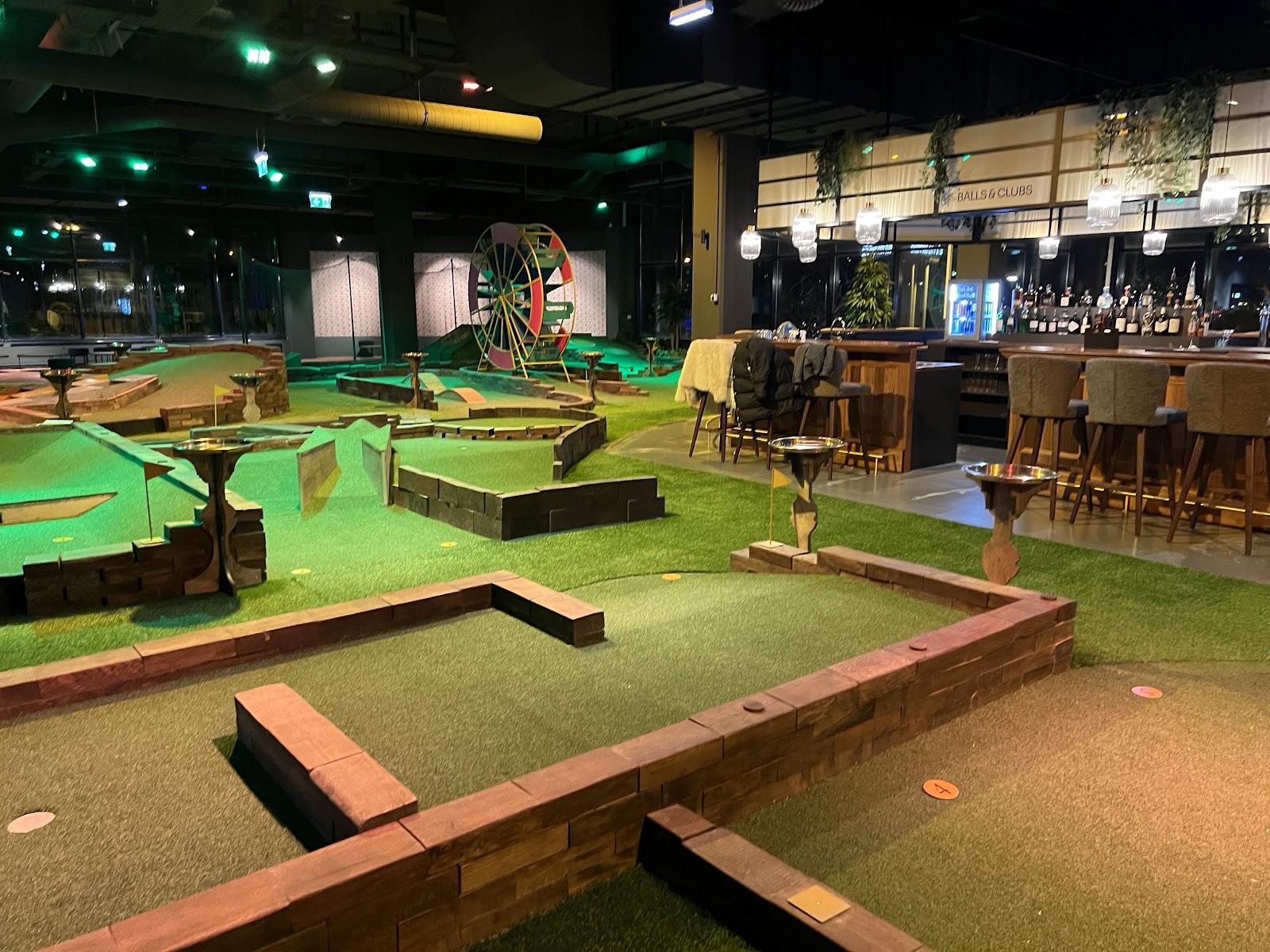
The following components require careful investment planning to deliver the quality standard that premium themed mini golf positioning demands and the durability required for cost-effective long-term operation.
- Scenic fabrication using materials specified for public venue durability: all scenic elements will be touched, leaned against, and interacted with by thousands of visitors each week, and materials selected for visual quality alone without regard to wear resistance will degrade within months, creating the maintenance cost and quality decline that undermine both the premium experience and the profit margin
- UV lighting and programmable LED systems designed by specialist lighting consultants who understand the relationship between light source selection, surface material behaviour, and the visual quality of the final environment under operating conditions rather than laboratory conditions
- Digital scoring and ticketing integration that creates a seamless visitor experience from booking through scoring to exit, with real-time leaderboard capability for group competitive engagement and the data infrastructure for loyalty programme development
- Safety-compliant course design with adequate pathway widths, non-slip surface materials, appropriate hazard marking, and emergency egress that meets commercial venue safety standards
- Queue and circulation planning that manages visitor flow through the eighteen-hole sequence without creating bottlenecks at popular holes, using hole duration balancing and catch-up rules that keep groups moving at the pace the throughput model requires
- Integrated café or food and beverage zone positioned at the natural mid-point and exit of the course circulation to capture spend at the two moments when groups are most likely to stop and consume
Revenue Architecture
Revenue Stream | Format | Profile |
Per-game Ticketing | Standard admission with optional premium hole upgrades | Primary |
Group and Birthday Packages | Pre-booked group admission with F&B inclusion | High-yield, advance-booked |
Corporate Team Events | Exclusive session hire with facilitated competitive scoring and catering | B2B premium |
League Tournaments | Structured competitive evenings with entry fees and prize formats | Community-building |
Membership Programmes | Season pass access with unlimited play and loyalty benefits | Recurring |
Themed Café and Dessert Counter | In-venue F&B aligned with the world-building theme | Dwell-extending |
Branded Merchandise | Story-world collectibles, apparel, and branded golf accessories | Ancillary |
Photography Packages | Professional or automated capture of memorable game moments | Premium add-on |
Global Mini Golf Benchmarks
01 | Swingers Crazy Golf London, UK Swingers Crazy Golf is the most commercially instructive example of the themed mini golf format as a premium adult competitive social entertainment destination, having built a model that successfully repositions mini golf from a family activity to an evening social occasion through the combination of high-quality themed course design and genuine restaurant and bar programming. Operating across central London locations, Swingers targets the young professional and millennial demographic that the format has historically underserved, and has demonstrated that this demographic is not only willing to pay premium prices for a high-quality mini golf experience but actively seeks the distinctive social occasion it provides. The brand’s success has inspired a wave of adult-focused mini golf ventures globally and provides direct evidence for developers that the premium adult positioning of themed mini golf is a commercially validated approach rather than an experimental one. |
02 | Puttshack Chicago, USA Puttshack’s technology-enabled scoring system, which uses ball-tracking technology to automate scoring and introduces gamified challenges at specific holes, reduces the friction of traditional mini golf score management and allows groups to focus entirely on the competitive and social dimensions of the experience. Combined with a dining programme that positions the venue as a quality restaurant with an entertainment dimension rather than a novelty attraction with food service, Puttshack has achieved premium per-capita spending rates that justify its development cost in strong urban markets. For developers planning the technology specification of a themed mini golf venue, the Puttshack model illustrates the return available from proprietary game technology investment when it genuinely enhances the competitive experience rather than adding complexity for its own sake. |
03 | GlowGolf Multiple US Locations GlowGolf is the most widely replicated indoor blacklight mini golf model in the United States and provides the most directly applicable precedent for developers planning mall-integrated indoor mini golf venues at a scale and investment level accessible to independent operators. Its operational model, which achieves strong throughput and consistent experience quality through standardised course design and reliable UV lighting systems, demonstrates the commercial viability of the indoor glow golf format across a wide range of mall environments and demographic markets without requiring the custom scenic fabrication investment of premium flagship venues. For developers evaluating the indoor glow golf format as a mall anchor or entertainment zone component, GlowGolf provides the volume of operating data and commercial precedent that validates the investment thesis with high confidence. |
Scaling and Longevity Strategy
The long-term commercial performance of a themed mini golf venue depends on a content evolution strategy that maintains freshness and creates new visit occasions for the returning audience. Seasonal theme overlays, where limited-time visual and narrative content is introduced on a planned calendar aligned with holidays and cultural moments, create the media-worthy announcements and time-limited motivation to return that sustain awareness among lapsed visitors without requiring new physical construction. Tournament night programming, where competitive events are structured around the existing course with prizes, commentary, and social media coverage, create community occasions that generate revenue from advanced ticket sales, food and beverage spending, and the social amplification that competitive events produce. Modular obstacle design, where individual hole obstacles are designed for straightforward replacement rather than demolition and rebuild, allows layout refresh at manageable cost and creates the sense of course evolution that motivates enthusiast visitors to return regularly.
Frequently Asked Questions
How many holes should a commercial themed mini golf course have? |
Eighteen holes is the established commercial standard for a full mini golf course experience and the format that most operators plan around for both throughput efficiency and visitor satisfaction. An eighteen-hole course creates a natural beginning, middle, and end to the playing experience, with a total play duration of 45 to 75 minutes for most groups, which is long enough to justify premium pricing while short enough to allow multiple session cycles per operating day. Nine-hole compact formats are viable for tight floor plates or as a second course within a larger venue, but they typically deliver lower per-visit satisfaction and per-capita spending than the eighteen-hole standard. Developers planning a commercial venue should target eighteen holes as the minimum, with the floor plate and budget dimensioned accordingly. |
What is the minimum floor area required for an indoor themed mini golf course? |
A compact eighteen-hole indoor glow golf course requires a minimum net playing area of approximately 4,000 to 5,500 square feet, with average hole footprints of 200 to 300 square feet allowing enough design variety for a genuinely engaging course layout. Premium venues with larger scenic elements, more elaborate obstacle designs, and immersive environmental features typically require 6,000 to 9,000 square feet for the playing area alone. Floor plate planning must also account for entry and ticketing areas, equipment storage, food and beverage service zones, and the safe corridor widths between holes that visitor flow management requires. A total venue footprint of 7,000 to 12,000 square feet is typical for a commercially complete indoor themed mini golf operation. |
How durable are UV blacklight and LED lighting systems in a commercial public venue? |
Commercial-grade UV blacklight tube systems and LED installation components have operating lifespans of 25,000 to 50,000 hours under normal operating conditions, which corresponds to approximately five to ten years of daily commercial venue operation before replacement. Maintaining this lifespan requires installation by qualified lighting contractors, appropriate heat management for LED drivers and UV ballasts, and a preventive maintenance schedule that tests and replaces failing components before complete failure rather than waiting for visible quality degradation. The surface materials of the scenic environment are typically the limiting factor in the visual quality of a blacklight installation over time, as UV-reactive paints and fabrics lose fluorescence gradually under ongoing UV exposure and will require periodic touch-up or repainting to maintain the visual standard expected at a premium venue. |
How should a themed mini golf venue approach corporate group business development? |
Corporate group business is among the most commercially attractive customer segments for a themed mini golf venue, delivering advance-booked revenue at higher per-head rates than general admission, predictable group sizes that support operational planning, and the post-event advocacy within corporate networks that generates subsequent bookings from other teams within the same organisations. Developing corporate group business requires a dedicated product offer rather than simply a group discount on standard admission: a structured corporate event package that includes exclusive course hire for a defined duration, hosted competitive scoring with a prize structure, pre-game welcome drinks, and a sit-down dining arrangement after play provides a complete event experience that corporate event buyers can purchase with confidence and present to their attendees as a quality occasion. Relationships with corporate event management companies and direct outreach to HR directors and office managers within the local business community are the most effective channels for initial corporate client acquisition. |
What seasonal themes deliver the strongest commercial results? |
The seasonal themes that consistently deliver the strongest combined attendance uplift and social media amplification are those that create visually dramatic departures from the baseline course environment while requiring limited physical modification: Halloween, where blacklight environments transform naturally into horror-themed visual spaces through costume changes to existing scenic elements and new UV-reactive props; Christmas, where the course environment is overlaid with light-intensive festive theming that generates strong family attendance; and Valentine’s Day, where romantic evening packages with cocktail service create premium booking occasions for couples. Each seasonal overlay should be supported by a photographic campaign that showcases the new visual environment to the existing visitor audience, creating the awareness that drives the time-limited return visits that are the primary commercial objective of seasonal programming. |
What is the expected payback period for a premium indoor themed mini golf venue? |
A well-designed premium indoor themed mini golf venue in a quality mall or mixed-use location, operated with active corporate group development and seasonal programming, typically achieves payback within 24 to 42 months. The key variables are the quality and originality of the design, which determines the social media reach and word-of-mouth advocacy rate; the food and beverage integration quality, which determines the per-capita spending uplift beyond the base ticket price; and the corporate group revenue development, which provides the advance booking revenue and per-head yield that improve both the total and the cash flow profile of the return. Venues that achieve a consistent split of 60 per cent or more of their revenue from non-ticket sources consistently outperform purely ticketing-focused operations in both absolute return and payback speed. |
Why Develop with Peach Prime Consultancy
Peach Prime Consultancy provides concept development, lighting design coordination, master planning, and revenue modelling for themed mini golf attractions. Whether you are planning an indoor glow golf venue or an outdoor adventure golf park, our team ensures immersive design impact with commercial viability. Visit www.peachprime.in to arrange a planning consultation.
WHAT PEACH PRIME DELIVERS | Concept and theme development, lighting and scenic specification coordination, spatial master planning and throughput optimisation, revenue architecture modelling, F&B concept integration, and investor presentation support. |