

Blogs
Theme Park Feasibility Study Guide: The First Step Toward a Successful Theme Park Project
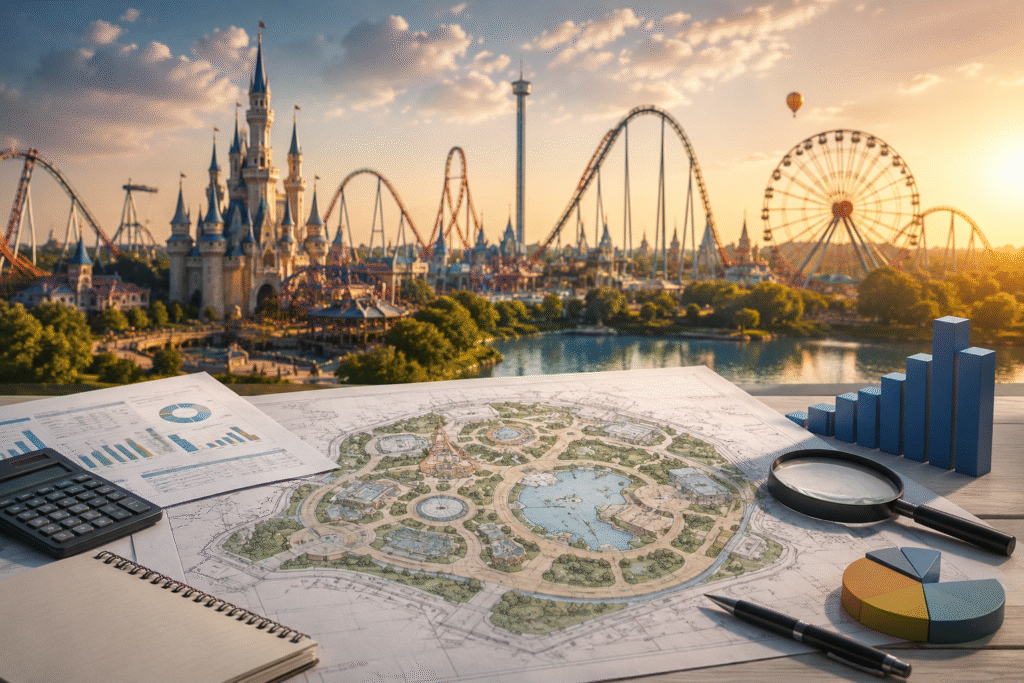
India’s entertainment industry is expanding rapidly, driven by growing tourism, rising disposable incomes, and increasing demand for quality recreational experiences. From theme parks and amusement parks to water parks, adventure parks, and Family Entertainment Centers (FECs), investors are exploring opportunities to develop world-class entertainment destinations.
Before investing in a large-scale project, the most important step is conducting a Theme Park Feasibility Study. A feasibility study helps determine whether the project is financially viable, commercially sustainable, and capable of meeting market demand. It provides investors with reliable information for making informed decisions while reducing investment risks.
What Is a Theme Park Feasibility Study?
A Theme Park Feasibility Study is a detailed evaluation conducted before planning, design, or construction begins. It analyzes market demand, project costs, investment requirements, expected revenue, competition, infrastructure needs, and long-term business potential.
Whether you’re planning an indoor entertainment center, adventure park, water park, or a large outdoor theme park, a feasibility study creates a solid foundation for successful project development.
Why Is a Theme Park Feasibility Study Important?
A successful theme park is built on research and strategic planning, not assumptions. A feasibility study helps developers understand whether the selected location can attract enough visitors, estimates construction and operating costs, forecasts revenue, and identifies potential business risks.
It also evaluates how long it may take to recover the investment and whether the project can remain profitable in the long run. By addressing these factors before construction begins, developers can avoid costly mistakes and improve project success.
Understanding Market Demand
Market research is essential before investing in any entertainment project. A Theme Park Market Analysis evaluates local population, tourist inflow, seasonal demand, nearby attractions, and future development plans to determine whether the project has strong long-term potential.
A demographic study also identifies the target audience, such as families, children, tourists, school groups, and young adults. Understanding visitor preferences helps developers select the right attractions and create an engaging guest experience.
Choosing the Right Location
Site selection plays a major role in the success of a theme park. Even a strong concept can struggle if developed in the wrong location.
A professional site analysis evaluates accessibility, road connectivity, surrounding infrastructure, nearby tourist attractions, and future urban development. It also includes land suitability, environmental compliance, and opportunities for future expansion.
Choosing the right location improves accessibility, increases visitor numbers, and supports long-term business growth.
Financial Planning and Investment Analysis
Financial planning helps investors understand the total investment required before construction begins.
A detailed investment analysis estimates expenses for land acquisition, infrastructure, attractions, utilities, landscaping, engineering, and project implementation. It also evaluates operating costs such as staffing, maintenance, utilities, security, insurance, and marketing.
Accurate budgeting allows investors to prepare realistic financial plans while estimating the expected Return on Investment (ROI).
Revenue Forecast and Business Potential
A successful theme park generates income from multiple revenue sources rather than ticket sales alone.
A revenue forecast estimates future earnings based on visitor numbers, ticket pricing, seasonal demand, tourism growth, and customer spending. Additional revenue may come from restaurants, retail outlets, branded merchandise, events, parking, games, and hospitality services.
Reliable revenue projections help investors understand the project’s long-term earning potential before making major financial commitments.
Risk Assessment
Every entertainment project involves certain risks. A Theme Park Risk Assessment identifies challenges such as changing tourism trends, economic conditions, construction delays, increasing development costs, environmental regulations, and market competition.
Many feasibility studies also include a SWOT analysis to evaluate the project’s strengths, weaknesses, opportunities, and threats. This helps investors prepare effective strategies and reduce future risks.
Business Planning and Project Development
Once the feasibility study confirms the project’s viability, the next step is preparing a detailed business plan.
A strong business plan defines the project’s vision, target audience, operational strategy, revenue model, staffing, marketing approach, and long-term growth plans. It serves as a roadmap that guides every stage of development.
The project then moves into master planning, engineering, infrastructure planning, attraction layout, and construction scheduling. Proper coordination helps control costs, improve quality, and ensure timely project completion.
Why Work with a Professional Theme Park Consultant?
A Theme Park Feasibility Study requires expertise in finance, architecture, engineering, tourism, and entertainment planning. An experienced consultant brings these disciplines together to deliver a comprehensive project evaluation.
Professional consultancy services typically include market research, feasibility analysis, financial planning, site selection, master planning, engineering coordination, project management, and business strategy. Many developers also choose turnkey solutions, where a single team manages the project from feasibility study to construction and final execution.
Why Choose Peach Prime Consultancy?
Peach Prime Consultancy provides complete theme park consultancy services for investors, developers, tourism organizations, and businesses across India.
Our expertise includes Theme Park Feasibility Studies, Master Planning, Theme Park Design, Engineering, Investment Consulting, Business Planning, Project Management, and Turnkey Theme Park Solutions.
Whether you’re planning a Family Entertainment Center, Water Park, Adventure Park, or a large Theme Park, we help transform your vision into a profitable and sustainable entertainment destination.
Conclusion
A Theme Park Feasibility Study is the foundation of every successful entertainment project. It helps investors evaluate market demand, project costs, site suitability, financial viability, revenue potential, and business risks before construction begins.
With professional planning and expert guidance, developers can make informed investment decisions, reduce risks, and build successful entertainment destinations. Partnering with Peach Prime Consultancy ensures your project is backed by detailed research, strategic planning, and industry expertise from concept to completion.