Longer visits sit at the heart of every healthy family entertainment centre. More time inside the venue means more food, more replay, more add on spend and better word of mouth. Shorter visits mean the opposite, and no amount of marketing fixes that.
The common instinct is to buy more equipment. But most venues do not need another ride. They need a few small changes in how the floor is used, who it is used by, and when.
Here are three low cost ideas you can try next week with the equipment you already have.
Idea 1: Keep the group together
A visit ends when one person in the group starts to feel like luggage. The parent holding bags. The grandparent on a bench in a corner. The non player who has already finished a coffee and has nothing to look at. When that person says, shall we go, the group goes.
The fix is to give every member of the group a role. A player who takes the turn. A teammate who helps and cheers. A spectator who watches and reacts. A diner who eats with the group. A learner who joins a short workshop. Any of these keeps a person connected. Luggage status breaks the visit.
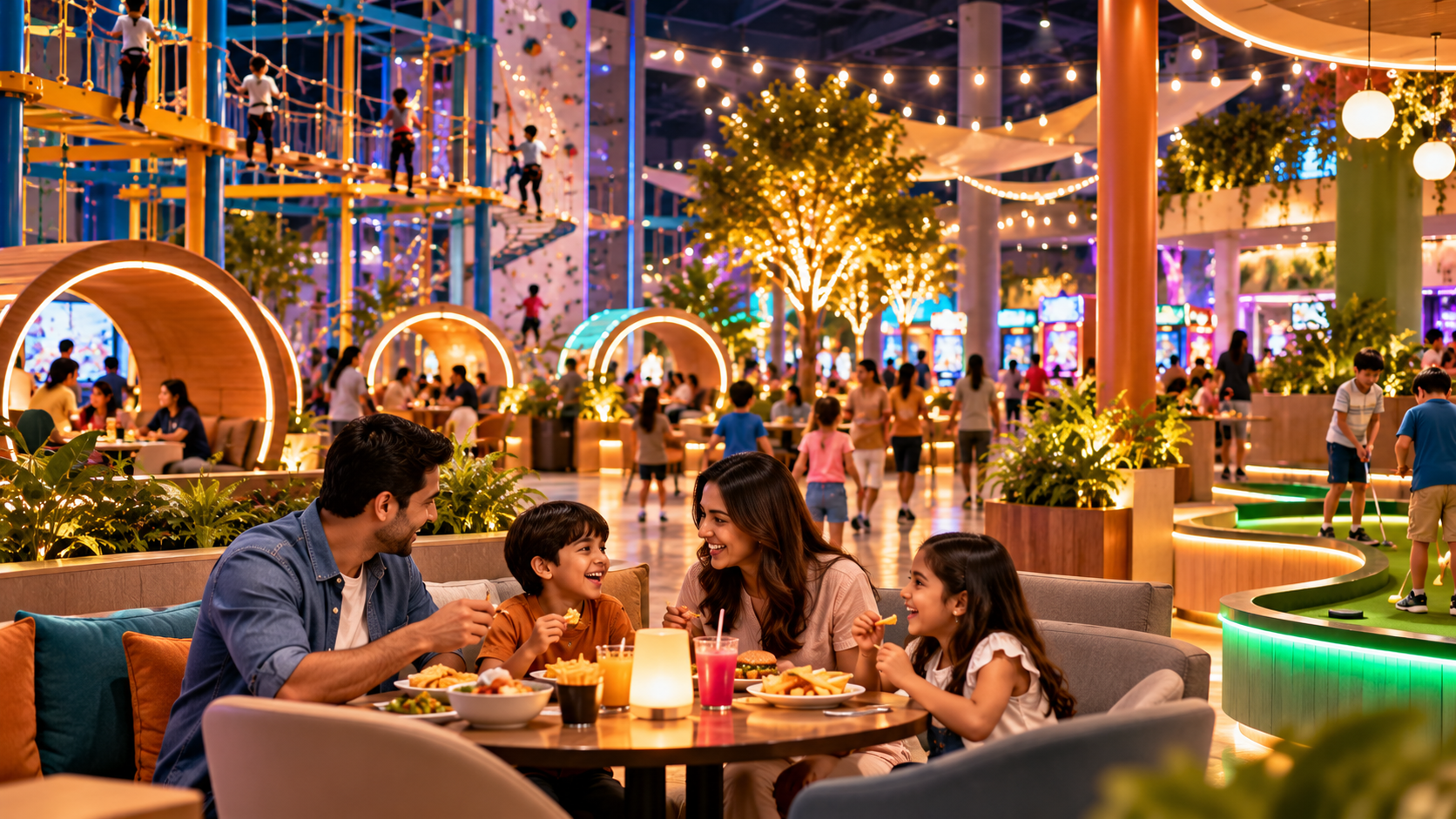
In design terms this means one game, one table, one group. Put the seats and the food table next to the game, not in another zone. Every seat should see the game. Food should come to the table. Bags and phone charging should be at the seat. Staff should walk behind, not through, the game.
Try this
Sit in the worst seat in your venue for ten minutes. If you cannot see the action, cannot order food without getting up, and cannot keep your bag with you, your non players are already looking at the exit.
Idea 2: Open a second front door
The games are your main front door. They bring in the families who come for play. But some families will never come for games alone. They will come to make something.
A 45 minute workshop is a second front door. Slime. A robot. A cake. A painting. A small clay piece. The format matters less than the fact that a child leaves with something in their hand.
Workshops bring audiences the main door does not reach.
- Schools come, often in the morning when the floor is empty
- Clubs and hobby groups come on weekday evenings
- Parents looking for a useful weekend come on Saturday afternoons
- Regular guests who have run out of new rides come back for a new skill
The trick is to plan what happens after the workshop before you design the room. The ideal flow is book, make, play, eat, take home, return. The workshop is the invitation. The rest of the venue builds the visit. The thing the child carries home keeps the memory alive in the house and brings the family back.
Try this
Run one 45 minute workshop next month. Count how many families stay to eat afterwards. Count how many book a return visit within the next four weeks. Those two numbers tell you whether the second door is worth opening wider.
Idea 3: Make every hour work
Every venue has quiet hours. Weekday mornings. Early afternoons. The hour before closing. The usual answer is a discount. A better answer is a different audience.
Think of the same floor working from morning to night. By day: brighter light, guided play, a family menu, school groups and toddler sessions. In the evening: warmer light, team games and sharing plates for office teams and friend groups. The building does not change. The light, the music and the menu do.
That is a daily rhythm. On top of it, add a yearly rhythm.
- Weekly: league nights and toddler mornings
- Monthly: maker days and tournaments
- Seasonal: festivals and school holidays
- Celebrations: birthdays, office parties, team outings
Plan the whole year before you open the doors, not month by month after the fact. The childhood fair was special because it came once a year. Your calendar can give a guest that feeling every month, from a venue that stays in the same building all year.
Try this
Mark your three quietest hours. Give each one its own audience. Design the light, the sound, the menu and the staff pitch for that audience. Track whether traffic in those hours moves inside two months.
Pick one, test it, measure it
Three ideas is too many to run at once. Pick the one that matches the weakest part of your current operation.
- Groups leaving within an hour or an hour and a half? Start with Idea 1.
- Weekday footfall thin? Start with Idea 2.
- Quiet hours dragging the weekly average down? Start with Idea 3.
Give the chosen idea a four week test. Measure one or two numbers that already matter to you: length of visit, spend per head, booking inquiries, return visits within a month. If the numbers move, scale the idea. If they do not, try the next one.
None of this needs a new ride. All of it uses the equipment and the floor you already have.