
Blogs
Water Park Planning Mistakes: Common Errors That Can Impact Project Success
Water parks are becoming increasingly popular destinations for families, tourists, schools, and corporate groups. With attractions such as water slides, wave pools, lazy rivers, and interactive play areas, these facilities offer entertainment experiences for visitors of different age groups. However, creating a successful water park requires much more than installing exciting attractions. Behind every profitable and well-managed water park is detailed planning, technical knowledge, and strategic decision-making.
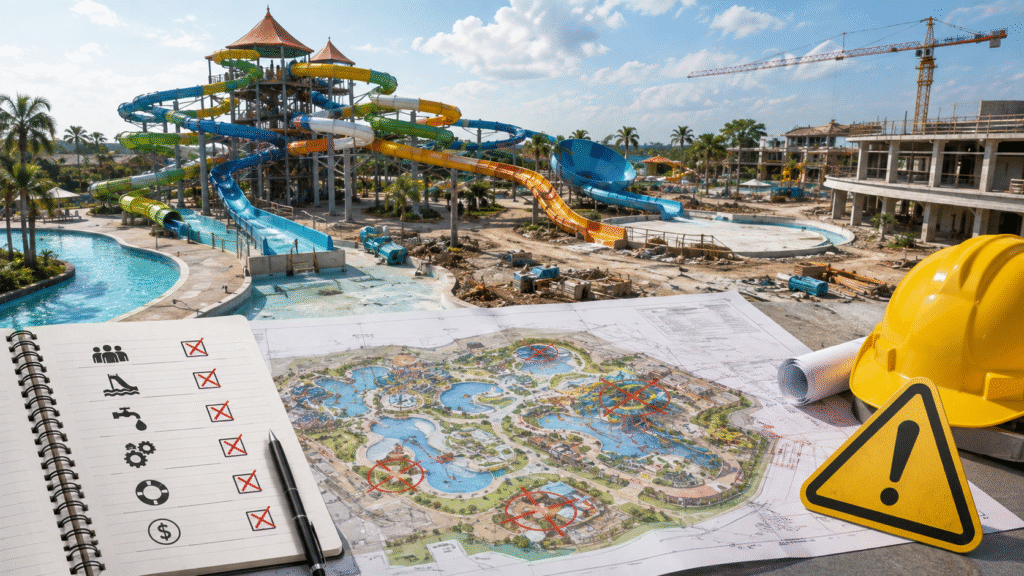
Many water park projects face challenges because important factors are overlooked during the early planning stages. Incorrect site selection, inefficient layouts, poor infrastructure planning, unrealistic budgeting, and lack of operational preparation can affect visitor satisfaction and long-term profitability. Understanding these common Water Park Planning Mistakes before development begins helps investors and developers create stronger, safer, and more successful projects.
The Importance of Strategic Water Park Planning
A modern water park is a complex entertainment destination that combines architecture, engineering, attractions, water management systems, landscaping, safety planning, and visitor experience design. Every element needs to work together to create a smooth and enjoyable environment.
A detailed Water Park Planning Process allows developers to evaluate market demand, understand visitor expectations, estimate investment requirements, and prepare a practical development strategy. Proper planning also helps avoid expensive modifications during construction and improves the overall efficiency of park operations.
Ignoring the Importance of Feasibility Analysis
One of the major reasons some water park projects struggle is the absence of a detailed feasibility evaluation before investment decisions are made.
A Water Park Feasibility Study helps analyze important factors such as market potential, location suitability, competition, expected visitor numbers, investment requirements, operational expenses, and revenue opportunities. Without proper research, developers may create facilities that do not match customer demand or local market conditions.
Professional feasibility planning provides valuable insights that help investors understand project opportunities and possible challenges before beginning development.
Selecting an Unsuitable Location
Location plays a major role in determining the success of a water park. A visually impressive park may still face difficulties if visitors cannot easily access it or if the surrounding infrastructure is insufficient.
Proper site evaluation should consider road connectivity, nearby attractions, population growth, tourism potential, availability of utilities, drainage conditions, and future expansion possibilities.
A well-selected site supports better visitor attendance while making it easier to develop essential facilities such as parking areas, service zones, maintenance spaces, and operational infrastructure.
Developing an Inefficient Park Layout
A poorly planned layout can negatively affect visitor movement and overall experience. When attractions, food areas, changing rooms, rest zones, and support facilities are not positioned correctly, visitors may experience unnecessary walking, congestion, and confusion.
Effective Water Park Layout Planning focuses on creating comfortable movement patterns throughout the property. Attractions should be arranged logically, with proper circulation areas, shaded relaxation zones, convenient facilities, and clear navigation systems.
A thoughtful layout also helps staff manage operations more effectively while improving safety and crowd control during busy periods.
Choosing Attractions Without Considering Visitor Needs
Selecting attractions only because they are popular is another common mistake in water park development. Every project has different goals, target audiences, available space, and investment capabilities.
A successful attraction strategy should consider families, children, teenagers, and adventure seekers. A balanced combination of thrill rides, family attractions, children’s splash areas, relaxation zones, wave pools, and interactive experiences creates a more complete visitor experience.
Careful attraction planning also considers maintenance requirements, operational costs, capacity, and long-term popularity to ensure sustainable performance.
Underestimating Visitor Capacity Requirements
Capacity planning is one of the most important aspects of water park development. Many projects focus heavily on attractions but fail to consider how visitors will move, wait, relax, dine, and use support facilities during peak periods.
Water Park Capacity Planning evaluates attraction capacity, seating requirements, parking, locker facilities, restaurants, pathways, and service areas to maintain a comfortable environment.
When capacity is properly planned, visitors experience shorter waiting times, better circulation, and improved satisfaction, even during high-demand seasons.
Neglecting Safety and Operational Requirements
Safety is the foundation of every successful water park. Ignoring safety standards during design and operations can create serious risks for visitors and negatively affect the reputation of the facility.
A reliable safety approach includes proper ride engineering, lifeguard planning, emergency response systems, safety signage, visitor instructions, staff training, and regular inspections.
Water Park Operations Planning should include preventive safety procedures from the beginning so that the park remains secure, efficient, and compliant throughout its operational life.
Poor Planning of Water and Mechanical Systems
Water management is one of the most critical technical aspects of any water park. Inefficient filtration systems, incorrect drainage planning, or inadequate mechanical infrastructure can increase operating costs and create maintenance challenges.
Modern water parks require advanced filtration, water treatment, pumping systems, and drainage solutions to maintain water quality and operational reliability.
Professional engineering planning ensures that these systems are designed according to project requirements and can support daily operations efficiently.
Focusing Only on Construction Cost
Many investors concentrate mainly on initial development costs while overlooking long-term operational expenses.
A realistic Water Park Cost Planning approach should consider staffing, energy consumption, water treatment, maintenance, equipment replacement, marketing, insurance, and daily management expenses.
Understanding operational costs in advance allows developers to create stronger financial models and avoid unexpected challenges after opening.
Lack of Future Maintenance and Expansion Planning
A water park requires continuous maintenance to remain attractive and safe. Equipment, attractions, mechanical systems, and public areas must receive regular attention throughout the year.
Maintenance planning should be included during the design stage itself. Preventive maintenance schedules, equipment inspection procedures, and replacement strategies help reduce downtime and protect the investment.
Future expansion should also be considered so that new attractions, facilities, or upgraded experiences can be added without major redevelopment.
Ignoring Sustainable Water Park Development
Sustainability is becoming an important consideration in modern entertainment projects. Environmentally responsible planning helps reduce operational expenses while improving the overall efficiency of the facility.
Energy-efficient equipment, water recycling systems, rainwater management, smart landscaping solutions, and efficient mechanical systems contribute to sustainable water park operations.
A sustainable approach not only benefits the environment but also creates a stronger brand image among modern visitors.
The Value of Professional Water Park Planning Expertise
Developing a successful water park requires coordination between designers, engineers, attraction specialists, safety experts, and project managers. Without professional guidance, even promising concepts can face avoidable challenges.
Experienced Water Park Consultants provide support in feasibility studies, master planning, attraction planning, engineering coordination, cost estimation, infrastructure development, and project management.
Instead of handling multiple teams separately, many developers prefer working with experienced planning partners who can coordinate different project stages and ensure better execution quality.
Why Choose Peach Prime Consultancy?
At Peach Prime Consultancy, we help investors and organizations create innovative and successful water park destinations through strategic planning, creative design, and technical expertise.
Our services include Water Park Consultancy, Water Park Master Planning, Water Park Feasibility Studies, Water Park Infrastructure Development, Water Park Engineering Services, Water Park Project Management, and complete Water Park Design Solutions.
With experience in entertainment and leisure projects, our team focuses on creating water parks that combine visitor satisfaction, operational efficiency, safety, and long-term commercial success.
Conclusion
Successful water park development depends on making the right decisions before construction begins. Avoiding common planning mistakes related to location, layout, attractions, capacity, safety, infrastructure, and operations can significantly improve project performance.
A well-planned water park provides better visitor experiences, smoother operations, reduced maintenance challenges, and stronger business potential.
If you are planning a new water park or expanding an existing facility, professional guidance from an experienced Water Park Project Consultant can help you create a destination that is safe, engaging, and designed for long-term success. With the expertise of Peach Prime Consultancy, your vision can be transformed into a modern water park experience that delivers value for both visitors and investors.