
A structured planning resource for property developers, institutional investors, and education entrepreneurs ready to build the next generation of interactive learning destinations.
Introduction: Why Master Planning Makes or Breaks an Edutainment Museum
Every compelling interactive learning museum begins not with an architect’s render or a technology specification, but with a question: what should a visitor know, feel, and do when they leave? Answering that question rigorously, and then translating the answer into a built environment that delivers it consistently at scale, is the discipline at the heart of great edutainment development.
For developers entering the experiential education market, this discipline demands structured thinking across at least four distinct domains: pedagogy, visitor psychology, spatial flow, and technology integration. These four domains are not independent. Decisions made in one directly shape the possibilities and constraints in the others. A spatial layout that prioritises throughput over discovery will undermine the most sophisticated educational programming. A technology layer that impresses on opening day but requires constant maintenance will erode the operator experience and the bottom line simultaneously.
This framework is designed to give developers a rigorous, step-by-step planning architecture for conceiving and executing a high-impact interactive learning museum. It draws on best practice from the world’s leading venues and reflects the integrated planning methodology that Peach Prime Consultancy applies across every project in this sector.
FRAMEWORK OVERVIEW | A successful interactive learning museum is the product of intentional decisions across narrative zoning, technology integration, and visitor flow design, each reinforcing the others to create an experience that is educationally impactful, operationally sustainable, and commercially viable. |
1 | Narrative Zoning and Learning Pathways |
The foundational act of master planning a learning museum is the creation of its narrative architecture: the decision about what topics the venue will explore, how those topics will be grouped into thematic zones, and how visitors will move through those zones in a sequence that builds understanding progressively.
This is not simply a content curation exercise. It is a spatial and educational design problem of the highest order. The arrangement of thematic zones determines how visitors feel as they move through the museum, what connections they draw between subjects, and whether they leave with a sense of coherent discovery or a fragmented collection of isolated experiences.
Defining Thematic Learning Clusters
The first task is to select and define the thematic clusters that will anchor the venue’s identity. These clusters should be chosen for their educational relevance, their capacity to support immersive interactive programming, and their alignment with the interests and curriculum needs of the target visitor demographic. The most consistently high-performing thematic clusters in interactive learning museums internationally include:
- Space Science and Astronomy: orbital mechanics, planetary exploration, cosmology, astrophysics, and the human story of space discovery
- Robotics and Emerging Technology: coding fundamentals, automation systems, artificial intelligence concepts, and the engineering of intelligent machines
- Sustainability and Environmental Science: renewable energy systems, climate science, biodiversity, and the circular economy
- Human Biology and Health Sciences: anatomy, neuroscience, genetics, sport science, and the biology of behaviour
- Innovation and Entrepreneurship Labs: design thinking, product development, materials science, and the process of turning ideas into solutions
Each cluster should be conceived as a complete learning destination within the larger venue. It requires an entry stimulus that orientates visitors to the subject matter, a progression of interactive stations that build from foundational to more complex concepts, and a synthesis point where visitors can connect what they have learned to broader ideas or real-world applications.
Sequencing the Learning Journey
Once thematic clusters are defined, the sequence in which visitors encounter them becomes a critical design decision. The most effective learning pathways are structured to create emotional escalation. Early zones should be accessible and visually arresting, drawing visitors in and building confidence. Middle zones introduce greater complexity and invite deeper participation. The most immersive and technically sophisticated experiences should sit toward the culmination of the journey, rewarding visitors who have engaged fully with earlier content.
A well-sequenced learning pathway also needs to accommodate the reality of non-linear visitor behaviour. Not every visitor will follow the intended route. Zone design should therefore ensure that each thematic cluster is independently coherent and rewarding, even for visitors who encounter it without the prior context of earlier zones. The sequenced pathway rewards full engagement; the non-linear experience remains satisfying for the casual visitor.
Learning Progression and Educational Impact

Clear learning progression across the venue improves both educational impact and visitor engagement. Research in educational psychology consistently shows that learners are most engaged and most likely to retain information when they can perceive their own progress. Interactive learning museums achieve this through tiered challenge structures within exhibits, achievement and badge systems that reward milestones, facilitated programming that scaffolds increasingly complex concepts, and reflection stations where visitors can consolidate and articulate what they have discovered.
Developers should ensure that the learning progression framework is built into the spatial plan from the outset, rather than retrofitted through signage or programming after the building is complete. The architecture of the space should itself communicate structure and sequence, making the journey feel purposeful and the visitor’s movement through it feel like genuine intellectual progress.
2 | Technology and Interactive Systems Integration |
The technology layer of an interactive learning museum is simultaneously its most powerful asset and its most demanding operational challenge. The right technology, selected and integrated with precision, creates experiences that are simply impossible to replicate at home or in a classroom. The wrong technology, or the right technology implemented without adequate consideration for maintenance, durability, and content longevity, becomes a source of persistent operational cost and visitor disappointment.
Effective technology integration in a learning museum requires a clear taxonomy of what different technologies do best, a rigorous approach to vendor selection and specification, and a long-term content management strategy that keeps the digital layer fresh and relevant over time.
Core Interactive Technology Formats
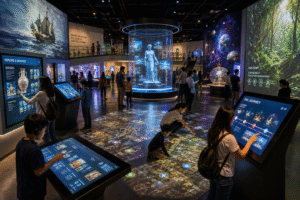
The following technology formats represent the current state of the art in interactive museum design and form the foundation of most high-performing new venues:
Augmented Reality Enhanced Exhibits
Augmented reality overlays digital content onto physical objects and spaces, creating hybrid experiences that extend the informational depth of exhibit installations without replacing their tactile and material character. AR applications in learning museums range from tablet-based exploration tools that reveal hidden anatomical structures or historical contexts to permanent AR-enabled wall installations that respond to visitor movement and interaction. The key design principle for AR exhibits is that the digital layer should enhance the physical experience, not substitute for it. Visitors who are primarily engaging with a screen are not engaging with the museum.
Projection-Based Simulations
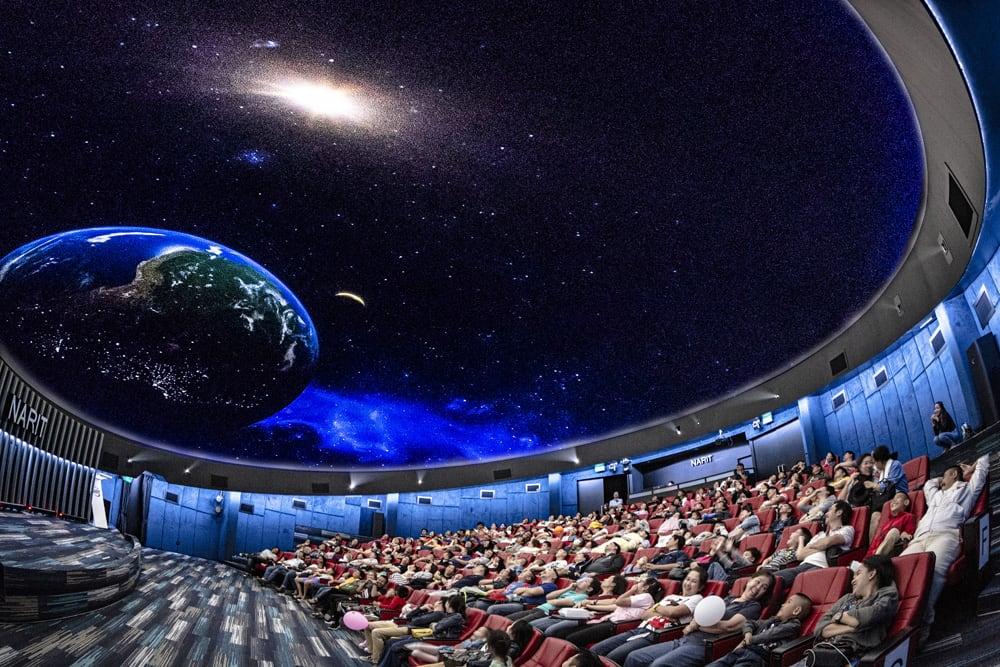
Large-scale projection systems allow learning museums to create fully immersive spatial experiences without the cost and operational complexity of dedicated physical set construction. Projection-mapped simulations can transform a standard room into an undersea environment, a geological cross-section, a weather system, or an outer space environment, adapting content to match scheduled programming or thematic seasons. The operational flexibility of projection-based systems makes them among the most cost-effective immersive technologies available, particularly for venues that anticipate regular content rotation.
Digital Gamification Systems
Gamification platforms integrate achievement tracking, challenge progression, and social comparison mechanics into the visitor experience, significantly extending average visit duration and incentivising repeat visitation. Venue-wide gamification systems typically operate through a visitor-facing app or a physical smart card or wristband that logs achievements as visitors complete interactive challenges across zones. Well-designed gamification systems create a meta-narrative that connects individual exhibit interactions into a coherent visitor journey, rewarding curiosity and thoroughness with visible progress toward meaningful goals.
AI-Driven Learning Kiosks
Artificial intelligence is beginning to enable a genuinely personalised museum experience at scale. AI-driven learning kiosks can assess a visitor’s existing knowledge through short diagnostic interactions, recommend personalised pathways through the museum based on their interests and learning profile, adapt the difficulty of challenges in real time, and provide contextually relevant supplementary content that extends and deepens the experience for advanced visitors. As AI capability continues to develop, these systems will become increasingly central to the premium experience proposition of leading venues.
Interactive Mechanical Installations
Not all interactivity requires digital technology. Some of the most enduringly popular exhibits in learning museums worldwide are large-scale mechanical installations that invite visitors to manipulate physical systems and observe the results. Gear and pulley demonstrations, pendulum arrays, fluid dynamics channels, and structural engineering challenge tables create tactile, multi-sensory learning experiences that are inherently durable, maintenance-friendly, and accessible to visitors across a wide age range. Every new venue should include a meaningful proportion of high-quality mechanical interactive content alongside its digital offerings.
Durability and Maintenance Planning
Any experienced museum operator will confirm that the most common cause of visitor dissatisfaction in interactive venues is broken or non-functional exhibits. Technology that works brilliantly on opening day but requires frequent downtime for repair, software updates, or component replacement undermines the visitor experience and places significant strain on the operations team. Developers and their technology consultants must apply rigorous durability standards to every interactive system specified for the venue, with particular attention to the following considerations:
- Public-grade versus consumer-grade hardware specifications: all interactive hardware must be rated for continuous public use across multiple daily shifts
- Ease of access for maintenance: interactive units should be designed with servicing in mind, allowing components to be replaced or repaired without removing the entire installation
- Software update protocols: all digital content systems require a clear update pathway that allows the venue to refresh content without extended downtime
- Redundancy planning: critical experience systems should have backup components or parallel configurations to ensure continuity during maintenance periods
- Visitor misuse tolerance: interactive systems in public venues will be subjected to treatment that far exceeds any standard use case; specifications must account for this reality
3 | Visitor Flow and Capacity Optimisation |
The spatial planning of a learning museum has a profound and often underestimated impact on the quality of the visitor experience, the operational efficiency of the venue, and the commercial performance of key revenue streams. Visitor flow design is not simply a matter of directing people from one zone to the next. It is the art of managing the density, pace, and character of the visitor experience at every point in the building, across every type of visit format and every level of daily capacity.
For a venue that expects to serve a mix of general admission visitors and structured school group programmes simultaneously, as most successful learning museums do, intelligent visitor flow planning is particularly critical. Failure to separate these two fundamentally different visitor types creates friction for both, reducing the quality of the school group experience and making the general admission visit feel crowded and institutionalised.
Separating School Group and General Admission Entry
The single most impactful visitor flow decision a developer can make is the provision of dedicated, physically separated entry points for school groups and general admission visitors. This decision has cascading benefits throughout the building. School groups arrive at predictable times in large numbers, often requiring facilitated orientation and pre-visit briefing before they begin their museum experience. Routing them through a dedicated entry point with an adjacent briefing space allows this process to happen efficiently and without congesting the main visitor circulation areas.
A separate school entry also enables the venue to manage the temporal distribution of school group arrival across the building, directing successive groups to different starting zones and staggering their progression through the museum to avoid bottlenecks at popular exhibits. This programming flexibility is almost impossible to achieve when school groups and general admission visitors share a single entry point and orientation sequence.
Workshop Rooms and Auditorium Spaces
Purpose-built programming spaces within the museum are among the highest-value square metres in the building from both an educational and a commercial perspective. Workshop rooms serve school group STEAM activities, teacher training sessions, holiday camp programmes, and corporate team-building events. A well-specified workshop room includes durable benching for hands-on project work, flexible AV and projection capability, access to water and basic laboratory consumables, and clear sightlines for facilitated group instruction.
Auditorium spaces, whether a dedicated lecture theatre or a flexible hall with staging and tiered seating, enable the venue to host keynote presentations, film screenings, live science demonstrations, and large-format school assembly programmes. These spaces are also valuable for community hire revenue outside of school hours and on weekends. Developers should size and specify these spaces generously, as they consistently represent a constraint in venues that underestimated their programming ambitions at the design stage.
Multipurpose Classrooms and Flexible Breakout Spaces
Beyond the primary workshop and auditorium provision, a well-planned learning museum benefits significantly from a network of smaller multipurpose classrooms and flexible breakout spaces distributed across the building. These spaces support the full range of programming formats that drive revenue and visitor engagement:
- Small-group facilitated learning sessions for school group subsets
- Parent and educator briefing areas adjacent to children’s programming zones
- Quiet reflection spaces for visitors who need a break from the sensory intensity of the main exhibition areas
- Overflow capacity for popular exhibits during peak periods
- Private hire spaces for birthday parties, corporate functions, and community events
The provision of adequate flexible programming space is one of the most consistent areas where new venue developers underinvest. It is far more expensive and disruptive to retrofit this provision after opening than to build it into the original design. Developers should plan for a minimum of 15 to 20 per cent of total floor area to be allocated to flexible programming and circulation, independent of the primary exhibition floor plate.
CAPACITY PLANNING NOTE | Designing for programming flexibility from day one, including separate school entry points, dedicated workshop rooms, and distributed breakout spaces, is one of the highest-return investments a learning museum developer can make. These spaces directly underpin the programme-based revenue streams that drive long-term financial sustainability. |
International Case Studies: Three Venues Redefining the Standard
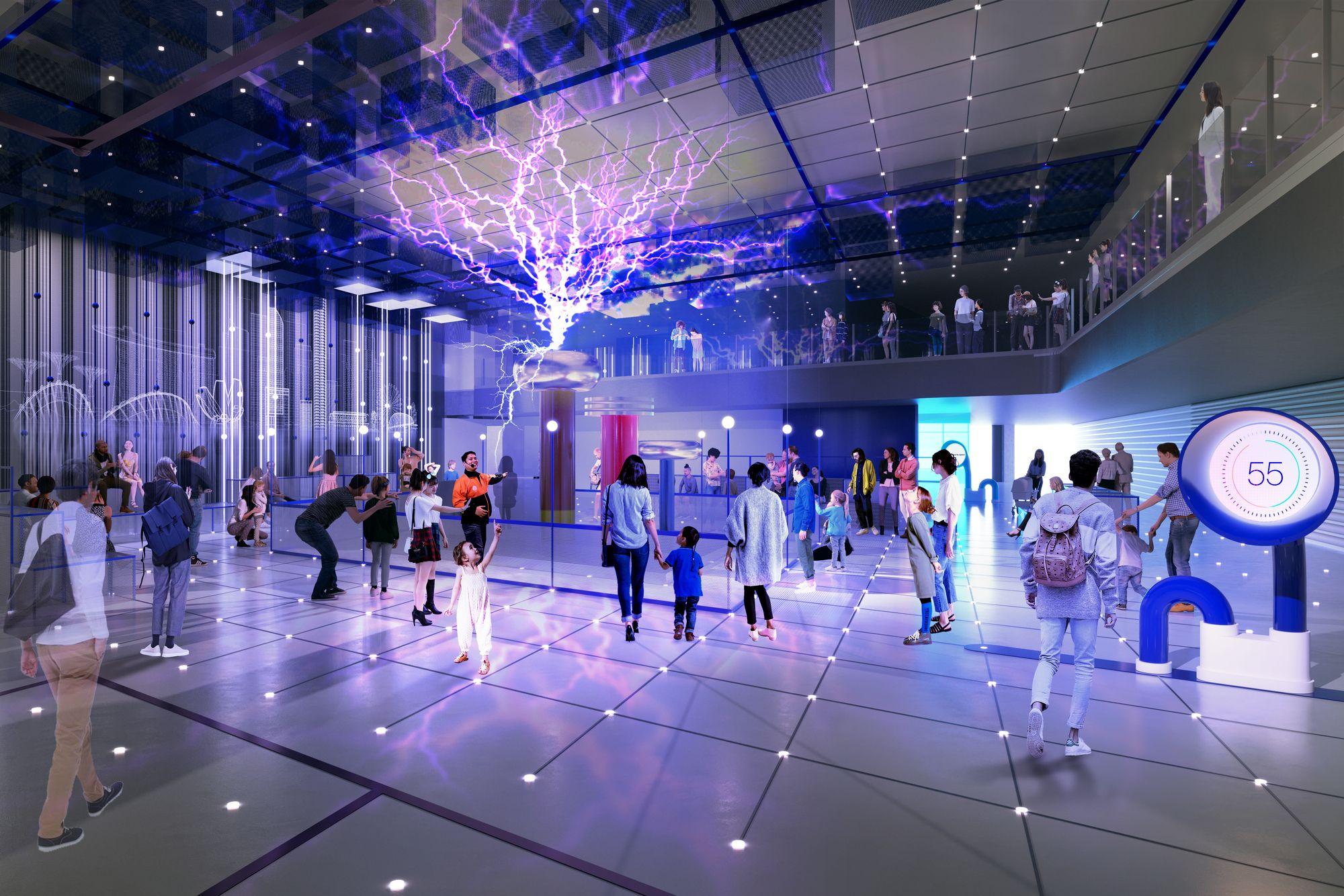
The following three institutions represent distinct but equally instructive approaches to the interactive learning museum model. Each has achieved international recognition not simply for its scale or its technology, but for the clarity and conviction of its underlying design philosophy. Together, they offer a powerful set of reference points for any developer seeking to understand what genuinely world-class execution looks like in this sector.
01 | Museum of the Future Dubai, United Arab Emirates The Museum of the Future in Dubai is one of the most architecturally audacious public buildings constructed anywhere in the world in the past decade, and its interior experience matches the ambition of its exterior. The museum is explicitly organised around visions of possible futures, inviting visitors to experience immersive scenarios set in the coming decades across themes including space habitation, biotechnology, climate futures, and urban intelligence. What distinguishes it from comparable venues is the sophistication of its narrative design: every exhibit, installation, and spatial sequence contributes to a coherent and emotionally resonant story about human potential and the agency of the individual within it. The museum’s global branding and its positioning as a serious intellectual destination, rather than simply an entertainment venue, has made it a credible partner for international institutions, technology companies, and governments seeking to engage the public with complex ideas about the future. |
02 | National Museum of Emerging Science and Innovation (Miraikan) Tokyo, Japan Miraikan in Tokyo stands as one of the world’s most sophisticated science communication institutions and a defining example of how to make cutting-edge research genuinely accessible to a general audience. The museum is operated by the Japan Science and Technology Agency and benefits from deep institutional relationships with Japan’s leading universities, technology companies, and research institutes. Its permanent collection features some of the most advanced public-facing robotics installations anywhere in the world, including demonstrations by ASIMO and other landmark platforms in the history of humanoid robotics. What makes Miraikan particularly instructive for new venue developers is its commitment to genuine intellectual rigour: the museum does not simplify or sensationalise its subject matter, but instead invests in the design and facilitation effort necessary to make complex science genuinely understandable and compelling. This approach has earned it a visitor base that spans primary school students, university researchers, and international tourists, an unusually broad demographic that reflects the depth and accessibility of its programming. |
03 | Cite des Sciences et de l’Industrie Paris, France The Cite des Sciences et de l’Industrie at La Villette in Paris is one of the largest science museums in Europe and a landmark example of how institutional partnerships and large-scale interactive programming can be combined to create a venue of genuine national significance. The museum occupies a vast former industrial structure redesigned by architect Adrien Fainsilber and benefits from its position within the broader cultural complex of La Villette, which includes a concert hall, a music museum, and extensive public parkland. The Cite’s strength lies in the breadth and consistency of its interactive science exhibitions, which cover topics from mathematics and light to life sciences and digital technology, and in its long-standing partnerships with French scientific and educational institutions that ensure a continuous pipeline of high-quality content. Its Geode hemisphere IMAX theatre, planetarium, and submarine exhibit are among the most visited attractions in the entire La Villette complex, illustrating the commercial power of signature destination experiences within a larger venue. |
Future-Proofing the Investment: Designing for Long-Term Relevance
One of the most common strategic errors in interactive learning museum development is designing for the moment of opening rather than for the decade that follows. A venue that looks extraordinary at launch but cannot adapt its content, upgrade its technology, or expand its programming offer will lose relevance faster than almost any other type of cultural or entertainment asset. Future-proofing is not an afterthought. It is a design imperative that must be built into every dimension of the venue from the earliest stages of planning.
Modular Exhibit Systems
Physical exhibit infrastructure should be specified with modularity as a core requirement. This means designing gallery spaces with flexible power, data, and structural connection points that allow exhibit configurations to be changed without major building works. It means specifying exhibit furniture and structures that can be reconfigured, relocated, or replaced as content requirements evolve. And it means avoiding bespoke, site-specific exhibit construction wherever a modular alternative can deliver equivalent quality, since bespoke installations are exponentially more costly to modify or replace.
Digital Content Update Pathways
Every digital interactive system in the museum requires a clearly defined content management and update pathway from the moment of procurement. Developers should insist on content management system access as a standard deliverable from all technology vendors, ensuring that the venue’s own team can refresh, replace, and expand digital content without ongoing dependence on the original vendor. Venues that retain control of their digital content layer are fundamentally more adaptable and commercially resilient than those that must return to external vendors for every content change.
Partnership-Based Programming
Long-term programming partnerships with universities, research institutions, government agencies, and technology companies are one of the most powerful tools available to a learning museum seeking to maintain content relevance over time. These partnerships bring a continuous supply of new content ideas, credentialed presenters, access to cutting-edge research, and co-funding opportunities for new exhibit development. Developers should invest in establishing the institutional relationships and governance structures necessary to sustain these partnerships from the earliest stages of venue development, well before opening day.
Hybrid Physical-Digital Exhibits
The future of the interactive learning museum experience extends beyond the building walls. Hybrid physical-digital exhibit formats, where the in-museum experience is connected to an ongoing digital engagement layer accessible through apps, web platforms, or AR-enabled take-home materials, fundamentally change the relationship between the visitor and the venue. Instead of a single visit event, the museum becomes an ongoing presence in the visitor’s learning life. This model creates recurring engagement opportunities, generates data that can inform programming decisions, and opens new revenue streams through digital subscriptions, premium content access, and connected merchandise.
- Pre-visit digital content that prepares visitors for the museum experience and builds anticipation
- In-museum apps that personalise the visit journey and enable achievement tracking
- Post-visit digital extensions that continue the learning experience at home or in the classroom
- Connected physical take-home kits that reference in-museum experiences and enable ongoing experimentation
Develop with Experienced Museum Consultants
The complexity of interactive learning museum development, spanning pedagogy, spatial design, technology integration, programming strategy, and commercial modelling, makes expert consultancy not simply a convenience but a genuine competitive advantage. Developers who attempt to navigate this complexity without structured specialist support routinely underestimate costs, misalign technology choices with operational realities, and miss the programming opportunities that drive long-term revenue performance.
Peach Prime Consultancy provides end-to-end museum planning support across every dimension of the development process. Our structured methodology covers the full lifecycle from initial concept and thematic development through to technical detailing, vendor coordination, and revenue modelling, ensuring that every decision is made with a clear understanding of its educational, operational, and commercial implications.
Our team brings direct experience across interactive learning venues, family entertainment centres, and science-focused cultural institutions across India and internationally. We understand the full spectrum of what makes these venues work: as physical spaces that inspire genuine curiosity, as educational resources that deliver measurable learning outcomes, and as commercial enterprises that generate sustainable returns for their investors and operators.
WHAT PEACH PRIME DELIVERS | Thematic concept development and learning framework design, spatial flow planning and programming space strategy, technology system specification and vendor selection, revenue modelling and commercial feasibility analysis, and ongoing project management support through to opening and beyond. |
If you are planning an interactive learning museum and want to ensure that your investment delivers both maximum educational impact and commercial viability, Peach Prime Consultancy is the partner you need. Visit www.peachprime.in to learn more or contact our team to arrange a strategic planning consultation.