

A structured design and operations guide for developers, creative directors, and investors building immersive walkthrough attractions that deliver exceptional visitor experiences at commercial scale.
Introduction: Where Storytelling Becomes Architecture
There is a particular kind of experience that stays with a person long after it ends. Not the kind that is watched from a seat or scrolled past on a screen, but the kind that is physically inhabited: where the visitor moves through space, encounters unexpected moments, makes decisions that shape what happens next, and emerges with a sense that something genuinely unusual has just occurred. Interactive story mazes, when designed with creative ambition and operational precision, are among the most powerful environments capable of producing that experience.
The design challenge of an interactive story maze is not simply a creative one. It is a multidisciplinary problem that sits at the intersection of narrative architecture, spatial design, environmental psychology, technology integration, and operational management. Each of these domains has its own demands and its own internal logic, and the quality of the final experience depends entirely on how well they are made to work together. A beautiful story concept realised in a space that generates bottlenecks and confusion will frustrate visitors. A technically sophisticated technology layer installed without adequate creative direction will feel cold and purposeless. Operational protocols that prioritise throughput at the expense of immersion will drain the very atmosphere that makes the experience worth having.
This masterplan is designed to give developers and creative teams a rigorous framework for approaching all of these domains in an integrated way. It addresses the visitor journey from first contact with the story world through to post-visit engagement, covers the full spectrum of technology and interaction systems available to the modern narrative maze, and provides concrete guidance on operational efficiency, safety planning, and long-term commercial growth.
DESIGN PHILOSOPHY | The most enduring interactive story mazes are not collections of impressive technology or elaborate scenic design. They are environments that make visitors feel genuinely present inside a story, where every spatial decision, atmospheric detail, and interactive moment serves the narrative rather than existing for its own sake. |
Designing the Visitor Journey
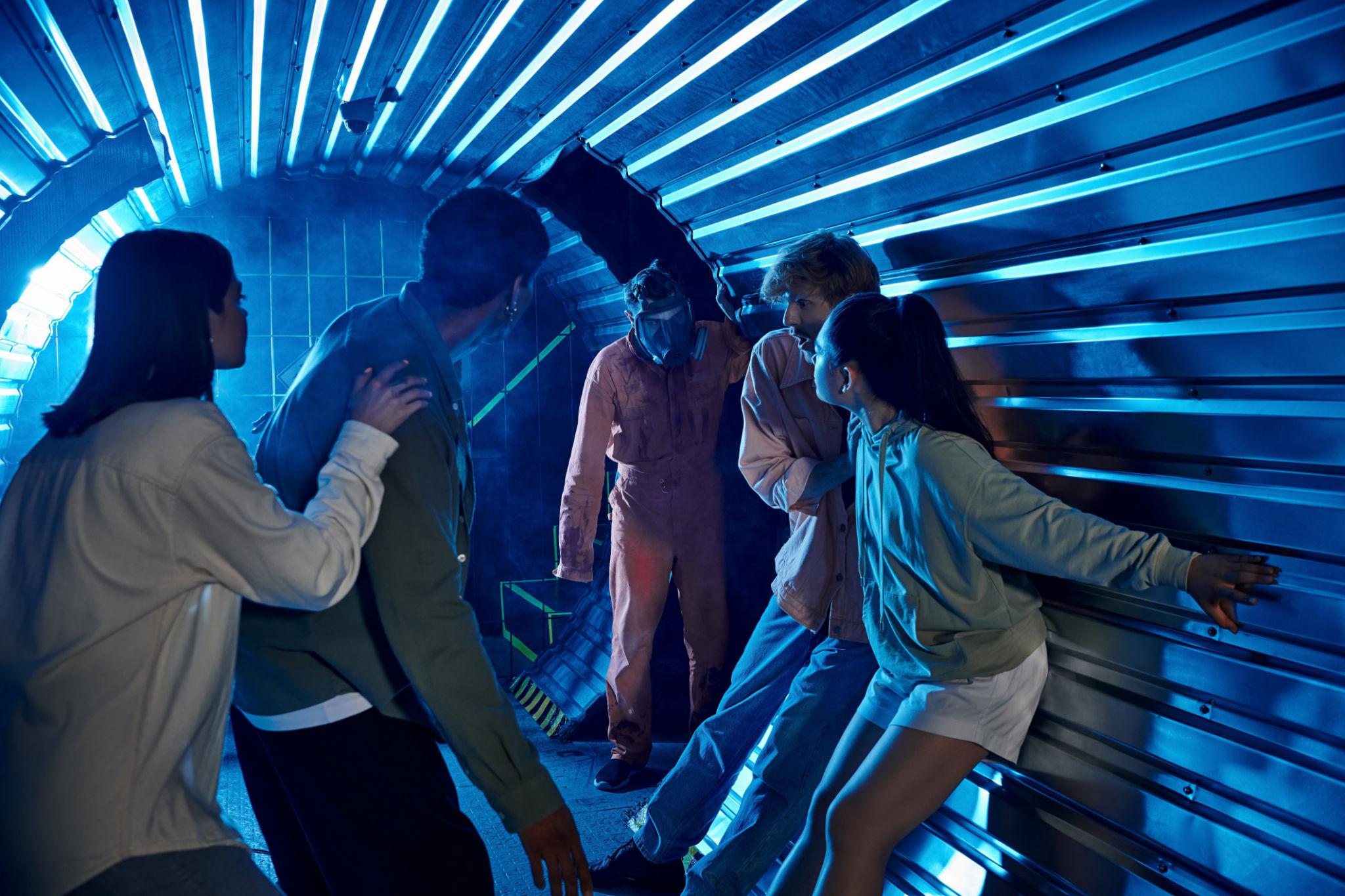
The visitor journey through an interactive story maze begins before the visitor enters the building and does not end when they leave. Every touchpoint across the full arc of the experience, from the pre-visit communication that sets expectations through to the post-visit content and community engagement that sustains the relationship, contributes to the overall quality of the experience and the likelihood of repeat visitation. Within the physical space itself, the design of the visitor journey demands particular care and structural rigour.
The Narrative Arc and Zone Structure
The foundational design decision of any interactive story maze is how the narrative arc maps onto the physical zone structure of the attraction. Each zone should function as a chapter in the larger story: introducing new characters or factions, escalating the dramatic stakes, shifting the emotional register, and advancing the visitor’s understanding of the story world. The transition from one zone to the next should feel like a meaningful story event rather than simply a change of scenery, with clear narrative signals that tell the visitor something has shifted in the world they are inhabiting.
A well-structured narrative arc for a maze attraction typically builds across three broad phases. The opening zones establish the story world, introduce the central premise, and orient the visitor within the narrative. The middle zones develop the complexity of the story, introduce the primary challenges and puzzles, and create the emotional investment that makes the final act meaningful. The closing zones resolve the narrative trajectory, deliver the emotional payoff of the journey, and bring the visitor to a story conclusion that feels earned and satisfying. Within this three-act structure, individual zones can vary significantly in scale, atmosphere, and interactive intensity, but each should contribute clearly to the arc as a whole.
Emotional Pacing and Tonal Variation
One of the most common creative errors in narrative maze design is maintaining a uniform emotional register across the entire experience. Sustained intensity without variation is exhausting rather than engaging. The most effective immersive experiences are designed with deliberate emotional pacing, alternating between zones of high intensity and zones of comparative calm, between spaces of claustrophobic compression and spaces of surprising openness, between moments of urgency and moments of quiet discovery. This tonal variation gives visitors the cognitive and emotional space to process what they have experienced and to anticipate with genuine curiosity what is coming next.
Multi-Sensory Atmospheric Design
Immersion in a story maze is not achieved through visual design alone. The full sensory environment of each zone determines how convincingly visitors are transported into the story world, and multi-sensory design is the discipline through which developers maximise that conviction. Controlled lighting design shapes the emotional character of every space and guides visitor movement without explicit signage. Soundscapes, from ambient environmental audio to directional sound effects and character voice, provide narrative context and atmospheric depth that scenic design alone cannot deliver. Scent diffusion, while requiring careful calibration to avoid overwhelming or unsettling visitors, is one of the most powerful and underutilised tools in the immersive designer’s toolkit: the right scent in the right zone can trigger emotional and memory associations that dramatically deepen the sense of presence. Tactile elements, including textured surfaces, temperature variations, and physical props that visitors can handle, complete the sensory picture and create the kind of full-body engagement that distinguishes a truly immersive experience from a visually impressive one.
Branching Pathways and Organic Navigation
The branching pathway structure of an interactive story maze is its most defining characteristic and its most complex design challenge. Pathways must branch in ways that feel organic and story-motivated rather than arbitrary or confusing. Every branch point should present the visitor with a clear choice that is framed in narrative terms, not simply as a left-or-right spatial decision but as a meaningful story decision with visible implications. The different pathways that result from these choices should lead to genuinely different experiences rather than superficially varied versions of the same content. And the overall spatial structure must remain navigable for visitors who may not be following the intended story logic, ensuring that no one becomes genuinely lost or separated from the main visitor flow.
- Branch points should be clearly signalled by narrative cues, character direction, or environmental design rather than by instructional signage
- Each pathway should offer a complete and satisfying experience in its own right, not simply an abbreviated version of the main route
- Convergence points, where different pathways reunite before the next branching decision, should be designed to feel like natural story moments rather than operational corrections
- The physical space should allow staff to monitor visitor distribution across branches and intervene gently to rebalance flow when needed
Technology and Interaction Systems
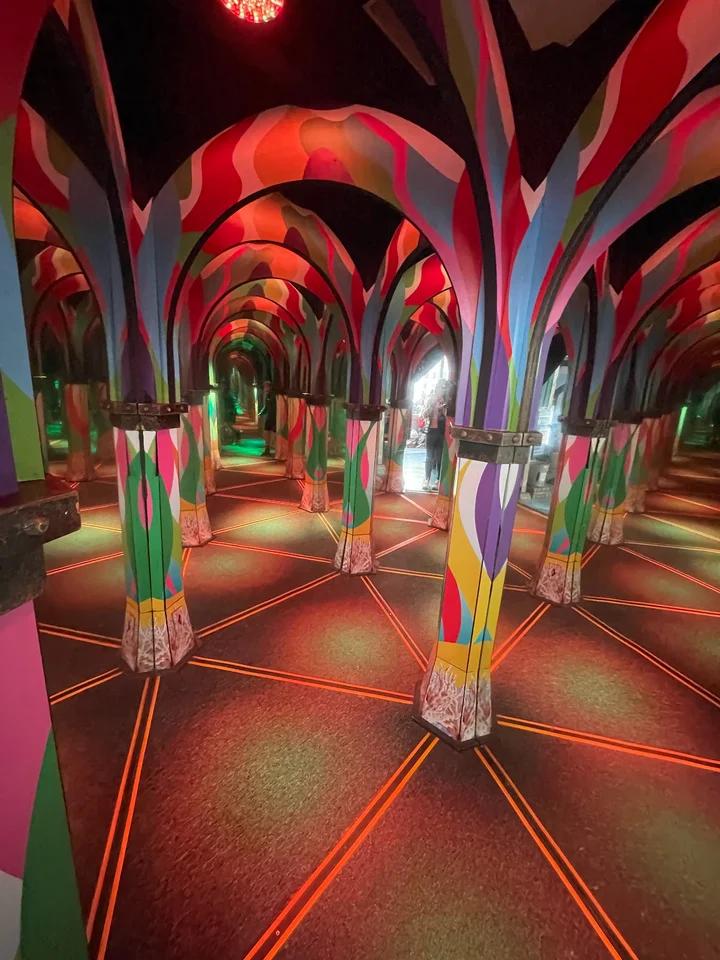
The technology layer of a modern interactive story maze is the mechanism through which the creative vision of the attraction is realised at scale and sustained over time. The right technology, selected with precision and integrated with creative intent, makes the story world feel alive, responsive, and genuinely interactive. The wrong technology, or the right technology poorly implemented, creates friction, breaks immersion, and generates the ongoing maintenance burden that is the primary cause of declining experience quality in the years following a venue’s opening.
Motion-Triggered Effects
Motion-triggered effects are among the most impactful tools available for creating the sense that the story world is aware of and responsive to the visitor’s presence. When a visitor moves through a doorway and triggers a character voice, a change in lighting, or a sudden environmental effect, the experience shifts from passive exploration to genuine inhabitation. The story world reacts, and the visitor feels, at a visceral level, that they are a participant rather than a spectator. Motion-triggered systems should be designed with careful attention to trigger zones, reset timing, and the creative logic of what each trigger communicates within the story. A trigger that fires too predictably loses its power; one that fires inconsistently or for no apparent story reason undermines immersion rather than enhancing it.
Projection Mapping
Projection mapping transforms the surfaces of the maze environment into dynamic story canvases, allowing walls, floors, ceilings, and objects to carry narrative content that changes with the story’s progression. The most effective projection mapping in narrative maze contexts is content-driven rather than spectacle-driven: the projected imagery serves the story first and creates visual impact as a consequence of that service. Projection mapping is particularly powerful at zone transition moments, where a shift in projected content across an entire environment can communicate a story state change with immediacy and emotional force that no other medium can match. Operational robustness is critical: projectors in a public attraction environment require regular alignment checks, dust management, and lamp replacement schedules that must be factored into the operational budget from day one.
Interactive Touchpoints and LED Immersive Walls
Interactive touchpoints throughout the maze allow visitors to engage with specific story elements directly, unlocking content, triggering effects, or advancing their mission progress through physical interaction with the environment. These touchpoints should be designed to feel like natural story objects rather than technology interfaces: a glowing artefact, a coded panel, a character communication device. The interaction should feel like participation in the story rather than operation of a machine. LED immersive walls and floors extend the projection concept into a fully addressable light environment, allowing dynamic content to envelop the visitor completely in zones where maximum immersion is the priority. These systems require significant power infrastructure and ongoing content management but deliver a level of experiential impact that justifies the investment in signature zones.
Centralised Show Control Systems
The operational nervous system of a technology-rich narrative maze is its centralised show control platform: the system through which all lighting, audio, projection, effects, and interactive triggers are managed, monitored, and coordinated in real time. A well-specified show control system allows the operations team to monitor the status of every technology element across the entire venue simultaneously, to trigger pre-programmed show states for different visitor group sizes or story modes, to respond in real time to technical faults without disrupting the visitor experience, and to implement content updates across all systems from a single interface. Investing in a robust, scalable show control platform is one of the highest-return technology decisions a narrative maze developer can make, as it directly determines the operational resilience and content flexibility of the venue for the entirety of its operating life.
RFID Personalisation and Performance-Based Outcomes
RFID tracking systems enable a level of narrative personalisation that fundamentally differentiates a technology-enabled story maze from a conventional walkthrough attraction. By assigning each visitor or visitor group a unique RFID identity at the point of entry, the venue can track their progress through the maze in real time, unlock story content progressively based on the challenges they complete, deliver personalised narrative moments through character interactions or environmental responses that reference the visitor’s specific story journey, and generate post-visit content such as a personalised story summary or achievement record that extends the relationship between the visitor and the story world beyond the physical experience. Performance-based outcomes, where the story ending a visitor receives is determined by the quality and completeness of their challenge performance across the maze, are among the most powerful drivers of repeat visitation in the format.
TECH INTEGRATION PRINCIPLE | Technology in a narrative maze should serve the story, not demonstrate itself. Every system, from the simplest motion trigger to the most complex projection mapped environment, should exist because it makes the story world more convincing, not because it is technically impressive. Visitors remember how a space made them feel, not which rendering engine produced the visuals. |
Global Inspiration: Three Immersive Experiences Setting the Standard
The creative and operational landscape of interactive story mazes has been shaped by a remarkable body of precedent from venues that approached the format with genuine artistic ambition and commercial sophistication. The following three experiences represent distinct creative philosophies and operational models, each offering direct and transferable lessons for developers planning new venues.
01 | The Void Multiple Cities, Global The Void represented one of the most technically sophisticated attempts to blend physical environments with interactive digital storytelling in the history of location-based entertainment. Operating across multiple cities with installations tied to major intellectual properties including Star Wars, Ghostbusters, and Marvel, The Void placed visitors in custom-built physical sets that were simultaneously overlaid with high-fidelity virtual reality environments, creating a combined physical and digital experience of unprecedented immersive depth. Visitors could touch real walls, feel real air movement, and smell real environmental scents while simultaneously seeing a fully realised digital story world overlaid on that physical reality. What The Void demonstrated most clearly for the broader narrative maze industry was the extraordinary emotional engagement that results from aligning the physical and digital layers of an immersive experience with precision. When the story world is supported simultaneously by what the visitor sees, hears, feels, and smells, the sense of genuine presence becomes something qualitatively different from any single-medium immersive experience, and the emotional memory of that presence is correspondingly more durable and more shareable. |
02 | Sleep No More New York, USA Sleep No More, produced by the British theatre company Punchdrunk and running in New York since 2011, is one of the most influential immersive experiences ever created and remains a defining reference point for narrative maze design globally. Staged across a converted warehouse transformed into the fictional McKittrick Hotel, the experience places visitors inside a non-linear retelling of Macbeth spread across six floors of elaborately designed rooms, corridors, and environments. Visitors wear white masks, move freely through the space at their own pace, and encounter performers enacting the story around them, with the freedom to follow any character, explore any room, and construct their own understanding of the narrative from the fragments they encounter. What Sleep No More demonstrates with particular clarity is the power of environmental storytelling at the granular level: every room, drawer, document, and object in the McKittrick Hotel contributes to the narrative world, rewarding curiosity with depth and creating the conditions for genuinely personalised story experiences that differ meaningfully from visitor to visitor and from visit to visit. Its multi-year run and extraordinary repeat visitation rates are a testament to the commercial durability of a story world designed with sufficient depth and subtlety to sustain sustained exploration. |
03 | Lotte World Immersive Walkthrough Zones Seoul, South Korea Lotte World in Seoul represents a different but equally instructive approach to the narrative maze format: the integration of immersive walkthrough zones within a large-scale commercial theme park environment. Lotte World’s themed storytelling areas combine narrative scenic design, interactive story elements, and tightly controlled guest flow management to sustain high visitor capacity across zones that are simultaneously immersive and operationally efficient. The Lotte World model is particularly relevant for developers planning narrative maze attractions within or adjacent to larger entertainment destinations, demonstrating how the format can be adapted to a high-throughput operational context without sacrificing the atmospheric and narrative qualities that define the experience. Its approach to controlled guest flow, which uses a combination of timed zone entry, pathway design, and trained staff deployment to manage density without creating the sense of being managed, is a masterclass in the operational art of making commercial necessity feel like creative intention. |
Operational Efficiency and Safety Planning
The operational design of an interactive story maze is the discipline through which creative ambition is made commercially sustainable and publicly safe. No matter how extraordinary the creative vision or how sophisticated the technology, a venue that cannot manage its visitor flow efficiently, maintain its experience quality consistently, or respond to safety incidents swiftly and effectively will not sustain commercial viability over time. Operational planning must be integrated with the creative and technical design process from the earliest stages of development, not treated as an implementation detail to be resolved after the concept is finalised.
Emergency Exits and Evacuation Planning
Regulatory compliance for emergency egress in a complex multi-zone walkthrough environment requires careful coordination between the spatial design team and the relevant building authority from the very beginning of the design process. Emergency exits must be positioned to ensure that visitors can evacuate from any point within the maze within the required time threshold, and their placement must be integrated into the scenic design in a way that maintains immersion during normal operations while remaining instantly accessible and clearly identifiable in an emergency. Staff access corridors running parallel to the visitor-facing environment allow the operations team to move through the space quickly without disrupting the visitor experience, and should be considered an essential planning requirement rather than a luxury.
Timed Group Entry and Flow Management
Managing the density of visitors within the maze environment is the central operational challenge of any narrative maze attraction. Too many visitors in the same zone simultaneously destroys immersion and creates safety risks. Too few visitors generates revenue shortfalls and creates an atmosphere of emptiness that is equally damaging to the experience quality. Timed group entry protocols, with staggered start intervals calibrated to the spatial capacity of each zone and the average dwell time per challenge, are the primary operational tool for managing this balance. Entry intervals should be established through rigorous pre-opening capacity testing and revisited regularly as operational data accumulates.
Durable Scenic Materials and Maintenance Standards
Scenic materials in a public attraction environment are subjected to a level of physical contact and incidental damage that far exceeds any theatrical or film production context. Every scenic element within the maze must be specified with public durability as a primary criterion alongside aesthetic quality. Surfaces that will be touched must withstand repeated contact without degrading. Props that will be handled must be robust enough to survive thousands of interactions without breaking or requiring replacement. Finishes must be maintainable and repairable in situ without requiring full zone closure. A systematic preventive maintenance schedule, with daily pre-opening checks and regular deeper inspection cycles, is essential for sustaining the experience quality that drives positive reviews and repeat visitation.
Performer and Technical Staff Training
The human team that operates a narrative maze is as central to the quality of the visitor experience as any element of the scenic or technology design. Live performers must understand the story world deeply enough to respond convincingly and creatively to an enormous variety of visitor interactions. Technical operators must be able to identify and resolve system faults quickly and quietly without breaking the immersive atmosphere. All staff must be trained in emergency protocols, visitor welfare procedures, and the specific operational demands of working within a complex immersive environment. Regular performance reviews, briefing sessions tied to story updates, and a culture of creative ownership among the operations team are the management practices that sustain experience quality over the full operating life of the venue.
Profit Optimisation and Long-Term Growth
The long-term commercial success of an interactive story maze depends on the operator’s ability to sustain and grow visitor demand beyond the initial opening period. First-mover curiosity drives strong attendance in the first weeks and months of operation, but sustaining that performance over years requires a structured approach to content refresh, community building, and revenue diversification that must be planned well before the venue opens.
Seasonal Story Arcs
Seasonal story arcs are the most powerful tool available to a narrative maze operator for driving repeat visitation and demand surges across the calendar year. A Halloween narrative overlay that transforms the story world into a darker, more intense version of itself, a winter mystery arc that introduces new characters and challenges tied to the season, or a summer adventure expansion that opens previously locked zones and introduces new branching pathways can each be introduced using the modular scenic design and programmable technology systems already in place. Seasonal arcs generate media coverage, create urgency among visitors who missed the previous season, and give the existing audience a compelling and time-limited reason to return. A well-managed seasonal calendar should plan for a minimum of two to three significant story events per year, timed to align with peak demand periods and school holiday windows.
Collectible Quest Artefacts
Physical collectibles tied to the story world are one of the highest-converting merchandise categories available to a narrative maze operator and serve a dual commercial function. They generate direct retail revenue through in-venue sale, and they extend the story world into the visitor’s home, creating an ongoing physical connection to the experience that reinforces memory and motivates return visits to complete a collection. Quest artefacts, which are story-world objects that visitors can acquire by completing specific challenges within the maze, combine the retail and experience dimensions particularly effectively. The scarcity and challenge-gating of premium collectibles drives both aspirational purchasing and repeat visitation from collectors motivated to complete their set.
Premium Character Interactions
Premium character interaction packages represent a significant upsell opportunity that complements the standard visitor experience without displacing it. These packages might include a private pre-maze briefing from a live story character, an exclusive mid-maze encounter that is not available to general admission visitors, or a post-experience debrief session that resolves story questions and reveals hidden narrative details. Premium interactions are particularly attractive to highly engaged visitors who want to go deeper into the story world, to families celebrating special occasions, and to corporate groups seeking a more intensive and memorable team experience. Pricing these packages at a meaningful premium above general admission, while ensuring they deliver a level of experience quality that fully justifies the price, is the key to maximising their revenue contribution without creating a perception of tiered experience quality that alienates the general admission audience.
The Content Roadmap as a Commercial Asset
Perhaps the most important strategic asset of a well-planned narrative maze attraction is its content roadmap: the structured, multi-year plan for how the story world will evolve, expand, and refresh over time. A credible and ambitious content roadmap communicates to investors that the venue is not a single-cycle asset but an evolving entertainment platform with durable revenue potential. It gives the marketing team a pipeline of announcements and campaigns that sustain media attention and audience engagement between major story events. And it provides the creative and technical team with the planning horizon they need to develop, test, and implement new content without the reactive pressure of imminent operational deadlines.
Frequently Asked Questions
The following questions address the most common and commercially important topics raised by developers, investors, and creative teams exploring the interactive story maze format for the first time.
What is the typical capital investment required to build an interactive story maze attraction? |
Capital requirements vary significantly based on the scale of the venue, the complexity of the story world, and the technology systems specified. A mid-scale narrative maze with a floor plate of 1,000 to 2,000 square metres, a full technology package including projection mapping and RFID tracking, and a high-quality scenic design realisation typically requires a capital investment in the range of INR 8 to 25 crore, depending on location, local construction costs, and the extent of bespoke scenic and technology elements. Lower-capital models are possible through modular off-the-shelf scenic components and a more restrained technology specification, but developers should be cautious about under-investing in the atmospheric quality that differentiates a genuinely immersive experience from a themed walkthrough. |
How long does it take to design and build an interactive story maze? |
A full-cycle development timeline for an interactive story maze, from initial concept through to opening, typically spans 18 to 30 months for a venue of mid to large scale. The story and experience design phase, which includes narrative architecture, zone scripting, and visitor journey mapping, generally requires four to six months. Spatial design and scenic specification runs concurrently and typically takes a similar duration. Construction and fit-out, including technology installation, scenic build, and systems integration, generally requires eight to fourteen months depending on the complexity of the technology layer. A pre-opening testing and staff training period of four to eight weeks before public launch is non-negotiable for a high-quality immersive experience. |
How do you maintain immersion when multiple visitor groups are moving through the maze simultaneously? |
Managing concurrent visitor groups without breaking the immersive atmosphere is one of the primary operational design challenges of any narrative maze. The most effective approaches combine staggered timed entry intervals that create spatial separation between groups, pathway designs that route concurrent groups through different zones at any given moment, and zone transition sequences that use lighting and audio effects to create a sense of arrival and discovery that distracts from any awareness of other visitors nearby. Staff deployed within the maze environment can also manage group pacing subtly, slowing or accelerating a group’s progress through a zone to maintain appropriate separation without making visitors feel directed or controlled. |
What drives repeat visitation in interactive story maze attractions? |
Repeat visitation in the narrative maze format is driven by four primary mechanisms. The first is story variation: branching pathways and multiple endings mean that different visits genuinely produce different experiences. The second is seasonal content refresh, which introduces new story layers, challenges, and zones on a planned calendar that gives the existing audience compelling time-limited reasons to return. The third is collectible and achievement systems that create ongoing motivation to complete a story world or collection across multiple visits. The fourth is community engagement, through social media, story fan communities, and hint and discussion forums that sustain audience investment in the story world between visits and create social motivation to return. |
How important is live actor integration to the success of a narrative maze? |
Live actor integration is one of the most powerful differentiators available to a narrative maze operator and consistently ranks among the most memorable elements of the visitor experience in post-visit research. A skilled performer within the maze environment can provide narrative context, manage visitor flow, respond dynamically to unexpected situations, and create moments of genuine emotional connection that no pre-programmed technology system can replicate. For venues where ongoing actor costs represent a significant budgetary constraint, a hybrid model combining live performers in signature story moments with digital character systems in secondary zones can deliver much of the experiential benefit at a lower ongoing cost. The key is ensuring that wherever live performance is present, its quality is consistently exceptional. |
How should a narrative maze attraction be positioned for corporate and group bookings? |
The narrative maze format is exceptionally well-suited to corporate team-building programming and should be developed as a distinct commercial product rather than simply promoted as a group ticket option. A strong corporate event product includes exclusive venue hire during off-peak hours, a customised story briefing that frames the maze experience within a team challenge narrative, facilitated debrief sessions after the experience that connect what happened inside the maze to leadership, communication, or problem-solving themes, and food and beverage packages that extend the event duration and per-head yield. Corporate bookings typically command a significant premium above general admission rates and are most effectively sold through a dedicated B2B sales function with direct outreach to HR and events teams at target organisations. |
Develop with Experienced Immersive Planners
The complexity of designing and launching a high-engagement interactive story maze demands a level of integrated specialist expertise that spans creative concepting, operational planning, technology specification, and commercial modelling simultaneously. The decisions made in the earliest stages of development shape the entire trajectory of the project, and the cost of correcting fundamental errors in story architecture, spatial design, or technology selection after construction begins is exponentially greater than the cost of getting those decisions right from the outset.
Peach Prime Consultancy offers structured end-to-end planning support for immersive walkthrough attraction projects of all scales. Our services span feasibility studies and market analysis, experience masterplanning and narrative zone design, technology system specification and vendor coordination, operational playbook development, and revenue modelling for investor and lender presentations. We bring deep practical expertise in the edutainment and immersive entertainment sector, with a planning methodology that consistently delivers commercially viable, experientially exceptional outcomes for our clients.
If you are at any stage of planning an interactive narrative maze project, whether exploring initial feasibility, developing a concept for investor presentation, or preparing for detailed design and construction, partnering with Peach Prime Consultancy will significantly reduce your execution risk and strengthen the commercial returns of your investment. Visit www.peachprime.in to learn more about our services or contact our team directly to arrange a strategic planning consultation.
WHAT PEACH PRIME DELIVERS | Feasibility studies and market positioning, experience masterplanning and narrative zone design, technology specification and vendor coordination, operational playbook development and staff training frameworks, and full commercial modelling for investor and lender presentations. |