

A comprehensive technical and commercial planning guide for developers, entertainment investors, and FEC operators building mixed reality battle arenas that deliver sustained competitive experiences at commercial scale.
Introduction: The Mixed Reality Arena as a Next-Generation Entertainment Asset
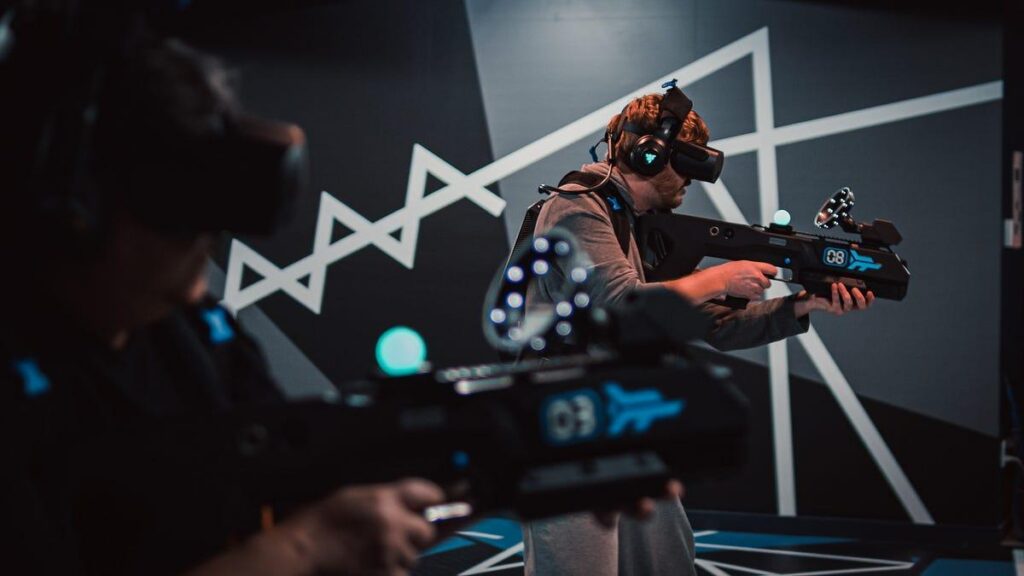
The convergence of augmented reality hardware, spatial computing, low-latency networking, and free-roam physical gameplay has produced a new category of entertainment asset that was simply not viable at commercial scale five years ago. Mixed reality arenas, venues where players move freely through a physical space while simultaneously inhabiting a shared digital game environment projected through AR visors, represent one of the most technically sophisticated and experientially distinctive entertainment formats available to developers today.
The commercial logic of the mixed reality arena is compelling. It occupies a market position that no other entertainment format currently fills with comparable depth: the intersection of competitive esports engagement, physical activity, social group play, and genuinely immersive digital storytelling. For younger adult audiences who have grown up within the visual language and competitive mechanics of video gaming, the mixed reality arena delivers the intensity and agency of a digital game in a physical environment that creates the social energy, bodily engagement, and shareable real-world experience that screen-based gaming cannot provide. For entertainment venue operators and developers, it offers a format that generates strong word-of-mouth through the sheer novelty and spectacle of the experience, drives repeat visitation through competitive ranking mechanics and evolving game content, and commands premium session pricing that supports the capital investment required to build it correctly.
This playbook addresses every dimension of mixed reality arena development with the technical precision and operational rigour that the format demands. From spatial layout engineering and safety design through to the full technology stack specification, throughput optimisation, revenue architecture, and the future-proofing strategies that sustain commercial performance over a multi-year operating lifecycle, every critical decision is examined in detail. The goal is to give developers the complete planning framework they need to approach a mixed reality arena project with confidence and precision.
MARKET OPPORTUNITY | Mixed reality arenas occupy a unique competitive position: they deliver the digital intensity of esports within a physical social environment that no screen-based platform can replicate. Venues that execute this combination correctly at commercial scale are building one of the most defensible entertainment asset positions currently available in the sector. |
Spatial Layout and Safety Engineering
The spatial design of a mixed reality arena is a genuinely multidisciplinary engineering challenge. It must simultaneously satisfy the gameplay requirements of a competitive physical environment, the safety requirements of a public venue in which players are moving rapidly while wearing visual overlays, the operational requirements of a high-throughput commercial attraction, and the technical requirements of a dense sensor and network infrastructure that must remain invisible to the player experience. No other entertainment format places such precise and simultaneous demands across all four of these dimensions at once, and the quality of the spatial design is the single variable that most determines whether all four are successfully balanced.
Arena Floor Area and Configuration
The minimum viable arena floor area for a commercially meaningful mixed reality experience is approximately 400 to 600 square metres of unobstructed play space per active session, supporting groups of six to twelve simultaneous players. Smaller floor areas compress gameplay in ways that reduce the quality of the free-roam experience and limit the complexity of game scenarios that can be designed around the space. Larger arenas of 800 to 1,500 square metres support larger player groups and more tactically complex game formats, enabling the team battle and objective-based gameplay modes that generate the strongest repeat engagement among competitive player demographics. Arena configurations with clear rectangular or L-shaped floor plans simplify both sensor coverage and safety management. Complex irregular geometries create sensor blind spots, circulation dead ends, and boundary management challenges that add operational cost and reduce the consistency of the player experience.
Circulation Paths and Boundary Engineering
Clear, unambiguous circulation infrastructure is a safety requirement and an operational necessity in a mixed reality arena. Players wearing AR visors with significant digital overlays have reduced peripheral vision and may not reliably perceive physical obstacles or boundary edges in their immediate environment. All physical boundaries must be padded with high-density foam padding at a minimum height of 1.8 metres, with no exposed hard edges or protruding fixtures at any point accessible to a moving player. Clear visual boundary markers, integrated into the floor surface as coloured lines or LED-lit channels, provide navigational cues that are legible both with and without the AR visor in place. Staff circulation corridors, running along the outer perimeter of the arena boundary, allow the operations team to monitor the play space and intervene safely at any point without entering the active player area during a session.
Emergency Exit Design and Safety Compliance
Emergency egress design in a mixed reality arena requires particular attention because the combination of reduced visual field from AR visors, high physical arousal from competitive gameplay, and potentially dimmed arena lighting during session play creates conditions that are significantly more challenging for rapid evacuation than a conventional entertainment venue. Emergency exits must be positioned to ensure that the maximum travel distance from any point on the arena floor to an exit does not exceed the regulatory requirement for the relevant building classification. Exit lighting must be independently powered from the main arena systems and must remain visible through or above the AR visor visual field. Session management software must include a one-action emergency state that simultaneously kills all gameplay, restores full arena lighting to maximum level, and activates exit guidance cues within the AR visor display itself.
Flooring Specification
The arena flooring specification must address a set of competing technical requirements that have no simple single solution. The surface must provide sufficient grip for rapid lateral movement and direction changes without generating the abrasion that damages the sensor hardware mounted in or near the floor boundary. It must absorb the impact loads generated by running, jumping, and incidental falls without transmitting vibration to the sensor infrastructure that could generate positional tracking noise. It must be cleanable to the standards required for a high-footfall public venue without the use of solvents or high-pressure methods that could damage floor-level hardware. Specialist sports surface materials, specifically cushioned polyurethane or ethylene vinyl acetate composite systems, meet the majority of these requirements and have the additional advantage of visual neutrality that prevents floor pattern elements from creating visual interference with the AR overlay display.
Hidden Sensor Infrastructure Positioning
The sensor infrastructure that enables player position tracking and spatial mapping must be positioned with millimetre-level precision to ensure complete, accurate, and interference-free coverage of the full arena floor area. Ceiling-mounted motion tracking cameras should be positioned on a grid calculated to provide full coverage at the camera’s specified operating range with a minimum 25 per cent overlap between adjacent camera fields at the floor level. LiDAR sensors used for real-time spatial mapping must be positioned to avoid the mutual interference patterns that can occur when adjacent LiDAR units operate on overlapping scan planes. All sensor cabling must be concealed within conduit runs integrated into the ceiling structure and wall boundary, with no exposed cable pathways in the active play area. Sensor mounting hardware must be vibration-isolated from the building structure to prevent mechanical noise from degrading positional data during high-intensity play.
Technology Stack and Integration
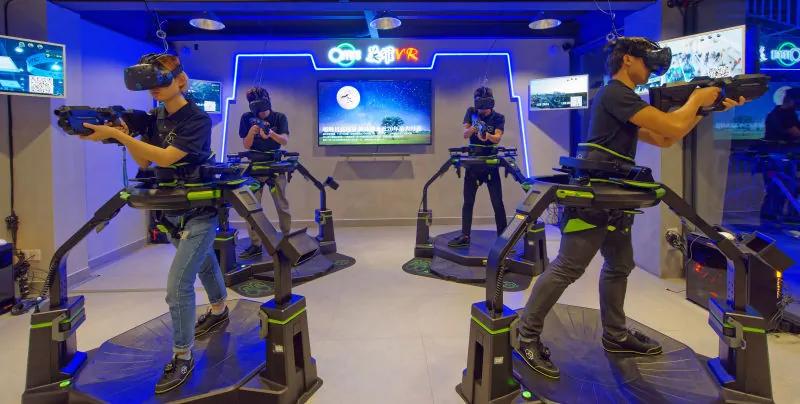
The technology stack of a mixed reality arena is its most complex and most capital-intensive dimension, and the quality of its specification and integration determines the quality and reliability of every session the venue delivers. A poorly specified or inadequately integrated technology stack does not simply deliver an inferior experience. It delivers an inconsistent experience, and inconsistency is the single greatest threat to the reputation and repeat visitation rates of a premium immersive attraction. The following section addresses each layer of the technology stack in detail, including the critical performance requirements that must be specified in vendor procurement.
Technology Stack Overview
The following table provides a structured overview of the core system layers in a mixed reality arena technology stack, their primary components, and the critical performance requirement that governs specification and procurement for each.
System Layer | Core Components | Critical Requirement |
Player Interface | AR visors, haptic controllers, positional beacons | Sub-20ms latency |
Spatial Tracking | Ceiling-mounted motion cameras, LiDAR sensors, spatial mapping software | Full arena coverage, no blind spots |
Game Control | Centralised game control dashboard, session management software, scoring engine | Real-time synchronisation across all players |
Network Infrastructure | Dedicated Wi-Fi 6 network, low-latency switches, isolated game VLAN | Zero packet loss during sessions |
Lighting and Effects | Synchronised LED grid, programmable atmospheric lighting, DMX control | Real-time game-state synchronisation |
Power and Cooling | Redundant UPS systems, dedicated cooling circuits, thermal monitoring | 100% uptime target, automatic failover |
AR Visors and Player Interface Hardware
The AR visor is the interface through which every player experiences the mixed reality game environment and is the component that most directly determines the quality and comfort of the player experience. Current-generation commercial AR visors suitable for arena use must deliver a minimum field of view of 50 to 60 degrees to provide sufficient immersive coverage for competitive gameplay, a display refresh rate of 90 Hz or above to prevent motion sickness during rapid physical movement, end-to-end system latency of under 20 milliseconds from physical movement to display update to maintain the perceptual alignment between the physical and digital environments, and a battery life of at least 45 minutes to support the full session duration without mid-session interruption. Hygiene management for visor hardware in a high-footfall public venue requires disposable face gasket inserts and a systematic between-session sanitisation protocol for all contact surfaces.
Motion Tracking and Spatial Mapping
The accuracy and reliability of the motion tracking system is the technical foundation on which the entire gameplay experience depends. Sub-centimetre positional accuracy for all player positions at 60 updates per second is the minimum specification for competitive gameplay quality, with sub-5-millimetre accuracy required for game scenarios involving close-range player interaction or precision targeting mechanics. Spatial mapping software must maintain a real-time three-dimensional model of the arena environment that accurately reflects the current physical configuration, including the positions and orientations of all active players and any physical props or obstacles within the play space. The spatial map must update at a rate sufficient to support the collision detection and physics simulation requirements of the game engine without introducing latency that is perceptible to players during rapid movement.
Low-Latency Networking
The network infrastructure of a mixed reality arena is a mission-critical system that directly determines whether the gameplay experience is coherent and fair for all simultaneous players. All player position data, game state updates, and AR display content must propagate across all active visors within a maximum end-to-end latency budget that does not exceed 20 milliseconds under full session load. This requires a dedicated Wi-Fi 6 network, isolated from any public-facing infrastructure, with access point placement calculated to provide continuous signal coverage at the specified bandwidth without dead zones across the full arena floor area. A dedicated network operations monitoring dashboard, displaying real-time latency, packet loss, and signal strength metrics for all connected devices during session play, is a non-negotiable operational requirement that allows the technical team to identify and respond to degradation before it becomes perceptible to players.
Centralised Game Control Dashboard
The game control dashboard is the operational interface through which every session is initiated, monitored, and managed in real time. A well-specified game control system allows the operations team to launch and configure any available game scenario from a standard session management interface, monitor all player positions, health states, and scoring data on a live arena floor map, identify and respond to technical anomalies during a session without interrupting gameplay, trigger the emergency state protocol with a single action from any control station, and access post-session performance analytics that inform throughput optimisation and content development decisions. The game control software must be specified to support concurrent session management across multiple arena zones if the venue operates parallel arenas, and must provide sufficient administrative access to allow the venue’s technical team to update game content and configuration parameters without dependence on the original software vendor.
Redundant Power Supply and Cooling
The technology infrastructure of a mixed reality arena places significant and concentrated electrical load demands on the building power systems, with the combined draw of tracking cameras, network equipment, AR visor charging systems, LED lighting grids, game control servers, and cooling infrastructure typically exceeding 50 to 80 kilowatts for a mid-scale arena. Redundant uninterruptible power supply systems for all critical game and tracking infrastructure are a mandatory specification, ensuring that a primary power disruption does not terminate an active session or corrupt session data. Dedicated cooling circuits for all server and network hardware rooms must be specified independently of the building’s general HVAC system, with thermal monitoring alerts that trigger automated responses before hardware temperatures reach performance-degrading thresholds.
International Case Studies: Three Venues Defining the Format
The mixed reality and free-roam immersive arena sector has produced a small but instructive set of global precedents that demonstrate both the commercial viability of the format and the range of approaches through which it can be successfully realised. The following three venues represent distinct models, each offering directly applicable lessons for new arena developers.
01 | VAR LIVE USA VAR LIVE represents one of the most operationally efficient approaches to free-roam multiplayer VR and AR hybrid gameplay in the family entertainment centre sector and provides a highly relevant model for developers seeking to integrate a mixed reality arena within a larger FEC environment. The VAR LIVE system is designed around modular arena configurations that can be adapted to a range of floor areas and player group sizes, making it particularly suitable for FEC integrations where the mixed reality arena must coexist with other attraction formats within a shared venue footprint. Its efficiency in space utilisation, achieving commercially viable player throughput from relatively compact arena configurations, directly addresses one of the primary commercial challenges of the format: the high real estate cost of the large floor areas that free-roam gameplay ideally requires. For FEC developers in particular, the VAR LIVE model illustrates how the mixed reality arena can be positioned as a premium attraction anchor within a broader entertainment portfolio rather than as a standalone destination venue, with the complementary revenue streams of adjacent attractions supporting the overall financial model of the development. |
02 | Dreamscape Immersive Los Angeles, USA Dreamscape Immersive represents the narrative storytelling approach to mixed reality arena design and stands as one of the most ambitious attempts to integrate genuinely cinematic storytelling with physical set design and immersive digital overlays in a commercial location-based entertainment context. Dreamscape’s experiences combine physical set environments constructed with professional film production quality with digital overlays delivered through custom VR and AR hardware, creating a combined physical and digital narrative world of exceptional coherence and emotional depth. What Dreamscape demonstrates for mixed reality arena developers is the commercial premium that sophisticated narrative integration commands over pure gameplay mechanics. Visitors who have been genuinely transported into a story world rather than simply stimulated by a competitive game environment consistently report higher satisfaction, stronger emotional memory, and greater willingness to pay premium pricing for the experience. Dreamscape’s partnerships with major entertainment IP holders also illustrate the brand extension and audience pre-qualification advantages that licensed intellectual property can deliver to a mixed reality arena seeking to establish a distinctive market position rapidly. |
03 | VR Park Dubai Dubai, UAE VR Park Dubai in the Dubai Mall represents one of the world’s most commercially successful integrations of mixed reality and virtual reality attractions within a high-footfall retail and tourism environment, and provides a compelling model for developers considering the placement of a mixed reality arena within a mall or mixed-use development context. Operating across multiple floors of the Dubai Mall, VR Park combines a broad portfolio of VR and mixed reality experiences within a single branded entertainment zone that benefits from the extraordinary footfall of one of the world’s most visited retail destinations. The cross-retail integration model that VR Park exemplifies, where the entertainment venue and its surrounding retail environment generate mutual footfall benefit, is particularly relevant for developers evaluating mixed reality arena sites within existing mall environments. VR Park’s success also illustrates the commercial viability of the mixed reality format in the high-spending, experience-oriented consumer culture of the Gulf region, providing direct regional precedent for developers planning venues in comparable Middle Eastern and South Asian metropolitan markets. |
Throughput and Profit Optimisation
The financial performance of a mixed reality arena is determined by the intersection of two variables: the revenue generated per session, and the number of sessions that can be delivered per operating hour. Optimising both variables simultaneously, without allowing the pursuit of throughput to degrade the experience quality that justifies the premium pricing, is the central commercial challenge of arena operations. A disciplined approach to throughput planning and revenue architecture is not simply a financial exercise. It is a design constraint that must be embedded in the spatial layout, technology specification, and operational protocol decisions from the earliest stages of development.
Timed Session Scheduling and Automated Resets
Timed session scheduling is the primary throughput management tool in a mixed reality arena and must be designed with the full operational cycle time in mind, not simply the active gameplay duration. The total time allocated per session slot must account for the player onboarding and briefing time required for groups unfamiliar with the hardware and safety protocols, the active gameplay duration, the cool-down and player exit period, and the arena reset time required to sanitise visors, recharge controllers, verify sensor calibration, and prepare the arena for the next group. Automated reset systems, which initiate equipment charging, run sensor self-calibration routines, and execute pre-session diagnostic checks between sessions without staff intervention, are the operational infrastructure investment that most directly determines the number of session slots an arena can deliver per operating day. A session reset that requires 15 minutes of manual staff preparation limits daily capacity to four sessions per hour. A fully automated reset cycle of five minutes increases that to approximately seven sessions per hour, a throughput gain that compounds across every operating day of the venue’s lifecycle.
Staff-Guided Onboarding
The onboarding experience for first-time mixed reality arena visitors is one of the highest-stakes moments in the operational cycle: it sets the visitor’s expectations for the session, establishes their confidence with the hardware, communicates the safety protocols that protect both the visitor and the equipment, and determines the quality of their gameplay in the first minutes of the session. A poorly executed onboarding that leaves visitors confused about controls, uncomfortable with the hardware, or uncertain about the boundaries of the play space will degrade their experience and generate negative reviews regardless of the quality of the game content and arena design. Staff-guided onboarding protocols must be precise, efficient, and consistently delivered across all staff members and all sessions. Maximum onboarding time should be specified as an operational standard, and briefing scripts and demonstration sequences should be designed to achieve safety and competence outcomes within that time limit without sacrificing the quality of the visitor preparation.
Revenue Architecture
A well-structured revenue architecture for a mixed reality arena captures value across the full range of visitor types and session formats, from single casual visit ticket sales to high-commitment competitive league memberships and premium corporate hire packages. The following table maps the primary revenue streams and their commercial profiles.
Revenue Stream | Format | Commercial Profile |
Timed Session Tickets | Standard 20 to 45 minute session pricing with peak and off-peak tiers | Primary, high-frequency |
Competitive League Events | Structured weekly or monthly tournaments with ranked standings | High-yield, repeat-driving |
Private Group Hire | Exclusive arena sessions for corporate teams and celebrations | Premium, pre-booked |
Seasonal Battle Maps | Limited-run game environments released on a content calendar | Demand surge, media-generating |
Player Ranking and Memberships | Monthly subscriptions with ranking access, priority booking, and discounts | Recurring, loyalty-building |
In-Arena F&B | Esports-themed food and beverage lounge adjacent to arena floor | Ancillary, high-margin |
Branded Merchandise | Player avatar gear, arena-branded apparel, collectible season items | Ancillary, brand-extending |
Competitive League Formats and Seasonal Battle Maps
Competitive league events are the most powerful repeat visitation driver available to a mixed reality arena operator and the primary mechanism for building the engaged player community that generates sustainable long-term revenue. A structured competitive league, whether a weekly singles ranking tournament or a monthly team battle championship, creates a recurring commitment from participants that delivers predictable session revenue, strong word-of-mouth within competitive gaming communities, and the social energy of a genuine sporting contest that elevates every session beyond a standard entertainment experience. Seasonal battle map releases, where new game environments with distinct mechanics, visual themes, and tactical challenges are launched on a planned quarterly or bi-monthly calendar, serve both the repeat visitation function of content refresh and the media function of a regular launch event that gives the venue a reason to communicate with its audience and attract new visitors who have heard about the new content through social channels.
Frequently Asked Questions
The following questions address the most common and commercially critical considerations for developers and investors approaching a mixed reality arena project.
What is the typical capital investment required to build a mixed reality arena? |
Capital requirements for a mixed reality arena vary significantly based on floor area, technology specification, and the complexity of the physical arena build. A mid-scale arena of 500 to 800 square metres with a full commercial-grade technology stack, including AR visors for 12 to 16 simultaneous players, ceiling-mounted tracking infrastructure, game control systems, LED lighting grid, and network equipment, typically requires a technology investment in the range of INR 3 to 8 crore, with construction and fit-out costs for the physical arena environment adding a further INR 2 to 5 crore depending on location and specification. Developers should plan for an additional 15 to 20 per cent contingency on the technology budget to cover integration, testing, and the inevitable refinements identified during the pre-opening operational trial period. |
How does a mixed reality arena sustain visitor interest beyond the initial novelty visit? |
Sustaining visitor interest beyond the initial novelty experience requires a structured approach across three dimensions simultaneously. The first is competitive depth: the game content must reward skill development and tactical sophistication sufficiently that experienced players find each session genuinely challenging and rewarding rather than simply familiar. This requires game design that goes well beyond the surface-level mechanics sufficient to engage a first-time visitor. The second is social motivation: competitive ranking systems, team formats, and league structures create the social stakes and community belonging that make competitive players return not just to improve their score but to maintain their position within a community they have invested in. The third is content evolution: seasonal battle map releases, limited-time game modes, and regular content updates ensure that the arena experience is visibly and meaningfully different from visit to visit, giving even players who have mastered the existing content a compelling reason to return. |
What are the most critical technical risks in a mixed reality arena and how should they be mitigated? |
The four most critical technical risks in a mixed reality arena are tracking system failure, network latency spikes, visor hardware failure, and power interruption. Tracking system failure, where player position data becomes inaccurate or unavailable, is the most disruptive risk because it renders the gameplay experience non-functional for the affected session. Mitigation requires redundant sensor coverage, automated calibration monitoring, and a clearly defined session compensation protocol for affected visitors. Network latency spikes degrade gameplay quality and can cause fairness-critical differences in player experience. Dedicated isolated network infrastructure and real-time latency monitoring with automated alerts are the primary mitigations. Visor hardware failure is managed through a minimum 20 per cent spare visor inventory maintained in ready state at all times. Power interruption is mitigated through UPS systems covering all critical game infrastructure, with automatic failover tested regularly against the specified switchover time requirement. |
How should a mixed reality arena be positioned within a larger FEC or entertainment complex? |
A mixed reality arena positioned within a larger FEC or entertainment complex should function as the premium anchor experience of the venue portfolio rather than as one attraction among equals. Its higher price point, longer session duration, and superior technological spectacle position it as the destination activity around which the broader venue visit is organised, with adjacent lower-investment attractions, F&B, and retail capturing the spending of visitors who arrive for the arena and extend their visit across the broader complex. Operational positioning should reflect this: the arena should have the most prominent spatial position within the venue, the clearest wayfinding, and the most capable staff. Cross-selling pathways between the arena and other venue attractions should be built into the booking and ticketing system from the outset, and the F&B concept should be designed to serve arena visitors in the pre and post-session social windows that represent some of the highest-value spending moments in the overall visit. |
What are the hygiene and maintenance requirements specific to a mixed reality arena? |
Hygiene management in a mixed reality arena is more demanding than in most entertainment venues because the player interface hardware, specifically the AR visor and its associated face contact surfaces, requires between-session sanitisation to standards that meet public health requirements for shared face-worn equipment. Disposable face gasket inserts, replaced for every player, are the baseline hygiene standard for visor management and should be budgeted as a consumable operational cost from day one. All hand-held controller hardware requires between-session surface sanitisation with appropriate antimicrobial products that do not damage the electronic components. The arena floor and boundary padding surfaces require daily cleaning protocols, with the specific products and methods validated for compatibility with the sensor and lighting hardware in contact with or adjacent to those surfaces. A documented hygiene protocol, including frequency, method, and responsible staff member for every hardware element in the arena, should be developed before opening and audited monthly. |
How long does it take to design, procure, and open a mixed reality arena? |
A complete development timeline for a mid-scale mixed reality arena typically spans 14 to 22 months from concept finalisation to public opening. The spatial design and safety engineering phase, including regulatory consultation for emergency egress and building compliance, generally requires three to four months. Technology procurement, which involves vendor selection, hardware specification, and the long lead times associated with commercial-grade tracking and AR visor hardware, typically requires three to five months and should be initiated as early in the design process as possible. Construction and technology installation generally requires six to ten months, with the integration and calibration of the tracking system and game control infrastructure typically taking four to six weeks of the installation period. A mandatory pre-opening testing and staff training phase of six to eight weeks should be planned before public launch, as the operational complexity of a mixed reality arena makes pre-opening system refinement essential rather than optional. |
Why Work with Peach Prime Consultancy
Designing and launching a commercially viable mixed reality arena requires a depth and breadth of specialist expertise that spans technical systems integration, spatial safety engineering, throughput operational design, and commercial financial modelling simultaneously. The technical complexity of the platform, the safety obligations of a venue serving the public in a physically active shared digital environment, and the commercial precision required to justify the capital investment make specialist consultancy not a convenience but a genuine project risk management necessity.
Peach Prime Consultancy provides end-to-end immersive attraction planning for mixed reality arena projects across every phase of development. Our services cover spatial master planning and safety compliance design, technology stack specification and vendor selection support, throughput and session management operational design, revenue architecture and financial feasibility modelling for investor and lender presentations, and operational playbook development and staff training framework design. We bring deep practical expertise in the immersive technology entertainment sector, with a planning methodology that ensures your arena is technically robust, operationally efficient, and commercially sustainable from day one.
If you are considering building a mixed reality battle arena, partnering with Peach Prime Consultancy from the earliest stages of development ensures your project is future-ready, built to the standard the market demands, and structured for the commercial performance your investment deserves. Visit www.peachprime.in to explore our full services or contact our team to arrange a strategic planning consultation.
WHAT PEACH PRIME DELIVERS | Spatial master planning and safety engineering, technology stack specification and integration oversight, throughput and session management design, revenue architecture and financial modelling, operational playbook development, and full investor and lender presentation support. |