

A technical design and commercial strategy guide for developers, investors, and creative directors building next-generation perception museums that combine immersive technology, precise illusion engineering, and scalable monetisation.
Introduction: The Evolution from Trick Room to Immersive Perception Ecosystem
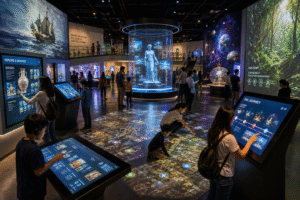
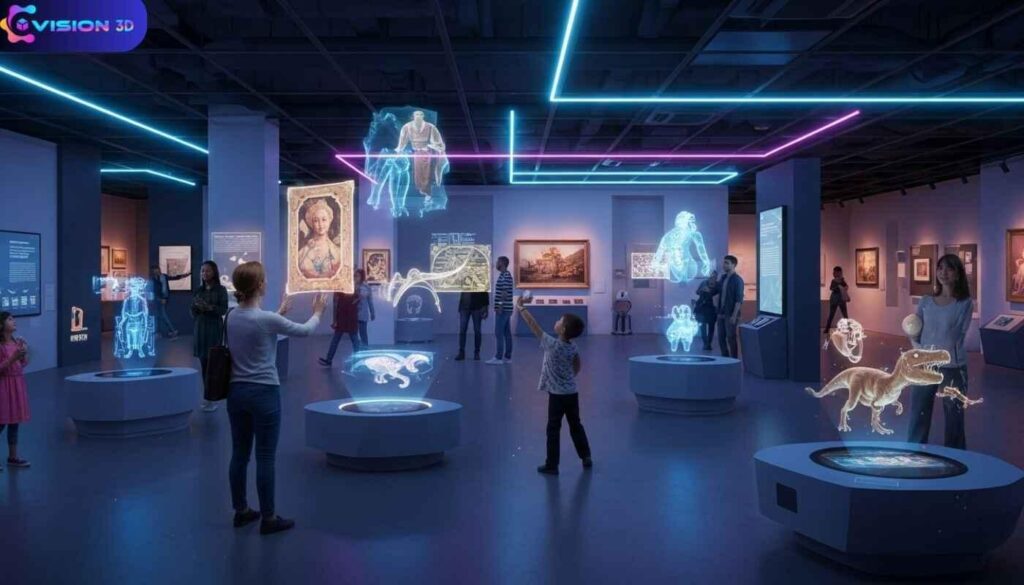
The optical illusion museum has undergone a significant design evolution in recent years. What began as a relatively compact format of static trick exhibits, Ames rooms, tilted corridors, and painted floor illusions arranged in sequence, has expanded into a far more sophisticated category that fuses perceptual psychology with immersive technology to create experiences of genuinely remarkable cognitive depth. Projection mapping systems now animate entire room surfaces with responsive narrative content that reacts to visitor presence. AR overlays allow visitors to see story layers superimposed on physical installations through their phone screens. Kinetic light sculptures create motion-based illusions that have no photographic precedent. Holographic chambers deliver floating three-dimensional imagery of a quality that visitors consistently describe as impossible.
This evolution is commercially significant because it dramatically raises the ceiling of what a perception museum can deliver and what it can charge for delivering it. The static trick exhibit format is well-established and its pricing is constrained by the competitive density of a category that now includes franchise rollouts in many major cities globally. The technology-enhanced illusion ecosystem, by contrast, occupies a far less crowded competitive position and supports the kind of premium pricing, extended dwell times, and genuinely distinctive market identity that command the financial returns available to a category-defining venue rather than a category-following one.
This guide addresses the design of a modern, technology-integrated perception museum from the perspective of both creative excellence and operational precision. It covers the cognitive journey architecture that determines how visitors experience the escalation of perceptual challenge across the venue, the engineering disciplines that determine whether illusions work with consistent accuracy under public operating conditions, and the monetisation framework that converts the format’s exceptional audience engagement into sustainable commercial performance.
EVOLUTION INSIGHT | The most commercially successful next-generation perception museums are not simply illusion museums with added technology. They are immersive cognitive environments where every design decision, from exhibit sequencing and lighting engineering to AR integration and brand partnership installation, serves a coherent visitor experience vision and a structured commercial strategy. |
Designing the Cognitive Journey: Escalation as an Architectural Principle
The cognitive journey through a perception museum is not simply the physical path a visitor walks between exhibits. It is the carefully engineered sequence of perceptual experiences that determines the emotional arc of the visit, the quality of the memories formed, and the likelihood that the visitor will share those memories with their network and return to continue exploring. Designing this journey with architectural intentionality, rather than simply selecting good exhibits and arranging them in a logical flow, is the discipline that separates the perception museums generating outstanding visitor satisfaction scores and social media reach from those that deliver impressive individual moments within an underwhelming overall experience.
The Escalation Principle
The foundational principle of cognitive journey design in a perception museum is escalation: the deliberate arrangement of exhibits from simple and accessible to complex and immersive, building the visitor’s perceptual confidence and curiosity progressively across the visit. An entry experience that immediately confronts visitors with the most challenging or disorienting exhibits in the venue creates anxiety rather than wonder, and leaves the remainder of the visit with nowhere to go emotionally. An entry experience that begins with immediately accessible, quickly rewarding perspective tricks, where the surprise of the illusion is delivered within seconds and the visitor feels immediately clever and engaged, builds the positive emotional state and exploratory confidence that makes the more demanding immersive experiences later in the journey feel exciting rather than threatening.
The following table maps the five stages of a well-structured cognitive journey against the exhibit categories appropriate to each stage, the design intent of each stage, and the dwell time targets that indicate a well-paced visitor experience.
Stage | Exhibit Category | Design Intent | Dwell Target |
Entry | Simple perspective tricks, 2D optical patterns | Establish curiosity, build confidence, deliver quick wins | 5 to 8 minutes |
Build | Forced perspective rooms, Ames rooms, shadow illusions | Introduce physical participation, encourage photography | 10 to 15 minutes |
Escalate | Vortex tunnels, tilted rooms, infinity mirrors, kinetic light | Deliver visceral physical responses, maximise social content | 15 to 20 minutes |
Peak | Projection-mapped immersive rooms, AR overlays, holographic chambers | Create the defining emotional memory of the visit | 10 to 15 minutes |
Resolution | Interactive gesture exhibits, anamorphic art, photo zones | Sustain engagement, generate social media content, ease exit | 8 to 12 minutes |
Transition Design Between Stages
The transitions between journey stages are design moments as important as the exhibits themselves. A visitor moving from the build stage into the escalation stage should experience a spatial and atmospheric signal that something more intense is approaching: a narrowing of the corridor, a shift in the lighting palette from warm and accessible to cooler and more mysterious, a change in the acoustic environment from ambient background to something more immersive and directional. These transition signals prime the visitor’s perceptual system for the intensified experiences ahead and create the anticipatory excitement that makes the escalation stage feel genuinely different from what preceded it rather than simply more of the same.
Dwell Time as a Commercial and Experiential Metric
Average dwell time is both the primary indicator of visitor experience quality and the primary driver of ancillary revenue per visit in a perception museum. Visitors who move through the venue quickly have not fully engaged with its exhibits and are unlikely to purchase merchandise, photo packages, or return on a future visit. Visitors who spend 60 to 75 minutes moving through the space with genuine curiosity and exploratory motivation are generating the sustained engagement that produces strong satisfaction scores, high social media output, and the positive emotional state that motivates retail and repeat visit spending. Exhibit sequencing designed around the escalation principle consistently produces longer dwell times than random or alphabetical exhibit arrangement, because it sustains the visitor’s sense of discovery and anticipation throughout the journey rather than front-loading the most impressive content and leaving the remainder of the visit feeling anticlimactic.
Engineering Precision: The Technical Disciplines That Make Illusions Work
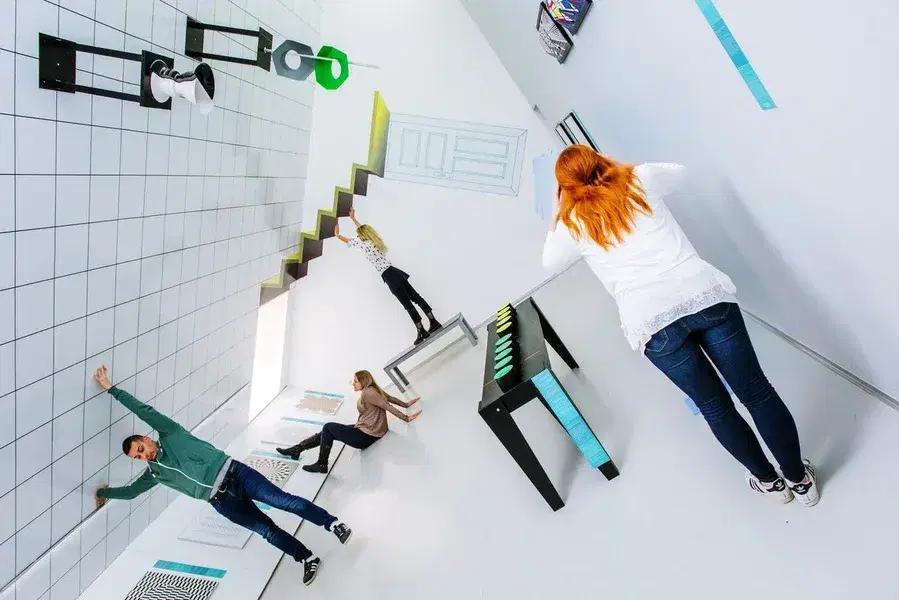
The perceptual effects of an optical illusion museum are the product of physical and optical principles that operate with mathematical precision. They work when the engineering parameters that create them are correctly specified and maintained, and they fail, sometimes subtly and sometimes completely, when those parameters drift from their required values. Understanding the engineering disciplines that govern each exhibit type, and building the operational practices that sustain them over the venue’s commercial life, is as important to the quality of the visitor experience as the creative brilliance of the exhibit concept.
Engineering Parameter Reference
The following table maps the six critical engineering parameters of a modern perception museum to the aspect of the visitor experience each governs and the consequence of failure in each parameter.
Engineering Parameter | What It Governs | Consequence of Failure |
Angle Calibration | Surface angles in forced perspective and Ames room constructions | Illusion fails from designated viewing position |
Lighting Control | Shadow management, reflection quality, projection contrast ratios | Illusion geometry revealed, projection washed out |
Mirror Alignment | Parallel alignment precision in infinity mirror and kaleidoscope rooms | Depth effect collapses, distortion visible at edges |
Floor Slope Accuracy | Gradient calibration in tilted gravity and anti-gravity rooms | Vestibular dissonance too strong or too weak, safety risk |
Projection Geometry | Projector throw distance, lens distortion correction, surface mapping | Image distortion, edge bleed, content misregistration |
Camera Viewpoint Marking | Precise floor marking of the photography position for each exhibit | Visitors photograph from wrong position, illusion not captured |
Angle Calibration and Perspective Geometry
Forced perspective illusions, Ames rooms, and all exhibits that manipulate the visitor’s perception of size, distance, and proportion through geometric design depend on precisely calculated surface angles that must be built to tolerances of a few millimetres to ensure the illusion holds convincingly from the designated viewing position. The calibration process for these exhibits begins with the mathematical calculation of every surface angle required to produce the desired visual effect from the specified viewpoint, continues through the precision construction and installation of those surfaces, and concludes with a viewing-position verification that confirms the illusion performs as designed before the exhibit opens to visitors. Any subsequent modification of the exhibit environment, including repainting, reflooring, or structural adjustment, requires re-verification of the calibration rather than assumption that the original precision has been maintained.
Lighting Control as an Engineering Discipline
Controlled lighting conditions are a technical requirement rather than an aesthetic preference for the majority of exhibit types in a perception museum. The Ames room requires elimination of the oblique shadows that would reveal the room’s true geometry to an observant visitor. Infinity mirror installations require precisely specified LED strip lighting within the mirror channels that controls both the depth and colour palette of the reflection effect. Projection-mapped rooms require ambient light levels low enough to achieve the contrast ratio necessary for the projection content to appear vivid rather than washed out. Anti-gravity and tilted gravity rooms require lighting that does not provide shadow-based orientation cues that would counteract the disorienting effect of the room geometry. Each of these requirements must be mapped to an architectural lighting design that specifies luminaire types, positions, colour temperatures, and dimming protocols for every zone of the venue, creating a comprehensive lighting engineering document that is as technically detailed as any structural or mechanical specification.
Mirror Alignment and Optical Precision
Infinity mirror rooms, kaleidoscope chambers, and all installations that rely on precise optical alignment between multiple reflective surfaces require installation tolerances that go significantly beyond standard commercial fit-out practice. Parallel mirror surfaces must be aligned to within fractions of a degree of true parallelism: small angular deviations that would be imperceptible in most contexts produce visible distortions in the infinite reflection effect that degrade the quality of the visitor experience and photographic output significantly. Mirror alignment is particularly sensitive to the thermal expansion and contraction cycles of the building envelope and must be specified with expansion joints and adjustment mechanisms that allow re-alignment without full reinstallation as the building moves seasonally.
Floor Slope Accuracy and Vestibular Safety
Tilted gravity rooms and anti-gravity chambers depend on precise floor slope angles that create the dissonance between visual and vestibular perception inputs that generates the illusion effect. The slope angle must be calibrated to a level that creates convincing illusory disorientation without generating vestibular distress that prevents visitors from completing the exhibit experience. This calibration is not a single universal value but a range that must be determined for each specific exhibit design based on the other visual cues present in the room, the intended visitor group profile, and the regulatory requirements of the jurisdiction regarding inclined public surfaces. Floor surface treatment must also provide adequate slip resistance across the full range of footwear types that visitors will be wearing, which requires a friction coefficient specification that accounts for both dry and incidental wet surface conditions.
Monetisation Framework: Building Commercial Depth
A perception museum’s commercial performance is determined by how fully its revenue architecture captures the value of the broad and engaged audience that the format attracts. The following framework maps the primary revenue streams available to a modern perception museum and their commercial profiles.
Revenue Stream | Format | Commercial Profile |
Dynamic Entry Tickets | Demand-adjusted pricing across peak, standard, and off-peak tiers | Primary, yield-optimised |
Educational Workshops | Science of perception sessions for school groups and youth programmes | Volume-driving, institutional |
Corporate Creativity Sessions | Facilitated team events using illusion environments to explore creative thinking | High-yield B2B |
Pop-Up Seasonal Illusions | Temporary exhibit additions tied to cultural calendar and trending themes | Demand surge, social media driver |
Brand Partnership Installations | Custom illusion exhibits co-designed with brand partners for activations | Incremental, brand-aligned |
Photo Packages and Print Services | On-site printing and digital delivery of illusion photography | High-margin upsell |
Private and Birthday Hire | Exclusive group sessions with F&B and facilitated photography | Premium, pre-booked |
Dynamic Ticket Pricing
Dynamic pricing, where admission rates are adjusted in real time or on a pre-programmed schedule based on demand conditions, slot availability, and advance booking lead time, is the pricing strategy that maximises revenue yield across the full range of demand variation that a perception museum experiences across its operating calendar. Online pre-booking at standard rates, same-day peak rates during high-demand periods, and off-peak promotions that drive attendance during lower-demand windows all contribute to a total revenue yield that consistently outperforms flat-rate pricing across the full year. Dynamic pricing also enables the advance booking incentive structure that smooths weekly demand patterns and improves cash flow predictability, as visitors who book in advance at preferred rates generate confirmed revenue weeks or months before their visit.
Corporate Creativity Sessions
Corporate creativity and innovation sessions represent a high-yield B2B revenue channel that is uniquely available to a perception museum by virtue of the intellectual content of the venue. The science of perception, the psychology of cognitive biases and visual assumptions, and the creative discipline of designing experiences that consistently surprise and delight a diverse public audience are all directly relevant to corporate teams working in design, marketing, innovation, product development, and leadership. A facilitated corporate session that uses specific exhibits as interactive demonstrations of perceptual and cognitive principles, followed by a structured creative workshop that connects those principles to the team’s work challenges, commands a premium price point that reflects its genuine professional development value rather than simply its entertainment quality. This product requires a facilitator who understands both the perceptual science behind the exhibits and the language of corporate innovation, which is a staff capability that must be developed deliberately rather than assumed.
Brand Partnership Installations
Brand partnership installations are among the most commercially innovative revenue opportunities available to a next-generation perception museum and represent a channel that few existing venues have developed to its full potential. Technology brands, automotive companies, luxury goods businesses, and consumer electronics companies all invest substantially in experiential marketing that creates memorable brand associations in precisely the audiences that a perception museum attracts. A custom illusion installation co-designed with a brand partner, in which the perceptual principle of the exhibit is thematically connected to a brand attribute or product feature, creates a visitor experience that is genuinely entertaining and educationally valuable while simultaneously delivering the brand impression that the partner is investing in. Unlike conventional advertising, a brand partnership installation generates social media content from every visitor who photographs it, creating earned media reach that extends the brand impression far beyond the physical venue visit.
Pop-Up Seasonal Illusions
Temporary pop-up exhibit installations, introduced on a planned seasonal calendar and retired after a defined run, serve two commercial functions simultaneously. They give the existing visitor audience a compelling reason to return and discover new content, which directly drives the repeat visitation rates that distinguish a sustainable venue from one that depends entirely on first-time visitor acquisition. And they generate the media-worthy event announcements and social media campaigns that maintain the venue’s visibility in its market between major renovations. Seasonal pop-ups work most effectively when they connect the perceptual theme of the installation to a cultural moment that the target audience is already engaged with: a festival, a season, a trending cultural phenomenon, or a local event that creates natural topicality for the new installation.
International Case Studies: Three Models of Illusion Museum Excellence
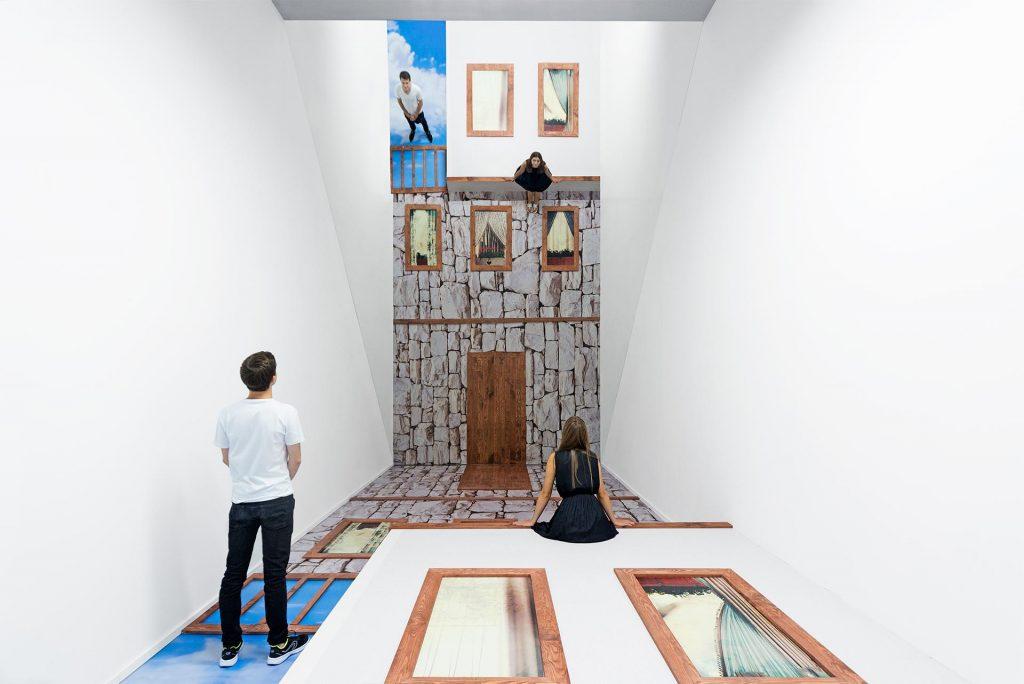
The following three venues represent distinct approaches to the design and commercial positioning of perception and illusion museum experiences, each offering directly applicable lessons for next-generation venue developers.
01 | Madame Tussauds Interactive Zones Global (Multiple Cities) Madame Tussauds, while primarily known as a wax figure attraction, has progressively developed interactive and illusion-based zones within its global venues that represent one of the most commercially instructive integrations of perception-based exhibit design with an established entertainment brand. The interactive zones within various Madame Tussauds locations include Ames room-style perspective installations, forced perspective photography zones, and technology-enhanced mixed reality experiences that extend the photographic participation dimension of the core wax figure attraction into more active perceptual territory. What makes Madame Tussauds relevant as a case study for perception museum developers is not the depth of its perceptual exhibit programme, which is secondary to its core proposition, but the commercial insight it demonstrates about the incremental value that well-designed interactive and illusion zones add to a visitor experience portfolio. The interactive zones consistently rank among the highest-rated elements of the Madame Tussauds visitor experience in post-visit research, generating social media content at rates that significantly exceed their floor area proportion of the venue. This data point has a clear implication for standalone perception museum developers: the perceptual exhibits that are a secondary enhancement for Madame Tussauds are the primary proposition for a dedicated illusion museum, and their appeal and commercial value is correspondingly greater when they are delivered at full depth and quality rather than as supplementary additions. |
02 | Optical Illusion Museum Kuala Lumpur Malaysia The Optical Illusion Museum in Kuala Lumpur represents the Asian mid-market execution of the illusion museum format and provides a commercially instructive example of how a venue targeting a predominantly domestic and regional tourism audience in a competitive urban entertainment market can sustain strong performance through consistent exhibit quality, active social media engagement, and a pricing model calibrated to the spending expectations of its primary demographic. The venue’s approach to anamorphic art programming, which features regularly updated local and Malaysian cultural themes alongside international illusion content, demonstrates the commercial and community value of localising exhibit content to reflect the cultural identity of the venue’s primary audience. Visitors from the domestic Malaysian market engage more deeply and share more enthusiastically with content that references their own cultural context, and the venue’s commitment to local artist commissioning for new anamorphic panels has generated significant earned media coverage and community goodwill that distinguishes it from franchise venues offering purely imported content. For Indian developers in particular, the Kuala Lumpur model offers a directly applicable precedent for how localised cultural content within a globally recognised attraction format can build distinctive brand identity and stronger audience loyalty than generic international programming. |
03 | House of Illusions Spain The House of Illusions in Spain represents the European boutique end of the illusion museum market and demonstrates how a smaller-footprint venue with exceptional design quality and a commitment to exhibit innovation can compete effectively against larger franchise venues through the depth of its perceptual experience and the sophistication of its curatorial approach. The House of Illusions has invested significantly in exhibits that go beyond the standard illusion museum portfolio to include kinetic sculptures, mechanically animated illusion environments, and interactive perceptual experiments that require active visitor participation rather than simple photography. This commitment to experiential depth over exhibit quantity creates a visit that is more intellectually engaging than most franchise venues offer and generates a distinctly different quality of visitor advocacy: guests who leave with a genuine sense of having learned something significant about how their own perception works, rather than simply having experienced a series of impressive visual tricks. For developers seeking to position a new venue at the premium end of the illusion museum market, the House of Illusions demonstrates that curatorial depth, exhibit innovation, and the educational credibility that comes from taking the science of perception seriously are commercially valuable differentiators that command higher pricing and stronger loyalty than breadth of exhibit count alone. |
Future Trends: The Next Generation of Perception Space Design
The perception museum category is approaching a significant technological inflection point that will reshape the competitive landscape of the format over the next five years. Developers planning new venues or major refurbishments of existing ones must engage with these emerging capabilities at the planning stage to ensure their venues are positioned to deliver experiences at the leading edge of what the market will expect rather than the middle of what it already offers.
AI-Generated Illusions and Adaptive Experiences
Artificial intelligence is beginning to enable a new category of dynamic optical illusion that was previously impossible: exhibits whose visual content adapts in real time to the specific characteristics of the visitor experiencing them. An AI-driven projection system that analyses the viewer’s position, movement patterns, and gaze direction through computer vision can generate perspective illusions that remain convincing across a range of viewing positions rather than being locked to a single designated viewpoint. Personalised illusion sequences that adapt their difficulty and intensity based on a visitor’s demonstrated perceptual responses across earlier exhibits create the kind of individually calibrated experience that no static exhibit installation can provide. Generative AI systems that produce novel illusion artwork variations, rather than displaying fixed content, allow exhibits to present genuinely different visual experiences to every visitor and on every visit. These capabilities will define the premium end of the perception museum market within the next three to five years, and venues that invest in the technical infrastructure and AI platform integration required to support them will occupy a category-leading position that static-exhibit competitors cannot match.
Mixed Reality Overlays and Hybrid Physical-Digital Exhibits
Mixed reality overlays, accessed through smartphone cameras or dedicated AR headsets provided by the venue, add a digital story layer to physical illusion exhibits that creates a hybrid experience unavailable in either the purely physical or purely digital domain alone. A physical Ames room enhanced with an AR overlay that places animated characters within the distorted space, interacting with the visitor in ways that acknowledge and play with the perspective illusion, creates a combined experience that is more memorable and more shareable than either the physical room or the digital animation would be in isolation. Hybrid physical-digital exhibits of this kind also allow the venue to refresh the digital content layer of an exhibit without modifying the physical installation, creating a cost-effective content update mechanism that maintains visual novelty for regular visitors at a fraction of the cost of full exhibit replacement.
Interactive Gesture-Based Exhibits
Gesture-based interactive exhibits, where visitors manipulate visual environments or trigger illusion effects through physical movement rather than button presses or touchscreens, create a level of physical agency and exploratory freedom that conventional interactive exhibits cannot match. A projection-mapped room that responds to visitor hand movements by morphing the geometric patterns on its surfaces, creating illusions that visitors can directly shape and control, invites a depth of personal engagement and creative exploration that generates both longer dwell times and richer social media content than passive illusion exhibits. The technology infrastructure required for gesture-based interaction, specifically computer vision systems with sufficient processing speed and accuracy to track multiple simultaneous visitors without lag, is increasingly accessible at commercial price points, making this exhibit category viable for a broader range of venue budgets than it was even two to three years ago.
Frequently Asked Questions
The following questions address the most common technical and commercial planning considerations for developers approaching a next-generation perception museum project.
What distinguishes a next-generation perception museum from a standard illusion museum? |
The core distinction lies in the integration of immersive technology with traditional perceptual engineering. A standard illusion museum delivers its effects primarily through physical construction: rooms, mirrors, and painted surfaces that exploit fixed optical principles. A next-generation perception museum layers technology systems including projection mapping, AR overlays, responsive lighting, and gesture-based interaction on top of that physical foundation to create exhibits whose visual content is dynamic, adaptive, and personalised rather than fixed. This technology integration raises both the experiential ceiling of the format, enabling exhibits of a complexity and responsiveness that pure physical construction cannot achieve, and the commercial premium it can command, supporting higher admission pricing, brand partnership revenue, and corporate programme fees that the standard format cannot justify. |
How does dynamic ticket pricing work in practice for an illusion museum? |
Dynamic pricing for an illusion museum operates through the venue’s online booking platform, which presents different admission rates based on the combination of the session’s proximity to the visit date, current booking levels relative to capacity, and the time-of-day and day-of-week demand profile established through historical booking data. Visitors who book two or more weeks in advance at off-peak times receive the lowest available rate. Visitors booking for the following weekend at peak afternoon hours encounter the highest rate. Same-day walk-in visitors pay a rate determined by current remaining capacity. The pricing algorithm is set to maximise total session revenue, not simply session occupancy, which means that a session at 70 per cent capacity at the peak rate can generate more revenue than the same session at 95 per cent capacity at a discounted rate. Communicating the price variation clearly and honestly to visitors, with transparent messaging about the advance booking discount and the reasons for peak pricing, prevents the customer satisfaction issues that arise when visitors feel they have been treated unfairly. |
How should a venue approach the balance between educational content and pure entertainment in exhibit design? |
The most commercially effective approach treats education and entertainment not as competing priorities but as mutually reinforcing dimensions of a single visitor experience design. Every optical illusion is simultaneously an entertainment moment and a demonstration of a perceptual or physical principle, and the exhibit design should deliver both dimensions simultaneously rather than separating them into a fun zone and a learning zone. Interpretive signage that explains the scientific principle behind each exhibit in concise, visually appealing language, positioned at the exit of each exhibit rather than the entry so that it serves curiosity after the experience rather than pre-empting the surprise before it, adds educational value without reducing entertainment impact. Facilitators who can explain the science engagingly to school groups add the depth of educational delivery that institutional buyers require, while remaining available to general visitors who want to understand what they have just experienced. |
What are the most important maintenance disciplines for sustaining illusion quality over time? |
Three maintenance disciplines are most critical for sustaining experience quality over time. The first is surface quality management: painted anamorphic floors, mirror surfaces, and projection screens all degrade under continuous public use and require scheduled inspection and remediation before visible quality degradation reaches a threshold that affects visitor satisfaction. Establishing photography quality standards for each exhibit, and using regular comparison photographs taken from the designated viewing position to assess current quality against the opening standard, provides an objective basis for remediation timing decisions. The second is calibration verification: perspective geometry exhibits, projection mapping alignments, and mirror installations all drift from their calibrated positions over time due to thermal movement, vibration, and incidental physical contact, and require periodic re-verification and re-alignment. The third is lighting system maintenance: lamp performance degradation in projection systems and colour drift in LED installations both reduce the contrast and colour quality of exhibits that depend on precise lighting conditions, requiring scheduled lamp inspection and replacement before performance drops below the specified standard. |
How can a perception museum use brand partnership installations without compromising the visitor experience? |
Brand partnerships work best in a perception museum context when the illusion concept and the brand message are genuinely aligned rather than artificially combined. The most effective brand partnership installations are those where the perceptual principle of the exhibit is intrinsically connected to a brand attribute or product dimension that the partner wants to communicate: a car brand associated with precision engineering installing a geometry-based perspective illusion that demonstrates engineering accuracy, a technology company associated with innovation installing an AI-responsive exhibit that adapts in real time to visitor interaction, or a wellness brand installing a sensory illusion environment that demonstrates the relationship between perception and wellbeing. When this genuine conceptual alignment exists, the brand presence feels like an enrichment of the exhibit rather than a commercial interruption, and the social media content generated by visitors interacting with the installation carries the brand impression naturally rather than requiring it to be labelled as advertising. |
What is the expected payback period for a well-designed next-generation perception museum? |
Payback periods for perception museums vary based on scale, location, and the quality of operational execution, but well-designed venues in strong urban markets with effective social media strategies typically achieve payback within 24 to 42 months, which is among the faster payback profiles available in the immersive entertainment sector. The relatively modest capital investment compared to technology-intensive attraction formats, combined with the low ongoing operational cost structure and the strong organic marketing efficiency of the social media-driven visitor acquisition model, create a financial profile that recovers the initial investment quickly when the venue achieves and maintains strong capacity utilisation. Venues that develop corporate creativity, educational group, and brand partnership revenue streams alongside general admission achieve payback at the faster end of this range, as these channels carry higher per-visitor yields and provide demand in the weekday daytime windows that general admission alone leaves partially unfilled. |
Partner with Peach Prime Consultancy
Designing a next-generation perception museum that delivers both creative distinction and commercial precision requires the integrated specialist expertise to navigate the perceptual engineering disciplines, immersive technology systems, visitor flow design, and revenue architecture decisions that together determine the quality and financial performance of the venue. The creativity of the exhibit concept and the rigour of its technical execution must be balanced with equal discipline, because the most imaginative illusion is commercially worthless if its engineering parameters are not maintained with precision or if its place in the visitor journey does not serve the emotional arc of the overall experience.
Peach Prime Consultancy provides structured planning for immersive illusion and perception museum projects, from initial concept development and exhibit portfolio design through to engineering coordination, visitor flow optimisation, and financial feasibility modelling. Our approach ensures that immersive creativity is balanced at every stage with operational precision and scalable profitability, delivering venues that are genuinely extraordinary experiences and commercially sustainable businesses simultaneously.
Whether you are at the concept exploration stage, developing a detailed investment case, or preparing to move into design and procurement, Peach Prime Consultancy provides the specialist guidance that positions your perception museum for long-term success. Visit www.peachprime.in to explore our full services or contact our team to arrange a strategic planning consultation.
WHAT PEACH PRIME DELIVERS | Exhibit portfolio concept design and illusion engineering coordination, cognitive journey architecture and spatial flow optimisation, lighting design specification, technology integration strategy including AR and projection systems, revenue architecture and financial feasibility modelling, and full investor and partner presentation support. |