

A comprehensive investment planning and commercial strategy guide for developers, entertainment investors, and FEC operators evaluating the mixed reality battle arena opportunity in the competitive social entertainment sector.
Introduction: Why Mixed Reality Battle Arenas Are a Strategic Investment Opportunity
Every entertainment investment thesis rests on a question about consumer desire: what do people want from their leisure time that the market is not yet delivering well enough, consistently enough, or at sufficient scale? For investors examining the competitive social entertainment sector in 2024 and beyond, the answer to that question increasingly points toward a specific combination of experiences that mixed reality battle arenas are uniquely positioned to provide.
Consumers, and particularly the Gen Z and millennial demographics that represent both the largest and the highest-spending segments of the recreational entertainment market, are looking for experiences that are simultaneously physical, social, digital, and competitive. They want to move their bodies in a shared space with friends and strangers. They want the intensity and strategic depth of digital gaming. They want the social energy and memorable stories that come from competing against real people in a real environment. And they want the kind of vivid, distinctive experience that is worth talking about, photographing, and returning to. Mixed reality battle arenas deliver all four of these desires in a single format, and no competing entertainment category currently delivers all four with comparable depth.
This investment and business strategy guide is designed to give developers and investors the complete commercial framework for evaluating, planning, and executing a mixed reality battle arena project. It covers the market dynamics driving demand, the core infrastructure and technology investment required, the revenue architecture that supports the financial case, and the risk mitigation strategies that protect the investment over a multi-year operating lifecycle. It is structured to serve both investors conducting initial feasibility analysis and developers preparing to move into detailed planning and execution.
INVESTMENT THESIS | Mixed reality battle arenas address a demonstrable gap in the competitive social entertainment market: an experience that is simultaneously physical, digital, social, and competitive, delivered at a level of technical and experiential quality that no existing format matches. Venues that capture this position in their markets early are building a durable competitive advantage. |
Why Mixed Reality Gaming Is Gaining Market Traction
The commercial momentum behind mixed reality gaming arenas is not driven by a single trend but by the convergence of several structural market forces that are simultaneously expanding the available audience and raising the expectation floor for what a premium entertainment experience should deliver.
The Limits of Passive and Single-Player Entertainment
The entertainment options available to young urban consumers have never been more diverse, but the experiences that consistently generate the strongest social energy, the most enduring memories, and the most enthusiastic word-of-mouth are overwhelmingly those that combine shared physical presence with active participation and genuine competitive stakes. Traditional laser tag has been a reliable indicator of this appetite for decades, but its technology ceiling has kept it positioned at the mid-market rather than the premium end of the entertainment spectrum. Standalone VR pods deliver digital immersion but sacrifice the shared physical environment that creates group social energy. Cinema and live performance create shared presence but remove individual agency. Mixed reality battle arenas are the format that resolves all of these limitations simultaneously, which is why search interest in AR battle arenas, interactive dodgeball technology, free-roam mixed reality gaming, and immersive tactical entertainment has grown consistently across global markets over the past several years.
The Esports Audience as a Physical Entertainment Market
One of the most commercially significant and underexploited insights in the entertainment sector is that the hundreds of millions of people who follow esports globally are not primarily interested in watching games. They are interested in the drama, strategy, community, and competitive identity that esports content represents. A mixed reality battle arena offers that same competitive identity and community belonging in a physical format that the screen-based esports experience cannot deliver: the visceral satisfaction of a skilled shot or a tactical manoeuvre executed with your own body, in a shared space, in front of teammates and opponents who are physically present. For esports enthusiasts, a well-designed MR battle arena is not an alternative to digital gaming. It is a complementary experience that extends the gaming identity they already hold into a social and physical dimension.
Corporate and Group Entertainment Demand
The corporate team-building and group entertainment market is one of the most commercially attractive segments for a mixed reality battle arena, both because of the premium price points it supports and because of the organisational purchasing decisions that generate predictable, recurring revenue. Corporate groups seeking team-building experiences increasingly demand activities that are distinctive, genuinely engaging, and capable of generating shared stories and competitive memories that persist in the workplace long after the event. Mixed reality battle arenas deliver this with a level of physical energy, strategic variety, and digital spectacle that conventional team-building formats, from bowling to escape rooms, cannot match. Venues that develop a strong corporate event product from the outset, including facilitated session formats, post-match performance debriefs, and dedicated event spaces for post-game hospitality, consistently find this segment to be one of their highest-margin and most reliably recurring revenue sources.
Venue Positioning: Mall, FEC, and Esports Hub Integration
Mixed reality battle arenas are uniquely adaptable to a range of venue integration contexts, which significantly expands the range of viable site and development models available to investors. Within a mall environment, an MR arena functions as a high-traffic anchor attraction that draws the young adult and family demographic most valuable to the surrounding retail tenants, with the mutual footfall benefit that this creates supporting favourable lease terms. Within a family entertainment centre, the arena provides the premium-priced adult and teen anchor experience that elevates the overall positioning of the venue and justifies above-market admission pricing across the portfolio. As a standalone esports hub destination, the arena becomes the physical expression of a competitive gaming community, with league formats, spectator infrastructure, and brand partnership opportunities that create a revenue model with significant upside beyond session-based ticketing.
Core Business and Infrastructure Planning
Developing a commercially viable mixed reality battle arena requires structured planning across eight interconnected infrastructure elements, each of which carries both capital cost implications and operational performance consequences. The following framework addresses each element in terms of its specification requirements and its priority level for commercial viability.
Infrastructure Element | Specification Requirement | Priority Level |
Arena Layout | Open, obstruction-free floor with padded perimeter and clear circulation corridors | Critical |
AR Headset Systems | Commercial-grade MR visors, minimum 60-degree FOV, under 20ms latency | Critical |
Motion Tracking | Ceiling-mounted sensors, full floor coverage, sub-centimetre positional accuracy | Critical |
Low-Latency Network | Dedicated Wi-Fi 6, isolated VLAN, real-time latency monitoring | Critical |
Scoring and Leaderboards | Centralised scoring engine, live display screens, post-match statistics | High |
Safety Infrastructure | Impact-resistant flooring, full perimeter padding, emergency lighting | Critical |
Spectator Screens | High-resolution displays showing live arena view and real-time scoring | High |
Arena Layout and Physical Environment
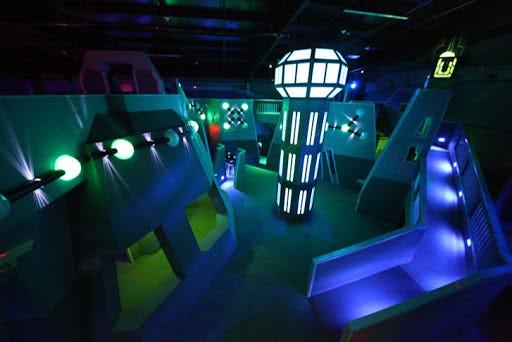
The physical arena is the foundation on which every other element of the MR battle experience depends, and its design must balance the competing requirements of gameplay quality, player safety, operational throughput, and spectator experience. An obstruction-free floor area of 400 to 800 square metres is the standard range for commercially viable mid-scale arenas, with the upper end of this range enabling the more complex tactical gameplay formats, larger player groups, and richer spectator sight lines that justify premium session pricing. The open floor must be bounded by fully padded perimeter walls with no hard edges accessible to moving players, with staff access corridors along the outer boundary allowing safe operational supervision without entering the active play zone. Ceiling height is a meaningful constraint: a minimum clear height of 3.5 metres is required to accommodate ceiling-mounted sensor infrastructure with the spacing geometry needed for full-floor coverage, with 4.5 metres or above being the preferred specification for installations planning to incorporate drone-based game elements or advanced projection systems.
Spectator Infrastructure as a Commercial and Marketing Asset
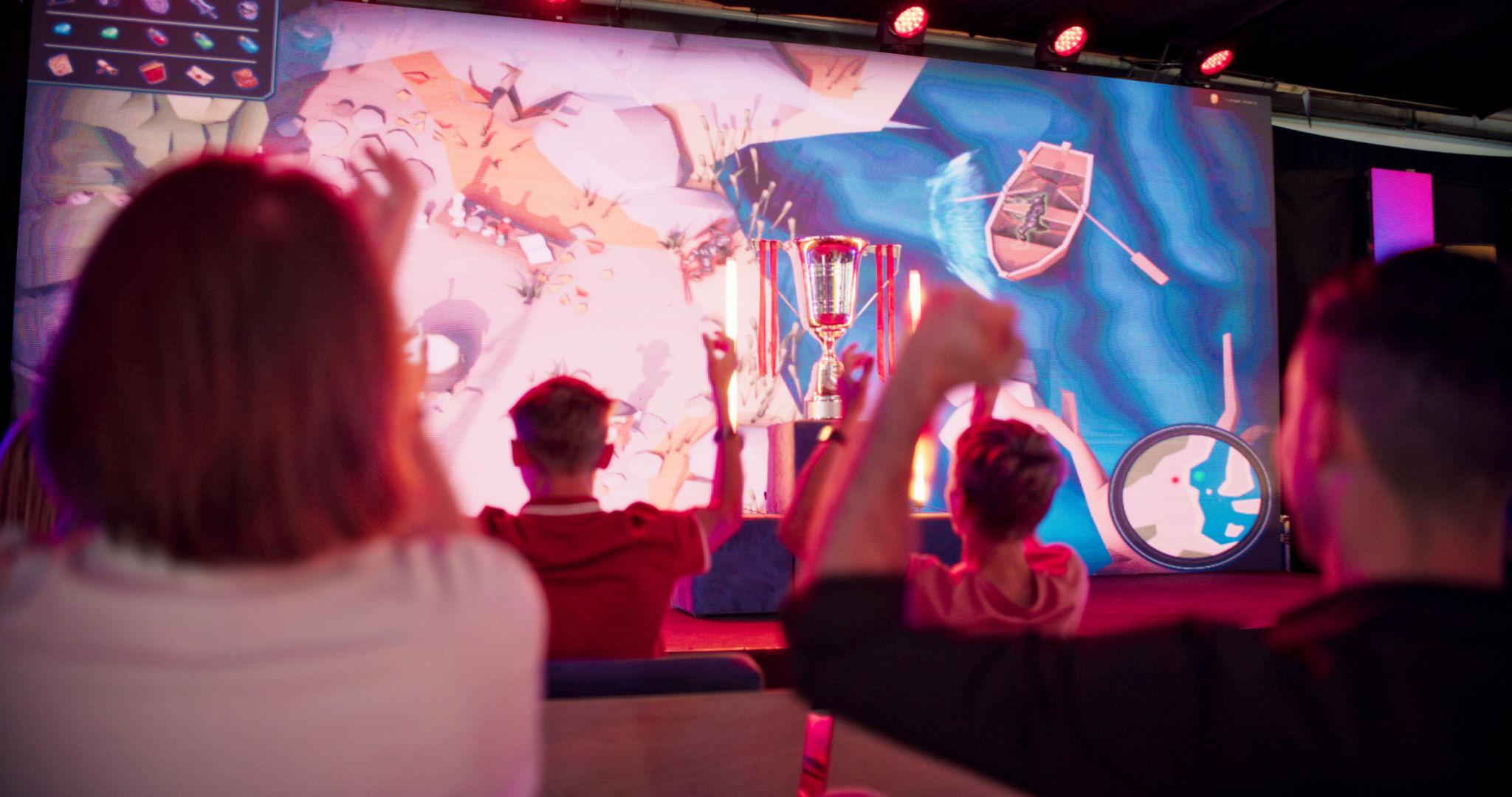
Spectator viewing infrastructure is frequently underinvestment in first-generation mixed reality arena developments, and consistently underperforms as a consequence. High-resolution screens displaying the live arena view from multiple camera angles, combined with the real-time scoring overlay that makes the competitive stakes of each match legible to non-participating observers, transform the waiting area outside the arena from a dead commercial space into an active spectator environment that generates its own social energy, F&B spend, and marketing content. Visitors waiting for their session watch the current match with genuine engagement, building anticipation and social motivation that elevates their own session experience. Spectator footage from dramatic match moments is among the most compelling social media content a venue can generate organically, at no additional cost beyond the infrastructure investment already made.
Capital Efficiency Relative to Mechanical Attractions
One of the most commercially important characteristics of the mixed reality arena investment model is its capital efficiency relative to mechanical ride-based attractions of comparable visitor appeal. A mechanical ride of equivalent novelty and throughput capacity requires substantially greater civil engineering investment, longer construction timelines, more complex regulatory approval processes, and a maintenance cost structure dominated by mechanical wear and safety inspection requirements that escalate with operating age. An MR arena’s capital investment is concentrated in technology hardware and software rather than mechanical systems, which means its upgrade and refresh pathway is driven by the technology market’s rapid cost-performance improvement curve rather than the slow and expensive cycle of mechanical asset replacement. Developers with a horizon of three to five years can expect to access meaningfully superior hardware at lower cost than the current generation, and modular upgrade pathways negotiated in the original procurement contract can capture this improvement without full arena replacement.
Revenue and Monetisation Strategy
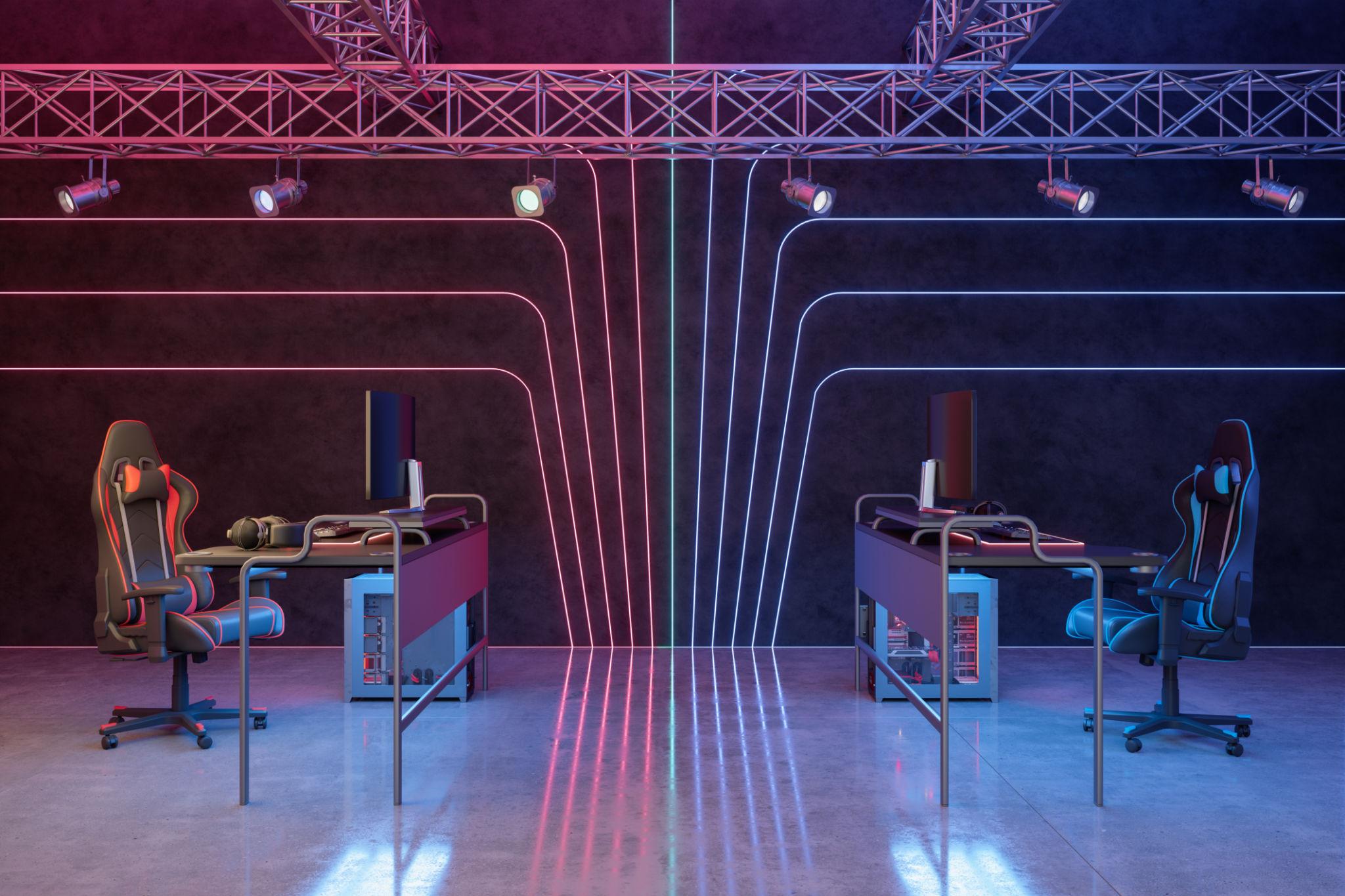
The revenue architecture of a mixed reality battle arena is one of its most compelling investment characteristics. The time-controlled session format creates a level of revenue predictability and throughput optimisation that most entertainment formats cannot match, while the multi-stream commercial model captures value across a range of visitor types, spending motivations, and group sizes that significantly outperforms a single-stream ticketing approach. The following revenue framework covers the full range of available streams and their commercial profiles.
Revenue Stream | Format | Commercial Profile |
Timed Battle Sessions | Standard and peak session pricing, 20 to 45 minute formats | Primary, high-frequency |
Competitive Leagues | Structured weekly and seasonal tournament formats with ranked standings | High-yield, repeat-driving |
Corporate Team-Building | Exclusive session hire with facilitated debrief and F&B packages | Premium B2B |
Birthday Packages | Private arena hire with party room, themed décor, and F&B inclusion | Premium, pre-booked |
Seasonal Tournaments | High-profile competitive events with prizes and spectator attendance | Demand surge, brand-building |
Sponsorship Integration | Brand presence on leaderboards, battle maps, and spectator screens | Incremental, brand-aligned |
F&B and Merchandise | Esports-themed lounge menu and arena-branded collectible merchandise | Ancillary, high-margin |
Maximising Revenue Per Square Foot Through Session Architecture
The time-controlled session format is the operational mechanism that most directly determines the revenue per square foot of the arena floor. A 45-minute session at a premium per-head rate, reset to a clean state for the next group in under 10 minutes, can generate revenue per square foot that compares favourably with premium dining and bar concepts of equivalent floor area. Achieving this performance requires a session architecture that is precisely calibrated: session duration set to capture the optimal balance between experiential completeness and operational throughput, timed entry intervals set on the basis of empirical reset time measurement rather than theoretical assumptions, and peak and off-peak pricing tiers that maximise yield during high-demand periods without creating the demand suppression that discourages off-peak attendance. Developers should model revenue per square foot explicitly at the financial planning stage, using realistic capacity utilisation assumptions derived from comparable venue benchmarks rather than theoretical peak capacity.
Competitive Leagues as a Recurring Revenue Engine
A structured competitive league programme is the highest-return repeat visitation investment available to a mixed reality battle arena operator. A well-designed league creates a recurring weekly or fortnightly session commitment from enrolled participants, generating predictable revenue that is booked and paid in advance and is substantially insulated from the week-to-week demand variation that affects general session ticketing. Beyond the direct revenue contribution, league participants become the venue’s most vocal advocates, generating word-of-mouth and social media reach within competitive gaming communities that are otherwise difficult to reach through conventional marketing. League formats should be structured to accommodate different competitive skill levels, from beginner leagues designed to convert casual first-time visitors into committed regular players, to elite leagues that attract the most serious competitive players and generate the kind of high-profile tournament events that drive media coverage and brand reputation.
Sponsorship Integration
Sponsorship integration is a revenue stream that is unique to the competitive entertainment format and available to few other leisure venue categories. The leaderboard displays, battle map environments, spectator screens, and post-match statistics platforms of a mixed reality arena provide genuine branded content placement opportunities for technology, gaming, energy drink, apparel, and lifestyle brands seeking access to the young adult competitive gaming demographic. Sponsorship packages that integrate brand presence organically within the game environment, rather than imposing it as interruptive advertising, are more valuable to brand partners and less disruptive to the player experience. A mid-scale arena with a developed competitive league programme and regular tournament events can realistically generate incremental sponsorship revenue that adds a meaningful margin-positive income stream with minimal additional operational cost.
Global Mixed Reality Benchmarks: Three Models Worth Studying
The mixed reality gaming sector has produced a diverse and instructive range of commercial precedents across different geographies, technology approaches, and market positioning strategies. The following three venues represent distinct but equally successful models for the investor studying the space.
01 | HADO AR Dodgeball Tokyo, Japan and Global HADO is one of the most commercially successful and globally replicated mixed reality gaming formats in the world and stands as the defining proof-of-concept for the AR sports category. The format combines the physical dynamics of dodgeball with augmented reality elements delivered through AR headsets and wrist sensors, allowing players to cast digital energy balls and deploy energy shields while competing in a physically demanding head-to-head match format. HADO’s commercial success is built on a foundation of competitive depth and scalability: the format is simple enough to be immediately accessible to first-time players but strategically rich enough to support a global competitive circuit with serious skill differentiation and a devoted player community. Its international tournament structure, which has generated live event audiences and broadcast content across multiple markets, demonstrates the spectator potential of well-designed MR sports formats and the brand and revenue expansion opportunities that a competitive circuit can unlock beyond the base venue business. For investors, HADO’s global franchise model, which has successfully placed the format in venues across more than 30 countries, illustrates the scalability of the AR battle arena concept across diverse markets and cultural contexts, and provides a directly accessible entry point for operators who want to launch with an established platform rather than developing original game content. |
02 | Sandbox VR Hong Kong and Global Sandbox VR is one of the world’s most commercially successful premium mixed reality experience operators and has built a global network of locations that consistently demonstrate the premium pricing power achievable when immersive storytelling, full-body motion tracking, haptic feedback, and multiplayer competition are combined at a high level of technical execution. Each Sandbox VR experience places a group of players inside a narrative scenario, from a zombie survival mission to a science fiction space battle, with their physical movements translated in real time into the digital game environment through a comprehensive body tracking and haptic suit system. What distinguishes Sandbox VR as an investment model is the clarity and conviction of its premium positioning: it competes on experience quality rather than price accessibility, commands session pricing that is among the highest in the location-based entertainment sector, and maintains that positioning through consistent and rigorous standards of hardware quality, content development, and operational delivery across all its global locations. For investors planning a premium-positioned MR battle arena, the Sandbox VR model provides direct evidence of the price points and financial returns that are achievable when the technology, content, and operational quality of the experience fully justify a premium positioning. |
03 | SPREE Interactive Munich, Germany and Global SPREE Interactive represents the FEC-optimised end of the mixed reality arena market and has developed one of the most commercially refined platforms for operators seeking to integrate a high-throughput MR arena experience within a larger family entertainment or social entertainment venue environment. The SPREE system is designed from the ground up around the operational priorities of an FEC operator: fast session setup and reset, robust hardware designed for the sustained daily use demands of a high-footfall public venue, a game content library that serves a genuinely diverse demographic range from children to corporate adults, and a venue management software platform that integrates seamlessly with standard FEC point-of-sale and booking systems. SPREE’s success across multiple international FEC deployments demonstrates the commercial viability of the mixed reality arena format when its operational design is aligned with the throughput, staffing, and margin requirements of the FEC business model. For developers planning to integrate a MR arena within a broader entertainment portfolio rather than as a standalone destination, the SPREE Interactive model provides the most directly applicable operational and commercial reference point currently available in the market. |
Risk Mitigation and Long-Term Strategy
Every investment in a technology-dependent entertainment asset carries a specific risk profile that differs from both conventional real estate and non-technology entertainment assets. Understanding and actively mitigating these risks is not a defensive exercise. It is a core component of the investment strategy that determines the long-term commercial performance of the venue as much as the quality of the initial concept and execution.
Risk Register and Mitigation Framework
The following risk register identifies the six primary risk categories for a mixed reality battle arena investment and maps each to its primary risk event and recommended mitigation strategy.
Risk Category | Primary Risk Event | Mitigation Strategy |
Technology Reliability | Tracking or network failure during a live session | Redundant servers, automated calibration, session compensation protocol |
Hardware Degradation | AR visor or controller failure under sustained public use | Minimum 20% spare inventory, predictive replacement schedule |
Content Fatigue | Declining repeat visitation as the game library becomes familiar | Quarterly battle map releases, seasonal tournaments, league competition |
Safety Incident | Player collision or fall during high-energy gameplay | Full perimeter padding, group size limits, briefing protocols, staff supervision |
Competitive Entry | New competing attractions opening in the same catchment | Brand differentiation, loyalty programme depth, community investment |
Technology Obsolescence | Core hardware becoming uncompetitive within 3 to 5 years | Modular upgrade pathways negotiated in original procurement contracts |
Technology Reliability and Redundancy Investment
Technology reliability is the most operationally critical risk category for a mixed reality arena and the one that most directly threatens visitor experience quality and reputation in the event of a failure. A session that fails mid-play due to a tracking outage or network disruption does not simply disappoint the affected visitors. It generates the kind of vivid negative experience that produces vocal online reviews and undermines the premium positioning of the venue in a way that is disproportionate to the operational cost of the failure itself. Redundant server infrastructure, with automatic failover to backup systems within a switchover time that is imperceptible to active players, is the primary technical mitigation. Regular hardware calibration schedules, ideally daily pre-opening checks for all critical systems, catch performance degradation before it reaches session-disrupting thresholds. And a clearly defined session compensation protocol, which converts a negative experience into a managed service recovery, is the operational response that turns a potential reputation risk into a demonstration of the venue’s customer service quality.
Content Refresh as Strategic Investment
Content fatigue is the primary long-term commercial risk for any experience-based entertainment venue, and it is the risk that most strongly differentiates the venues that sustain strong performance over three to five years from those that plateau after the initial novelty period. For a mixed reality battle arena, the content refresh strategy must address both the game environment dimension, through new battle maps, game modes, and seasonal overlays, and the competitive structure dimension, through new league formats, tournament series, and ranking mechanics that give committed players ongoing reasons to invest in improving their performance. A structured content roadmap, developed before the venue opens and managed as a key commercial asset thereafter, is the planning infrastructure that ensures refresh investment is made proactively and purposefully rather than reactively in response to declining attendance metrics.
Building the Community Moat
The most durable long-term competitive advantage available to a mixed reality battle arena operator is not the quality of its technology or the novelty of its game content. It is the strength of the competitive community that gathers around the venue. A venue with a deeply engaged player community, active league participation, a lively social media presence driven by genuine player enthusiasm, and a reputation as the home of competitive MR gaming in its market is significantly more resistant to competitive entry, content fatigue, and demand variation than a venue whose visitors relate to it purely as a consumer transaction. Building this community requires deliberate investment: in competitive programming that gives serious players a genuine reason to commit, in community communications that make regular players feel connected to the venue between visits, and in the physical and digital spaces where community interaction happens. The venues that make this investment consistently report the strongest repeat visitation rates and the lowest customer acquisition costs in the sector.
Frequently Asked Questions
The following questions address the most important investment and planning considerations for developers and operators evaluating the mixed reality battle arena opportunity.
What differentiates a mixed reality battle arena from conventional laser tag or VR pod attractions? |
The key differentiators operate across three dimensions. Experientially, a mixed reality battle arena combines free physical movement with a shared digital game environment that responds in real time to every player’s position and actions, creating a level of physical engagement and digital immersion that laser tag’s purely physical format and VR pods’ isolated single-player format cannot deliver simultaneously. Commercially, the MR arena format supports significantly higher per-head pricing than laser tag due to the quality premium of the experience, while achieving better throughput economics than individual VR pods by serving groups of six to sixteen players in a single shared session. Competitively, the ranking systems, league formats, and spectator infrastructure of an MR arena create a competitive community dimension that neither laser tag nor VR pods have historically been able to sustain at meaningful scale. |
What are the ideal target demographics for a mixed reality battle arena? |
The core target demographic for a mixed reality battle arena is the 16 to 35 age group, specifically the Gen Z and millennial consumer segments that combine strong digital gaming cultural fluency with high spending willingness on distinctive social experiences. Within this broad group, the most commercially valuable sub-segments are young adult friend groups seeking premium social entertainment, corporate teams looking for team-building experiences that go beyond conventional formats, competitive gaming enthusiasts and esports audiences seeking physical embodiment of the competitive gaming experience they engage with digitally, and birthday and celebration groups who want a centrepiece activity that is genuinely memorable and premium. Family groups with older children, typically aged 12 and above, represent a meaningful secondary demographic in venues with appropriate safety provisions and game content calibrated for mixed-age groups. |
How does a mixed reality battle arena generate strong return on investment? |
The ROI case for a mixed reality battle arena rests on four compounding financial characteristics. First, the time-controlled session format enables revenue per square foot that is comparable to premium hospitality concepts because the floor area generates session revenue continuously across the operating day rather than sitting idle between occasional visitors. Second, the multi-stream revenue architecture, spanning session tickets, corporate hire, competitive leagues, sponsorship, and F&B, spreads revenue across channels that peak at different times and across different visitor types, creating a more resilient total revenue profile than single-stream models. Third, the repeat visitation mechanics built into the format, specifically competitive ranking, league participation, and content refresh, reduce customer acquisition cost per visit over time as the existing player base generates a growing proportion of total revenue. Fourth, the capital efficiency advantage over mechanical attractions means that more of the total investment budget is allocated to technology that can be upgraded rather than infrastructure that cannot. |
What site characteristics make an ideal location for a mixed reality battle arena? |
The ideal site for a mixed reality battle arena combines high footfall from the target demographic, a floor plate that can accommodate the required arena floor area plus supporting spaces, and a physical environment that supports the technology infrastructure requirements of the format. High-footfall retail and entertainment destinations, specifically shopping malls with strong young adult traffic, mixed-use leisure and hospitality developments, and established family entertainment centre locations, are the most commercially proven site types. The floor plate requirement for a commercially viable mid-scale arena, typically 700 to 1,200 square metres of total venue area including the arena floor, spectator areas, F&B lounge, and back-of-house, is a meaningful site constraint that must be assessed early in the feasibility process. Ceiling height of at least 3.5 metres throughout the arena floor area is a technical requirement that eliminates some otherwise suitable commercial premises. |
How important is staff training to the operational performance of a mixed reality arena? |
Staff quality is the variable that most consistently separates high-performing mixed reality arenas from those that deliver technically correct but experientially undistinguished sessions. The operations team of an MR arena carries responsibilities that span safety supervision, technical system monitoring, hospitality service delivery, and live performance facilitation simultaneously, and the quality of their execution across all four dimensions during every session directly determines the quality of the visitor experience. Investment in structured onboarding training, regular performance reviews, and a culture of creative ownership among the operations team is not a soft operational nicety but a core commercial discipline. Venues that invest in their team as seriously as they invest in their technology consistently achieve higher visitor satisfaction scores, stronger word-of-mouth, and better repeat visitation rates than those that treat staffing as a cost to be minimised. |
What is the realistic payback period for a mixed reality battle arena investment? |
Payback periods vary based on site location, capital investment level, market size, and operational execution quality, but well-designed and well-operated mid-scale arenas in strong urban markets typically achieve payback within 36 to 60 months. Venues that develop strong corporate event and competitive league revenue streams from the outset tend to achieve payback at the faster end of this range, as these revenue channels carry higher per-head yields and generate the recurring revenue base that accelerates the recovery of the initial capital investment. Venues in premium mall locations with high natural footfall and strong young adult demographic profiles also tend to achieve payback more quickly, as the reduced customer acquisition cost in a high-footfall environment allows the venue to reach target capacity utilisation sooner after opening. |
Partner with Experienced Immersive Consultants
The decision to develop a mixed reality battle arena is a significant capital commitment in a technology-intensive format that rewards deep sector expertise and penalises the planning gaps that non-specialist developers consistently encounter. The feasibility analysis, technology evaluation, arena layout planning, and revenue modelling that underpin a credible investment decision each require specialist knowledge that spans the commercial, technical, and operational dimensions of the format simultaneously.
Peach Prime Consultancy supports investors and developers across the full MR arena planning lifecycle. Our services cover initial feasibility studies and market positioning analysis, technology platform evaluation and vendor selection support, arena spatial layout planning and safety compliance design, revenue modelling and financial feasibility analysis for investor and lender presentations, and operational planning for launch and beyond. We bring the deep sector expertise and structured methodology that gives our clients the analytical confidence to make well-informed investment decisions and the planning precision to execute them effectively.
If you are evaluating the mixed reality battle arena opportunity, whether at the earliest stage of market assessment or preparing to move into detailed planning and procurement, Peach Prime Consultancy provides the expert guidance that reduces your execution risk and maximises the commercial return on your investment. Visit www.peachprime.in to explore our full service offering or contact our team directly to arrange a strategic planning consultation.
WHAT PEACH PRIME DELIVERS | Feasibility studies and market analysis, technology platform evaluation and vendor selection, arena layout planning and safety compliance design, revenue modelling and financial feasibility for investor presentations, operational playbook development, and ongoing performance optimisation consulting. |