

Blogs
How Much Does It Cost To Build An FEC Or Game Zone In India
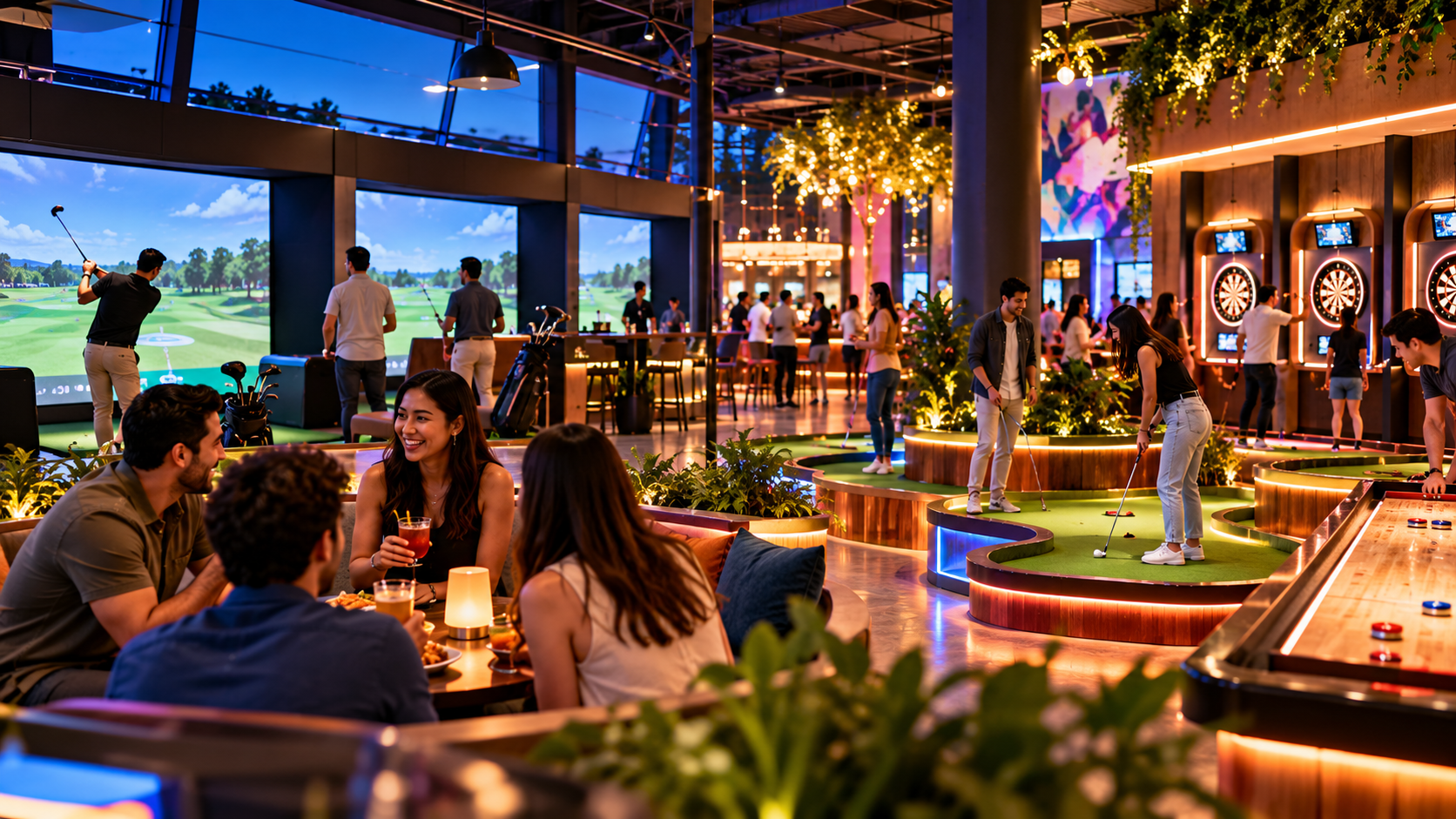
Family entertainment centres and game zones are the most asked about entertainment format in India right now. They fit mall footprints, high street boxes, hotel annexes, and standalone plots. They open faster than theme parks and recover capital faster when designed well. The flip side is that bad game zones close just as fast. This post sets out what a good FEC or game zone actually costs in India in 2026, where the money goes, and how the revenue model works.
Why FECs And Game Zones Are The Hot Format Right Now
Three forces are pushing FEC and game zone demand in India. First, malls are rebalancing floor mixes away from pure retail toward footfall engines. An FEC on the top floor of a mall pulls families on weekends and drives food court and cinema revenue. Second, the under 25 population has disposable income and a strong appetite for shared experiences, which arcade and social gaming formats serve well. Third, developers want anchor tenants who sign long leases and pay reliable rent, which experienced FEC operators do. The combined effect is that rents have become more competitive and locations better than they were five years ago.
Benefits Of Building An FEC Or Game Zone Now
- Fastest payback of any entertainment format in India at 24 to 48 months for well designed venues
- Lower capital intensity than theme parks or water parks, so more operators can self fund phase one
- Indoor format means year round operation with no weather dependency
- Multiple revenue streams (arcade, F&B, parties, groups) that diversify risk
- Data rich operations through RFID card systems, enabling precise optimisation month over month
- Strong fit for repeat visits, which compounds brand loyalty in a defined catchment
- Expandable concept: a successful venue in one city becomes a chain in three
What Counts As An FEC Versus A Game Zone
A game zone is primarily an arcade floor. It can include redemption games, video games, simulators, and a small token counter. A family entertainment centre is broader. It includes multiple attractions like soft play, trampoline, laser tag, VR, escape rooms, bowling or mini bowling, F&B, and party rooms. The cost ranges below assume both formats are built new, including base building work, services, machines, and soft costs.
Deciding which to build is about catchment and lease size, not preference. A 4,000 square foot mall unit on a high street road in Jaipur almost always works better as a focused game zone than as a shallow FEC. A 15,000 square foot top floor space in a Bangalore mall always works better as a deep FEC than as a large arcade. Pick the format the space can actually host well, not the one you read about in a magazine.
Working Capital Ranges By Size
Game Zone, 2,000 To 5,000 Square Feet
A tight game zone fit for a mall floor plate or a high street unit runs 1.2 to 3.5 crore rupees all in. The split is roughly 50 to 60 percent machines, 20 to 25 percent civil and MEP, 10 to 12 percent theming and interiors, and the rest in pre opening costs. The machine mix is weighted to redemption to drive repeat play. Target footfall of 60,000 to 120,000 visits a year. Average spend per visit of 220 to 380 rupees including card top up. Payback in 20 to 36 months.
Small FEC, 5,000 To 12,000 Square Feet
A single floor FEC with three attractions (arcade, soft play, and one feature attraction such as a mini bowling line or a VR bay), F&B, and party rooms runs 3.5 to 8 crore. At this size you start to see real benefit from a professional FEC design approach because the attraction mix needs to serve two or three age groups without cannibalising itself. Target footfall of 150,000 to 280,000 visits a year. Average spend per visit of 350 to 550 rupees. Payback in 30 to 48 months.
Mid Sized FEC, 15,000 To 30,000 Square Feet
This is the format that dominates new India. Five to seven attractions, a proper F&B outlet, a party precinct, retail, and themed interiors. Plan 9 to 22 crore. The jump comes from larger attractions like trampoline parks and go karting, immersive theming, and heavier MEP. Target 250,000 to 500,000 visits a year. Average spend per visit of 500 to 800 rupees. Payback in 36 to 54 months.
Large Flagship FEC, 40,000 Square Feet And Above
Flagship FECs with eight plus attractions, an anchor like an indoor electric go kart track or a free roam VR arena, and strong theming land between 25 and 60 crore. These are the venues that can draw across a full metro and justify destination level pricing. Target 500,000 to 900,000 visits a year. Average spend per visit of 700 to 1,200 rupees. Payback in 42 to 66 months.
Where The Money Actually Goes
- Machines and attractions: 40 to 55 percent of hard cost
- Civil and MEP: 18 to 25 percent, higher in old malls with weak services
- Interiors, theming, and signage: 12 to 18 percent
- F&B kitchen and counter: 5 to 8 percent
- Pre opening, licensing, training: 6 to 9 percent
- Card system, CCTV, and IT infrastructure: 3 to 5 percent
- Reserve for contingency: 5 to 8 percent
The Cost Decisions That Matter Most
Machine Mix, Not Machine Count
A floor with 60 machines built around three or four hero pieces outperforms a floor with 90 machines with no hero. Visitors photograph and remember the hero. They pay full price for the hero. Everything else monetises around it. We usually recommend a 65 percent redemption, 20 percent video, 15 percent simulator or sport mix as a baseline, then adjust based on the catchment demographic. In a venue with a strong teen and young adult segment, add more rhythm and skill based machines. In a venue with a strong under 10 segment, increase redemption with lower ticket count games that children can win quickly.
Soft Play Depth
Soft play is the stickiest attraction in an Indian FEC because the under 8 segment drives repeat visits. A deep, well zoned soft play increases average visit length and parent spend. Cutting soft play to save money is almost always wrong. Spend the extra 30 to 50 lakh on a good soft play and recover it in year one through parent F&B spend and birthday parties alone.
Theming That Reads In Thirty Seconds
Theming does not need to be expensive. It needs to be legible. A single strong idea carried across the entry, uniforms, tokens, and interiors beats a confused mix of styles at double the cost. Choose a theme the catchment can read without explanation. Jungle, space, underwater, retro arcade, racing, and pirate themes all read instantly. Abstract or art directed themes that need interpretation rarely pay back the marketing cost to explain them.
The Card System Is Infrastructure, Not An Afterthought
Modern FECs run on RFID card systems. This is both revenue infrastructure and a data engine. Spend properly on the card system. A cheap one creates queues, breaks on peak weekends, and loses data. A good one costs 15 to 35 lakh including readers, kiosks, and backend, and pays back by giving you per machine earn data, visitor frequency data, and promotional targeting.
Revenue Model At A Healthy FEC
- Arcade card top up and attraction tickets: 45 to 55 percent of revenue
- F&B: 20 to 28 percent
- Party packages: 12 to 18 percent
- Corporate and school groups: 6 to 10 percent
- Retail and photo: 2 to 5 percent
- Memberships and annual passes: 3 to 6 percent
Opex You Should Know Before You Sign The Lease
The capital number is not the one that kills FECs. Operating cost is. Plan honestly for machine maintenance (6 to 9 percent of machine capex per year), card system licensing, soft play inspection, staff training retention costs, and marketing. Experience led FECs retain better because they generate word of mouth. We cover this in our post on experience led versus equipment first FECs and in three low cost ideas to increase dwell time.
Typical operating cost for a mid sized FEC at stabilisation runs 55 to 65 percent of revenue, broken down into: rent 12 to 18 percent, labour 18 to 24 percent, utilities 4 to 6 percent, machine and attraction maintenance 4 to 6 percent, F&B cost of goods 6 to 9 percent of total revenue, marketing 4 to 6 percent, and all other operating costs 5 to 8 percent. Rent is the single most important line to negotiate well, because it is fixed and sets the floor for the whole P&L.
Common Mistakes That Hurt Payback
- Signing a lease without a realistic financial model, resulting in too high a rent to GMV ratio
- Over spending on theming in areas visitors spend under five minutes in
- Under investing in the party precinct, missing the highest margin revenue stream
- Launching with a weak F&B menu, then trying to fix it after word of mouth has already been seeded
- Buying 20 machines of the same category because the deal was good, rather than building a balanced floor
- Thin staff training, which produces short tenure and visible service failures in month three
Frequently Asked Questions
Can I open a game zone in a tier 3 city?
Yes, and some of the strongest unit economics we see in India today are in tier 3 cities where competition is low and rents are reasonable. The format has to match the catchment: a focused game zone of 3,000 to 5,000 square feet with a strong redemption floor, a good F&B counter, and a clear party package often outperforms a larger FEC in these markets.
How long does an FEC take from lease signing to opening?
Eight to twelve months is normal. Four to six months for design, machine procurement and import, three to four months for fit out, and a month for commissioning and soft launch. Compressed timelines are possible but usually produce a weaker opening.
Do I need a specialist FEC designer or can I use an interior designer?
Interior designers rarely understand attraction mix, dwell time flow, or card system integration. The venues that struggle most often are ones designed by residential or hospitality interior designers without entertainment specific input. The FEC design skill set is distinct, and the capital saved by skipping it is almost always lost in year one operations.
Next Steps
If you are sizing an FEC or game zone, start with a feasibility and concept note that fixes the attraction mix to the catchment. Everything else is downstream of that. Our FEC design and game zone design pages walk through our approach, and the projects page shows recent work. A short call with your target location and size is enough to begin shaping the plan.